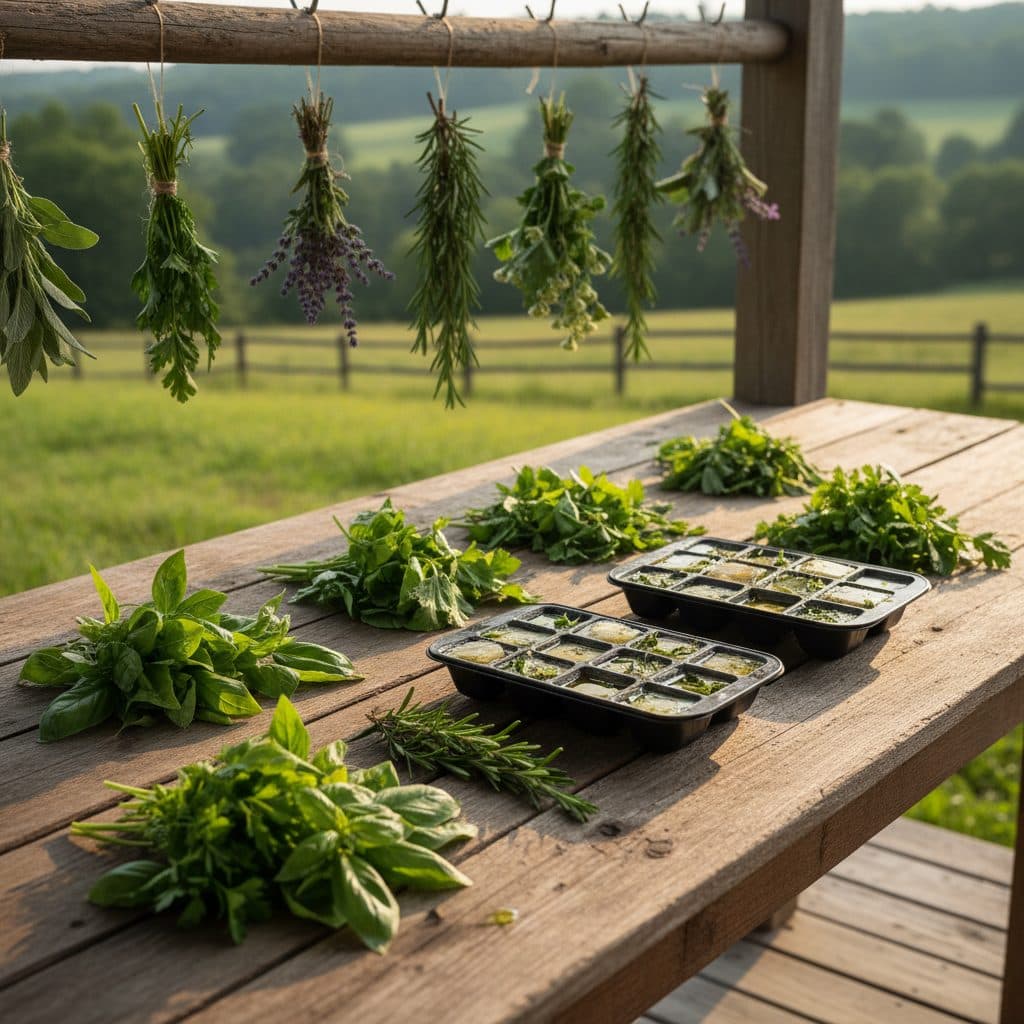
Key takeaways
- Freezing herbs in oil or water preserves fresh flavor for up to 12 months, ideal for delicate varieties like basil.
- Drying herbs reduces moisture content to below 10%, extending shelf life significantly, often for one to three years.
- Pesto cubes offer a convenient, ready-to-use option, combining herbs, oil, nuts, and cheese for quick meal preparation.
- Consider the herb type: delicate, leafy herbs like cilantro or parsley freeze well, while woody herbs such as rosemary or thyme often dry better.
- Proper storage, whether frozen at 0°F or dried in airtight containers away from light, is important for maintaining quality and potency.
- Drying can reduce herb volume by 75% or more, making it a space-efficient preservation method for smaller kitchens.
Quick answer: Basil can be preserved by freezing in oil or water for up to 12 months, or by drying to reduce moisture content for a shelf life of one to three years. Pesto cubes offer another convenient freezing method, combining herbs, oil, nuts, and cheese.
For home growers across the United States, from the humid summers of Georgia to the cooler growing seasons of Oregon, deciding how to preserve an abundant herb harvest is a common challenge. Many gardeners in USDA zone 7, for instance, find themselves with more basil than they can use fresh in July. The goal is to preserve flavor and aroma for use during the winter months.
Two primary methods stand out for home preservation: freezing and drying. Each approach offers distinct advantages and drawbacks, impacting flavor, texture, and shelf life. Understanding the specifics of freezing herbs in oil, water, or as pesto, compared to traditional drying techniques, can help you make an informed decision for your specific herbs and culinary needs, ensuring your efforts yield flavorful results for up to 12 months or even longer.
Freezing herbs in oil or water for peak freshness
Freezing herbs in oil or water preserves the fresh flavor and color of delicate herbs, particularly in regions like the Pacific Northwest where fresh herbs are abundant in summer. This technique works especially well for herbs such as basil, cilantro, parsley, and mint. By encasing the chopped herbs in a protective layer of liquid, you minimize exposure to air, which helps prevent freezer burn and oxidation.
To prepare, simply wash and thoroughly dry your chosen herbs. Chop them finely, or leave leaves whole if preferred, then pack them into ice cube trays. Fill the trays with either a good quality olive oil or plain water, ensuring the herbs are fully submerged. Freeze the trays for at least four hours, or until solid. Once frozen, pop the herb cubes out and transfer them to freezer-safe bags or containers. Keep them frozen until you use them — herbs and garlic held in oil at room temperature carry a botulism risk, so thawed cubes and pesto belong in the refrigerator, not the pantry or the counter. Label them with the herb type and date. These cubes can be stored at 0°F for up to 12 months, ready to be dropped directly into soups, stews, or sauces. A single cube typically holds about one tablespoon of chopped herbs.
The benefits of freezing in oil
Using oil offers a few advantages, especially for herbs destined for cooking. The oil itself adds flavor and can be used as a cooking base. For example, a basil-in-olive-oil cube can go straight into a hot pan with garlic for a quick pasta sauce. This method is particularly effective for herbs like basil, oregano, and thyme, as the oil helps to extract and preserve their fat-soluble flavor compounds. Water is a good alternative for herbs like mint or cilantro, which might be used in beverages or fresh salsas where oil isn’t desired. Use just enough oil or water to cover the herbs completely — submersion is what keeps air out.
- Basil (sweet basil, lemon basil)
- Cilantro
- Parsley (flat-leaf, curly)
- Mint (peppermint, spearmint)
- Chives
Freezing pesto cubes for year-round storage
Pesto cubes preserve basil and other herbs for quick use, especially in warm climates like Florida or California where basil produces multiple harvests through the growing season. This method goes beyond simple herb preservation by creating a ready-to-use sauce base. A classic pesto typically includes fresh basil, pine nuts, garlic, Parmesan cheese, and olive oil. The oil and nuts protect the basil from oxidation, maintaining its green color in the freezer. A typical batch yields about 2 cups of pesto, enough for several meals.
To make pesto cubes, first prepare your pesto as usual. A common ratio is two cups of packed basil leaves to one-half cup of olive oil, one-third cup of pine nuts, two cloves of garlic, and one-half cup of grated Parmesan cheese. Blend all ingredients in a food processor until smooth, or to your preferred consistency. Once prepared, spoon the pesto into ice cube trays. Each cube will hold about one to two tablespoons of pesto, a convenient portion for individual servings or adding to dishes. Freeze the trays for at least three hours until the cubes are solid.
Storing and using your pesto cubes
After freezing, transfer the solid pesto cubes into freezer-safe bags or containers, ensuring they are tightly sealed to prevent freezer burn. Label them with the date; pesto cubes can maintain their quality in the freezer for six to nine months, or even up to 12 months if stored properly at 0°F. When ready to use, simply drop a frozen cube or two into hot pasta, soup, or stew. They can also be thawed and spread on sandwiches or used as a topping for grilled vegetables. This method is particularly useful for maximizing the yield from a large basil patch, perhaps 10 to 15 plants, producing multiple pounds of leaves over a season. For more on preserving herbs, see our guides on dehydrating food.
- Fresh basil leaves (2 cups packed)
- Pine nuts or walnuts (1/3 cup)
- Garlic cloves (two medium)
- Parmesan cheese (1/2 cup grated)
- Extra virgin olive oil (1/2 cup)
Traditional drying: concentrating herb flavors
Drying herbs is one of the oldest and most straightforward preservation methods, particularly effective for growers in drier climates like Arizona or parts of California, where low humidity aids the process. This technique removes moisture from the plant material, inhibiting microbial growth and enzymatic reactions that cause spoilage. The goal is to reduce the moisture content to below 10%, which significantly extends shelf life. Woody herbs such as rosemary, thyme, oregano, and sage are well suited for drying, as their firm cell structures hold up well to the process. Delicate herbs like basil or mint can also be dried, but they may lose some of their fresh flavor compared to freezing.
There are several ways to dry herbs, with air drying being the simplest for many home gardeners. For air drying, harvest herbs just after the morning dew has evaporated, when their essential oil content is typically highest. Tie small bunches of herbs, perhaps five to eight stems each, and hang them upside down in a warm, dry, well-ventilated area away from direct sunlight. An attic or a pantry with good air circulation, maintaining temperatures between 68°F and 86°F, works well. Drying can take anywhere from one to three weeks, depending on the herb’s moisture content and ambient conditions. Once completely dry, the leaves should be brittle and crumble easily.
Using a dehydrator for consistent results
For more consistent results, especially in humid environments like the American South, a food dehydrator is useful. Dehydrators circulate warm air at controlled temperatures, typically between 95°F and 125°F, allowing for faster and more uniform drying. Spread a single layer of washed and dried herbs on the dehydrator trays, ensuring good airflow between pieces. Drying times vary, but most herbs will be fully dry within two to eight hours in a dehydrator, depending on leaf thickness. Always check for complete dryness before storing. Properly dried herbs can be stored whole or crumbled in airtight containers in a cool, dark place for one to three years. This method can reduce the volume of fresh herbs by 75% or more, making storage very efficient. For more details on this process, see our guide on dehydrating food.
- Rosemary
- Thyme
- Oregano
- Sage
- Marjoram
Dehydrating herbs with a food dehydrator
Using a dehydrator ensures a consistent drying temperature and airflow, which speeds up the process and reduces the risk of mold formation. Most dehydrators operate at temperatures between 95°F and 125°F, which is low enough to preserve essential oils and flavor compounds, yet high enough to evaporate water efficiently. This method is excellent for herbs like mint, lemon balm, and even some types of basil that might struggle to air dry completely in humid conditions.
To dehydrate herbs, first wash them thoroughly and pat them completely dry. Remove any thick stems or discolored leaves. Arrange the herbs in a single layer on the dehydrator trays, ensuring there is space between pieces for air to circulate freely. Overlapping herbs can lead to uneven drying and potential spoilage. Set the dehydrator to the recommended temperature for herbs, typically around 100°F to 110°F. Drying times can vary significantly based on the herb type, thickness, and moisture content, ranging from as little as two hours for delicate leaves to eight hours or more for thicker stems. Check the herbs periodically for dryness; they should be crispy and easily crumble when crushed.
Post-dehydration storage and usage
Once the herbs are fully dehydrated, allow them to cool completely to room temperature before storing. This step prevents warm herbs from creating condensation in storage containers, which leads to moisture buildup and spoilage. Store the dried herbs whole or lightly crumbled in airtight glass jars or vacuum-sealed bags. Keep these containers in a cool, dark place, such as a pantry or cupboard, away from direct sunlight and heat. Proper storage can extend the shelf life of dehydrated herbs to one to three years. When using dried herbs, remember that their flavor is more concentrated than fresh herbs; generally, use one-third to one-half the amount of dried herbs compared to fresh in recipes. For instance, if a recipe calls for three tablespoons of fresh parsley, use one tablespoon of dried parsley. This concentrated flavor makes them a powerful addition to winter cooking.
- Mint (peppermint, spearmint)
- Lemon balm
- Dill
- Fennel fronds
- Bay leaves
Choosing the right method: flavor, storage, and application
The choice between freezing and drying herbs often boils down to the specific herb, its intended culinary use, and your available storage space. For instance, a gardener in USDA zone 5 with a small freezer might prioritize drying woody herbs like rosemary, which take up minimal space and retain flavor well. Delicate, leafy herbs such as basil, cilantro, and parsley retain their fresh flavor and color better when frozen. Freezing suspends the enzymatic processes that cause degradation, locking in the herb’s essence. This makes frozen herbs ideal for dishes where a fresh, bright flavor is desired, such as pestos, sauces, or garnishes added at the end of cooking. They can be stored at 0°F for up to 12 months without significant loss of quality.
Drying, on the other hand, concentrates the flavors of herbs, often intensifying their aromatic compounds. This makes dried herbs particularly potent in slow-cooked dishes, stews, and marinades, where their flavors have time to meld and infuse. Woody herbs like oregano, thyme, and sage dry well, as their structure withstands moisture removal without losing too much flavor. Dried herbs are also incredibly space-efficient, reducing their bulk by 75% or more, which is a significant advantage for those with limited freezer capacity. They can be stored in airtight containers for one to three years, making them a long-term pantry staple.
Considerations for different culinary uses
When deciding, think about how you’ll use the herbs. If you envision making large batches of pesto or adding a fresh burst to a summer salad in winter, freezing basil or cilantro in oil or water cubes is likely your best bet. A single ice cube tray can hold enough chopped herbs for eight to ten servings of a dish. However, if you’re looking to season roasts, create spice blends, or add depth to winter soups, drying rosemary, thyme, or bay leaves will provide a more concentrated and suitable flavor. For example, dried rosemary is noticeably more concentrated than fresh, which is why you use so much less of it. Both methods contribute significantly to reducing food waste and making the most of your garden’s yield, providing flavorful options throughout the year, even when your garden is dormant for 4-6 months.
- Delicate herbs (basil, cilantro) for fresh flavor retention.
- Woody herbs (rosemary, thyme) for concentrated, long-lasting flavor.
- Space availability in freezer vs. pantry.
- Intended culinary application (fresh taste vs. slow-cooked depth).
- Humidity levels in your region affecting drying efficiency.
Comparison of herb preservation methods
Method | Flavor Retention | Storage Space | Shelf Life | Best For |
|---|---|---|---|---|
Freezing (Oil/Water) | Excellent (bright, fresh) | Moderate (ice cube trays) | Up to 12 months at 0°F | Delicate herbs: basil, cilantro, parsley |
Freezing (Pesto) | Very Good (rich, complex) | Moderate (ice cube trays) | 6 to 9 months at 0°F | Basil, for ready-to-use sauce |
Drying (Air/Dehydrator) | Good (concentrated, earthy) | Low (reduces volume by 75%) | 1 to 3 years in airtight containers | Woody herbs: rosemary, thyme, oregano |
Freezer temperature: Maintain your freezer at 0°F (-18°C) or colder to ensure optimal preservation and a shelf life of up to 12 months for frozen herbs.
Drying moisture target: Aim to reduce the moisture content of dried herbs to below 10% to prevent spoilage and extend their shelf life to one to three years.
Frequently asked questions
Can I freeze any type of herb?
While most herbs can be frozen, delicate leafy herbs like basil, cilantro, and parsley retain their fresh flavor and texture best when frozen in oil or water. Woody herbs such as rosemary and thyme can be frozen, but they often perform better when dried, offering a shelf life of one to three years.
How long do frozen herbs last?
Frozen herbs, when stored properly in airtight containers at 0°F, can maintain their quality for up to 12 months. Pesto cubes typically last six to nine months, due to the additional ingredients like cheese and nuts.
Is it better to freeze or dry basil?
For basil, freezing is generally preferred as it preserves more of its fresh flavor and color, especially when frozen in oil or as pesto. Drying basil can result in a significant loss of its delicate aroma, though it remains a viable option for long-term storage, lasting one to three years.
What’s the best way to store dried herbs?
Dried herbs should be stored in airtight glass jars or vacuum-sealed bags in a cool, dark place, such as a pantry or cupboard. Exposure to light, heat, or air degrades their flavor and potency well before the stated shelf life.
How much dried herb equals fresh herb in a recipe?
As a general rule, use one-third to one-half the amount of dried herbs compared to fresh herbs in a recipe because their flavor is more concentrated. For example, if a recipe calls for three tablespoons of fresh oregano, use one tablespoon of dried oregano for similar intensity.
Can I reuse the oil from frozen herb cubes?
Yes, the oil from frozen herb cubes is perfectly safe and flavorful to use directly in your cooking. It’s already infused with the herb’s essence, making it a convenient base for sautéing vegetables or starting a sauce.
References
- USDA Natural Resources Conservation Service (2024). USDA Natural Resources Conservation Service.
- SARE — Sustainable Agriculture Research & Education (2023). SARE — Sustainable Agriculture Research & Education.
- ATTRA / NCAT Sustainable Agriculture (2023). ATTRA / NCAT Sustainable Agriculture.
- USDA National Agroforestry Center (2023). USDA National Agroforestry Center.