Key takeaways
- Many traditional garden vegetables struggle in temperatures consistently above 90°F, leading to reduced yields and plant stress.
- Okra, southern peas, sweet potatoes, malabar spinach, and amaranth are excellent choices for US gardens experiencing hotter, drier summers.
- These resilient plants often tolerate poor soil conditions and require less water once established, making them suitable for challenging climates.
- Incorporating heat-tolerant varieties can help maintain garden productivity and food security in USDA zones 7-10 and beyond.
- Building healthy soil with organic matter and mulching are key strategies for supporting these plants in high heat and drought conditions.
Quick answer: Heat-loving vegetables such as okra, southern peas, sweet potatoes, malabar spinach, and amaranth thrive in US gardens facing temperatures consistently above 90°F. These resilient plants help maintain garden productivity and food security in changing climates.
Gardeners across the United States, from the arid Southwest to the humid Southeast, are increasingly facing hotter summers and more unpredictable rainfall patterns. In regions like Arizona, where summer temperatures regularly exceed 100°F for weeks, or in parts of Texas experiencing prolonged drought, traditional cool-season crops often fail to produce. This shift means many home growers are re-evaluating their plant choices to maintain productive gardens.
Fortunately, a range of vegetables naturally thrives in conditions that would stress or kill more common garden fare. These heat-loving plants are not just survivors; they are often prolific producers, offering substantial harvests even when the mercury climbs above 90°F. By understanding and cultivating these resilient species, US gardeners can adapt to changing climates and continue to enjoy fresh, homegrown food throughout the hottest months.
Adapting to a warmer garden climate
The average annual temperature in the contiguous United States has risen by 1.8°F since 1895, with the most recent decade being the warmest on record. This trend translates to longer periods of extreme heat and increased drought frequency in many regions, particularly the Southwest and Southeast. For instance, in USDA zone 8, where summer highs frequently reach 95°F, many popular vegetables like lettuce and broccoli will bolt or cease production entirely. We now need to adapt our gardening practices to ensure continued harvests. We must select plants that are genetically programmed to perform well under these challenging conditions.
Understanding plant heat tolerance
Plant heat tolerance means a plant keeps thriving and producing through high temperatures. Some plants, like tomatoes, may survive 90°F days but will often drop flowers, leading to poor fruit set when night temperatures remain above 75°F. In contrast, truly heat-loving vegetables continue to flower and set fruit even when daytime temperatures consistently exceed 90°F and nighttime lows stay warm. They have evolved mechanisms to cope with intense sun, high transpiration rates, and often, less-than-ideal soil moisture. The USDA Natural Resources Conservation Service emphasizes the importance of selecting regionally appropriate plants for successful cultivation [6].
- Identify your USDA zone, which shapes your local climate.
- Monitor local weather patterns: Track average high temperatures and drought frequency.
- Observe plant behavior: Note which plants struggle and which thrive in summer heat.
- Research heat-tolerant varieties: Look for cultivars specifically bred for hot climates.
Okra: the resilient southern producer
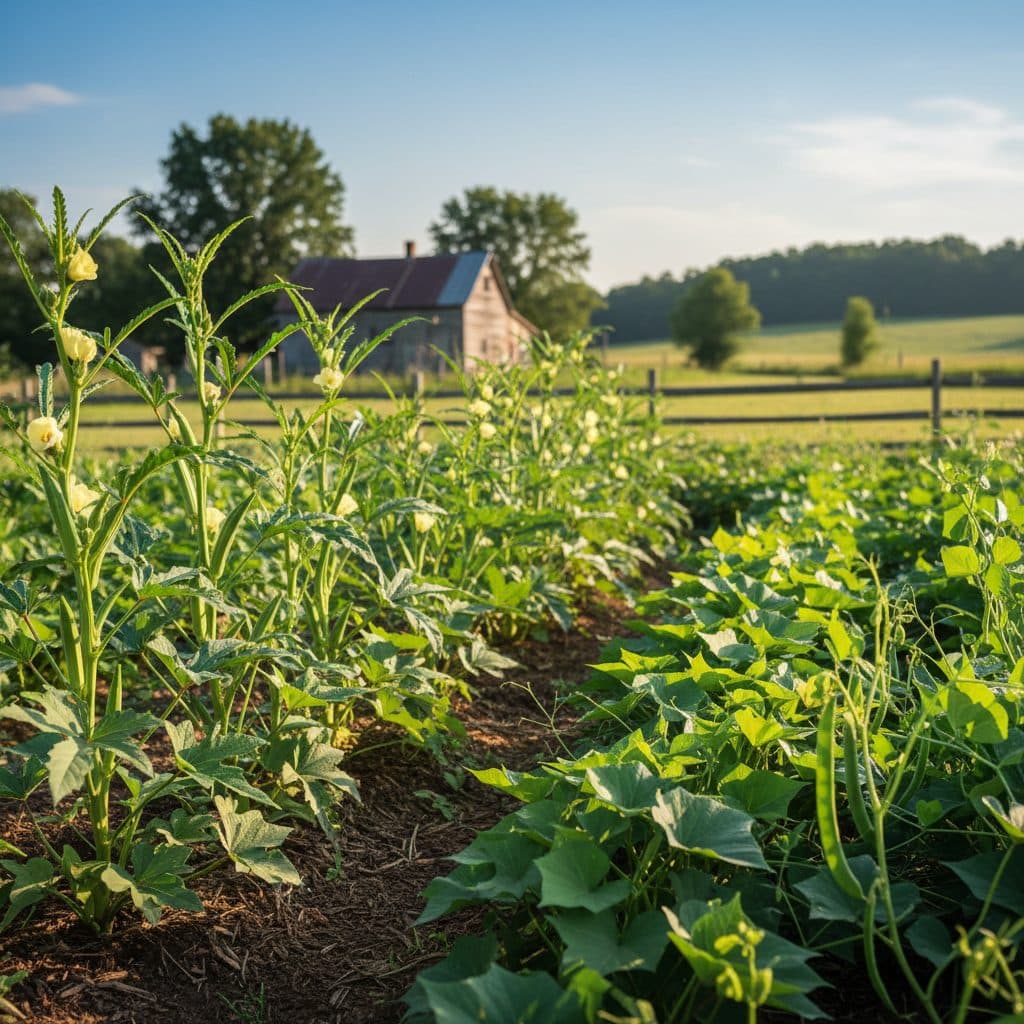
Okra (Abelmoschus esculentus) is a quintessential heat-loving vegetable, perfectly suited for US gardens in USDA zones 7-11, particularly across the Southeast. It thrives in full sun and temperatures consistently above 85°F, often producing prolifically when other plants are wilting. In states like Georgia and Alabama, where summer temperatures can reach 98°F, okra plants can grow 6-8 feet tall and produce pods every one to two days once they start. This high yield makes it a valuable crop for food security during the hottest parts of the year. You can learn more about specific growing techniques at agripure.org/articles/how-to-grow-okra.
Okra’s drought and soil tolerance
Beyond its heat tolerance, okra demonstrates remarkable resilience to drought and a wide range of soil conditions. While it prefers well-drained, fertile soil, it can produce respectable harvests in less-than-ideal ground, including sandy or clay-heavy soils. Once established, young okra plants require about one inch of water per week, but mature plants can tolerate drier spells, especially when mulched. Research indicates that okra can accumulate certain heavy metals from soil, suggesting its ability to draw nutrients from various soil compositions [5]. This adaptability makes okra a reliable choice for gardeners facing water restrictions or less-than-perfect garden beds, providing a steady supply of pods from early summer until the first frost, often for 90-120 days.
- Planting time: After all danger of frost, when soil temperatures are consistently above 65°F.
- Sun exposure: Requires at least six to eight hours of direct sunlight daily.
- Harvest frequency: Pick pods every one to two days when they are 2-4 inches long.
- Watering: One inch per week, but tolerant of some drought once mature.
Southern peas: soil builders and heat beaters
Southern peas, often referred to as cowpeas (*Vigna unguiculata*), are another group of exceptional heat-loving vegetables, particularly well-suited for USDA zones 6-10. Varieties like black-eyed peas, crowder peas, and purple hull peas thrive in temperatures ranging from 80°F to 95°F and are highly tolerant of drought conditions once established. In the hot, dry summers of Oklahoma or Texas, these peas can produce abundant yields, often 20-30 pounds per 100 square feet, when many other legumes would falter. Their ability to fix atmospheric nitrogen into the soil also improves garden fertility, reducing the need for synthetic fertilizers by up to 25%.
Nitrogen fixation and poor soil tolerance
One of the most valuable attributes of southern peas is their capacity for nitrogen fixation, a process carried out by symbiotic bacteria in their root nodules. This natural fertilization benefits not only the pea plants themselves but also subsequent crops grown in the same bed. They are also remarkably tolerant of poor, sandy, or clay soils, making them an excellent choice for improving marginal garden areas. In regions with depleted soils, southern peas can significantly improve soil structure and nutrient availability within a single growing season. This resilience and soil-building capacity make them a cornerstone of sustainable gardening practices, especially in challenging climates where soil health is a constant concern [1].
- Soil improvement: Fix nitrogen, benefiting future crops.
- Drought tolerance: Require less water than many other legumes once established.
- Versatile varieties: Many types exist, from bush to vining, for different garden spaces.
- Nutritional value: High in protein and fiber, a valuable food source.
Sweet potatoes: underground resilience
Sweet potatoes (*Ipomoea batatas) are truly remarkable plants for hot climates, performing exceptionally well in USDA zones 8-11, even in sandy or poor soils. Unlike common potatoes (Solanum tuberosum*), which prefer cooler temperatures, sweet potatoes thrive when temperatures are consistently above 75°F, with optimal growth occurring between 85°F and 95°F. They are incredibly efficient at converting sunlight into energy, producing abundant tubers underground. In regions like Florida or coastal Carolina, a single sweet potato plant can yield 3-5 pounds of tubers, providing a significant food source from a relatively small footprint. More detailed information on growing sweet potatoes is available at agripure.org/plants/ipomoea-batatas.
Growing in challenging soils
One of the sweet potato’s greatest strengths is its ability to produce in less-than-ideal soil conditions. While rich, well-drained soil is preferred, they can tolerate sandy, clay, or even somewhat rocky soils, provided there is adequate drainage. They are also quite drought-tolerant once established, requiring about one inch of water per week during tuber development but capable of surviving drier periods. This makes them a prime candidate for gardens in areas prone to drought or with naturally poor soil quality, such as many parts of the US South. Their vigorous vine growth also acts as a natural groundcover, suppressing weeds and helping to conserve soil moisture, which is a key benefit in hot, sunny environments.
- Planting slips: Start with slips (rooted cuttings) after the last frost, when soil is warm.
- Space requirements: Allow 12-18 inches between plants and 3-4 feet between rows for vining types.
- Harvest indicators: Tubers are typically ready 90-120 days after planting, before first frost.
- Curing: Cure harvested tubers at 85-90°F and 85-90% humidity for 5-10 days for best flavor and storage.
Malabar spinach and amaranth: greens for the heat
When traditional leafy greens like lettuce and spinach bolt and turn bitter in summer heat, Malabar spinach (Basella alba) and amaranth (Amaranthus spp.) step in as excellent alternatives. Malabar spinach, a vining plant, thrives in USDA zones 7-11, preferring temperatures above 80°F and tolerating extreme heat up to 100°F. Its succulent leaves and stems provide a spinach-like texture and flavor, even in the hottest months. Amaranth, another robust leafy green, is equally heat-tolerant, growing well in zones 4-11 and producing edible leaves and seeds even in arid conditions. In regions like California’s Central Valley, where summer temperatures regularly exceed 95°F, these plants offer continuous harvests of greens when other options are scarce. For more on Malabar spinach, visit agripure.org/plants/basella-alba.
Nutrient-dense and drought-resilient greens
Both Malabar spinach and amaranth are not only heat-tolerant but also highly nutritious and relatively drought-resilient. Malabar spinach, with its thick leaves, holds moisture well and can produce a continuous supply of greens from June through October. Amaranth, particularly grain amaranth varieties, can be grown for both its leaves and its protein-rich seeds, which are a valuable food source. Research suggests that sustainable vegetable cultivation can involve methods like aquaponics, which these greens are well-suited for, indicating their adaptability to various growing systems [2]. These plants also tolerate a range of soil types, including those with lower fertility, making them suitable for challenging garden environments. They represent a smart choice for gardeners seeking to extend their fresh green harvests through the peak of summer, providing a reliable yield when other crops have long since given up.
- Malabar spinach growth: Vining habit, can be trellised for easier harvest.
- Amaranth versatility: Edible leaves (young plants) and nutritious seeds (mature plants).
- Continuous harvest: Both offer repeated harvests throughout the summer.
- Water needs: Moderate, but more tolerant of dry spells than traditional greens.
Building a resilient garden for the future
Cultivating heat-loving vegetables is just one component of building a truly resilient garden in the face of changing climate patterns. Beyond selecting the right plants, focusing on soil health is paramount. Incorporating significant amounts of organic matter, such as compost, aged manure, or cover crops like Indian sweet clover (agripure.org/plants/melilotus-indicus), can dramatically improve soil’s water-holding capacity and nutrient availability. For instance, increasing soil organic matter by just one percent can allow soil to hold an additional 20,000 gallons of water per acre, a critical advantage in drought-prone areas. This practice also supports a robust microbial community, which in turn helps plants access nutrients more efficiently.
Water management and mulching strategies
Effective water management is another cornerstone of resilient gardening. Drip irrigation systems can deliver water directly to plant roots, reducing water loss through evaporation by up to 50% compared to overhead sprinklers. Mulching deeply with 3-6 inches of organic material like straw, wood chips, or shredded leaves helps to cool the soil, suppress weeds, and conserve moisture. In a garden in central Texas, a 4-inch layer of mulch can reduce soil temperature by 10-15°F on a 95°F day, significantly benefiting plant roots. These strategies, combined with the strategic planting of heat-tolerant species, create a garden ecosystem better equipped to handle the challenges of hotter, drier growing seasons, ensuring continued productivity for years to come.
- Increase organic matter: Boosts soil water retention and fertility.
- Use drip irrigation: Reduces water waste by directly targeting roots.
- Mulch deeply: Conserves moisture, suppresses weeds, and moderates soil temperature.
- Rotate crops: Helps prevent pest and disease buildup and maintains soil health.
Heat-Loving Vegetables: Resilience at a Glance
Vegetable | Optimal Temp Range (°F) | Drought Tolerance | Soil Tolerance |
|---|---|---|---|
Okra | 85-98 | High | Wide range, prefers well-drained |
Southern Peas | 80-95 | High | Tolerates poor, sandy, clay soils |
Sweet Potato | 85-95 | Medium-High | Tolerates sandy, clay, rocky soils |
Malabar Spinach | 80-100 | Medium | Wide range, prefers moist |
Amaranth | 75-95 | High | Tolerates poor, dry soils |
Soil Organic Matter: Increasing soil organic matter by just one percent can allow soil to hold an additional 20,000 gallons of water per acre.
Mulch Benefit: A 4-inch layer of mulch can reduce soil temperature by 10-15°F on a 95°F day in central Texas.
Frequently asked questions
What temperature is too hot for most common garden vegetables?
Most common garden vegetables, such as tomatoes, peppers, and beans, begin to experience significant stress and reduced production when daytime temperatures consistently exceed 90°F, especially if nighttime temperatures remain above 75°F. This often leads to flower drop and poor fruit set, reducing overall yields by 30% or more in some cases.
Can these heat-loving vegetables grow in poor soil?
Yes, many heat-loving vegetables like southern peas, sweet potatoes, and amaranth are remarkably tolerant of poor soil conditions, including sandy, clay, or low-fertility soils. Southern peas, for example, can even improve soil fertility by fixing atmospheric nitrogen, potentially reducing fertilizer needs by 25% for subsequent crops.
How much water do these resilient plants need?
While initial establishment requires consistent moisture, most heat-loving vegetables are quite drought-tolerant once mature, needing about one inch of water per week during active growth. Strategic mulching with 3-6 inches of organic material can significantly reduce water evaporation, conserving up to 50% of irrigation water in hot climates.
Are there any leafy greens that can withstand summer heat?
Absolutely. Malabar spinach and amaranth are excellent choices for leafy greens that thrive in summer heat, even when temperatures reach 100°F. Unlike traditional spinach or lettuce, these plants continue to produce edible leaves throughout the hottest months, offering continuous harvests from June through October in many regions.
What are the benefits of growing southern peas?
Southern peas offer multiple benefits, including their exceptional heat and drought tolerance, making them ideal for USDA zones 6-10. They are also valuable for improving soil health through nitrogen fixation, which can reduce the need for external nitrogen fertilizers by up to 25%. Additionally, they provide a nutritious, high-protein food source.
References
- Loving Boundaries (2015). Loving Boundaries.
- The sustainable vegetables that thrive on a diet of fish poo (2015). The sustainable vegetables that thrive on a diet of fish poo.
- People Thrive When They Know They Matter (2025). People Thrive When They Know They Matter.
- Embracing the Village (2026). Embracing the Village.
- Determination of Some Heavy Metals in Vegetables (Spinach, Cabbage, and Okra) Collected from Maiduguri, Borno State (2025). Determination of Some Heavy Metals in Vegetables (Spinach, Cabbage, and Okra) Collected from Maiduguri, Borno State.
- USDA Natural Resources Conservation Service (2024). USDA Natural Resources Conservation Service.