Key takeaways
- Malabar spinach, amaranth, and New Zealand spinach thrive in summer heat when lettuce bolts.
- Succession planting every 2-3 weeks ensures a continuous supply of tender leaves.
- Optimal soil temperatures for these greens range from 70°F to 90°F, unlike lettuce’s 60-70°F.
- Provide consistent moisture, especially in USDA zones 7-10, to prevent bitterness and encourage growth.
- Harvest outer leaves regularly to promote new growth and extend the plant’s productivity through August.
- Incorporate living mulches or cover crops to maintain soil moisture and suppress weeds in hot conditions.
Quick answer: To extend summer harvests of leafy greens in hot climates like USDA zones 7-10, cultivate heat-tolerant varieties such as Malabar spinach, amaranth, and New Zealand spinach. These plants thrive in conditions where traditional lettuce bolts, and produce continuous yields through the hottest months.
For many growers in the southern United States, particularly across USDA zones 7-10, the arrival of July and August often signals the end of fresh, home-grown lettuce. As temperatures consistently climb above 80°F, traditional lettuce varieties quickly bolt, turning bitter and unusable. This annual challenge leaves a significant gap in the summer garden, but it doesn’t have to mean a pause in your leafy green harvests. By shifting focus to resilient, heat-loving alternatives, you can maintain a steady supply of nutritious greens right through the hottest months.
This article covers three dependable heat-tolerant greens: Malabar spinach, amaranth, and New Zealand spinach, which thrive even as summer heat intensifies. We’ll discuss their specific growing requirements, optimal planting times, and how to integrate them into a succession planting strategy to ensure continuous yields, even when daily highs reach 95°F or more in regions like Southern New Mexico.
Understanding the summer lettuce slump
For many growers, the transition from late spring to mid-summer marks a challenging period for leafy greens. Traditional lettuce varieties, particularly those grown in USDA zones 7-10, are highly sensitive to heat. Once ambient temperatures consistently rise above 75°F, and especially when soil temperatures exceed 70°F, lettuce plants initiate a process called bolting. This physiological response involves the plant rapidly sending up a flower stalk, diverting energy from leaf production, and causing the remaining leaves to become bitter and tough. In regions like Southern New Mexico, where summer daily highs regularly surpass 90°F, lettuce performance significantly declines, making successful cultivation nearly impossible after early June.
Why lettuce struggles in July and August
The primary reason lettuce struggles in July and August is its genetic predisposition to cooler weather. Most common lettuce cultivars, such as ‘Romaine’ or ‘Butterhead’, are bred for spring and fall harvests, thriving in temperatures between 60°F and 70°F. When exposed to prolonged heat, the plant perceives this as a signal to complete its life cycle and produce seeds, leading to bolting within days. This rapid decline means that by mid-summer, many gardeners face a distinct lack of fresh, home-grown salad greens, often relying on store-bought options that have traveled hundreds of miles. Understanding these temperature thresholds (specifically the 75°F air temperature and 70°F soil temperature) is important for planning a continuous harvest strategy.
- High temperatures: Consistent air temperatures above 75°F accelerate bolting.
- Soil warmth: Soil temperatures exceeding 70°F stress lettuce roots.
- Day length: Longer summer days can also trigger the bolting response.
- Water stress: Inconsistent watering in hot conditions exacerbates bitterness.
- Genetic factors: Most popular lettuce varieties are not bred for heat tolerance.
Malabar spinach: a vining summer standout
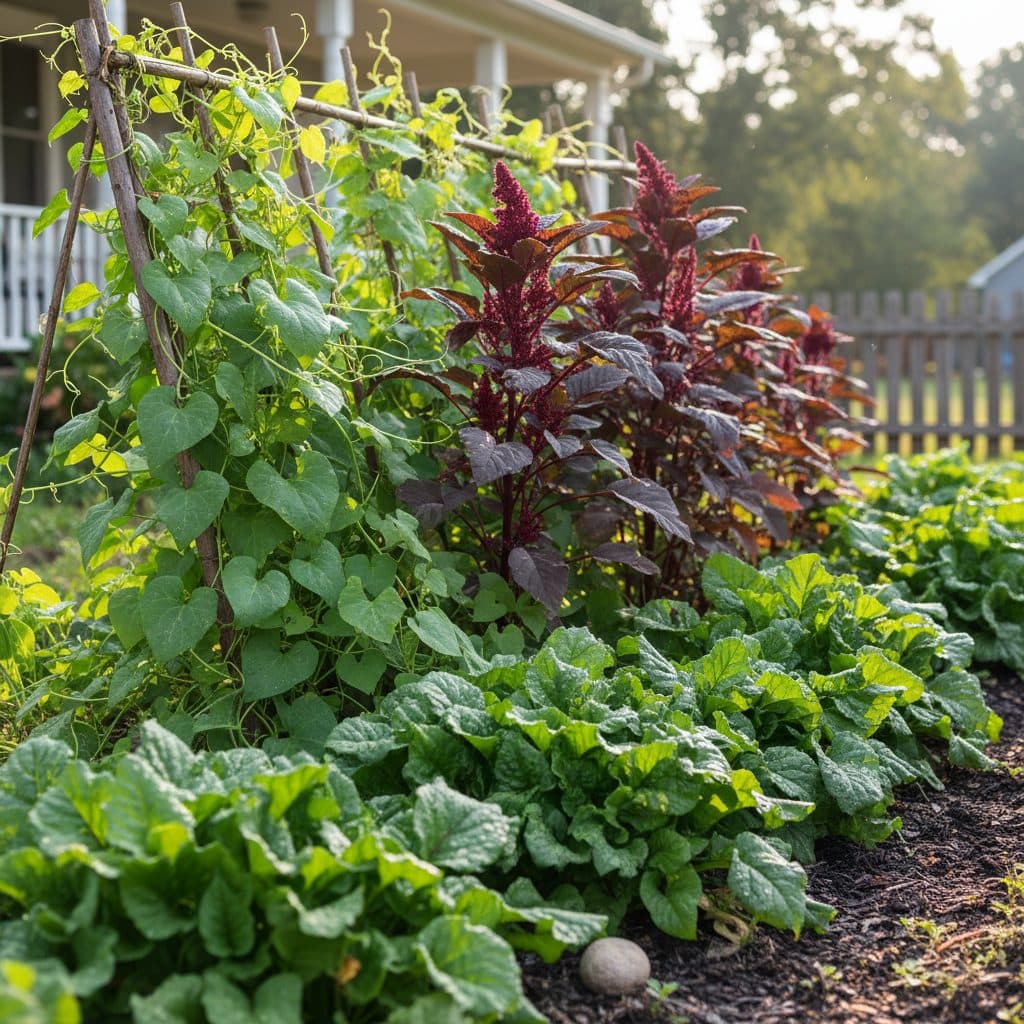
When the summer sun makes traditional spinach wilt, Malabar spinach (Basella alba) steps in as a robust alternative. This heat-loving vine, native to tropical Asia, thrives in conditions that would cause most leafy greens to fail, performing exceptionally well in USDA zones 7-11. Unlike common spinach, Malabar spinach is not a true spinach but offers a similar mild, slightly peppery flavor with a succulent texture, making it an excellent substitute in stir-fries, soups, and salads. It prefers full sun exposure (at least 6 hours daily) and consistently moist, well-draining soil rich in organic matter. Plants can reach lengths of 6-10 feet, requiring a trellis or support structure to grow vertically and maximize air circulation, reducing disease risk.
Planting and care for Basella alba
To establish Malabar spinach, you can sow seeds directly into the garden after all danger of frost has passed and soil temperatures are reliably above 65°F, typically in late May or early June in many southern states. Soaking seeds for 24 hours prior to planting can improve germination rates, which are often around 70-80%. Plant seeds about one-half inch deep and 6 inches apart, thinning to 12 inches between plants once seedlings are 3-4 inches tall. Consistent watering, providing 1-1.5 inches of water per week, is important, especially during dry spells, to encourage lush leaf growth and prevent any bitterness. Regular harvesting of the outer leaves and tender stems will promote continuous production from July through September, yielding up to 2 pounds of greens per plant over a 120-day growing season. For more detailed information on its cultivation, refer to Malabar Spinach on our site.
- Support structure: Provide a trellis or fence for its vining habit.
- Consistent moisture: Water regularly, aiming for 1-1.5 inches weekly.
- Fertilization: A balanced organic fertilizer every 4-6 weeks can boost growth.
- Harvesting: Pinch off outer leaves and tender stem tips regularly.
- Pest control: Monitor for aphids and spider mites, especially in dry conditions.
Amaranth: diverse greens for hot climates
Amaranth (Amaranthus spp.) is a highly versatile plant, cultivated for both its nutritious leaves and its protein-rich grains. As a leafy green, amaranth is an exceptional choice for summer gardens, flourishing in hot, sunny conditions where temperatures consistently exceed 85°F. Many varieties, such as ‘Red Leaf’ or ‘Tampala’, offer a mild, earthy flavor, often compared to spinach, and are packed with vitamins and minerals. These plants are remarkably drought-tolerant once established, making them suitable for regions experiencing dry summers. They can grow 2-6 feet tall depending on the variety, providing a substantial harvest from June through September.
Cultivating amaranth for leaf production
For leaf production, sow amaranth seeds directly into well-draining soil in full sun after the last frost, when soil temperatures are above 60°F. Plant seeds about one-quarter inch deep, 4-6 inches apart in rows 12-18 inches apart. Thin seedlings to 8-12 inches apart for larger plants, or leave them closer for baby greens. Amaranth germinates quickly, often within 7-10 days, and can be ready for its first harvest in as little as 30-45 days. Consistent moisture, about 1 inch of water per week, is beneficial for tender leaves, but established plants can tolerate drier conditions. Harvesting outer leaves regularly encourages new growth, allowing for multiple cuttings throughout the summer. Regular cut-and-come-again harvesting keeps plants in vegetative growth and extends the productive window well beyond a single cutting.
- Variety selection: Choose varieties specifically for leaf production, like ‘Tampala’.
- Succession planting: Plant small batches every 2-3 weeks for a continuous supply.
- Pinch back flowers: Remove flower heads to encourage more leaf growth.
- Fertility: Amaranth is not a heavy feeder but benefits from compost-enriched soil.
- Pest resistance: Generally robust, but watch for leafminers in some regions.
New Zealand spinach: a ground-covering alternative
New Zealand spinach (Tetragonia tetragonioides) is another excellent heat-tolerant green, offering a mild, slightly salty flavor and a succulent texture similar to common spinach. Despite its name, it is not related to true spinach but belongs to the Aizoaceae family. This sprawling, low-growing plant is particularly well-suited for hot, dry conditions, thriving in full sun and tolerating temperatures up to 90°F or more, even in challenging environments like coastal California or the arid Southwest. Its thick, fleshy leaves and stems help it retain moisture, making it a valuable addition to drought-tolerant plant selections. Plants typically spread 2-3 feet wide and grow 6-12 inches tall, forming a dense ground cover that can suppress weeds.
Growing and harvesting Tetragonia tetragonioides
New Zealand spinach can be direct-sown after the last frost, when soil temperatures are consistently above 60°F. Seeds have a hard coat, so soaking them in warm water for 24 hours or scarifying them can significantly improve germination, which might otherwise take 10-20 days. Plant seeds one-half inch deep, 12 inches apart, in rows 24-36 inches apart. Once established, New Zealand spinach is remarkably low-maintenance. While it tolerates dry spells, consistent moisture, about 1 inch per week, will ensure the most tender and abundant harvests. Harvest the tender tips of the stems and leaves, leaving the main plant to continue producing throughout the summer and early fall, often for 90-110 days. The plant self-seeds readily in USDA zones 8-10. That supplies free volunteers, but it also means the plant spreads where you did not put it — strip the seed capsules from any plants you do not intend to let naturalize, particularly in coastal areas where it has escaped cultivation.
- Seed preparation: Soak seeds for 24 hours to aid germination.
- Spacing: Allow ample room for its sprawling growth habit (2-3 feet).
- Watering: Water deeply but less frequently once established.
- Harvesting method: Pinch off the top 2-4 inches of new growth.
- Mulching: Apply a 2-inch layer of mulch to conserve soil moisture.
Strategic succession for a steady supply
Succession planting is a fundamental strategy for maximizing garden productivity, especially with heat-tolerant greens that can produce for extended periods. Instead of planting all your Malabar spinach, amaranth, or New Zealand spinach at once, staggering your plantings ensures a continuous supply of young, tender leaves throughout July and August, and often into September. This approach helps avoid a glut of produce followed by a period of scarcity, smoothing out your harvest curve. For these fast-growing greens, planting small batches every 2-3 weeks is an effective method. This keeps you harvesting plants at their peak tenderness rather than working through one aging planting.
Planning your summer succession schedule
Begin your first succession planting of these heat-tolerant greens in late spring, around May in USDA zone 7, or earlier in zones 9-10, once soil temperatures are reliably above 60°F. For Malabar spinach and New Zealand spinach, which have longer maturity times, plan to sow seeds every 3-4 weeks. For faster-growing amaranth, a 2-week interval is often sufficient for continuous baby leaf harvests. Mark your calendar with planting dates and expected harvest windows to stay organized. Consider dedicating specific beds or rows for each succession, allowing you to easily rotate crops and maintain soil health. For instance, a 4×8 foot bed could be divided into three sections, with each section planted two weeks apart, providing fresh greens for 6-8 weeks from that single bed.
- Staggered planting: Sow seeds every 2-3 weeks for continuous harvests.
- Small batches: Plant only what you can reasonably consume or process.
- Track dates: Use a garden journal to record planting and harvest times.
- Crop rotation: Move planting locations to new spots each season.
- Variety selection: Experiment with different varieties to find what performs best in your microclimate.
Nurturing soil and conserving water in summer
Successful summer gardening, particularly with heat-tolerant greens, relies heavily on robust soil health and efficient water management. Healthy soil, rich in organic matter, acts like a sponge, holding moisture and nutrients vital for plant growth, especially when temperatures soar above 80°F. Incorporating 2-3 inches of compost annually raises soil organic matter steadily over several seasons, improving water retention and reducing how often you need to irrigate. Furthermore, a mulch layer of 2-3 inches is indispensable. Mulch insulates the soil, keeping root zones cooler, suppressing weeds that compete for water, and reducing evaporation by 30-50%.
Effective watering and mulching strategies
During the hottest months, consistent watering is paramount for tender, non-bitter leaves. Aim for deep, infrequent watering rather than shallow, frequent sprinkles. This encourages roots to grow deeper, making plants more resilient to dry spells. A good rule of thumb is to provide 1-1.5 inches of water per week, either through rainfall or irrigation. Drip irrigation or soaker hoses are highly efficient, delivering water directly to the root zone with minimal waste, applying water considerably more efficiently than overhead sprinklers. Consider integrating living mulches or cover crops, especially legumes, between rows to further enhance soil health and moisture retention; for suitable options, see Best Living-Mulch and Cover-Crop Legumes by USDA Zone for No-Dig Beds. These practices are critical for maintaining productivity in regions like the arid Southwest, where water conservation is a top priority.
- Compost application: Add 2-3 inches of compost to beds annually.
- Thick mulching: Apply 2-3 inches of straw or shredded leaves, pulled back from the row before each new sowing.
- Deep watering: Water deeply to encourage extensive root systems.
- Drip irrigation: Utilize drip systems or soaker hoses for efficiency.
- Living mulches: Plant low-growing cover crops to shade soil and add organic matter.
Comparison of Heat-Tolerant Greens for Summer Harvests
Characteristic | Malabar Spinach | Amaranth (Leaf) | New Zealand Spinach |
|---|---|---|---|
Heat Tolerance | Excellent (95°F+) | Excellent (85°F+) | Very Good (90°F+) |
Growth Habit | Vining (6-10 ft) | Upright (2-6 ft) | Sprawling (6-12 in tall, 2-3 ft wide) |
Flavor Profile | Mild, slightly peppery, succulent | Mild, earthy, spinach-like | Mild, slightly salty, succulent |
Harvest Period | July-September (120 days) | June-September (90-120 days) | July-October (90-110 days) |
Water Needs | Consistent moisture (1-1.5 in/week) | Moderate, drought-tolerant once established (1 in/week) | Moderate, very drought-tolerant once established (0.5-1 in/week) |
Support Required | Yes, trellis or stake | No, unless for very tall varieties | No, ground cover |
Malabar Yield: A single Malabar spinach plant can yield 1.5-2 pounds of greens over a 120-day growing season in warm climates.
Amaranth Harvest: Amaranth leaves can be harvested as early as 30-45 days after planting, providing multiple cuttings if outer leaves are regularly picked.
Browse drought-tolerant plants
Frequently asked questions
What temperature range do these heat-tolerant greens prefer?
Malabar spinach, amaranth, and New Zealand spinach generally thrive in temperatures ranging from 70°F to 95°F, with some varieties tolerating even higher heat. This is significantly warmer than traditional lettuce, which typically bolts above 75°F.
How often should I water these greens in summer?
During summer, aim to provide 1-1.5 inches of water per week, either through rainfall or irrigation. Consistent moisture is key for tender leaves, especially when temperatures are above 85°F, and a 2-3 inch layer of mulch noticeably reduces evaporation.
Can I grow these in containers?
Yes, all three greens can be grown successfully in containers. Choose pots at least 10-12 inches in diameter for Malabar spinach and amaranth, and wider, shallower containers for sprawling New Zealand spinach. Ensure good drainage and consistent moisture, as container plants dry out faster, often requiring daily watering in 90°F weather.
When is the best time to plant for a July and August harvest?
For July and August harvests, begin planting seeds in late spring to early summer, typically from May to early June in USDA zones 7-10. Succession plant every 2-3 weeks to ensure a continuous supply of fresh greens through the hottest months, extending your harvest by up to 30%.
Do these greens taste like regular spinach?
While often used as spinach substitutes, their flavors vary. Malabar spinach has a mild, slightly peppery taste with a succulent texture. Amaranth is earthy and spinach-like. New Zealand spinach is mild, slightly salty, and also succulent. Malabar spinach and very young amaranth leaves are fine raw in modest amounts. New Zealand spinach is high in soluble oxalates and is normally blanched for a minute with the water discarded before eating, so it is not the one to put raw in a salad. All three are oxalate-rich, so anyone prone to kidney stones should keep servings small and cooked.
What are the best ways to prepare these summer greens?
These greens are versatile. Malabar spinach is excellent in stir-fries, curries, or lightly sautéed. Amaranth leaves can be used sparingly in salads when very young, or cooked like spinach in soups and stews. Like spinach and chard, amaranth is high in oxalates and readily accumulates nitrate when grown in heavily manured or high-nitrogen soil, so cooking is the safer default for anything more than a garnish. New Zealand spinach is great lightly steamed or added to quiches. Always wash thoroughly before use, and consider blanching for 30 seconds if using mature leaves.
References
- Performance of Heat-tolerant Lettuce Cultivars in Southern New Mexico in 2020—21 (2023). Performance of Heat-tolerant Lettuce Cultivars in Southern New Mexico in 2020—21.
- USDA Natural Resources Conservation Service (2024). USDA Natural Resources Conservation Service.