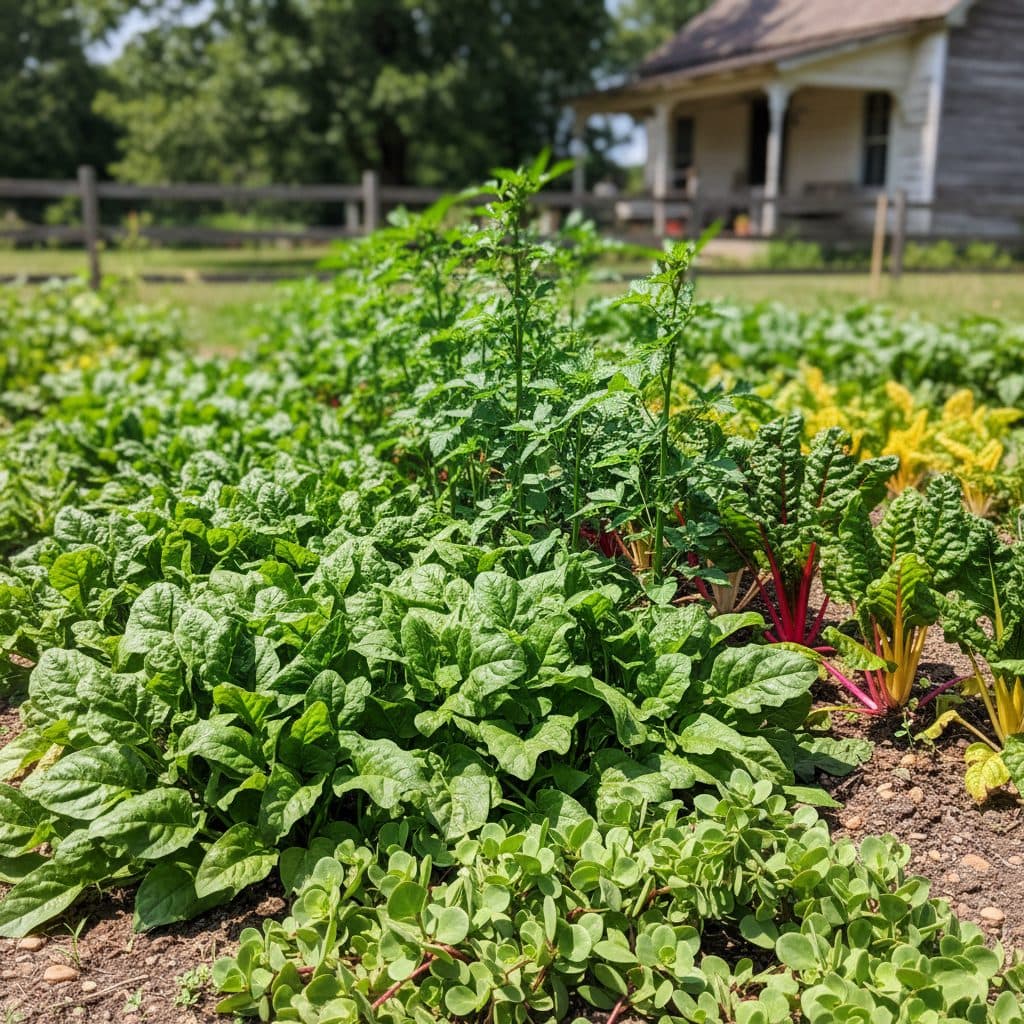
Key takeaways
- Many common greens bolt at temperatures above 75°F, but specific varieties thrive in heat.
- New Zealand spinach (Tetragonia tetragonioides) tolerates temperatures up to 90°F and beyond.
- Molokhia (Corchorus olitorius) prefers sustained heat above 80°F, making it ideal for southern US states.
- Swiss chard (Beta vulgaris subsp. cicla) offers a long harvest window, enduring temperatures up to 95°F.
- Purslane (Portulaca oleracea) is a succulent, drought-tolerant green that grows well in poor soil and high heat.
- Effective water management and soil health, including 3-5% organic matter, support summer resilience.
Quick answer: New Zealand spinach, molokhia, Swiss chard, and purslane are four greens that thrive in 90°F summer heat across US gardens. These varieties are adapted to high temperatures, drought, and even poor soil conditions.
For many gardeners in regions like USDA zone 7 and higher, the arrival of summer often signals the end of leafy green harvests. Traditional cool-season crops like spinach and lettuce tend to bolt—send up a flower stalk and become bitter—once temperatures consistently climb above 75°F. This can leave a significant gap in fresh, home-grown produce during the hottest months, typically from June through August across much of the United States. However, a different class of greens exists, perfectly adapted to the challenges of intense heat, drought, and even less-than-ideal soil conditions.
Understanding how plants manage thermal stress helps with summer gardening, since steady-periodic heat conduction principles influence soil and plant temperatures [1]. This article covers four resilient greens: New Zealand spinach, molokhia, Swiss chard, and purslane. They tolerate, and often prefer, the summer sun, so gardeners can maintain a continuous supply of fresh, nutritious leaves. By selecting the right species and implementing smart growing practices, such as maintaining 3-5 inches of mulch, you can extend your harvest well into the 90°F days of summer.
New Zealand spinach: a sprawling summer survivor
New Zealand spinach (Tetragonia tetragonioides) is not a true spinach, but its heat tolerance makes it a valuable substitute when traditional spinach bolts. This sprawling plant, native to Australia and New Zealand, thrives in full sun and temperatures consistently above 80°F, often continuing to produce well into the 90s. Unlike the specific thermal dynamics of a bolt underhead during tightening [4], New Zealand spinach’s biological mechanisms are adapted to high thermal loads, preventing premature flowering. It can be direct-sown after the last frost, typically in late May in USDA zone 6, with seeds germinating in 10-20 days.
planting and care for continuous harvest
To ensure a steady supply, plant seeds one-half inch deep and 6 inches apart in rows 18-24 inches apart. Once established, New Zealand spinach requires minimal care, though consistent moisture helps maximize leaf production, especially during dry spells; aim for one inch of water per week. The plant grows as a low-lying bush, spreading up to 3 feet wide, and its succulent leaves and stems are harvested by pinching off the tips, encouraging more bushy growth. Harvest can begin in 50-70 days from seeding, yielding up to two pounds of greens per plant over a season. This plant is particularly resilient in sandy or poor soils, common in coastal regions of the US.
- Plant seeds one-half inch deep in late spring.
- Space plants 6 inches apart in rows 2 feet wide.
- Provide one inch of water weekly during dry periods.
- Harvest by pinching off the top 4-6 inches of growth.
- Expect first harvest in 50-70 days after planting.
Molokhia: the heat-loving egyptian green
Molokhia (*Corchorus olitorius*), also known as Egyptian spinach or jute mallow, is a powerhouse green that truly shines in hot weather. Originating from tropical and subtropical regions, molokhia thrives in sustained temperatures above 80°F, making it an excellent choice for southern states like Florida and Texas, where summer temperatures frequently exceed 95°F. Unlike many common greens that bolt at 75°F, molokhia’s growth accelerates with heat, producing abundant, mucilaginous leaves. It prefers rich, well-drained soil with a pH between 6.0 and 6.8, and benefits from a soil moisture meter to ensure consistent hydration.
cultivating molokhia for peak summer production
Molokhia seeds can be slow to germinate; soaking them in warm water for 24 hours prior to planting can improve germination rates, which typically occur within 7-14 days. Plant seeds one-quarter inch deep and 4-6 inches apart, thinning to 8-12 inches between plants once seedlings are 3 inches tall. For optimal growth and a yield of up to 3 pounds per plant, provide consistent moisture and a balanced fertilizer every three to four weeks. The plant can reach heights of 3-6 feet, and leaves are ready for harvest in 40-60 days. Regular harvesting of the top 6-8 inches of growth encourages branching and higher yields, providing fresh greens throughout the summer and into early fall in USDA zone 8.
- Soak seeds for 24 hours to improve germination within 7-14 days.
- Plant one-quarter inch deep, spacing 8-12 inches apart.
- Fertilize every three to four weeks for optimal growth.
- Harvest top 6-8 inches of growth every 2-3 weeks.
- Expect first harvest in 40-60 days from planting.
Swiss chard: colorful and resilient
Swiss chard (*Beta vulgaris subsp. cicla*) is a versatile leafy green that stands out for its vibrant stems and its remarkable tolerance to a wide range of temperatures. While it prefers cooler weather, Swiss chard can endure summer temperatures up to 95°F without bolting, making it a reliable choice for summer harvests even in hot climates like those found in USDA zone 9. Its deep taproot helps it access water, contributing to its drought resilience. The USDA Natural Resources Conservation Service [6] notes that deep root systems matter for plant survival in varied soil conditions.
maintaining vigorous chard through summer
Plant Swiss chard seeds one-half inch deep and 2-4 inches apart, thinning to 6-12 inches between plants for mature size. It thrives in full sun but can benefit from some afternoon shade in regions where temperatures routinely exceed 90°F. Consistent watering, about one inch per week, is essential to keep leaves tender and prevent bitterness. Mulching with 2-3 inches of straw or wood chips helps conserve soil moisture and regulate soil temperature. Harvest outer leaves when they reach 6-8 inches long, leaving the inner leaves to continue growing. This cut-and-come-again method can provide continuous harvests for 60-70 days, often extending from spring through fall in many US gardens. Learn more about cut-and-come-again harvesting for greens.
- Plant seeds one-half inch deep, 2-4 inches apart.
- Thin seedlings to 6-12 inches for mature growth.
- Provide one inch of water weekly to prevent bitterness.
- Apply 2-3 inches of mulch to conserve moisture.
- Harvest outer leaves when 6-8 inches long.
Purslane: the drought-proof edible weed
Purslane (Portulaca oleracea) is often considered a weed, but this succulent plant is a highly nutritious and incredibly resilient summer green. It thrives in hot, dry conditions and poor soil, making it an ideal choice for challenging garden spots or for gardeners seeking a truly low-maintenance crop. Purslane is commonly found growing wild in disturbed soils across all USDA zones, particularly in areas with full sun exposure and temperatures exceeding 85°F. Its thick, fleshy leaves and stems allow it to store water, providing exceptional drought tolerance. Discover more about purslane’s benefits.
harvesting and utilizing this resilient succulent
Purslane can be direct-sown in spring after the last frost, or it can often be found growing wild. Seeds are tiny, so simply scatter them over prepared soil and lightly rake them in, or cover with one-eighth inch of soil. Germination usually occurs within 7-14 days. Once established, purslane requires almost no care, tolerating long periods without rain. It can produce up to 2.5 pounds of edible greens per square foot in ideal conditions, providing a continuous harvest from early summer until the first hard frost. Harvest by pinching off stems and leaves, or by cutting entire plants back to one inch above the ground; new growth will quickly emerge, providing multiple harvests over 60-90 days. It is important to harvest before it flowers to prevent self-seeding, which can lead to it becoming pervasive in the garden.
- Scatter tiny seeds over soil or cover with one-eighth inch.
- Germination typically occurs within 7-14 days.
- Requires minimal watering once established.
- Harvest stems and leaves before flowering.
- Expect continuous harvest for 60-90 days.
General strategies for summer green success
Beyond selecting heat-tolerant varieties, several general gardening practices can significantly improve your success with summer greens. Maintaining healthy soil structure, with at least 3% organic matter, enhances water retention and nutrient availability, which are critical when temperatures climb above 85°F. Radial heat flow in spherical coordinates [3] illustrates how soil temperatures can fluctuate, which is why mulch helps stabilize temperature. Incorporating compost annually can improve soil tilth and microbial activity, which supports plant growth even in challenging conditions. Consider using a soil moisture meter to precisely monitor water levels.
water management and microclimates
Efficient water management is paramount. Deep, infrequent watering encourages deeper root growth, making plants more resilient to drought periods. Aim for one deep watering session per week, providing one to two inches of water, rather than shallow daily sprinkles. Creating microclimates can also help; planting taller crops like corn or sunflowers on the west side of your greens can provide afternoon shade, reducing heat stress when temperatures peak at 90-95°F. Using row covers with 30-50% shade cloth can also reduce leaf temperatures by 10-15°F, preventing scorching and extending the harvest of even moderately heat-tolerant greens. The USDA Natural Resources Conservation Service [6] provides regional data on soil moisture and evaporation rates, which can inform watering schedules for specific US locations.
- Maintain soil with at least 3% organic matter.
- Water deeply and infrequently, one to two inches per week.
- Use 2-4 inches of mulch to conserve moisture and regulate temperature.
- Create afternoon shade with taller plants or 30-50% shade cloth.
- Monitor soil moisture closely with a dedicated tool.
Comparison of Heat-Tolerant Greens for US Gardens
Green | Max Temp Tolerance | Days to Harvest | Drought Tolerance | Growth Habit |
|---|---|---|---|---|
New Zealand Spinach | 90°F+ | 50-70 days | Good | Sprawling, 3 ft wide |
Molokhia | 80°F+ | 40-60 days | Moderate | Upright, 3-6 ft tall |
Swiss Chard | 95°F | 60-70 days | Good | Upright, 1-2 ft tall |
Purslane | 85°F+ | 60-90 days | Excellent | Low-lying, spreading |
Soil Organic Matter: Maintaining soil with at least 3% organic matter can increase water holding capacity by up to 20% in sandy soils, which matters for summer resilience.
Shade Cloth Benefit: Using 30% shade cloth can reduce leaf surface temperatures by 10-15°F on days exceeding 90°F, preventing sunscald on sensitive greens.
Frequently asked questions
What temperature causes most common greens to bolt?
Most common cool-season greens, such as lettuce and traditional spinach, tend to bolt and become bitter when ambient temperatures consistently rise above 75°F. This usually occurs from late spring through early fall in many US regions.
How much water do heat-tolerant greens need in summer?
While heat-tolerant, most greens benefit from consistent moisture. Aim for one to two inches of water per week, delivered through deep, infrequent watering sessions to encourage robust root systems, especially when temperatures exceed 85°F.
Can I grow these greens in containers?
Yes, New Zealand spinach, molokhia, Swiss chard, and purslane can all be grown successfully in containers. Ensure containers are at least 10-12 inches deep and wide to accommodate root growth, and provide consistent moisture as container plants dry out faster, sometimes requiring daily watering in 90°F heat.
How do I prevent purslane from taking over my garden?
To manage purslane’s prolific self-seeding, harvest the plant regularly by pinching off stems and leaves, or cutting back entire plants to one inch above the ground, before it has a chance to flower and set seed. A single plant can produce thousands of tiny seeds.
What are the best soil conditions for these summer greens?
These greens generally prefer well-drained soil with a pH between 6.0 and 7.0. Incorporating 2-3 inches of compost or other organic matter annually will improve soil structure, nutrient availability, and water retention, which are vital for plant health in summer temperatures above 80°F.
References
- Steady-Periodic Heat Conduction (2010). Steady-Periodic Heat Conduction.
- Numbering System in Heat Conduction (2010). Numbering System in Heat Conduction.
- Radial Heat Flow in Spherical Coordinates (2010). Radial Heat Flow in Spherical Coordinates.
- A Numerical Investigation of Bolt Underhead Temperature Evolution During Tightening (2007). A Numerical Investigation of Bolt Underhead Temperature Evolution During Tightening.
- Rectangular Coordinates (2010). Rectangular Coordinates.
- USDA Natural Resources Conservation Service (2024). USDA Natural Resources Conservation Service.