Key takeaways
- Nitrogen-fixing plants, primarily legumes, host bacteria that convert atmospheric nitrogen into a usable form for plants, enriching soil fertility.
- Common nitrogen fixers like clover, hairy vetch, field peas, and lupine offer diverse benefits, including erosion control, weed suppression, and biomass accumulation.
- Integrating these plants into permaculture designs, such as food forests, plant guilds, and swales, improves ecosystem resilience and reduces the need for synthetic fertilizers.
- Selecting the right species depends on your USDA zone, soil type, and specific garden goals, with options available for cold-hardy regions and poor soils.
- Proper management, including timely termination and chop-and-drop methods, maximizes nitrogen transfer to subsequent crops and builds soil organic matter.
- These plants contribute significantly to water infiltration and soil structure, helping manage stormwater runoff in various landscapes.
Quick answer: Nitrogen-fixing plants, primarily legumes, host bacteria that convert atmospheric nitrogen into a usable form, enriching soil fertility. This process improves ecosystem resilience and reduces the need for synthetic fertilizers in gardens.
In the humid subtropical climate of USDA zone 8b in Georgia, many growers understand the constant battle to maintain soil fertility. Synthetic nitrogen fertilizers, while effective, carry both financial and environmental costs. An alternative rooted in ecological principles uses nitrogen-fixing plants. From clover to lupines, these plants pull nitrogen from the air and make it available in the soil, enriching the growing environment for other plants without manufactured inputs.
This approach is central to permaculture design, where the goal is to create self-sustaining, productive ecosystems. By integrating nitrogen-fixing groundcovers and cover crops into food forests, plant guilds, and around swales, we can build soil health, suppress weeds, and reduce erosion. For instance, a single acre of crimson clover can fix between 70 and 150 pounds of nitrogen per year, a significant contribution that directly benefits neighboring fruit trees or vegetable beds [1]. Understanding how to select and manage these plants is a fundamental step toward a more resilient and productive garden system across the varied climates of the United States.
the science of nitrogen fixation in the garden
Nitrogen is an essential nutrient for plant growth, but the vast majority of it in the atmosphere (about 78%) is in a form plants cannot directly use. This is where nitrogen-fixing bacteria, primarily rhizobia, come into play. These microscopic organisms form a symbiotic relationship with certain plants, mainly legumes, residing in specialized nodules on their roots. Within these nodules, they convert atmospheric nitrogen gas (N₂) into ammonia (NH₃), a form that plants can readily absorb and utilize for building proteins and DNA [2]. This biological process is a cornerstone of natural fertility in many ecosystems.
microbial partners for soil health
Beyond rhizobia, other free-living bacteria like Azotobacter and Azospirillum also contribute to nitrogen fixation in the soil, benefiting a wider range of crops, including non-legumes [4]. Inoculating cereals with Azospirillum has produced modest growth and nutrient-uptake responses in trials, though results are inconsistent across soils and seasons. Understanding these microbial interactions allows us to select appropriate inoculants when planting legumes in soils that may lack the specific rhizobia strains. A healthy soil microbiome, supported by diverse plant life, can significantly reduce the need for external nitrogen inputs, potentially cutting fertilizer costs over several seasons. This biological process is far more efficient than industrial nitrogen production, which consumes vast amounts of fossil fuels.
- Rhizobia bacteria: Form root nodules on legumes, converting atmospheric N₂ to plant-available ammonia.
- Symbiotic relationship: Plants provide sugars to bacteria; bacteria provide nitrogen to plants.
- Non-legume benefits: Free-living bacteria like Azotobacter fix nitrogen, aiding crops like cereals [3].
- Soil organic matter: Nitrogen fixers contribute biomass that slowly builds soil organic matter.
clover: a versatile groundcover for diverse climates
Clover, particularly white clover (Trifolium repens) and red clover (Trifolium pratense), is a widely recognized nitrogen-fixing groundcover across the United States. White clover, a perennial, spreads by stolons and can tolerate mowing, making it an excellent choice for pathways, orchards, and as a living mulch in vegetable beds. It thrives in USDA zones 3 through 9, often fixing 50 to 100 pounds of nitrogen per acre annually. Red clover, a biennial, grows taller (up to 20 inches) and produces more biomass, which suits chop-and-drop mulching around larger plants like fruit trees in a food forest setting.
selecting the right clover species
Crimson clover (Trifolium incarnatum), an annual, is particularly popular in the Southeast (USDA zones 6-9) for its rapid growth and beautiful flowers. Planted in fall, it provides winter cover and fixes substantial nitrogen (up to 150 pounds per acre) before dying back in late spring, leaving a rich mulch. For colder regions, like USDA zone 4 in Minnesota, Alsike clover (Trifolium hybridum) offers cold hardiness and tolerates wetter soils than other clovers. Do not sow it where horses graze — alsike is linked to photosensitization and liver disease in horses. When establishing clover, ensure good seed-to-soil contact and consider inoculating seeds with the appropriate rhizobia for optimal nitrogen fixation, especially in new plantings. A seeding rate of 10-15 pounds per acre is common for many clover varieties. You can learn more about specific cover crop choices in Cover crops for the home garden.
- White Clover: Perennial, low-growing, good for paths and orchards, fixes 50-100 lbs N/acre.
- Red Clover: Biennial, taller, good for biomass and chop-and-drop, fixes 70-150 lbs N/acre.
- Crimson Clover: Annual, rapid growth, excellent winter cover in warmer zones, fixes up to 150 lbs N/acre.
- Alsike Clover: Cold-hardy, tolerates wet soils, suitable for USDA zones 3-7; not for horse pasture.
hairy vetch and field peas: annual crops for soil building
For gardeners in regions with cold winters, like USDA zone 5 in upstate New York, hairy vetch (Vicia villosa) and field peas (Pisum sativum) are invaluable annual cover crops. Hairy vetch is exceptionally cold-hardy, overwintering reliably through northern winters when it is established early enough to make good root growth before hard frost, which makes it an excellent choice for fall planting. It establishes quickly and produces a substantial amount of biomass, contributing 80 to 150 pounds of nitrogen per acre when terminated at flowering. Its sprawling growth habit also makes it an effective weed suppressor, particularly against winter annuals.
timing and termination for maximum benefit
Field peas, while less cold-hardy than hairy vetch, are also fast-growing and can fix 50 to 100 pounds of nitrogen per acre. They are often planted in early spring or late summer in USDA zones 4-7, providing quick cover before a main crop or after an early harvest. Both hairy vetch and field peas are excellent for chop-and-drop techniques in permaculture gardening, where their biomass is cut down and left on the soil surface to decompose, feeding the soil food web. Timely termination (typically at 50% bloom) maximizes nitrogen transfer and prevents them from going to seed, which can turn them into weeds. For detailed information on hairy vetch, see Hairy Vetch.
- Hairy Vetch: Cold-hardy annual, fixes 80-150 lbs N/acre, excellent weed suppressor. Not a grazing crop — it can cause a sometimes fatal systemic disease in cattle and horses, and its hard seed volunteers for years.
- Field Peas: Fast-growing annual, fixes 50-100 lbs N/acre, good for quick cover.
- Chop-and-Drop: Cut plants at flowering and leave on soil surface to return nutrients.
- Timing: Plant hairy vetch in fall (USDA zones 5-9), field peas in early spring or late summer (USDA zones 4-7).
lupine: improving poor soils and supporting pollinators
Lupines (Lupinus spp.) are effective nitrogen-fixing plants, particularly valuable for improving poorer, acidic, or sandy soils where other legumes might struggle. Species like white lupine (Lupinus albus) and blue lupine (Lupinus angustifolius) are commonly used as cover crops in agricultural settings, capable of fixing up to 120 pounds of nitrogen per acre. Their deep taproots also help break up compacted soil and scavenge nutrients from deeper soil layers, bringing them to the surface. This makes them excellent candidates for initial soil remediation in degraded areas or new garden plots, particularly in regions like the sandy coastal plains of North Carolina (USDA zone 7).
integrating lupine into permaculture systems
Beyond their soil-building capabilities, lupines produce striking flower spikes that are highly attractive to pollinators, adding a beneficial aesthetic and ecological layer to a permaculture design. They can be incorporated into the understory of young food forests, especially where soil organic matter is low, or planted on the edges of swales to stabilize banks and improve water infiltration. Lupines are not a safe grazing plant: they carry quinolizidine alkaloids, concentrated in the seed and pods, and several western Lupinus species also carry anagyrine, which causes crooked calf disease — permanent skeletal deformities in calves — when pregnant cattle graze them during a narrow window of gestation, at intakes well short of a lethal dose. Keep stock off lupine stands, and do not eat seed from ornamental or cover-crop lupines: only low-alkaloid sweet lupin cultivars are grown for food. For home gardens, the focus is on their soil benefits and pollinator support. They generally prefer full sun and well-drained soil, tolerating pH levels between 5.5 and 7.0. For cold-hardy options, consider species adapted to Cold-Hardy Nitrogen Fixers for Zones 2-6.
- Soil Improvement: Deep taproots break compaction and improve nutrient cycling in poor soils.
- Nitrogen Fixation: Can fix up to 120 lbs of nitrogen per acre, especially in acidic or sandy conditions.
- Pollinator Support: Attractive flowers provide nectar and pollen for bees and other beneficial insects.
- Permaculture Role: Suitable for initial soil building, food forest understories, and swale stabilization.
integrating nitrogen fixers into permaculture design
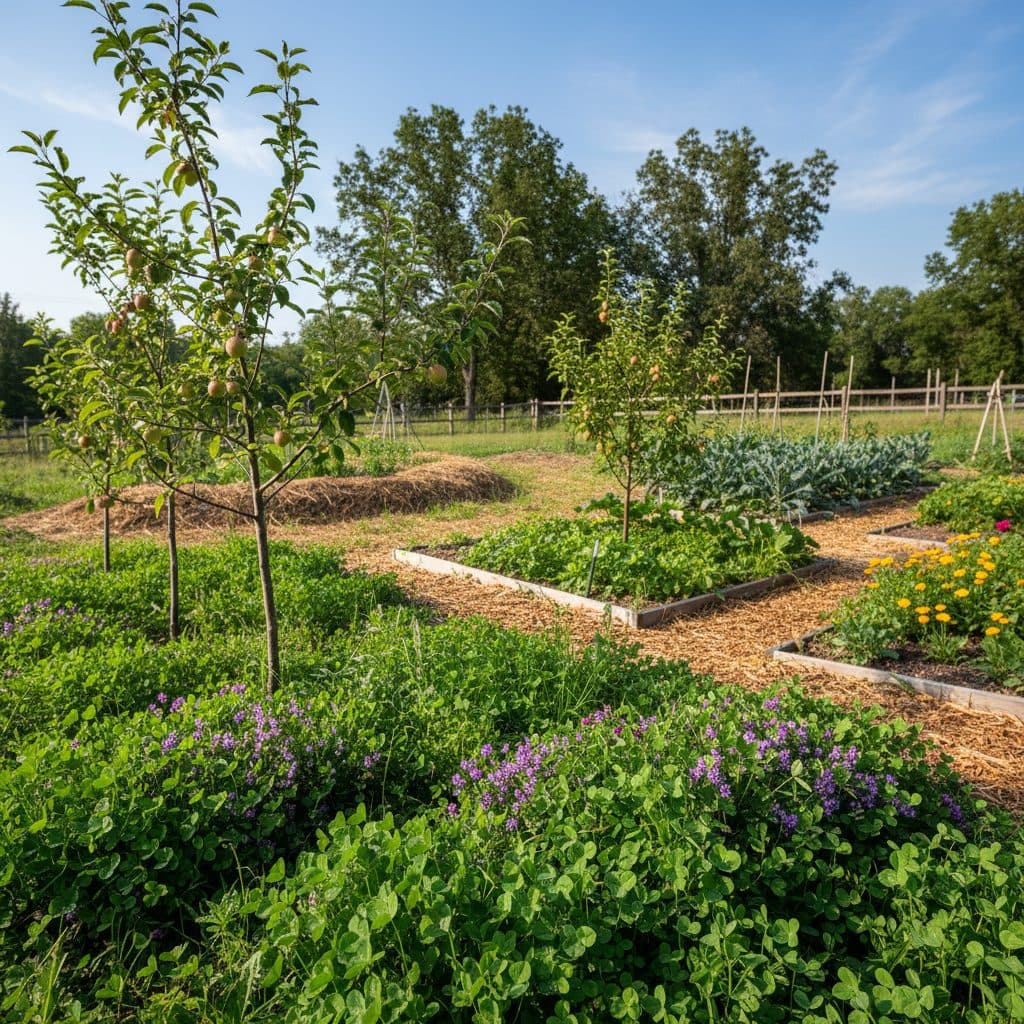
Nitrogen-fixing groundcovers and cover crops work effectively when integrated into a permaculture design. In a food forest, for example, clover or low-growing vetch can serve as a living mulch around fruit trees, suppressing weeds and providing a continuous supply of nitrogen to the tree roots. This creates a beneficial plant guild, where each species supports the others. On a larger scale, planting nitrogen-fixing species along the contours of swales helps stabilize soil, prevent erosion, and improve water infiltration, especially after the heavy winter rains common west of the Cascades in the Pacific Northwest.
strategic placement for maximum impact
In permaculture zone planning, Zone 1 (the most frequently visited area) can use annual field peas rotated with vegetables, while Zone 2 (an orchard) can host a permanent white clover groundcover. For more remote Zone 3 areas, where larger trees might be planted, perennial lupines or a nitrogen-fixing tree could be established to build soil over decades. If you are considering black locust, check your state noxious weed list first — it is listed as invasive or restricted in a number of states, it suckers aggressively from the roots, cutting it makes the suckering worse, and its bark, foliage, and seeds are toxic to livestock, especially horses. When designing your garden, a careful site analysis, as discussed in Permaculture design: how to read a site before you plant it, will guide the selection of appropriate species. A mix of annual and perennial nitrogen fixers provides continuous benefits throughout the year, supporting a resilient planting that requires fewer external inputs.
- Food Forests: Living mulches of clover or vetch around trees create beneficial plant guilds.
- Swales: Nitrogen fixers stabilize banks, reduce erosion, and improve water absorption.
- Zones: Match species to intensity of use: annuals for Zone 1, perennials for Zone 2 and beyond.
- Chop-and-Drop: Regularly cut and drop biomass to cycle nutrients and build soil organic matter.
Nitrogen-fixing groundcovers & cover crops comparison
Plant | Type | USDA zones | Nitrogen fixed (lbs/acre/year) | Key benefits |
|---|---|---|---|---|
White Clover | Perennial | 3-9 | 50-100 | Living mulch, weed suppression, tolerates mowing |
Red Clover | Biennial | 3-9 | 70-150 | Biomass, chop-and-drop, forage |
Crimson Clover | Annual | 6-9 | 70-150 | Rapid growth, winter cover, attracts pollinators |
Hairy Vetch | Annual | 5-9 | 80-150 | Cold-hardy, excellent weed suppression, high biomass |
Field Peas | Annual | 4-7 | 50-100 | Fast-growing, quick cover, early season nitrogen |
Lupine | Annual/Perennial | 4-9 | 80-120 | Improves poor/sandy soils, deep taproot, pollinator support |
Nitrogen Contribution: A single acre of crimson clover can fix between 70 and 150 pounds of nitrogen per year, significantly enriching soil fertility [1].
Soil Moisture Retention: Cover crops, including nitrogen fixers, build soil organic matter over years, and soil that holds more organic matter holds more plant-available water.
Frequently asked questions
What are the primary benefits of using nitrogen-fixing groundcovers?
Nitrogen-fixing groundcovers offer multiple benefits, including enriching soil with plant-available nitrogen, suppressing weeds by competing for light and water, and reducing soil erosion. They can contribute 50 to 150 pounds of nitrogen per acre annually, significantly reducing the need for synthetic fertilizers.
How do I choose the right nitrogen-fixing plant for my USDA zone?
Selecting the right plant depends on your USDA zone’s climate, soil type, and specific garden goals. For instance, cold-hardy hairy vetch is suitable for zones 5-9, while crimson clover thrives in warmer zones 6-9. Always check a plant’s hardiness and soil preferences before planting.
Can nitrogen-fixing cover crops help with weed control?
Yes, many nitrogen-fixing cover crops, such as hairy vetch and dense stands of clover, are excellent at suppressing weeds. They establish quickly, outcompeting weeds for light, water, and nutrients, and a dense stand can substantially reduce weed pressure.
What is ‘chop-and-drop’ and how does it benefit the soil?
Chop-and-drop is a permaculture technique where cover crops are cut down at their peak biomass (often at 50% bloom) and left on the soil surface to decompose. This returns organic matter and fixed nitrogen directly to the soil, feeding the soil food web and improving soil structure.
Are there any nitrogen-fixing plants suitable for very poor or sandy soils?
Lupines are particularly well-suited for improving poor, acidic, or sandy soils where other legumes might struggle. Their deep taproots break up compaction and scavenge nutrients, and they can fix up to 120 pounds of nitrogen per acre in these challenging conditions, making them ideal for initial soil remediation.
How much nitrogen can these plants add to my garden?
The amount of nitrogen added varies significantly by species and growing conditions, but common figures range from 50 to 150 pounds per acre per year. For example, red clover can contribute up to 150 pounds, while field peas typically add 50-100 pounds, providing a substantial natural fertility boost.
References
- Cover Crops and Soil Nitrogen Cycling (2021). Cover Crops and Soil Nitrogen Cycling.
- Ecology of Nitrogen-Fixing Bacteria for Sustainable Development of Non-legume Crops (2022). Ecology of Nitrogen-Fixing Bacteria for Sustainable Development of Non-legume Crops.
- Interactions of Nitrogen-Fixing Bacteria and Cereal Crops: An Important Dimension (2022). Interactions of Nitrogen-Fixing Bacteria and Cereal Crops: An Important Dimension.
- Mechanisms and applications of nitrogen fixing Azotobacter and Azospirillum in horticultural crops (2024). Mechanisms and applications of nitrogen fixing Azotobacter and Azospirillum in horticultural crops.