Key takeaways
- Leaf curl and roll are often early signs of heat stress, especially when temperatures exceed 85°F for several hours.
- Bronzing indicates severe, prolonged heat and drought damage, particularly in sensitive plants like basil and lettuce.
- Good soil health, including a minimum of 3% organic matter, significantly improves plant resilience to heat and drought.
- Consistent moisture monitoring with a soil moisture meter can prevent water stress during heatwaves, helping maintain 1-2 inches of water weekly.
- Shade cloth can reduce leaf temperatures by 10-15°F, protecting plants during peak summer heat in zones 7 and higher.
- Distinguish heat stress from viral diseases by observing symptom patterns, new growth, and the presence of insect vectors.
Quick answer: Leaf curl, leaf roll, and bronzing are early indicators of heat stress in garden plants, especially when temperatures exceed 85°F. Recognizing these signs and using strategies like improving soil health, consistent watering, and shade cloth can help plants recover.
In many parts of the United States, from the arid Southwest to the humid Southeast, gardeners are facing increasingly intense summer heat. For instance, parts of Arizona and Texas regularly experience temperatures above 100°F for weeks at a time during July and August. Understanding plant distress signals helps maintain a productive garden. When temperatures climb consistently above 85°F, leaf curl, leaf roll, and bronzing indicate environmental stress.
These visual cues are physiological responses plants use to protect themselves from excessive heat and insufficient moisture. Interpreting these signals quickly helps prevent crop loss, especially for heat-sensitive vegetables like tomatoes, peppers, and beans. Recognizing these stress signals and applying practical strategies builds garden resilience during extreme heat.
Understanding leaf curl and leaf roll as early warnings
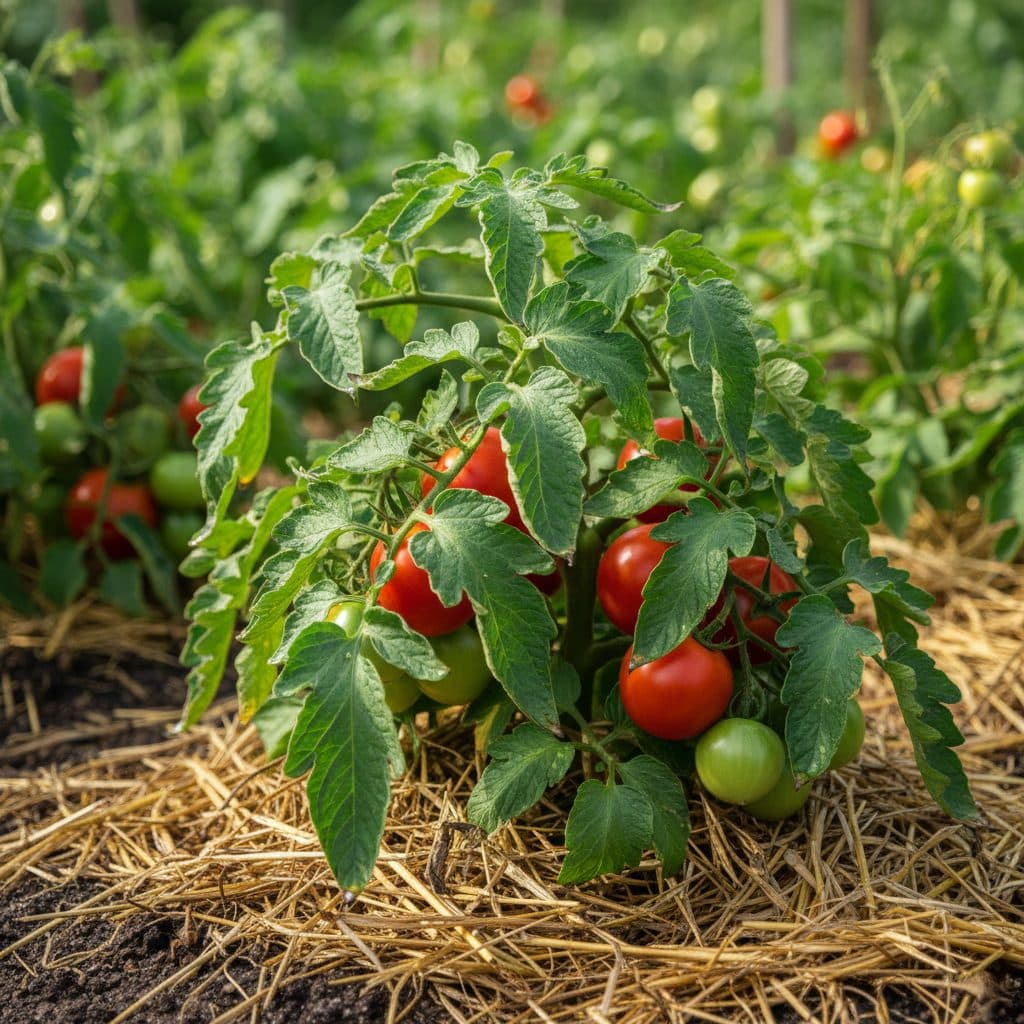
When your plants’ leaves begin to curl or roll inwards, it is often their first line of defense against high temperatures and water loss. This physiological response, common in plants like tomatoes (Solanum lycopersicum) and peppers (Capsicum annuum), reduces the leaf surface area exposed to direct sunlight, thereby minimizing transpiration and conserving water. For example, during a heatwave in USDA zone 7 where ambient temperatures reach 90°F, a tomato plant might curl its leaves tightly within a few hours to reduce water evaporation by up to 30%.
It is important to distinguish heat-induced leaf curl from symptoms caused by viral diseases. Viral infections, such as Tomato Yellow Leaf Curl Virus (TYLCV) [1] or Cotton Leaf Curl Virus [3], typically cause permanent deformation, stunting, and yellowing of veins, affecting new growth as well. Heat-stressed leaves, however, often recover their normal shape once cooler temperatures return, or after a deep watering. Observing the entire plant and checking for pest presence, like whiteflies which transmit TYLCV, can provide additional clues. A soil moisture meter can confirm if the soil is dry, indicating water stress is a primary factor. For instance, if the meter reads below a 3 on a 1-10 scale, water is likely insufficient.
Differentiating heat stress from disease
- Symptom onset: Heat stress appears rapidly during high temperatures, often above 85°F, and can reverse with cooler conditions.
- New growth: New leaves on heat-stressed plants are typically normal once conditions improve; viral infections often deform new growth.
- Pattern: Heat stress usually affects sun-exposed leaves first; viral diseases can be more systemic.
- Associated pests: Check for aphids or whiteflies, which transmit many leaf curl viruses like those found in raspberries [2], [4].
- Soil moisture: Use a soil moisture meter to confirm if water availability is low, often below 40% saturation.
Identifying bronzing and scorch
Bronzing and scorch represent a more severe stage of heat and drought stress, indicating significant cellular damage. When leaves turn a coppery, reddish-brown, or bronze color, it means the plant’s photosynthetic machinery is breaking down, often due to prolonged exposure to temperatures above 95°F combined with insufficient water. This is particularly common in broad-leafed plants like basil (Ocimum basilicum) and lettuce (Lactuca sativa), which have a high surface area for transpiration and are sensitive to direct sun. In a garden in central California during a dry summer, basil plants can show bronzing within a single afternoon if soil moisture drops below 30%.
Scorching, characterized by crispy, brown edges or spots on leaves, is often the result of direct sun exposure on already stressed tissue. This is frequently seen on the outer leaves of corn (Zea mays) or beans (Phaseolus vulgaris) during peak midday sun when temperatures reach 100°F or higher. While some bronzing can be a natural response in certain plants, widespread or rapid bronzing across multiple leaves signals acute distress. Immediate action is required to prevent irreversible damage and plant death. Ensuring adequate soil organic carbon levels, ideally above 3%, helps the soil retain moisture and lessens these severe symptoms.
Signs of severe heat damage
- Color change: Leaves develop a reddish-brown or coppery hue, often uniformly across the leaf blade.
- Texture: Affected leaves become brittle or crispy, especially along the margins.
- Location: Often appears on the most exposed leaves or the entire plant if stress is prolonged, particularly in USDA zones 8-10.
- Growth cessation: The plant stops producing new growth, or new growth is severely stunted.
- Wilting: Even after watering, the plant may struggle to regain turgor, indicating root damage.
Building soil resilience for heat and drought
The foundation of a heat-resilient garden lies beneath the surface, in healthy soil. Soil rich in organic matter acts like a sponge, holding significantly more water and nutrients than depleted soil. For every 1% increase in soil organic matter, the soil’s water-holding capacity can increase by 20,000 to 27,000 gallons per acre, according to the USDA Natural Resources Conservation Service [6]. This means a garden bed with 5% organic matter can hold substantially more water than one with 1% organic matter, providing a buffer during dry spells and heatwaves in regions like the Great Plains or California’s Central Valley.
Incorporating compost, aged manure, or cover crops can steadily build your soil’s organic carbon content. Aim for at least 3% organic matter in your garden beds; many productive soils in the Midwest achieve 4-6%. Regular additions of organic amendments, such as a 1-inch layer of compost annually, will improve soil structure, aeration, and microbial activity. This helps retain moisture and makes nutrients more available to plants, supporting stronger root systems that can better withstand stress. You can learn more about assessing your soil by reading soil organic-carbon numbers.
Strategies for improving soil health
- Add compost: Apply a 1-2 inch layer of finished compost to garden beds every spring and fall.
- Mulch heavily: Use 3-4 inches of organic mulch (straw, wood chips) to conserve soil moisture and regulate temperature.
- Plant cover crops: Grow legumes or grains in off-season to add biomass and protect soil from erosion.
- Minimize tillage: Reduce soil disturbance to preserve soil structure and fungal networks.
- Incorporate organic fertilizers: Use slow-release options like fermented soybean meal to feed soil microbes and plants.
Immediate interventions and monitoring
When heat stress symptoms appear, timely intervention is necessary. The most immediate step is to provide adequate water. Deep, infrequent watering is generally more effective than shallow, frequent watering, as it encourages roots to grow deeper into the soil where moisture is more consistent. During a 90°F heatwave in a raised bed in Virginia, a tomato plant might need 1-2 gallons of water daily, applied slowly at the base. Use a soil moisture meter to check moisture levels at a depth of 4-6 inches; aim to keep the soil consistently moist but not waterlogged.
Beyond watering, providing temporary shade can dramatically reduce plant stress. A 30-50% shade cloth draped over a simple frame can lower leaf temperatures by 10-15°F, protecting sensitive plants like lettuce, spinach, and even young fruit trees in USDA zones 8-10 during the hottest parts of the day (11 AM to 4 PM). This simple measure can prevent bronzing and scorching, allowing plants to continue photosynthesis more efficiently. Consider installing shade cloth when temperatures are forecast to exceed 90°F for multiple days, or if you notice early signs of stress. For plants in containers, moving them to a shadier location or grouping them together can also help create a cooler microclimate.
Quick actions for stressed plants
- Deep watering: Provide 1-2 inches of water per week, or more during heatwaves, ensuring it penetrates 6-8 inches deep.
- Apply shade: Use 30-50% shade cloth during peak sun hours (11 AM – 4 PM) for sensitive plants.
- Mulch: Replenish mulch layers to 3-4 inches to insulate soil and retain moisture.
- Avoid fertilizing: Do not apply high-nitrogen fertilizers during heat stress, as this can exacerbate water demand.
- Monitor soil: Regularly check soil moisture with a soil moisture meter, aiming for 60-80% saturation.
Long-term garden resilience and plant selection
Building a garden that can withstand increasing heat and drought requires a long-term perspective, starting with plant selection. Opt for heat-tolerant varieties that are well-suited to your specific USDA zone. For instance, in USDA zone 9, certain varieties of tomatoes like ‘Florida 91’ or ‘Heatwave II’ are bred to set fruit in temperatures up to 95°F, unlike more sensitive heirloom varieties. Similarly, consider drought-tolerant herbs like rosemary (Salvia rosmarinus) or lavender (Lavandula angustifolia) instead of water-intensive options for exposed areas.
Creating microclimates within your garden can also improve resilience. Planting taller crops like corn or sunflowers on the south and west sides of your garden can provide natural shade for smaller, more sensitive plants during the hottest parts of the day. Incorporating permanent structures like trellises with climbing vines can also offer shade. Reflective surfaces, such as those found in a reflective indoor grow tent, demonstrate how light management can impact plant health, a principle that can be adapted outdoors. Over time, these thoughtful design choices can reduce the need for intensive interventions and create a more self-sustaining ecosystem in your backyard, even as average summer temperatures rise by 2-3°F over a decade.
Designing for heat resilience
- Choose tolerant varieties: Select vegetables and ornamentals known for heat and drought tolerance in your specific USDA zone.
- Strategic planting: Use taller plants or structures to cast shade on sensitive crops during peak sun hours.
- Windbreaks: Plant hedges or install fences to reduce drying winds, especially in open areas like the Great Plains.
- Water harvesting: Implement rain barrels or swales to capture and store rainwater, providing a reserve during dry periods.
- Perennial focus: Incorporate more native perennials adapted to local climate conditions, reducing annual replanting and water needs.
Distinguishing heat stress from viral leaf curl
Characteristic | Heat Stress | Viral Leaf Curl |
|---|---|---|
Onset | Rapid, during high temperatures (85°F+) | Gradual, can appear anytime |
Recovery | Often recovers with cooler temps/water | Permanent deformation, no recovery |
New Growth | Usually normal after stress subsides | Often stunted, distorted, or yellowed |
Leaf Color | Green, sometimes bronzing/scorch | Often yellowing, especially veins |
Pest Presence | No specific pest link | Often associated with whiteflies, aphids |
Affected Area | Sun-exposed leaves first | Systemic, affects entire plant |
Water Retention: Every 1% increase in soil organic matter can boost water-holding capacity by 20,000 to 27,000 gallons per acre, helping with drought resilience [6].
Temperature Reduction: Using a 30-50% shade cloth can lower leaf temperatures by 10-15°F, protecting sensitive plants during peak summer heat in zones 8-10.
Frequently asked questions
Can leaf curl be caused by too much water?
Yes, overwatering can also cause leaf curl, as roots become waterlogged and cannot absorb oxygen or nutrients efficiently. This often presents as downward curling and yellowing. Always check soil moisture 4-6 inches deep before watering, keeping the soil moist without saturating it.
What temperature is too hot for most garden vegetables?
Most common garden vegetables, such as tomatoes, peppers, and beans, begin to show signs of stress when ambient temperatures consistently exceed 85°F for several hours a day. Fruit set can be significantly reduced above 90°F, and temperatures above 95°F can cause severe damage and yield loss.
How can I tell if my plant is wilting from heat or disease?
Wilting from heat stress typically occurs during the hottest part of the day (1 PM – 5 PM) and often recovers overnight or after watering. Disease-induced wilting, like Fusarium wilt, is usually progressive, starts on one side of the plant, and does not recover with watering, often leading to plant death within 7-10 days.
Is bronzing always a sign of heat stress?
While bronzing is a strong indicator of severe heat and drought stress, it can also be caused by nutrient deficiencies (like phosphorus), certain fungal diseases, or even herbicide drift. However, if it appears rapidly during a heatwave above 95°F, heat stress is the most likely culprit, especially in plants like basil.
How much organic matter should my garden soil have?
For optimal plant health and resilience, garden soil should ideally contain 3% to 5% organic matter. Soils with less than 1% organic matter struggle with water retention and nutrient availability, requiring significantly more irrigation during dry periods in regions like the arid Southwest.
References
- Tomato yellow leaf curl virus (leaf curl). (2021). Tomato yellow leaf curl virus (leaf curl)..
- Raspberry Beta Leaf Curl LuteovirusBeta Leaf Curl Luteovirus (2023). Raspberry Beta Leaf Curl LuteovirusBeta Leaf Curl Luteovirus.
- Cotton leaf curl virus (leaf curl disease of cotton). (2021). Cotton leaf curl virus (leaf curl disease of cotton)..
- Raspberry Alpha Leaf Curl LuteovirusAlpha Leaf Curl Luteovirus (2023). Raspberry Alpha Leaf Curl LuteovirusAlpha Leaf Curl Luteovirus.
- Cotton leaf curl disease complex (leaf curl disease of cotton). (2021). Cotton leaf curl disease complex (leaf curl disease of cotton)..
- USDA Natural Resources Conservation Service (2024). USDA Natural Resources Conservation Service.