Key takeaways
- Succession planting involves staggered planting of crops to ensure continuous harvests throughout the growing season.
- Bush beans mature in 50-60 days, radishes in 21-28 days, and carrots in 60-75 days, allowing for strategic rotation.
- Regular soil testing and amending with compost, aiming for 3-5% organic matter, matters for optimal growth.
- Crop rotation, especially with nitrogen-fixing legumes like beans, improves soil fertility and reduces disease pressure.
- Planting every 2-3 weeks for carrots and beans, and every 7-10 days for radishes, maintains a steady supply.
- Monitor soil temperatures; bush beans thrive at 60-80°F, while radishes prefer 50-70°F for best results.
Quick answer: Succession planting involves staggering crop plantings, such as bush beans, radishes, and carrots, every few weeks to ensure continuous harvests and maximize garden productivity throughout the growing season. This method also improves soil health through strategic crop rotation.
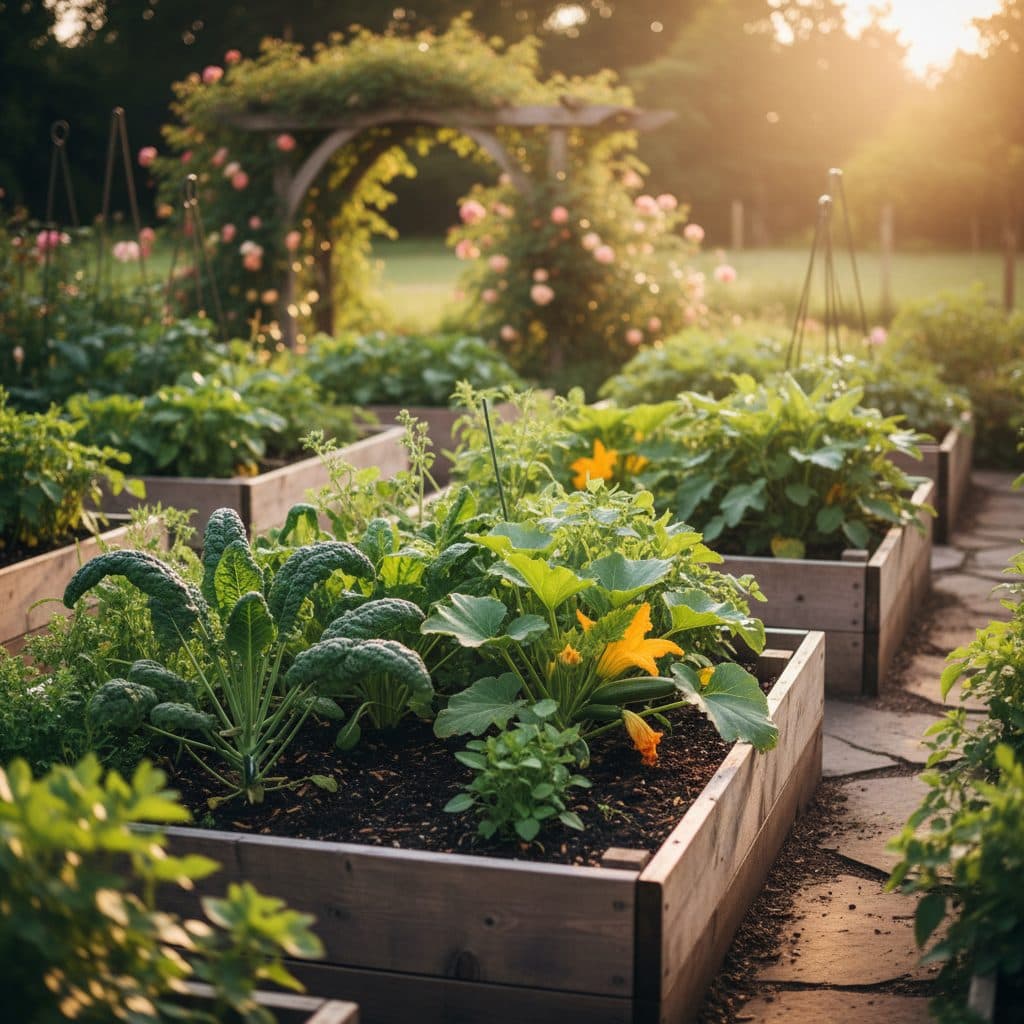
In many US home gardens, from the humid summers of USDA zone 7 in North Carolina to the cooler growing seasons of USDA zone 4 in Minnesota, gardeners often plant their entire crop of a particular vegetable at once. While this approach yields a large harvest, it often results in a glut followed by a scarcity. Succession planting offers a more consistent alternative, allowing for a steady supply of fresh produce from spring through fall rather than one glut and a long gap.
This method focuses on strategic, staggered plantings of quick-maturing crops like radishes, medium-duration crops such as bush beans, and longer-season vegetables like carrots. By understanding the growth cycles and specific needs of these three vegetables, and by integrating a thoughtful crop rotation plan, you can maximize your garden’s productivity and maintain strong soil health across various USDA zones, from the mild winters of zone 9 to the shorter summers of zone 3.
the principles of succession planting: why and how it works
Succession planting is a strategy that maximizes garden space and ensures a continuous harvest, rather than a single large yield. It involves planting smaller batches of vegetables every few weeks, instead of planting all seeds at once. For instance, in a typical USDA zone 6 garden, you might start your first radish planting in early April, then follow with another batch two weeks later. This method is particularly effective for crops with relatively short maturity windows, like radishes which can be ready in 21-28 days, or bush beans that typically mature in 50-60 days.
staggered planting for continuous yield
There are several approaches to succession planting, each suited to different crops and garden sizes. One common method is sequential planting, where you plant a new batch of the same crop every 10 to 20 days. Another is relay planting, where a second crop is planted between rows of a maturing crop, such as planting lettuce between rows of corn that are still growing. This technique keeps beds producing through windows that would otherwise sit empty, which is where the extra output comes from. Regardless of the method, the goal is to avoid periods of overabundance followed by scarcity and keep a consistent supply of fresh vegetables for your kitchen throughout the 120-day growing season typical for many temperate regions. Planning your plantings based on the average last frost date and first fall frost date for your specific USDA zone helps extend your harvest window by several weeks.
- plant small batches every 10-20 days
- rotate crop families to prevent pest buildup
- utilize vertical space with trellises for beans
- amend soil with compost after each harvest
- select varieties with different maturity dates
bush beans: a nitrogen-fixing staple
Bush beans (Phaseolus vulgaris) are an excellent choice for succession planting due to their relatively quick maturity and their ability to enrich the soil. Most bush bean varieties are ready for harvest in 50 to 60 days, making them suitable for multiple plantings within a single growing season, especially in USDA zones 5 through 9. For optimal germination and growth, bush beans require soil temperatures between 60°F and 80°F. Planting seeds 1 inch deep and 3-4 inches apart in rows 18-24 inches apart ensures good air circulation and plant development, yielding several pounds of beans per 10-foot row. For continuous harvests, sow new seeds every 2-3 weeks until about 60 days before the first anticipated fall frost.
cultivating healthy bush bean crops
Bush beans are legumes, meaning they form a symbiotic relationship with soil bacteria that convert atmospheric nitrogen into a form plants can use. This nitrogen fixation contributes to soil fertility, though bush beans are modest fixers and remove much of what they fix in the harvested pods. Turn the vines under at the end of the picking to keep the benefit in the bed rather than in the kitchen. To encourage strong growth and maximize yields, ensure your beans receive at least 1 inch of water per week, especially during flowering and pod development. Regular picking, ideally every 2-3 days, also encourages the plant to produce more pods. For more detailed guidance on bean cultivation, refer to our article on how to grow green beans.
- select disease-resistant bush bean varieties
- ensure soil pH is between 6.0 and 7.0
- provide consistent moisture, about 1 inch weekly
- pick pods frequently to stimulate more production
- consider inoculating seeds with rhizobium bacteria
radishes: the rapid-fire harvest
Radishes are arguably the fastest-growing crop a gardener can plant, with fast varieties ready in 21 to 28 days from seed. This rapid turnaround makes them ideal for filling small gaps in the garden or for very frequent succession plantings. In many regions, including the desert climates of Arizona where specific varieties are adapted, radishes can be planted every 7-10 days from early spring until temperatures consistently exceed 70°F. They prefer cooler soil temperatures, ideally between 50°F and 70°F, and a consistent moisture supply to prevent them from becoming woody or overly pungent. Planting seeds 0.5 inches deep and 1 inch apart in rows 6 inches apart is a good starting point, yielding a harvest of 1-2 pounds per 5-foot row.
maximizing radish production
To ensure a continuous supply of crisp, flavorful radishes, avoid planting large quantities at once. Instead, sow a small 2-foot row every week or two. Once harvested, the space can be immediately replanted with another batch of radishes, or with a different quick-maturing crop like lettuce or spinach. Radishes are relatively low-maintenance, but they do benefit from well-drained soil with good organic matter content, ideally 3-5%. Proper drainage is especially important in regions like the Pacific Northwest, where heavy rainfall can lead to root rot if soils are not adequately prepared. For more detailed cultivation tips, including variety selection for different climates, explore our guide on how to grow radishes.
- choose fast-maturing radish varieties like ‘Cherry Belle’
- thin seedlings to 2-3 inches apart for optimal root development
- maintain consistent soil moisture to prevent bitterness
- harvest promptly when roots reach 1 inch in diameter
- avoid planting in hot weather to prevent bolting
carrots: sweet roots with patience
Carrots, while taking longer to mature than radishes or bush beans (typically 60-75 days), are still excellent candidates for succession planting, especially in regions with long growing seasons like USDA zone 8. Successful carrot cultivation starts with well-prepared, loose soil that is free of rocks and clumps, ideally to a depth of 6-8 inches. This allows the taproot to grow straight and long, preventing forking or stunted growth. Carrots thrive in full sun and prefer soil pH between 6.0 and 6.8. For a continuous supply, sow new seeds every 2-3 weeks from early spring until about 70 days before the first fall frost, so the harvest extends well into autumn.
preparing beds for carrot success
Carrot seeds are very small and require consistent moisture during germination, which can take 7-21 days. Mixing them with sand before sowing can help with even distribution. Once seedlings emerge, thin them to 2-4 inches apart, depending on the variety, to give each root ample space to develop. A 10-foot row of carrots can yield 5-10 pounds of roots. Regular watering, about 1 inch per week, matters most during dry spells. Mulching with 2-3 inches of straw or shredded leaves can help retain soil moisture and suppress weeds, which are particularly detrimental to young carrot seedlings. Be mindful of diseases like Alternaria leaf blight, which can be managed through crop rotation and resistant varieties.
- prepare deep, loose, stone-free soil for straight roots
- ensure consistent moisture during the 7-21 day germination period
- thin seedlings to 2-4 inches apart for proper development
- mulch to retain moisture and suppress weeds effectively
- choose varieties suited to your soil type and climate
integrating crop rotation for soil vitality
Beyond succession planting, incorporating a solid crop rotation strategy is fundamental for long-term garden health and productivity. Rotating crops means not planting the same crop, or crops from the same botanical family, in the same spot year after year. For example, after harvesting a bed of bush beans, which are legumes, you might follow with carrots (a root crop) or radishes (another root crop) in that same space the following season. This practice helps to break disease and pest cycles, as many pathogens and insects are specific to certain plant families. The USDA Natural Resources Conservation Service emphasizes the importance of diverse cropping systems for soil health, including how much water the soil can take in and hold.
planning your rotation strategy
A simple three- or four-year rotation plan can significantly improve your garden’s resilience. For instance, you could divide your garden into sections and rotate legumes (like beans), root crops (carrots, radishes), leafy greens, and fruiting crops annually. This not only manages pests and diseases but also helps balance nutrient use. Legumes, for example, enrich the soil with nitrogen, which then benefits heavy feeders like leafy greens planted in that spot the next year. Consider using cover crops, such as crimson clover or hairy vetch, during off-seasons to further build soil organic matter and suppress weeds, and to add nitrogen for the crop that follows. Our article on best living-mulch and cover-crop legumes by USDA zone offers further insights.
- divide your garden into 3-4 sections for rotation
- follow legumes with root or leafy crops to utilize nitrogen
- avoid planting the same crop family in the same spot for 3 years
- incorporate cover crops during fallow periods for soil building
- monitor soil nutrient levels with annual soil tests
Comparison of Bush Beans, Radishes, and Carrots for Succession Planting
Crop | Maturity (Days) | Ideal Soil Temp (°F) | Planting Depth (in) | Spacing (in) | Typical Yield (per 10-ft row) |
|---|---|---|---|---|---|
Bush Beans | 50-60 | 60-80 | 1 | 3-4 | 1-2 lbs |
Radishes | 21-28 | 50-70 | 0.5 | 1 | 1-2 lbs |
Carrots | 60-75 | 60-75 | 0.25-0.5 | 2-4 | 5-10 lbs |
Optimal Soil Temp: Bush beans thrive in soil temperatures between 60°F and 80°F, ensuring vigorous growth and consistent yields.
Rapid Harvest: Radishes can be ready for harvest in as little as 21 days, making them perfect for quick turnovers and frequent succession planting.
Frequently asked questions
How often should I succession plant radishes for a continuous supply?
For a steady supply of radishes, sow a new small batch of seeds every 7 to 10 days. This ensures that as one crop matures in 21-28 days, another is ready to take its place, preventing a single large harvest followed by a gap.
What is the ideal soil temperature for planting bush beans?
Bush beans germinate and grow best when soil temperatures are consistently between 60°F and 80°F. Planting in soil cooler than 60°F leads to poor germination, seed rot, and stunted growth.
How deep should I prepare the soil for carrots?
Carrots require loose, well-drained soil prepared to a depth of at least 6-8 inches. This allows their taproots to grow long and straight; stones, clods, and compacted layers are what cause forking and misshapen roots.
Can succession planting increase my overall garden yield?
Yes, succession planting can significantly increase your overall garden yield. By continuously using garden space throughout the growing season, you get substantially more total production than planting everything at once, and the gain is largest where the season is long.
What are the benefits of rotating crops like beans with other vegetables?
Rotating crops, particularly following nitrogen-fixing legumes like beans, offers multiple benefits. It helps break pest and disease cycles, improves soil structure, and returns some nitrogen to the bed for the crop that follows.
References
- Correct planting of carrots (2006). Correct planting of carrots.
- Diseases of Carrots, Radishes, and Knol Khol (Kholrabi) and Their Management (2020). Diseases of Carrots, Radishes, and Knol Khol (Kholrabi) and Their Management.
- Planting radishes in the desert (2023). Planting radishes in the desert.
- SUCCESSION PLANTING (2023). SUCCESSION PLANTING.
- USDA Natural Resources Conservation Service (2024). USDA Natural Resources Conservation Service.