Key takeaways
- Sow small batches of lettuce, spinach, and other greens every two to three weeks for a continuous supply from spring to fall.
- Select heat-tolerant varieties for summer and cold-hardy types for spring and autumn to extend your harvest window.
- Prepare garden beds with rich, well-draining soil, with a pH between 6.0 and 7.0 for optimal nutrient uptake.
- Maintain consistent soil moisture, about one inch of water per week, to prevent bolting and bitterness in leafy greens.
- Keep leafy greens out of the same bed for about three years, cycling two other crop families through it in between.
- Utilize partial shade and living mulches in warmer zones to protect plants from high summer temperatures above 80°F.
Quick answer: Succession planting involves sowing small batches of seeds like lettuce and spinach every two to three weeks to ensure a continuous harvest throughout the growing season, maximizing garden space and yield. This method prevents overproduction and scarcity, providing a steady supply of fresh produce.
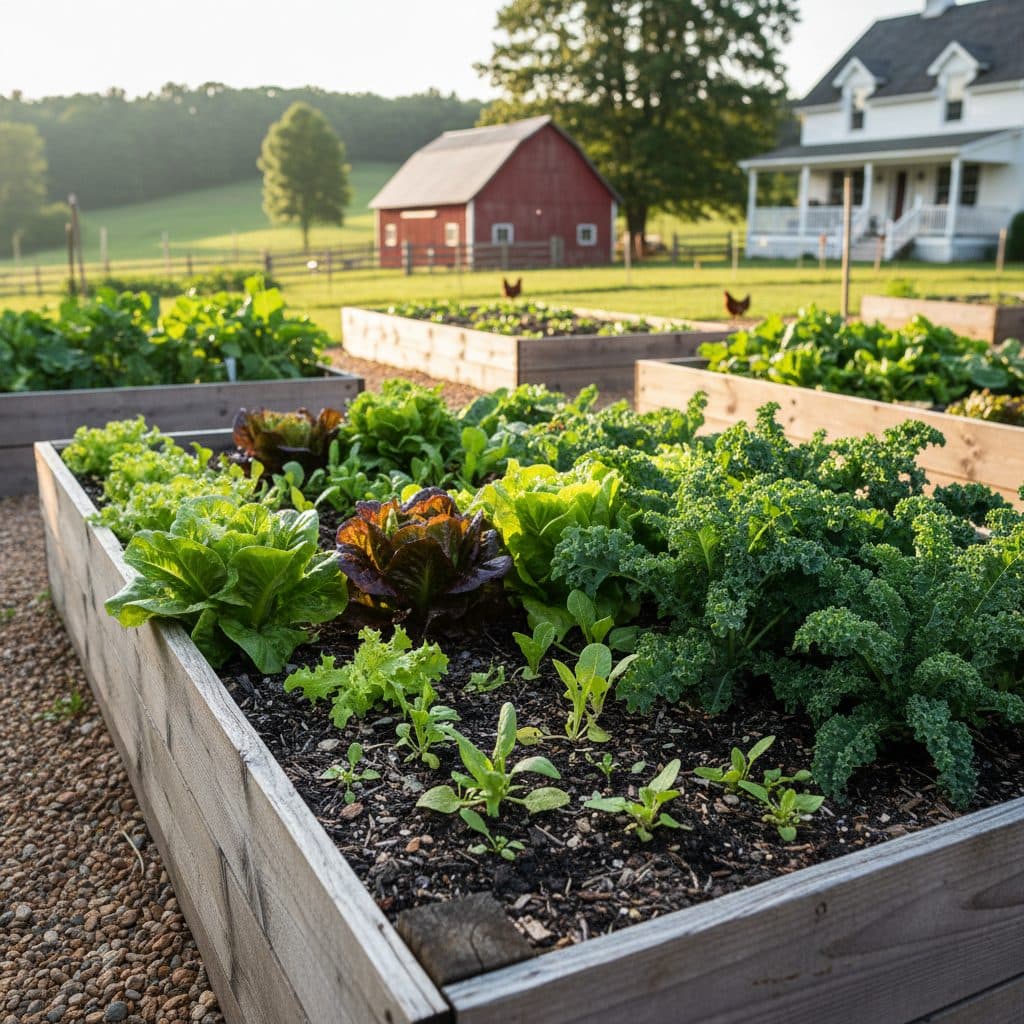
In many parts of the United States, from the fertile valleys of California to the humid plains of the Southeast, a home gardener can enjoy fresh salad greens for nine months or more out of the year. The key to this extended bounty is a practice known as succession planting. Instead of planting all your lettuce, spinach, and other leafy greens at once, which leads to a glut of harvest followed by a long wait, you sow small, staggered batches.
For growers in USDA zone 7, this means starting new seeds every two to three weeks from early spring, typically March, through late fall, often into November. This method keeps a steady supply of tender leaves coming for your kitchen, without overproduction or periods of scarcity. It’s a practical approach that maximizes garden space and effort, providing consistent yields from a relatively small footprint.
understanding succession planting for leafy greens
Succession planting is a strategy that involves sowing small batches of seeds every two to three weeks to ensure a continuous harvest of fresh greens throughout the growing season. This method is particularly effective for fast-growing crops like lettuce, spinach, and arugula, which mature quickly and then tend to bolt, or go to seed. Heat is one trigger, but spinach bolts mainly on day length — it runs to seed once days pass roughly 13 to 14 hours even in cool weather, which is why spring spinach sowings stop paying off by late May in most of the country regardless of temperature. By staggering plantings, you always have new plants coming to maturity as older ones finish their production cycle. For instance, in a typical USDA zone 7 garden, you might plant a row of ‘Black Seeded Simpson’ lettuce in early April, followed by another row in late April, and a third in mid-May. This ensures a steady supply rather than a single large harvest.
why it works for fast-growing crops
Leafy greens mature rapidly, often within 30 to 60 days from seeding, making them ideal candidates for succession planting [5]. This quick turnaround means that a small bed can produce multiple harvests over several months. Without succession planting, a single sowing of lettuce might yield a large harvest for two to three weeks, followed by several weeks with no fresh greens. With staggered plantings, a 4-foot by 8-foot bed can provide fresh salads weekly. This approach also helps manage pests and diseases, as younger plants are often more vigorous and less susceptible to issues that plague older, stressed plants. It’s a reliable way to keep your kitchen stocked with fresh produce. Consider exploring how to grow lettuce for more specific techniques.
- Continuous harvest: Ensures a steady supply of fresh greens.
- Maximizes space: Small beds yield multiple harvests over time.
- Manages bolting: Replaces maturing plants before they go to seed.
- Reduces waste: Prevents overproduction and subsequent spoilage.
- Pest management: Younger plants are often more resilient to pressure.
choosing the right greens and varieties
The success of your succession planting strategy hinges on selecting appropriate varieties for different times of the year. For early spring and late fall in USDA zones 5 through 8, cold-hardy greens are essential. Spinach varieties like ‘Bloomsdale Long Standing’ can tolerate temperatures down to 15°F, making them excellent choices for these cooler periods [4]. Mâche, or corn salad, also thrives in cool weather, germinating well at 40°F and maturing in about 60 days. As summer approaches and temperatures consistently rise above 70°F, switch to varieties bred to hold in heat, such as ‘Jericho’, ‘Nevada’, ‘Muir’, or ‘Buttercrunch’, which are slower to bolt than the fast spring looseleaf types.
varieties for different seasons
For mid-summer plantings, especially in warmer regions like USDA zone 8 or 9, consider greens that can tolerate some heat and partial shade. Arugula and mizuna are good options, often maturing in 30 to 40 days, but they will bolt quickly if exposed to full sun and temperatures above 85°F. Loose-leaf lettuces are generally more forgiving in heat than crisphead types. For continuous harvest, it’s wise to have three to five different varieties in rotation, for diversity in flavor and texture and options for varying weather conditions. Some growers in hot climates plant heat-tolerant varieties in the shade of taller crops, cutting the direct sun the greens take during the hottest part of the day.
- Cold-hardy: Spinach (‘Bloomsdale Long Standing’), Mâche, Claytonia, Arugula.
- Heat-tolerant: Lettuce (‘Jericho’, ‘Nevada’, ‘Buttercrunch’), Malabar Spinach (not true spinach), New Zealand Spinach.
- Fast-maturing: Arugula, Mizuna, Radish greens, some loose-leaf lettuces (30-45 days).
- Slow-bolting: ‘Parris Island Cos’ romaine, ‘Red Sails’ lettuce.
- Shade-tolerant: Most leafy greens benefit from partial shade in temperatures above 80°F.
timing is everything: a usda zone planting calendar
A successful succession planting strategy depends on your local climate and USDA hardiness zone. While the general rule is to plant every two to three weeks, the starting and ending points of your season vary significantly. In USDA zone 5, you might begin sowing cold-hardy spinach and lettuce as early as March, as soon as the soil can be worked, and continue until late September. For growers in USDA zone 8, the season can extend from February through November, with a possible break during the hottest summer months when temperatures consistently exceed 90°F. Always check your average last and first frost dates, as these are critical benchmarks for planning.
seasonal adjustments for optimal growth
During the peak of summer, especially in southern states like Georgia or Texas, it’s often beneficial to plant greens where they get afternoon shade, or to run shade cloth rated around 30% to 40% over the bed. This helps prevent bolting and keeps leaves tender. As fall approaches, reduce the planting interval to every three to four weeks, as growth slows with shorter days and cooler temperatures. For example, in USDA zone 6, you might sow ‘Winter Density’ lettuce in September for a late fall or early winter harvest. Consider incorporating living mulches to help regulate soil temperature and moisture, especially during transitional seasons, which can extend the growing window by several weeks.
- USDA Zone 5: March to September, with a summer slowdown.
- USDA Zone 6: Mid-March to October, with careful summer variety selection.
- USDA Zone 7: Early March to November, often with a short summer break.
- USDA Zone 8: February to November, requiring significant summer shade.
- USDA Zone 9-10: Year-round, with a focus on cool-season varieties during winter and heat-tolerant types with shade in summer.
soil, nutrients, and pest management for continuous greens
The foundation of productive succession planting is healthy soil. Leafy greens are relatively shallow-rooted and thrive in well-draining, fertile soil rich in organic matter. Before your first planting, amend your beds with 2 to 3 inches of compost, which improves soil structure and provides a slow release of nutrients. Most salad greens prefer a soil pH between 6.0 and 7.0 for optimal nutrient uptake [6]. A soil test every two to three years can confirm your pH and nutrient levels. Throughout the season, consistent moisture matters; lettuce and spinach need roughly one inch of water per week, from rainfall or irrigation, to stay tender and reduce stress-driven bolting.
integrated pest and disease strategies
Even with succession planting, pests and diseases can emerge. Common issues for lettuce and spinach include aphids, slugs, and downy mildew. Inspect your plants regularly, at least once a week, especially the undersides of leaves. For aphids, a strong spray of water can dislodge them, or you can introduce beneficial insects like ladybugs. Slugs are often managed with traps or by removing hiding spots. To prevent fungal diseases like downy mildew, ensure good air circulation around plants and avoid overhead watering in the evening. Rotating your crops is also a key strategy; keep leafy greens out of a bed for about three years to interrupt pest and disease cycles. This practice supports long-term garden health, much like learning about perennial edible greens can add variety to what you grow.
- Soil pH: Aim for 6.0 to 7.0 for optimal growth.
- Organic matter: Incorporate 2-3 inches of compost annually.
- Watering: Provide 1 inch of water per week consistently.
- Pest patrol: Inspect plants weekly for aphids, slugs, and other issues.
- Crop rotation: give a bed about three years between leafy green crops to prevent disease buildup.
crop rotation and bed management
Effective crop rotation is a cornerstone of sustainable gardening, especially when practicing succession planting with leafy greens. Planting the same crop in the same spot year after year can lead to a buildup of specific soil-borne pathogens and pests, as well as nutrient imbalances. For leafy greens, which are often heavy nitrogen feeders, rotating them with legumes or root vegetables can replenish soil nutrients and break pest cycles. For example, after a season of lettuce, you might plant a crop of bush beans, which fix nitrogen into the soil, or carrots, which draw different nutrients and don’t share common pests with greens. A three-year rotation cycle is often recommended, ensuring that leafy greens return to a bed only after two different crop families have occupied it.
maximizing bed productivity and health
When a section of your bed is harvested, it’s important to prepare it quickly for the next succession. Remove spent plants, add a thin layer of compost (about one inch), and lightly work it into the top few inches of soil. This replenishes nutrients and keeps the soil active. In smaller gardens, where strict rotation is challenging, focus on diversifying the types of greens you plant in a single bed, or alternate with a cover crop for a few weeks. For instance, after harvesting a bed of spinach in late spring, you might sow a quick-growing buckwheat cover crop for four to six weeks before planting a fall crop of lettuce. This strategy helps maintain soil health and productivity, so your succession planting efforts stay productive for many seasons to come and keep a steady supply of greens on your table.
- Three-year cycle: Rotate greens with other crop families every three years.
- Nitrogen fixation: Follow greens with legumes like beans or peas.
- Nutrient balance: Alternate with root crops (carrots, radishes) or fruiting crops (tomatoes).
- Compost replenishment: Add 1 inch of compost after each harvest to maintain soil fertility.
- Cover cropping: Use quick cover crops like buckwheat to rest and enrich beds between plantings.
Comparison of Common Salad Greens for Succession Planting
Green Type | Maturity (days) | Cold Tolerance (°F) | Heat Tolerance (°F) |
|---|---|---|---|
Loose-leaf Lettuce | 45-60 | 25 | 80 (with shade) |
Spinach | 30-45 | 15 | 75 (bolts quickly) |
Arugula | 30-40 | 20 | 75 (bolts quickly) |
Mizuna | 30-40 | 20 | 80 (with shade) |
Radicchio | 60-90 | 20 | 85 (can get bitter) |
Optimal pH: Most salad greens thrive in soil with a pH between 6.0 and 7.0, a range that supports nutrient availability for robust growth.
Water Needs: Lettuce and spinach require about 1 inch of water per week, either from rainfall or irrigation, to maintain consistent growth and prevent bitterness.
Frequently asked questions
How often should I succession plant lettuce and spinach?
For a continuous harvest, sow small batches of lettuce and spinach seeds every two to three weeks. This ensures that as older plants are harvested or begin to bolt, new plants are always coming to maturity, providing a steady supply of fresh greens.
What is bolting and how can I prevent it?
Bolting is when a leafy green plant prematurely sends up a flower stalk and goes to seed, often making the leaves bitter. For lettuce it is usually triggered by heat together with inconsistent watering. Spinach is different: it bolts mainly on lengthening days, so a spring sowing runs to seed in early summer no matter how cool you keep it. To prevent it, choose heat-tolerant varieties, provide partial shade during summer, and maintain consistent soil moisture of about one inch per week.
Can I succession plant in containers?
Yes, succession planting works very well in containers. Use containers that are at least 6 inches deep and wide. Plant a small number of seeds in one container, and two to three weeks later, plant another batch in a different container. This method is ideal for small spaces like balconies or patios, providing fresh greens from a limited area.
What soil pH do lettuce and spinach prefer?
Lettuce and spinach thrive in slightly acidic to neutral soil, with an optimal pH range between 6.0 and 7.0. This range allows for the best availability of essential nutrients. A soil test can help you determine your garden’s pH, and amendments like compost can help adjust it.
How much sunlight do leafy greens need?
Most leafy greens require at least 6 hours of direct sunlight per day for robust growth. However, in hotter climates or during peak summer months when temperatures exceed 80°F, providing partial afternoon shade can prevent bolting and keep the leaves tender and less bitter.
What are some good cold-hardy varieties for early spring?
For early spring plantings in cooler USDA zones, consider cold-hardy varieties like ‘Bloomsdale Long Standing’ spinach, which can tolerate temperatures down to 15°F. Other good choices include Mâche, ‘Winter Density’ lettuce, and ‘Arctic King’ lettuce, all of which thrive in cooler conditions.
References
- Weed Control in Leafy Greens (Lettuce, Endive, Escarole, and Spinach) (2010). Weed Control in Leafy Greens (Lettuce, Endive, Escarole, and Spinach).
- Pot-herbs and salad greens (1935). Pot-herbs and salad greens.
- Genetic resources collections of leafy vegetables (lettuce, spinach, chicory, artichoke, asparagus, lamb’s lettuce, rhubarb and rocket salad): composition and g (2011). Genetic resources collections of leafy vegetables (lettuce, spinach, chicory, artichoke, asparagus, lamb’s lettuce, rhubarb and rocket salad): composition and g.
- Spinach (1979). Spinach.
- Salad Greens (2020). Salad Greens.
- USDA Natural Resources Conservation Service (2024). USDA Natural Resources Conservation Service.