Key takeaways
- Start warm-season seeds indoors on heat mats across temperate and cool regions in August.
- Direct sow cold-hardy vegetables including peas, carrots, spinach, and silverbeet into outdoor beds.
- Plant certified seed potatoes in trenches or large bags as soil begins to warm in late winter.
- Begin direct sowing spring vegetables like sweet corn, beans, and zucchini in subtropical zones.
- Slash down winter green manure crops four weeks before spring planting to incorporate organic matter.
- Set up mini green tunnels or cloches over outdoor seedbeds to accelerate early germination.
Quick answer: In August, Australian gardeners in temperate and cool climates should start warm-season seeds like tomatoes, capsicums, and eggplants indoors under cover, while direct sowing peas, spinach, carrots, and potatoes outside. Subtropical and tropical growers can direct sow spring and dry-season vegetables including beans, zucchini, sweet corn, and cucumbers.
August is the gateway month to spring across Australia. While the southern states still experience frosty mornings and cold winter rains, day length is steadily expanding, and soil temperatures are beginning their slow upward climb. In the veggie patch, August is all about strategic preparation, indoor seed propagation, and establishing the earliest spring harvests.
Knowing what to plant in August Australia wide depends heavily on your regional climate zone. Southern gardeners must protect tender summer seedlings from winter frosts, whereas northern and coastal gardeners are already transitioning into active outdoor planting.
By taking advantage of late winter sowing opportunities indoors and direct sowing hardy staples outside, you can build serious momentum in your garden weeks before the official start of spring in September.
+----------------------------------------------------------------------------------------------------+
|                              AUGUST PLANTING CALENDAR ACROSS AUSTRALIA                             |
+-------------------+--------------------------------------------------------------------------------+
| Climate Zone      | Top Crops to Plant in August                                                   |
+-------------------+--------------------------------------------------------------------------------+
| Tropical (Far Nth)| Beans, sweet corn, melons, basil, cucumber, Asian greens                       |
| Subtropical       | Zucchini, beans, sweet corn, capsicum, beetroot                                |
| Temperate         | Indoors: Tomatoes, capsicums. Outdoor: Peas, spinach                           |
| Cool / Cold       | Indoors: Brassicas, leeks, onions. Outdoor: Radish                             |
| Arid / Inland     | Potatoes, onions, spinach, carrots, peas                                       |
+-------------------+--------------------------------------------------------------------------------+
Temperate regions: Sydney, Perth, Adelaide, and Coastal NSW
In temperate Australia, August mornings remain brisk, but afternoon sunshine warms the surface soil. This makes August the premier month for dual-track planting: propagating summer vegetables in protected indoor spaces while direct sowing hardy crops in outdoor beds.
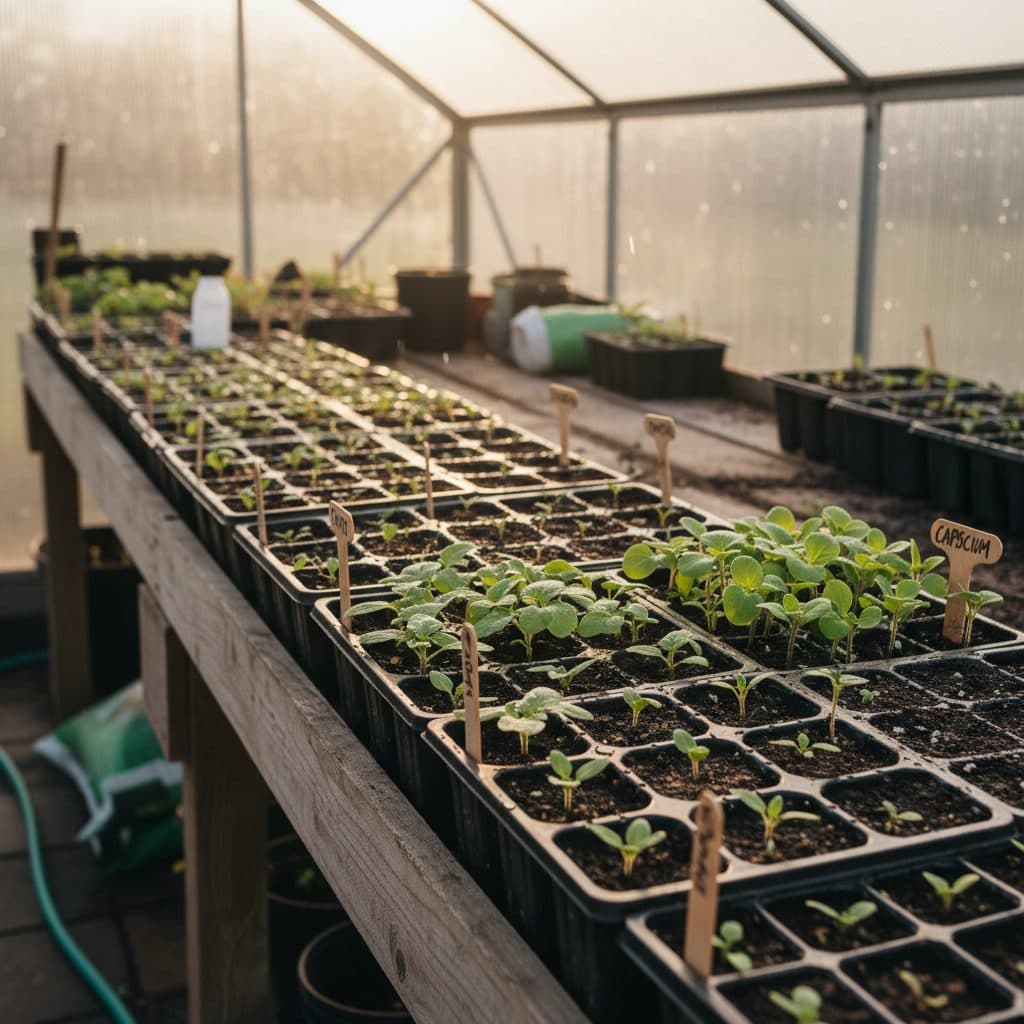
Indoor and protected sowing (under glass, mini greenhouses, or sunny windowsills):
- Tomatoes: Start seeds in trays of seed-raising mix. Keeping trays at 20°C to 24°C ensures strong germination within 7 to 10 days, producing sturdy seedlings ready for October transplanting.
- Capsicums and chillies: These slow-growing nightshades need an early August start to ensure an extended fruiting window during summer.
- Eggplants: Sow in individual modular cells to avoid root shock at transplanting time.
Outdoor direct sowing in the veggie patch:
- Peas: Make a final winter sowing of snow peas and shelling peas.
- Root crops: Direct sow carrots, beetroot, radishes, and parsnips into finely raked beds.
- Leafy greens: Sow English spinach, silverbeet, rocket, and loose-leaf lettuce.
- Seed potatoes: Plant sprouted seed potatoes 10 cm deep in trenches or grow bags.
To coordinate your crop sequencing with seasonal transitions, check our guide on what to plant in april australia.
Cool and cold regions: Melbourne, Tasmania, Canberra, and Highlands
For cold climate gardeners, August remains firmly in the grip of winter, with frequent sub-zero nights, hard frosts, and waterlogged soils. Outdoor planting should be approached with patience, focusing heavily on indoor propagation.
Indoor propagation tasks:
- Nightshades on heat mats: Use thermostatically controlled seedling heat mats to germinate tomatoes, capsicums, and eggplants indoors.
- Early brassicas: Sow spring cabbage, broccoli, and kohlrabi into cell trays in an unheated greenhouse or sunny porch.
- Alliums: Sow spring onions and leek seeds in deep punnets.
Outdoor cold-climate tasks:
- Chitting seed potatoes: Lay seed potatoes in egg cartons in a bright, frost-free room to develop stout green sprouts (chits) before September planting.
- Direct sowing under cloches: If soil is workable, sow broad beans, spinach, and radishes beneath clear plastic covers or cloches to warm the ground.
Subtropical regions: Brisbane, Northern NSW, and Sunshine Coast
In subtropical zones, August brings warm, clear days with minimal frost risk. Gardeners can move aggressively into direct sowing of spring and summer vegetables.
What to plant outdoors in subtropical August:
- Fruiting vegetables: Direct sow or transplant zucchini, bush beans, climbing beans, sweet corn, and cucumbers.
- Nightshades: Transplant established tomato, capsicum, and eggplant seedlings into fertile, compost-rich beds.
- Cucurbits: Sow small pumpkin varieties and watermelons. For detailed spacing and vine advice, read our comprehensive guide on growing pumpkin australia.
- Root vegetables: Direct sow beetroot and carrots, and plant out sweet potato slips into warm, mounded beds.
- Herbs: Sow basil, dill, coriander, and parsley.
Mulch beds thoroughly with sugarcane mulch to retain moisture as temperatures rise toward spring.
Tropical regions: Darwin, Cairns, Townsville, and Broome
In the tropical north, August represents the final phase of the comfortable, low-humidity dry season. Gardeners should capitalise on the mild conditions before monsoonal build-up heat arrives from around September.
Tropical August plantings:
- Quick salad crops: Sow Asian greens, lettuce, and radishes in partial shade to prevent heat bolting.
- Legumes: Plant snake beans and bush beans.
- Melons and sweet corn: Sow rockmelons, watermelons, and sweet corn in deeply watered beds.
- Perennial edibles: Establish cassava, sweet potato, and taro. Cassava roots must always be peeled and thoroughly cooked before eating — raw or undercooked cassava contains cyanogenic compounds and is not safe. Taro must also be cooked, never eaten raw, and it has naturalised as an environmental weed along creeks and waterways in northern Australia, so keep it contained and well away from watercourses.
Ensure drip irrigation systems are running efficiently, delivering consistent water directly to root systems early in the morning.
+--------------------------------------------------------------------------+
|                     LATE WINTER SEED PROPAGATION SETUP                   |
+--------------------------------------------------------------------------+
|  [ Clear Plastic Humidity Dome (Retains Moisture & Heat) ]               |
|  [ Quality Seed-Raising Mix in Cell Trays (Light & Well-Draining) ]      |
|  [ Waterproof Propagation Tray (Bottom Watering Reservoir) ]            |
|  [ Electric Heat Mat set to 21-24°C (Accelerates Germination) ]          |
+--------------------------------------------------------------------------+
Late winter soil preparation and green manure management
August is the critical month to prepare your outdoor beds for the heavy nutrient demands of spring and summer crops.
If you grew cover crops over autumn and winter, August is the time to slash them down:
- Slashing green manures: Cut down field peas, oats, or vetch with a line trimmer or shears while stems are tender and before flowering.
- Chop and drop: Chop the foliage finely and allow it to wilt on the surface, or fork it lightly into the top 5 cm of soil.
- Decomposition window: Allow three to four weeks for soil microbes and earthworms to break down the green residue before planting spring seedlings.
To select and manage cover crops effectively, explore our dedicated resource on green manure crops australia.
For beds without cover crops, spread a 5 cm layer of well-rotted compost and aged cow manure. Water the beds deeply and cover them with clear builder's plastic for two weeks. Clear sheeting lets sunlight through and traps the heat beneath, warming the top of the soil profile noticeably faster than bare ground; black weed matting suppresses weeds but warms the soil far less because it absorbs the heat at its own surface.
Managing early spring pests in the veggie patch
As days warm up in late August, sap-sucking pests like aphids and scale insects emerge on new tender growth and citrus trees. Proactive cultural control prevents early pest populations from expanding out of control.
Check citrus trees, brassicas, and emerging perennials regularly for aphid clusters on soft shoots. For effective organic control of sap-suckers without synthetic chemicals, consult our proven white oil recipe.
Rotate your crop families carefully so nightshades — tomatoes, capsicums, eggplants, potatoes — do not follow last season's nightshades. Following them with a grass such as sweet corn, or with legumes, breaks the disease cycle. Learn how to map out multi-year growing cycles in our guide on crop-rotation-home-garden-plans.