Key takeaways
- May is late autumn in the Southern Hemisphere: prepare beds now for winter cropping before soil temperatures drop sharply in June.
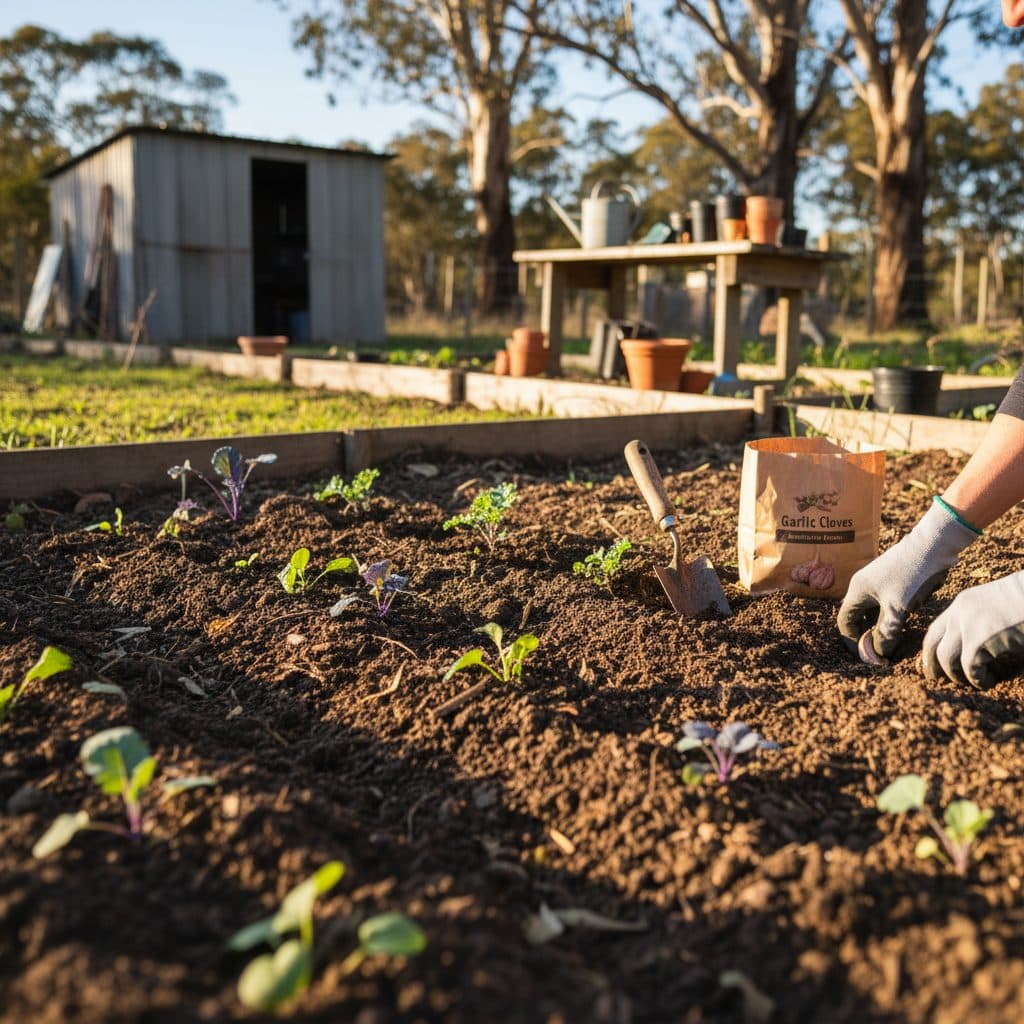
- Plant garlic cloves across temperate, cool, and Mediterranean zones in May for harvest from late spring to early summer (roughly November to December).
- Direct-sow broad beans and winter peas in late autumn; their symbiotic root bacteria fix atmospheric nitrogen into the soil over winter.
- Plant out sturdy seedlings of brassicas (broccoli, cabbage, kale, cauliflower) and leafy greens (silverbeet, spinach, rocket).
- In tropical and subtropical northern zones, May marks the start of the prime dry-season planting window for tomatoes, capsicums, and beans.
Quick answer: In Australia, May represents late autumn heading into winter. In temperate, cool, and Mediterranean climate zones (Melbourne, Sydney, Adelaide, Hobart, Perth), May is the prime planting window for winter staples including garlic cloves, broad beans, green peas, silverbeet, spinach, English spinach, and root vegetables like onions, carrots, and radishes. Conversely, in tropical and subtropical northern Australia (Brisbane, Cairns, Darwin), May begins the cool, dry winter growing season, making it the ideal time to sow summer crops like tomatoes, capsicums, sweet corn, and bush beans.
Gardening in Australia requires shifting away from Northern Hemisphere seasonal thinking. When May arrives, Australian growers are heading into winter rather than summer heat.
As day lengths shorten and overnight temperatures cool across southern Australia, growth rates slow. Plants established in May build strong root systems while autumn soil retains residual warmth, setting up vigorous growth for late winter and early spring harvests.
Because Australia spans dramatically distinct climatic bands—from frosty alpine valleys in Tasmania and Victoria to tropical monsoon belts in Queensland and the Northern Territory—successful May planting depends on selecting the right crops for your specific geographic zone.
May planting by Australian climate zone
Match your seed sowing and seedling transplanting to your regional climate:
+------------------------+-----------------------------------+-----------------------------------+
| Climate Zone           | Example Regions                   | May Planting Selections           |
+------------------------+-----------------------------------+-----------------------------------+
| Cool & Cold            | Hobart, Ballarat, Canberra, Blue  | Garlic, broad beans, spinach,     |
|                        | Mountains, Armidale               | silverbeet, winter lettuce, onions|
| Temperate              | Sydney, Melbourne, Adelaide,      | Garlic, broad beans, peas, kale,  |
|                        | Perth, Geelong                    | broccoli, cabbage, carrots, rocket|
| Subtropical            | Brisbane, Gold Coast, Sunshine    | Tomatoes, capsicum, beans, lettuce|
|                        | Coast, Northern Rivers NSW        | brassicas, coriander, beetroot    |
| Tropical               | Darwin, Cairns, Townsville,       | Tomatoes, cucumbers, zucchini,    |
|                        | Broome, Rockhampton               | sweet corn, pumpkin, capsicum     |
| Arid & Semi-Arid       | Alice Springs, Mildura, Dubbo,    | Broad beans, peas, garlic, onions,|
|                        | Broken Hill                       | silverbeet, spinach, carrots      |
+------------------------+-----------------------------------+-----------------------------------+
+-------------------------------------------------------------------+
| MAY VEGGIE PATCH PRIORITIES (TEMPERATE / COOL) |
+-------------------------------------------------------------------+
|1. Plant Garlic: Mid-to-late May; bury cloves 3 cm deep |
|2. Sow Broad Beans: Direct sow 5 cm deep; space 20 cm apart |
|3. Transplant Brassicas:Broccoli, cabbage, kale, cauliflower plugs |
|4. Direct Sow Greens: Silverbeet, English spinach, rocket, radish|
|5. Mulch Beds: Apply 5 cm mulch to buffer soil temp |
+-------------------------------------------------------------------+Planting garlic in May: the Australian staple
May is the traditional garlic planting month across southern and eastern Australia. Planting before the winter solstice (late June) allows cloves to develop robust root systems and initial leaf shoots before deep winter dormancy.
+------------------------+-----------------------------------+-----------------------------------+
| Garlic Group           | Climate Suitability               | Key Cultivars                     |
+------------------------+-----------------------------------+-----------------------------------+
| Turban (Early)         | Subtropical, warm temperate       | Glenlarge, Southern Glen          |
| Artichoke (Softneck)   | Warm Temperate, Mild Winter       | Australian White, Italian Late    |
| Creole (Late)          | Warm temperate, Medit., dry summer| Creole Red, Burgundy              |
| Rocambole (Hardneck)   | Cool & Cold Temperate             | Spanish Roja, German Red          |
+------------------------+-----------------------------------+-----------------------------------+
How to plant garlic cloves
- Soil Prep: Choose a sunny bed with free-draining soil enriched with compost. Avoid excessive fresh manure immediately before planting, which can cause clove rot.
- Clove Selection: Break apart garlic bulbs just before planting. Choose the largest, plumpest outer cloves; save tiny inner cloves for cooking.
- Spacing and Depth: Plant cloves pointed-end up, 3 cm to 5 cm below the soil surface, spaced 15 cm apart in rows 20 cm apart.
- Mulching & Biosecurity: Cover with 5 cm clean lucerne or sugar cane mulch. Buy certified Australian seed garlic rather than supermarket bulbs (imported garlic is treated to inhibit sprouting). Space rows well: garlic rust (Puccinia allii) is the main disease in humid coastal districts and hits crowded, shaded plantings hardest.
Winter legumes: broad beans and peas
Broad beans (Vicia faba) and winter shelling peas are cool-season workhorses. They germinate reliably in cold autumn soil and fix atmospheric nitrogen through symbiotic root nodules, enriching the veggie patch for heavy-feeding summer tomatoes the following year.
Broad bean growing tips
- Direct Sowing: Sow seeds directly into garden beds 5 cm deep. Soaking seeds in non-chlorinated water for two hours before sowing accelerates germination.
- Staking Support: Broad bean stalks grow 1.0 m to 1.5 m tall and become heavy with pods by late winter. Drive sturdy wooden stakes at row ends and run tensioned twine along either side of the plants to prevent wind toppling during stormy winter weather.
- Pinching Tips: Once the lowest flowers have set pods — usually late winter to early spring in southern Australia — pinch out the top 5 cm of each stem to discourage black aphid and push energy into pod fill.
Leafy greens and root vegetables for cool weather
May is ideal for establishing hardy leafy greens and root crops that turn bitter or bolt to seed during summer heat.
Silverbeet and English spinach
Silverbeet (Swiss chard) is an Australian backyard institution, providing continuous cut-and-come-again leaves for over nine months. True English spinach (Spinacia oleracea) thrives in cold May weather; direct-sow seeds in full sun (save partly shaded beds for spring sowings, when shade delays bolting).
Winter salad greens
- Rocket: Fast-growing peppery green; harvest outer leaves within four weeks of sowing.
- Mizuna and Tatsoi: Asian greens that tolerate light frosts and regrow rapidly after picking.
- Coriander: In Australia, coriander bolts to seed instantly in hot summer weather. May through September provides the perfect cool conditions for lush, leafy coriander growth.
Root crops
Direct-sow carrots, turnips, radish and beetroot into friable, stone-free soil. Leave parsnips for spring — the seed germinates poorly in cold soil and needs a longer season than a May sowing allows. Cover fresh carrot seedbeds with a plank or damp hessian and lift it to check every few days. In cool May soil emergence commonly takes three to four weeks — remove the cover the moment the first seedlings show, not on a fixed day.
For gardeners managing specific capital city conditions, explore our detailed adelaide vegetable planting guide and learn how to harvest autumn rhizomes in growing ginger in australia.
Autumn garden maintenance and soil care
Preparing beds properly in May protects soil ecology through wet winter months:
- Mulch Bare Soil: Never leave vegetable beds unmulched over winter. Heavy winter rains leach soluble nutrients and compact bare clay topsoil. Apply sugar cane, pea straw, or lucerne mulch across all open ground.
- Reduce Irrigation Frequency: As temperatures drop and evaporation slows, adjust automatic drip timers. Overwatering in cold weather promotes root rot and fungal damping-off.
- Frost Protection: In frost-prone inland valleys, prepare lightweight horticultural fleece or cloches to cover tender young seedlings during freezing nights.
- Wicking Bed Management: Check overflow pipes on wicking systems as described in wicking beds self watering to ensure winter rains drain freely rather than waterlogging root zones.
Mastering seed preservation techniques from seed saving storage viability ensures you maintain vigorous, climate-adapted seed stock for every autumn sowing season.