Key takeaways
- Identify your specific USDA hardiness zone to understand your average Frost dates and growing season length, which matters for planning.
- Implement succession planting to maximize bed space and ensure a continuous harvest of specific crops throughout the growing season.
- Utilize crop rotation over a three-to-four-year cycle to maintain soil health, manage pests, and prevent disease buildup in your garden.
- Plan for all four seasons—spring, summer, fall, and winter—by selecting appropriate crop varieties and employing season-extension techniques.
- Incorporate Cover crops and living mulches in off-seasons to enrich soil, suppress weeds, and reduce erosion, particularly in zones 6 and above.
- Consult regional extension resources for localized planting dates, as microclimates and specific weather patterns can vary significantly within a USDA zone.
Quick answer: To optimize planting for continuous harvest across USDA zones, identify your specific hardiness zone and frost dates, then implement succession planting and crop rotation. Utilize season-extension techniques and select appropriate crop varieties for all four seasons to ensure year-round productivity.
In the fertile valleys of central Pennsylvania, a grower in USDA zone 6b can expect an average of 180 to 200 frost-free days annually. This window, however, is just one piece of the puzzle for year-round productivity. To truly make the most of your garden space and soil, a strategic approach to planting across all four seasons is essential, moving beyond the traditional single-season mindset. This involves understanding your local climate, selecting the right crops for each window, and implementing practices like crop rotation and succession planting to maintain soil vitality and ensure a steady yield.
Successful growers know that the garden doesn’t stop producing after the last tomato is picked. By carefully planning for spring, summer, fall, and even winter, it’s possible to extend harvests, improve soil structure, and reduce pest and disease pressure. This guide provides a framework for optimizing your planting schedule based on US growing conditions. It covers how to plan for each season, from spring through winter.
Understanding your climate and USDA hardiness zone
The USDA Plant Hardiness Zone system, maintained by the USDA Agricultural Research Service (ARS), provides a standard for determining which plants are most likely to thrive in a particular location based on the average annual minimum winter temperature. A grower in USDA zone 5 can expect winter lows between -20°F and -10°F, while someone in USDA zone 9 might only see lows between 20°F and 30°F. This 40-50 degree difference dramatically impacts crop selection and planting schedules.
frost dates and growing season length
Beyond the hardiness zone, understanding your average last spring frost date and first fall frost date defines your primary growing season. In northern states like Minnesota (USDA zone 4), the frost-free period might be as short as 120 days, often from late May to early September. Conversely, a grower in southern California (USDA zone 10) could experience a growing season exceeding 300 days, allowing for multiple crop cycles. These dates are not absolute, as weather patterns can shift by several weeks year to year, but they provide a critical baseline for planning when to start seeds indoors or direct sow outdoors. Always consult local extension offices for the most precise regional data, as microclimates can vary within a single zone.
- Identify your USDA hardiness zone using the official USDA map.
- Research average last spring frost date for your specific location.
- Determine average first fall frost date to calculate your growing season length.
- Note historical temperature fluctuations for early/late season adjustments.
- Consider microclimates within your property, such as shaded or sheltered areas.
Spring planting: laying the groundwork for abundance
Spring is a season of eager anticipation, but also strategic planning. In USDA zone 6, many growers aim to get cool-season crops like peas and spinach in the ground by mid-March, often under row covers to protect against late frosts. Early spring planting focuses on crops that tolerate cooler soil temperatures, typically above 40°F, and can mature before the intense heat of summer. This includes leafy greens, root vegetables, and brassicas. For peas, planting can begin as soon as the soil is workable, often 4-6 weeks before the last frost date, yielding harvests in late May or early June. More details on growing peas can be found at How to grow peas: seed to harvest, plus a second fall crop.
Succession planting for continuous harvests
To maximize output from a limited space, succession planting is key. Instead of planting all your lettuce seeds at once, sow small batches every 2-3 weeks. This ensures a steady supply rather than a single overwhelming harvest followed by a gap. For instance, in USDA zone 7, a grower might plant a 10-foot row of radishes every two weeks from early April through late May, yielding continuous harvests for over two months. As one crop finishes, another can immediately take its place. This strategy is particularly effective for fast-maturing crops like radishes (25-30 days), lettuce (45-60 days), and bush beans (50-60 days).
- Sow cool-season crops like spinach, lettuce, and radishes 4-6 weeks before last frost.
- Plant successive batches of quick-maturing vegetables every 2-3 weeks.
- Start warm-season crops indoors 6-8 weeks before transplanting after last frost.
- Harden off seedlings for 7-10 days before moving them outdoors permanently.
- Prepare beds with compost, aiming for 2-3 inches of organic matter annually.
Summer’s bounty and preparing for fall
Summer is the peak season for many gardens, especially for warm-weather crops that thrive in temperatures above 70°F. Tomatoes, peppers, corn, and squash reach their full potential during these months. In USDA zone 7, July and August provide ample heat and sunlight for these crops. However, summer also presents challenges like increased pest pressure and potential drought. Efficient watering — often 1-2 inches per week, delivered slowly at the base of plants — becomes critical. Mulching with 3-4 inches of straw or wood chips helps retain soil moisture and suppress weeds, cutting how often you need to water.
Crop rotation for soil health
As summer crops mature and decline, it’s time to think about fall planting and crop rotation. This practice involves changing the type of crop grown in a particular bed each season or year to prevent the buildup of pests and diseases specific to certain plant families, and to manage soil nutrient levels. For example, if you grew heavy-feeding tomatoes in a bed this summer, planting nitrogen-fixing legumes like fall beans or peas in that same bed next spring can replenish the soil. A common rotation cycle is a three-to-four-year plan, categorizing crops by their nutrient needs and family. For instance, follow heavy feeders (corn, tomatoes) with light feeders (carrots, lettuce), then with nitrogen fixers (beans, peas). This helps maintain a healthy soil microbiome and reduces reliance on external inputs.
- Plant warm-season crops like tomatoes, peppers, and squash after all danger of frost is past.
- Ensure consistent watering, providing 1-2 inches of water per week during dry spells.
- Apply 3-4 inches of organic mulch to conserve moisture and regulate soil temperature.
- Plan your crop rotation for next season, categorizing plants by family and nutrient needs.
- Harvest regularly to encourage continued production and prevent pest issues.
Fall and winter: extending the season and building soil
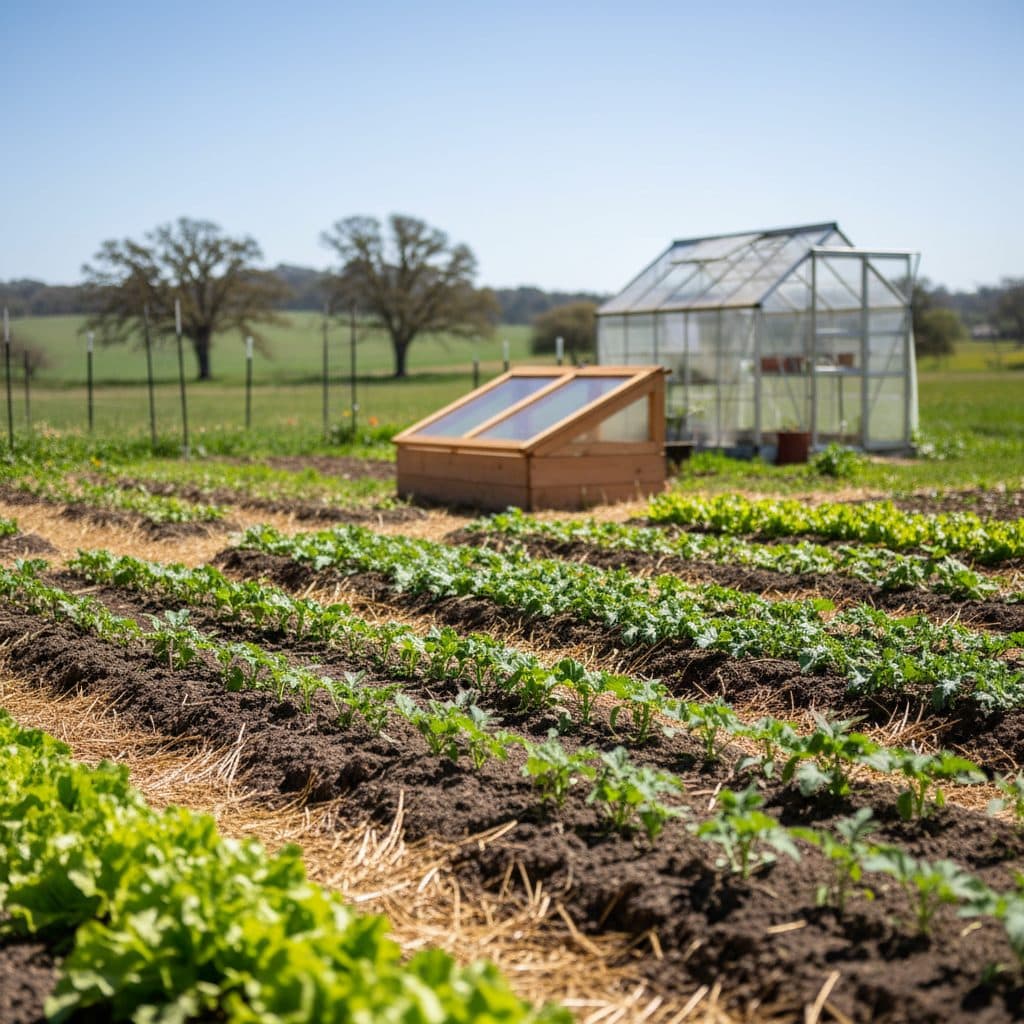
As temperatures drop and daylight hours shorten, the gardening season doesn’t have to end. Fall is an excellent time for a second round of cool-season crops. In USDA zone 6, you can plant spinach, lettuce, kale, and radishes in late August or early September for harvests extending into November. These crops often taste sweeter after a light frost. For growers in warmer zones, like USDA zone 9, the fall and winter months are often the most productive, allowing for continuous cultivation of many vegetables that would bolt in summer heat. Using season extension tools like cold frames, hoop houses, or even simple row covers can push harvests well past the first hard frost, sometimes by 4-6 weeks.
cover crops and living mulches
Once your main crops are harvested and beds are empty, consider planting cover crops. These are plants grown specifically to benefit the soil, not for harvest. Common choices include winter rye, clover, or vetch. In USDA zone 5, planting winter rye in October can protect the soil from erosion over winter, add organic matter when tilled under in spring, and suppress weeds. Leguminous cover crops, like crimson clover, also fix atmospheric nitrogen into the soil, providing a natural fertilizer for next year’s crops. For more on this, see Best Living-Mulch and Cover-Crop Legumes by USDA Zone for No-Dig Beds. This practice is a long-term investment in your garden’s health, reducing the need for synthetic fertilizers and improving soil structure over time.
- Plant fall cool-season crops like kale, collards, and spinach 8-10 weeks before your first average frost date.
- Utilize cold frames or row covers to extend harvests by several weeks into winter.
- Sow cover crops such as winter rye or clover on empty beds to protect and enrich soil.
- Harvest root vegetables like carrots and parsnips after a few frosts for improved flavor.
- Monitor soil moisture in winter; even dormant beds can benefit from occasional watering in dry periods.
Adapting a zone 6 planting calendar to your own zone
A comprehensive planting chart is an invaluable tool for managing your garden across all seasons. The guidance below is built around USDA zone 6, which represents a large portion of the US Midwest and Northeast and offers a balance of distinct seasons. Remember that these dates are averages; local conditions, microclimates, and specific varietal requirements can shift planting times by 1-2 weeks. For example, a sheltered bed against a south-facing wall might allow for earlier spring planting by 7-10 days compared to an open field. Always observe your local weather patterns and soil temperatures.
Adapting the chart to your zone
To adapt these zone 6 timings to your own USDA zone, adjust planting dates relative to your average last and first frost dates. If you are in USDA zone 5, you might delay spring plantings by 2-3 weeks and advance fall plantings by the same amount. Conversely, in USDA zone 8, you could move spring dates 2-3 weeks earlier and extend fall and winter harvests significantly. For warm-season crops, ensure soil temperatures consistently reach 60°F before transplanting. For cool-season crops, soil temperatures around 40-50°F are generally suitable. This adaptability matters for growers from northern states like Montana (USDA zone 4) down to the warmer climates of Florida (USDA zone 9).
- Use the zone 6 timings above as a baseline, adjusting for your specific microclimate.
- Shift spring planting dates earlier for warmer zones (e.g., zone 8) and later for colder zones (e.g., zone 5).
- Extend fall and winter harvest windows significantly in zones 7 and above with protection.
- Track your actual planting and harvest dates each year to refine your personal calendar.
- Experiment with different varieties to find those best suited to your specific seasonal conditions.
Crop Characteristics by Season for US Growers
Season | Typical Temperature Range (°F) | Example Crops | Key Practice | Soil Prep Focus |
|---|---|---|---|---|
Spring | 40-65 | Lettuce, Peas, Radishes | Succession Planting | Compost, Nitrogen |
Summer | 70-90+ | Tomatoes, Corn, Beans | Pest Management, Watering | Mulch, Balanced Nutrients |
Fall | 35-60 | Kale, Carrots, Spinach | Season Extension | Cover Crops, Phosphorus |
Winter | 0-35 | Garlic, Overwintered Greens | Soil Protection, Planning | Organic Matter, Erosion Control |
Frost-Free Days: Growers in USDA zone 6 typically experience 180 to 200 frost-free days annually, providing a substantial window for diverse plantings.
Water Savings: A 3-4 inch layer of organic mulch slows evaporation from the soil surface, so beds stay usable between waterings for longer during hot summer months.
Frequently asked questions
What is the primary benefit of knowing my USDA hardiness zone?
The primary benefit is understanding the average annual minimum winter temperature in your area, which dictates which perennial plants can survive the winter outdoors. For example, a plant hardy to zone 7 will likely not survive winter in zone 5 without protection, as zone 5 temperatures can drop 20 degrees lower.
How does succession planting maximize my garden’s yield?
Succession planting maximizes yield by ensuring continuous harvests from the same garden space. Instead of one large harvest, you get smaller, more manageable harvests over a longer period, and the bed stays in production rather than sitting empty between crops.
Why is crop rotation important for soil health?
Crop rotation matters for preventing the buildup of specific pests and diseases in the soil, which can cut yields severely over time. It also helps balance soil nutrient levels, as different plant families have varying nutrient demands and contributions, like legumes adding nitrogen.
Can I really grow vegetables in winter in colder USDA zones?
Yes, with season extension techniques like cold frames, hoop houses, or heavy row covers, you can grow hardy cool-season vegetables in winter even in zones as cold as USDA zone 5. Crops like kale, spinach, and some root vegetables can often be harvested into December or January, provided temperatures don’t drop below 10°F for extended periods.
What are cover crops, and when should I plant them?
Cover crops are plants grown to protect and enrich the soil, not for harvest. They should typically be planted in late summer or early fall, 6-8 weeks before the first hard frost, on any garden beds that will be otherwise empty for the winter. For instance, winter rye planted in October in USDA zone 6 will establish before winter.
How much organic matter should I add to my garden beds annually?
To maintain and improve soil health, aim to incorporate 2-3 inches of well-rotted compost or other organic matter into your garden beds annually. This practice can increase soil organic matter content by 0.5-1% per year, significantly improving water retention and nutrient availability.
References
- USDA Natural Resources Conservation Service (2024). USDA Natural Resources Conservation Service.