Key takeaways
- In Brisbane and South East Queensland, autumn and winter (March to September) are the primary vegetable-growing season for standard crops.
- Cool, dry, sunny winter days (20°C to 24°C) allow tomatoes, brassicas, lettuce, and carrots to thrive without severe fungal leaf diseases.
- Summer (December to February) brings intense heat, high humidity, and heavy storm deluges that rot conventional temperate vegetables.
- Grow heat-hardy tropical alternatives during summer, including sweet potato, snake beans, rosella, ginger, turmeric, and Ceylon spinach.
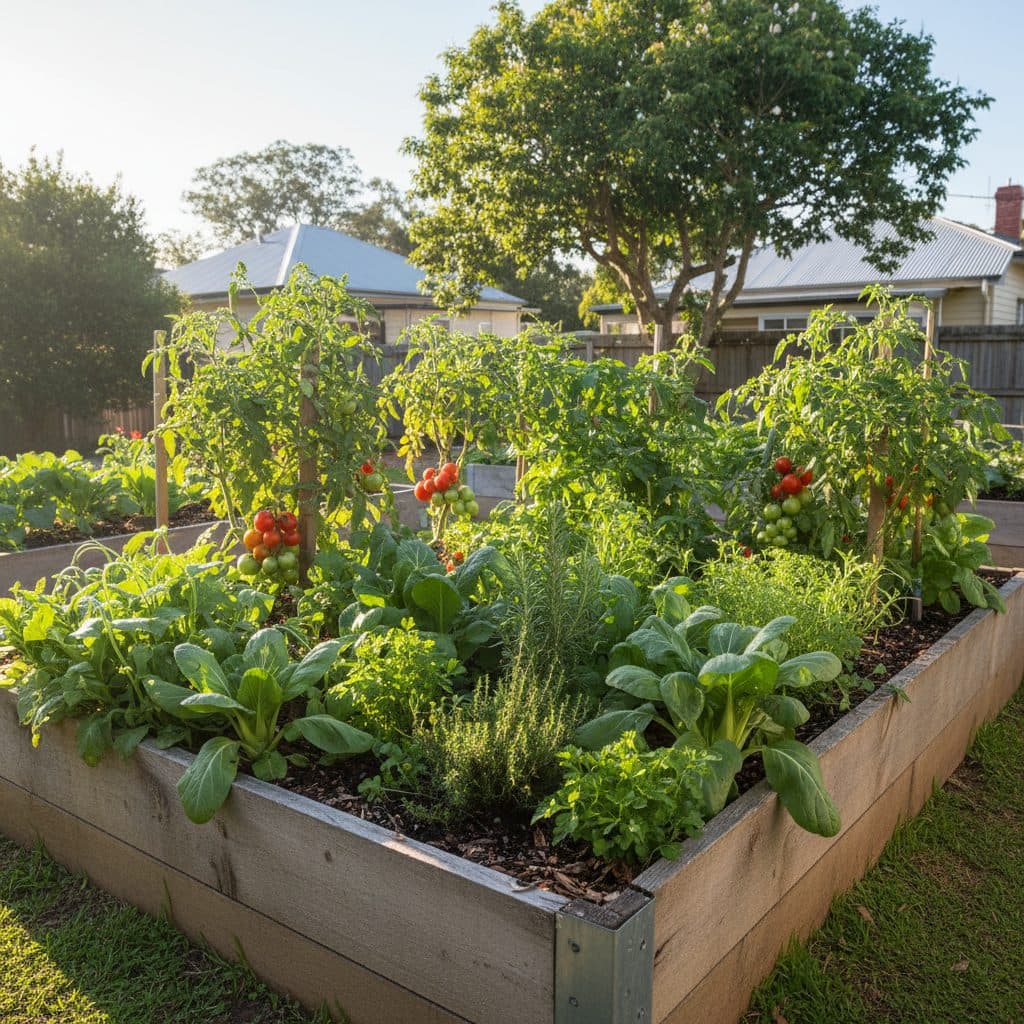
- Construct raised garden beds to ensure rapid drainage through heavy clay subsoils during monsoonal storm events.
- Protect crops from Queensland fruit fly and native ringtail or brushtail possums using physical exclusion netting and compliant frames.
Quick answer: In subtropical Brisbane, the primary vegetable-growing season runs through autumn and winter from March to September, when mild, sunny weather suits tomatoes, capsicums, brassicas, carrots, and leafy greens. During the hot, humid summer from December to February, grow tropical survivors like snake beans, sweet potato, and rosella in well-drained raised beds.
Gardening in Brisbane and South East Queensland offers year-round growing potential, but it requires unlearning conventional temperate gardening calendars. In southern Australia, summer is the main production season; in subtropical Brisbane, winter is the star season for home food production.
Growing vegetables in Brisbane centres on this inverted climate rhythm. Between March and September, Brisbane enjoys low humidity, minimal rainfall, and daytime temperatures between 20°C and 25°C with frost-free nights near the coast and in the inner suburbs; expect light frosts in the western suburbs and outer valleys. These conditions allow home gardeners to harvest productive crops of tomatoes, broccoli, lettuce, and herbs that would wither in summer heat.
This guide details seasonal sowing windows, summer survival strategies, and subtropical pest management across Brisbane.
+-------------------------------------------------------------+
|              BRISBANE TWO-SEASON GROWING PARADIGM           |
|                                                             |
|   SEASON               CLIMATE REALITY      PLANTING FOCUS  |
|   ------               ---------------      --------------  |
|   Autumn to Winter     Dry, mild, sunny     Tomatoes, peas, |
|   (March - September)  (10-24°C, low rain)  greens, brassica|
|                                                             |
|   Spring to Summer     Humid, stormy, hot   Sweet potato,   |
|   (Sept - February)    (28-35°C, high rain) snake bean, taro|
+-------------------------------------------------------------+
What should you plant during Brisbane's autumn and winter window?
The autumn sowing window (March through May) is the main planting period of the year in Brisbane. Crops planted now grow rapidly through the mild autumn and crop heavily across winter.
+-------------------------------------------------------------+
|              AUTUMN & WINTER BRISBANE SOWING MATRIX         |
|                                                             |
|   VEGETABLE             SOWING MONTHS       HARVEST WINDOW  |
|   ---------             -------------       --------------  |
|   Tomatoes              March to May        June to October |
|   Broccoli & Cabbage    March to May        June to August  |
|   Capsicums & Chillies  February to April   May to October  |
|   Carrots & Beetroot    March to June       June to Sept    |
|   Silverbeet & Spinach  March to July       May to October  |
|   English Peas / Snow   April to May        July to Sept    |
+-------------------------------------------------------------+
The winter tomato advantage
In Brisbane, the best time to grow large, slicing tomatoes is from March to September:
- During winter, low relative humidity suppresses early blight (Alternaria solani) and bacterial spot.
- Queensland fruit fly activity drops significantly during cool July and August days.
- Choose vigorous indeterminate varieties such as 'Grosse Lisse' or prolific cherry types like 'Sweet Bite'. If you want a paste tomato, note that 'Roma' is determinate and crops in a single concentrated flush.
For broader autumn planting across the continent, explore what to plant in March in Australia and winter legumes like growing broad beans in Australia.
+-----------------------------------------------------------------+
|                 BRISBANE TOMATO GROWING TIMELINE                |
|                                                                 |
|   MONTH             STAGE IN SUBTROPICAL BRISBANE               |
|   -----             -----------------------------               |
|   Feb - March       Sow seeds in punnets; transplant            |
|   April - June      Growth, staking, main flowering and fruit set|
|   July - August     Slow ripening; pick as fruit colours        |
|   Sept - Oct        Final crop before summer heat               |
+-----------------------------------------------------------------+
Winter brassicas and salad greens
- Brassicas: Broccoli, cabbage, cauliflower, and kale thrive when planted in March and April. Caterpillar pressure eases as nights cool, but cabbage white butterfly and cluster caterpillar stay active through a Brisbane winter — keep brassicas under insect mesh from the day you transplant.
- Leafy greens: Traditional English spinach, crisphead lettuce, rocket, and coriander grow reliably without bolting to seed.
Which crops survive Brisbane's hot, humid summer?
From December to February, Brisbane experiences high humidity, temperatures frequently exceeding 32°C, and sudden tropical thunderstorms. Standard European vegetables succumb quickly to root rots and fungal blights.
Switch your summer vegetable patch to resilient tropical and subtropical crops:
+---------------------------------------------------------------------+
|              TROPICAL SUMMER SURVIVORS FOR BRISBANE                 |
|                                                                     |
|   CROP CATEGORY         SPECIES             GROWING HABIT           |
|   -------------         -------             -------------           |
|   Climbing Greens       Ceylon Spinach      Fast vine               |
|   Heat-Hardy Legumes    Snake Beans         2-4 m climber (pods 30-60 cm) |
|   Root Tubers           Sweet Potato        Dense groundcov         |
|   Culinary Rhizomes     Ginger & Turmeric   Moist partial sh        |
|   Fruiting Veg          Okra, Eggplant      Deep taproot            |
|   Edible Shrubs         Rosella (*Hibiscus* Upright bush            |
+---------------------------------------------------------------------+- Snake beans (Yard-long beans): Unlike standard French beans which drop blossoms when daytime temperatures exceed 30°C, snake beans thrive in intense subtropical heat and humidity.
- Sweet potato (Ipomoea batatas): Acts as a productive living mulch, protecting topsoil from erosion during heavy summer storms while producing nutritious tubers and edible young leaf tips.
- Ceylon spinach (Basella alba): A thick, fleshy climbing green that loves hot, steamy conditions and provides continuous salad leaves all summer.
- Ginger and turmeric: Plant root rhizomes in September and October into rich, composted beds in dappled shade. They soak up summer rains and are ready to harvest the following winter.
For spring establishment details, consult what to plant in October in Australia.
How should you prepare Brisbane soils for heavy rainfall?
Brisbane soils vary from dense, poorly drained podzolic clays in suburban river catchments to porous red volcanic soils on local ridges. Managing seasonal moisture extremes requires careful bed preparation:
+-------------------------------------------------------------+
|                 SUBTROPICAL BED DESIGN (METRIC)             |
|                                                             |
|   [ Sugar Cane Mulch: 5-7 cm ]                              |
|   [ Topsoil + Compost + Blood & Bone: 25-30 cm Depth ]      |
|   =======================================================   |
|   [ Drainage Base / Native Clay: Graded on Brick Stands ]   |
+-------------------------------------------------------------+- Raised beds: Construct raised timber or corrugated iron beds 30 to 45 cm high. Raised beds allow excess water to drain freely away from root crowns during intense 100 mm summer storm downpours, preventing root asphyxiation.
- Organic conditioning: Incorporate well-rotted compost and an organic dressing of blood and bone fertiliser before autumn planting. Blood and bone releases steady phosphorus and calcium without burning tender roots.
- Mulching: Use clean sugar cane mulch, lucerne, or pea straw. Keep mulch 5 cm clear of plant stems to avoid fungal collar rot.
- Grub inspection: When turning over garden beds in late summer, check the subsoil for destructive scarab larvae. See our guide on identifying and managing curl grubs.
For fruit lovers, combine seasonal vegetable beds with perennial berry care via growing strawberries in Australia.
How do you manage subtropical pests and wildlife in Brisbane?
The warm Brisbane climate supports active insect populations and prolific native wildlife:
+-------------------------------------------------------------+
|             BRISBANE PEST & WILDLIFE MANAGEMENT             |
|                                                             |
|   CHALLENGE         IMPACT             MANAGEMENT           |
|   ---------         ------             ----------           |
|   Fruit Fly         Stung fruit/maggot Netting bags (<2mm)  |
|   Ringtail Possums  Foliage grazing    Rigid wire cages     |
|   Grasshoppers      Leaf skeletonising Hand catch / poultry |
|   Fungal Blight     Leaf spotting      Drip lines & airflow |
+-------------------------------------------------------------+
Queensland fruit fly (Bactrocera tryoni)
Queensland fruit fly is an endemic challenge across Brisbane. Female flies insert eggs beneath the skin of developing fruits:
- Enclose whole garden beds in fine exclusion netting (mesh aperture under 2 mm) or bag individual fruit clusters with organza bags once flowers pollinate.
- Collect and solarise all fallen fruit in sealed plastic bags.
- Follow Queensland biosecurity guidelines regarding the movement of home-grown fruits outside regional zones.
Possum protection
Brushtail and ringtail possums are protected native wildlife in Queensland under the Nature Conservation Act. Never trap, harm, or attempt to relocate possums. Build sturdy, fully enclosed timber or poly-pipe frames covered in galvanised wire mesh or taut shade cloth to physically protect your veggie patch.