Key takeaways
- March marks the start of the Southern Hemisphere autumn, opening the major planting window for winter brassicas, root vegetables, and cool-season greens.
- In temperate and cool zones, sow broccoli, cabbage, cauliflower, kale, and broad beans early in the month so root systems establish before winter dormancy.
- Subtropical gardeners should begin planting autumn crops as excessive summer heat and torrential rains ease.
- Prepare garden beds by incorporating well-rotted compost and an organic phosphorus source like blood and bone fertiliser to support root growth.
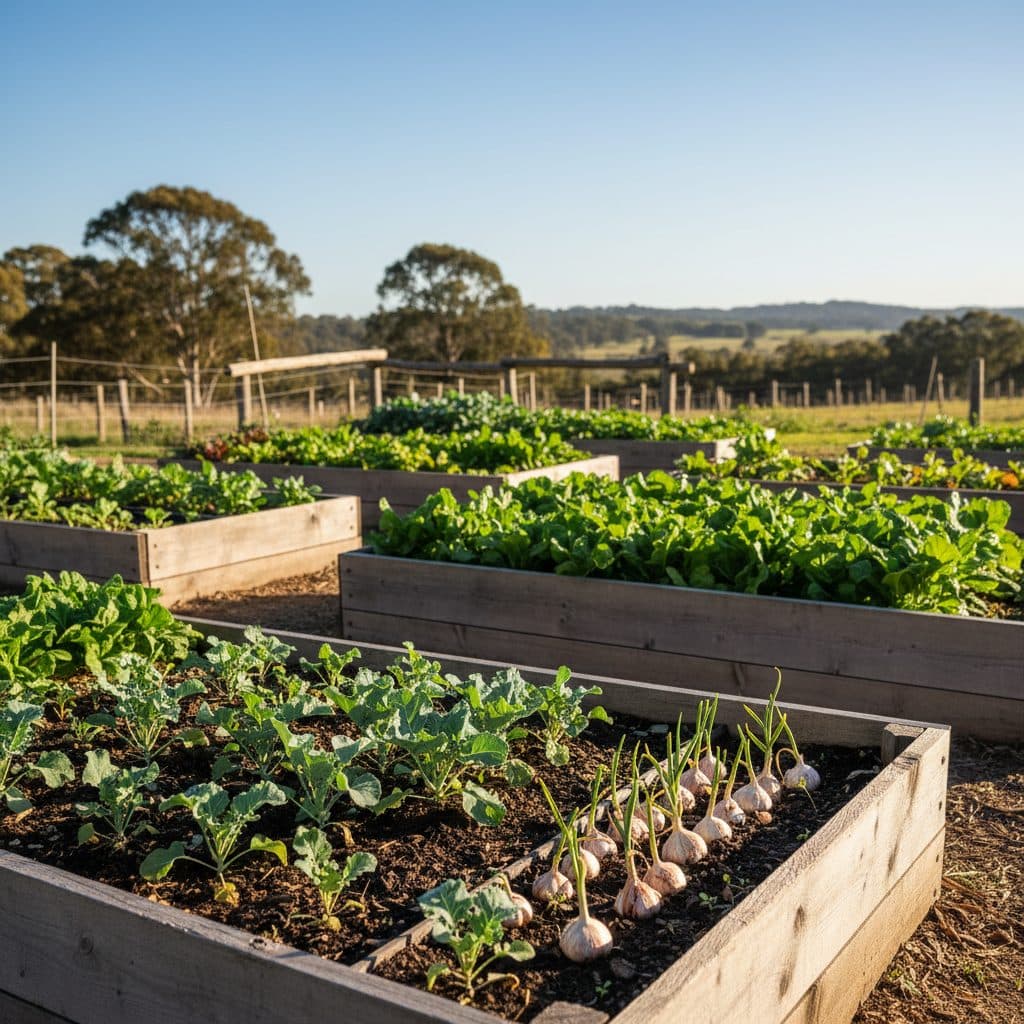
- Plant Australian garlic cloves from mid to late March in temperate and cool climates for harvest in late spring to early summer (November to December).
- Protect emerging autumn seedlings from nocturnal pests, native wildlife, and remaining hot spells using lightweight shade cloth and physical exclusion netting.
Quick answer: In Australia, March is a primary autumn planting month across southern and eastern states. In temperate and cool regions, plant broccoli, cauliflower, cabbage, kale, spinach, silverbeet, broad beans, carrots, and garlic. In subtropical zones, start tomatoes, capsicums, lettuce, and Asian greens as humidity drops, while tropical gardeners prepare seed trays for the approaching dry season.
March is an active planting month on the Australian gardening calendar. As the scorching heatwaves of summer give way to milder days and crisp autumn mornings, the veggie patch undergoes a major seasonal transformation.
Knowing what to plant in March in Australia requires matching your crop choices to your specific regional climate zone. Because Australia spans vast climatic differences (from the tropical north to the frost-prone valleys of Tasmania and the southern tablelands), sowing timelines vary considerably across the continent.
Whether you are revamping raised beds in Melbourne, preparing a suburban balcony in Brisbane, or managing an expansive garden in Adelaide or Perth, this guide provides a zone-by-zone planting guide and soil preparation strategy for March.
+-------------------------------------------------------------+
|              AUSTRALIAN MARCH PLANTING CALENDAR             |
|                                                             |
|   CLIMATE ZONE          KEY CROPS FOR MARCH                 |
|   ------------          -------------------                 |
|   Tropical              Snake beans, sweet potato, basil    |
|   Subtropical           Tomatoes, capsicums, Asian greens   |
|   Temperate             Brassicas, garlic, broad beans, peas|
|   Cool / Cold           Winter spinach, kale, broad beans   |
|   Arid / Inland         Carrots, beetroot, onions, brassicas|
+-------------------------------------------------------------+
What vegetables should you plant in temperate Australia during March?
Temperate Australia (including Sydney, Melbourne, Adelaide, Perth, and coastal New South Wales) experiences cooling daytime temperatures and reliable autumn rainfall in March. This is the prime window to establish slow-growing winter crops.
+-------------------------------------------------------------+
|              TEMPERATE ZONE MARCH SOWING GUIDE              |
|                                                             |
|   VEGETABLE             SOWING METHOD      DEPTH / SPACING  |
|   ---------             -------------      ---------------  |
|   Broccoli & Cabbage    Seed trays/pots    0.5 cm / 45 cm   |
|   Garlic Cloves         Direct in bed      3-5 cm / 10-15 cm|
|   Broad Beans           Direct in bed      5 cm / 20-25 cm  |
|   Carrots & Parsnips    Direct seed drills 0.5 cm / 5 cm    |
|   Silverbeet & Spinach  Direct or punnets  1 cm / 30 cm     |
|   Snow Peas & Sugar Snap Direct against net 2 cm / 10 cm    |
+-------------------------------------------------------------+- Winter brassicas: Sow seeds of broccoli, cauliflower, cabbage, kale, and kohlrabi into seed trays or transplant sturdy seedlings directly into beds. Establishing these plants in March ensures large, sturdy root frames before day length shortens in June.
- Garlic: Mid to late March (around the autumn equinox) is the traditional time to plant garlic cloves in temperate zones. Choose certified virus-free Australian-grown softneck or hardneck varieties.
- Legumes: Direct sow broad beans and peas towards the end of March. Legumes fix atmospheric nitrogen, conditioning the soil for subsequent spring crops. For comprehensive timing on fava varieties, read our guide on growing broad beans in Australia.
- Leafy greens and herbs: Sow rocket, coriander, parsley, and Asian greens (tatsoi, pak choi). Coriander and rocket thrive in autumn without bolting prematurely to seed as they do in summer.
What should you plant in subtropical and tropical zones?
In the subtropical belt (spanning south-east Queensland, northern New South Wales, and coastal Western Australia), March signals the welcome end of oppressive summer humidity.
For detailed month-by-month recommendations tailored to the unique subtropical rhythm where winter is the prime vegetable-growing season, explore our Brisbane vegetable planting guide.
+-------------------------------------------------------------+
|              SUBTROPICAL & TROPICAL MARCH CROPS             |
|                                                             |
|   REGION                PRIMARY PLANTING FOCUS              |
|   ------                ----------------------              |
|   Subtropical Coast     Tomatoes, capsicums, zucchini,      |
|                         silverbeet, French beans, carrots   |
|   Tropical Wet North    Bed prep, raised drainage mounds,   |
|                         sweet potato, snake beans, nursery  |
+-------------------------------------------------------------+
Subtropical recommendations (Brisbane to Northern NSW)
- Fruiting crops: Start seedlings of tomatoes, capsicums, chillies, and eggplants. These summer favourites struggle with subtropical fungal blights in January, but thrive when grown through mild, sunny autumn and winter months.
- Salad crops: Direct sow beetroot, carrots, lettuce, radish, and silverbeet.
- Cucurbits: Plant zucchini and bush cucumbers in well-drained, compost-amended soil.
Tropical north (Darwin, Cairns, Broome)
In the deep tropics, March marks the tail end of the monsoon wet season. Heavy downpours remain possible, so focus on raised mounds, clearing wet season weeds, and sowing heat-tolerant crops like sweet potato slips, snake beans, Ceylon spinach, and basil. Start tomato and capsicum seeds in sheltered seedling trays ready to plant into open ground in April as the dry season begins.
What can you plant in cool and cold Australian climates?
Cool and cold zones (including Tasmania, the ACT, the Victorian High Country, and elevated tablelands) experience rapid temperature drops and early autumn frosts by late March.
- Fast-maturing greens: Direct sow cold-tolerant spinach, winter lettuce, and mizuna. These leafy greens establish quickly and withstand sub-zero overnight temperatures.
- Root vegetables: Sow winter-hardy turnip, swede, and beetroot varieties early in the month.
- Broad beans and garlic: Plant hardneck garlic cloves and cold-hardy broad bean varieties such as 'Aquadulce' directly into open soil.
- Frost preparation: Install timber stakes or wire hoops over beds to support frost fleece or cloches before the first heavy autumn chills arrive.
To compare spring planting schedules with autumn tasks, look ahead to our guide on what to plant in October in Australia.
+-------------------------------------------------------------+
|                 COOL CLIMATE AUTUMN STRATEGY                |
|                                                             |
|   CROP CATEGORY         ACTION REQUIRED IN MARCH            |
|   -------------         ------------------------            |
|   Winter Brassicas      Plant out advanced seedlings now    |
|   Direct Root Crops     Complete sowings in first fortnight |
|   Garlic & Broad Beans  Direct plant throughout March       |
|   Perennial Crowns      Apply thick compost mulch           |
+-------------------------------------------------------------+
How should you prepare Australian soils for autumn planting?
Summer crops like tomatoes, sweetcorn, and pumpkins deplete large amounts of organic matter and nutrients from the soil. Revitalising your beds in March supports steady autumn growth.
+-------------------------------------------------------------+
|                 AUTUMN SOIL REVITALISATION                  |
|                                                             |
|   SOIL AMENDMENT        PURPOSE            APPLICATION      |
|   --------------        -------            -----------      |
|   Garden Compost        Structure & biota  1-2 buckets / m² |
|   Blood & Bone          Phosphorus/Calcium Handful per m²   |
|   Agricultural Lime     pH adjustment (Ca) For acidic soils |
|   Sugar Cane Mulch      Moisture & carbon  5 cm top layer   |
+-------------------------------------------------------------+- Clear spent summer plants: Remove exhausted summer vines, disposing of diseased foliage (such as powdery mildew-affected cucurbits) into the council green waste bin rather than your home compost heap.
- Incorporate organic matter: Dig in well-rotted compost or aged sheep manure across the top 15 cm of soil to restore microbial activity.
- Add slow-release nutrients: Apply a natural organic dressing such as blood and bone fertiliser to supply gentle, sustained phosphorus and calcium for strong root development. Inspect the subsoil for root-damaging curl grubs while aerating your garden beds.
- Mulch lightly: Spread a 3 to 5 cm layer of clean pea straw or sugar cane mulch across exposed beds to moderate soil temperature and suppress opportunistic autumn weeds.
For fruit growers planning winter berry patches, read our advice on growing strawberries in Australia.
How do you protect March autumn seedlings from pests and wildlife?
Warm early autumn days bring specific pest challenges across Australian gardens:
+-------------------------------------------------------------+
|                 AUTUMN PEST DEFENCE MATRIX                  |
|                                                             |
|   PEST / WILDLIFE       THREAT             MANAGEMENT       |
|   ---------------       ------             ----------       |
|   White Butterfly       Caterpillars chew  Insect netting   |
|   Native Possums        Foliage grazing    Physical cages   |
|   Snails & Slugs        Seedling rasping   Beer traps/tiles |
|   Fruit Fly             Late stone fruit   Biosecurity traps|
+-------------------------------------------------------------+
Excluding brassica pests
Cabbage white butterflies (Pieris rapae) remain active throughout March. Cover young broccoli, cabbage, and kale seedlings immediately with fine insect exclusion netting (mesh aperture around 1.3 mm, or under 5 mm for butterflies) draped over poly hoops. This prevents butterflies from depositing yellow eggs on the undersides of leaves.
Native possum management
Brushtail and ringtail possums are protected native wildlife under state and territory legislation throughout Australia. It is illegal to harm, trap without a permit, or relocate possums. Protect your autumn veggie patch through physical exclusion:
- Build sturdy timber frames covered in rigid galvanised wire mesh or heavy-duty shade cloth around productive raised beds.
- Ensure netting is taut and secured tightly to ground level to prevent wildlife entanglement.
Biosecurity and fruit fly awareness
In areas affected by Queensland fruit fly (Bactrocera tryoni), clean up any fallen, overripe summer fruit promptly. Dispose of infested fruit by solarising in sealed black plastic bags or boiling before disposal to break the breeding cycle. Adhere to all regional biosecurity fruit movement regulations when transporting home-grown produce across state or exclusion zones.