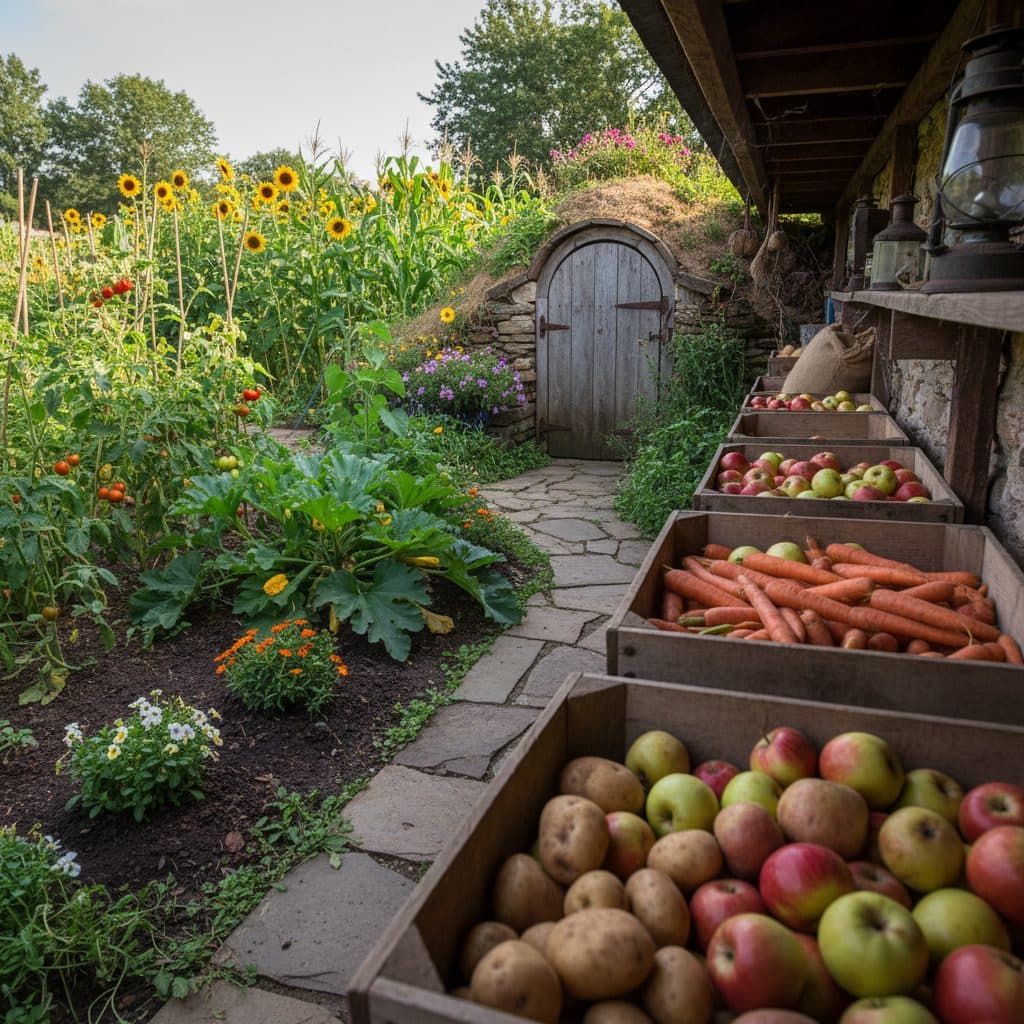
Key takeaways
- Most root vegetables, like carrots and beets, require cold storage between 32°F and 40°F with 90-95% relative humidity to prevent sprouting and shriveling. Potatoes are the one crop to watch: at the cold end of that range their starch converts to sugar, so they taste sweet and darken when fried unless you hold them at room temperature for a week or two before use.
- Crops such as onions, garlic, and winter squash prefer cool, dry conditions, typically 50°F to 60°F with 50-70% humidity, for long-term preservation.
- High humidity prevents moisture loss and weight reduction in many fruits and vegetables, which shrivel and soften within days in dry air.
- Dehydrating produce requires consistent warm temperatures (around 95°F to 110°F for delicate herbs and 125°F to 140°F for fruit and vegetable slices) and dry air, for safe, long-term preservation.
- Monitoring both temperature and humidity with reliable tools, such as a hygrometer, is essential for successful storage, especially in a root cellar or dedicated pantry space.
- Proper air circulation, achieved through slatted shelves or mesh bags, helps prevent mold and spoilage in stored crops, particularly in humid environments.
Quick answer: To store garden produce optimally, maintain specific temperature and humidity levels tailored to each crop type. For instance, most root vegetables require 32-40°F and 90-95% humidity, while onions and squash prefer 50-60°F with 50-70% humidity.
In the Pacific Northwest, where a long growing season often yields abundant harvests, knowing how to store your garden’s bounty effectively can mean fresh produce well into winter. From crisp apples picked in October to potatoes dug in late summer, extending the life of your crops beyond the harvest period is a practical skill. This guide focuses on the specific temperature and humidity ranges that keep common garden vegetables and fruits at their best, preventing spoilage and maintaining quality for weeks or even months.
Understanding the precise environmental conditions required for each type of produce is not just about avoiding waste; it is about preserving flavor and nutritional value. For instance, a carrot stored at 35°F and 95% relative humidity will retain its crispness and sweetness far longer than one left on a countertop at 70°F and 40% humidity. We will explore the science behind these recommendations, offering actionable advice for home growers in regions from USDA zone 5 to USDA zone 9.
The science of temperature and humidity in food storage
The longevity of harvested produce is largely determined by its respiration rate and moisture content, both of which are heavily influenced by ambient temperature and relative humidity. A higher temperature generally increases the respiration rate of fruits and vegetables, causing them to ripen faster, produce more ethylene gas, and ultimately spoil more quickly. For example, a tomato stored at 70°F might last one week, while one kept at 55°F could last two weeks. Conversely, very low temperatures can cause chilling injury in sensitive crops like tomatoes or cucumbers, leading to discoloration or soft spots.
The critical role of relative humidity
Relative humidity, expressed as a percentage, measures the amount of water vapor in the air compared to the maximum amount it can hold at a given temperature. High humidity, typically 85-95%, matters most for fresh produce because it minimizes moisture loss, which can lead to wilting, shriveling, and significant weight loss [2]. Fruit held in dry air loses weight steadily through moisture loss, showing up as shriveling and softening within days. Conversely, excessively high humidity combined with poor air circulation can foster mold and bacterial growth, especially at temperatures above 45°F. Monitoring these conditions with a thermometer and a hygrometer matters for successful preservation.
- Respiration rate: Lower temperatures reduce metabolic activity, extending shelf life.
- Moisture loss: High humidity prevents produce from drying out and shriveling.
- Ethylene production: Some fruits release ethylene, a ripening hormone, which can be slowed by cooler temperatures.
- Chilling injury: Certain crops are sensitive to temperatures below 45°F, requiring warmer storage.
- Mold and bacteria: Proper air circulation and balanced humidity prevent microbial growth.
Cold and humid storage: root cellars and refrigerators
For many root crops, leafy greens, and some fruits, a cold and humid environment is ideal. This typically means temperatures between 32°F and 40°F, coupled with a relative humidity of 90-95%. A traditional root cellar, or even a well-insulated garage or basement in USDA zone 6, can provide these conditions naturally. Carrots, beets, parsnips, and potatoes thrive in this environment, maintaining their crispness and preventing sprouting for up to five months. Apples, too, benefit from these conditions, lasting several months when stored properly.
Creating the right environment
To achieve high humidity in a root cellar, you might use damp sand or sawdust to layer root crops, or simply ensure the space has an earthen floor that can be periodically moistened. Refrigerators, while colder, can also be adapted. Many modern refrigerators maintain humidity around 60-70%, but crisper drawers are designed to hold higher moisture levels, often reaching 80-90% if kept closed and full. For leafy greens like spinach or kale, a quick wash, light drying, and storage in a sealed bag in the crisper drawer can extend their freshness for one to two weeks. Remember to check for condensation daily.
- Potatoes: Store at 35-40°F and 90-95% humidity for up to five months; at the cold end their starch turns to sugar, so hold them at room temperature for a week or two before frying to reverse it.
- Carrots and Beets: Ideal at 32-38°F and 90-95% humidity, lasting four to six months.
- Apples: Keep at 30-32°F and 90-95% humidity for three to six months.
- Cabbage: Store at 32-35°F and 90-95% humidity for up to three months.
- Leafy Greens: Refrigerate at 32-35°F and 95% humidity for one to two weeks in sealed containers.
Cool and dry storage: pantries and basements
Not all crops prefer the damp chill of a root cellar. Some, like onions, garlic, and winter squash, require a cool and dry environment to cure properly and store for extended periods. This typically means temperatures between 50°F and 60°F, with a relative humidity of 50-70%. A well-ventilated pantry, a dry basement, or even an unheated spare room in a home in USDA zone 7 can serve this purpose. These conditions allow the outer skins of onions and garlic to dry, forming a protective layer that prevents rot and extends their shelf life to six months or more.
Curing for long-term preservation
Before storing, many of these crops benefit from a curing period. For onions and garlic, this involves drying them in a warm, airy spot (around 75-80°F with good air circulation) for one to two weeks immediately after harvest. Winter squash, such as butternut or acorn, also benefits from curing at 70-80°F for ten days to two weeks to harden their skins, which can extend their storage life to three to six months. Once cured, they are ready for the cooler, drier storage conditions. Ensure good airflow by storing them on slatted shelves or in mesh bags, preventing moisture buildup that could lead to spoilage.
- Onions: Cure at 75-80°F for two weeks, then store at 50-60°F and 60-70% humidity for six to eight months.
- Garlic: Cure at 75-80°F for one to two weeks, then store at 50-60°F and 60-70% humidity for six to nine months.
- Winter Squash: Cure at 70-80°F for ten days, then store at 50-55°F and 50-70% humidity for three to six months.
- Sweet Potatoes: Cure at 85-90°F for ten days, then store at 55-60°F and 80-90% humidity for four to six months.
- Dried Beans: Store in airtight containers at 50-70°F and below 60% humidity for one to two years.
Warm and dry storage: dehydrating and curing
Beyond fresh storage, preserving produce through dehydration or specific curing methods relies on warm and very dry conditions. Dehydrating removes moisture content to below 10-15%, effectively stopping microbial growth and enzymatic activity. This method is excellent for herbs like garden sage, fruit leathers, or even sliced vegetables. Temperatures for dehydration typically range from 125°F to 140°F, maintained for several hours or days, depending on the food item and dehydrator model. The goal is to achieve a brittle or leathery texture, indicating sufficient moisture removal.
Methods for dry preservation
Curing, distinct from the short curing period for squash or onions, involves using salt, sugar, or smoke to preserve foods like meat or some peppers. For example, hot peppers can be strung and air-dried in a warm, dry room (around 70°F with 40-50% humidity) for several weeks until brittle. This process, often seen in regions like New Mexico for chili ristras, makes them shelf-stable for over a year. For more detailed guidance on drying various produce, consult resources like Dehydrating food: how to dry produce, herbs, and jerky. Always ensure proper air circulation, perhaps with a small fan, to facilitate even drying and prevent localized moisture pockets.
- Herbs (e.g., basil, oregano): Dry at 95-110°F until brittle, then store in airtight containers for six to twelve months.
- Fruit Slices (e.g., apples, pears): Dehydrate at 135-140°F until leathery, store in airtight containers for six to twelve months.
- Tomato Slices: Dry at 135°F until leathery and pliable, store for six to twelve months.
- Hot Peppers (air-dried): Dry at 70-80°F with good air circulation until brittle, store for one year.
- Mushrooms: Dehydrate at 125°F until crisp, store in airtight containers for six to twelve months.
Special considerations for specific crops
While general guidelines cover many vegetables, some crops have specific needs that deviate from the standard cold-humid or cool-dry categories. For example, peas, such as the Garden Pea, are best preserved by freezing or canning immediately after harvest, as their sugars convert to starch rapidly at room temperature. Freezing at 0°F or below effectively halts this process, preserving their sweetness for eight to twelve months. Another example is basil, which turns black in the refrigerator; it’s better stored at room temperature in a jar of water, like cut flowers, for up to one week.
Monitoring and rotation
Regardless of the storage method, regular monitoring of your stored produce is essential. Check for any signs of spoilage, such as mold, soft spots, or unusual odors, at least once a week. Remove any compromised items immediately to prevent the spread of decay to healthy produce. Practicing a ‘first in, first out’ rotation system ensures that older items are used before they spoil, maximizing your harvest’s utility. Even with ideal conditions, some crops, like apples, naturally release ethylene gas, which can accelerate ripening in nearby produce. Storing ethylene-producing fruits separately can extend the life of other sensitive items by several weeks.
- Tomatoes (ripe): Store at 50-55°F and 85-90% humidity for one to two weeks, never below 45°F.
- Cucumbers: Store at 50-55°F and 90-95% humidity for one week; sensitive to chilling injury below 45°F.
- Basil: Keep at room temperature (65-70°F) in water, not refrigerated, for up to seven days.
- Avocados: Ripen at room temperature (65-70°F), then refrigerate at 40°F for three to five days.
- Berries: Refrigerate unwashed at 32-35°F and 90-95% humidity for three to seven days.
Ideal storage conditions for common garden crops
Crop | Ideal Temperature (°F) | Ideal Humidity (%) | Storage Type | Estimated Shelf Life |
|---|---|---|---|---|
Apples | 30-32 | 90-95 | Cold & Humid | 3-6 months |
Beets | 32-38 | 90-95 | Cold & Humid | 4-6 months |
Cabbage | 32-35 | 90-95 | Cold & Humid | 2-3 months |
Carrots | 32-38 | 90-95 | Cold & Humid | 4-6 months |
Garlic | 50-60 | 60-70 | Cool & Dry | 6-9 months |
Onions | 50-60 | 60-70 | Cool & Dry | 6-8 months |
Potatoes | 35-40 | 90-95 | Cold & Humid | 4-5 months |
Sweet Potatoes | 55-60 | 80-90 | Cool & Humid | 4-6 months |
Winter Squash | 50-55 | 50-70 | Cool & Dry | 3-6 months |
Tomatoes (ripe) | 50-55 | 85-90 | Cool & Humid | 1-2 weeks |
Cucumbers | 50-55 | 90-95 | Cool & Humid | 1 week |
Herbs (dried) | 60-70 | Below 10 | Warm & Dry | 6-12 months |
Dried Beans | 50-70 | Below 60 | Cool & Dry | 1-2 years |
Root cellar humidity: Maintaining 90-95% relative humidity in a root cellar prevents the moisture loss that shrivels produce within days.
Potato storage: Potatoes stored at 35-40°F and 90-95% humidity can remain viable for up to five months, significantly longer than at warmer temperatures.
Dehydration temperature: For dehydration, run the dehydrator at 125-140°F to bring moisture content below about 15% and stop microbial growth. This is an air temperature, not an internal food temperature: evaporative cooling keeps the food itself cooler than the air around it, and drying alone does not pasteurise. Meat destined for jerky must be heated separately to a safe internal temperature before or after drying, following a tested USDA or extension recipe.
Onion curing: Curing onions at 75-80°F for two weeks before storage helps form a protective skin, extending their shelf life to six to eight months.
Frequently asked questions
What is the best way to store potatoes long-term?
Potatoes store best in a dark, cool, and humid environment, ideally between 35°F and 40°F with 90-95% relative humidity. This prevents sprouting and shriveling, allowing them to last for up to five months. Avoid storing them near onions, as gases from onions can accelerate potato spoilage.
How can I increase humidity in my root cellar?
To increase humidity in a root cellar, you can lightly dampen the earthen floor periodically, or place pans of water around the space. Another effective method is to layer root crops like carrots or beets in damp sand or sawdust, which helps maintain a localized humidity of over 90% around the produce.
Why do some vegetables need to be cured before storage?
Curing helps certain vegetables, such as onions, garlic, and winter squash, develop a protective outer skin or harden their rind. This process typically involves exposure to warmer temperatures (70-80°F) for one to two weeks, which reduces surface moisture and prevents rot, extending their shelf life by several months.
Can I store all my garden produce in the refrigerator?
No, not all garden produce benefits from refrigerator storage. While leafy greens and many fruits thrive at 32-40°F, items like tomatoes, basil, and winter squash can suffer chilling injury or flavor loss below 45°F. Always check specific temperature requirements; a refrigerator’s average temperature is around 38°F.
What is the ideal temperature for dehydrating food?
The ideal temperature for dehydrating most foods, including fruits and vegetables, ranges from 125°F to 140°F. This temperature range is high enough to remove moisture efficiently without cooking the food, ensuring a moisture content below 15% for safe, long-term storage.
How does relative humidity impact stored produce?
Relative humidity significantly impacts how long produce stays fresh. High humidity (90-95%) prevents moisture loss, keeping items like carrots and apples crisp and firm. Conversely, low humidity causes wilting, while excessively high humidity without proper airflow can lead to mold, especially at temperatures above 45°F.
References
- Supplemental Information 8: Soil temperature, air temperature and air humidity variations for every two hours of all the days in July 2018 in the plots (2023). Supplemental Information 8: Soil temperature, air temperature and air humidity variations for every two hours of all the days in July 2018 in the plots.
- Effects of storage temperature and humidity on loss of weight by fruit / (1962). Effects of storage temperature and humidity on loss of weight by fruit /.
- Local Temperature and Humidity Impacts from Rain Garden Implementation in Contiguous U.S. Cities Using Urban Climate Modeling (2025). Local Temperature and Humidity Impacts from Rain Garden Implementation in Contiguous U.S. Cities Using Urban Climate Modeling.
- USDA Natural Resources Conservation Service (2024). USDA Natural Resources Conservation Service.