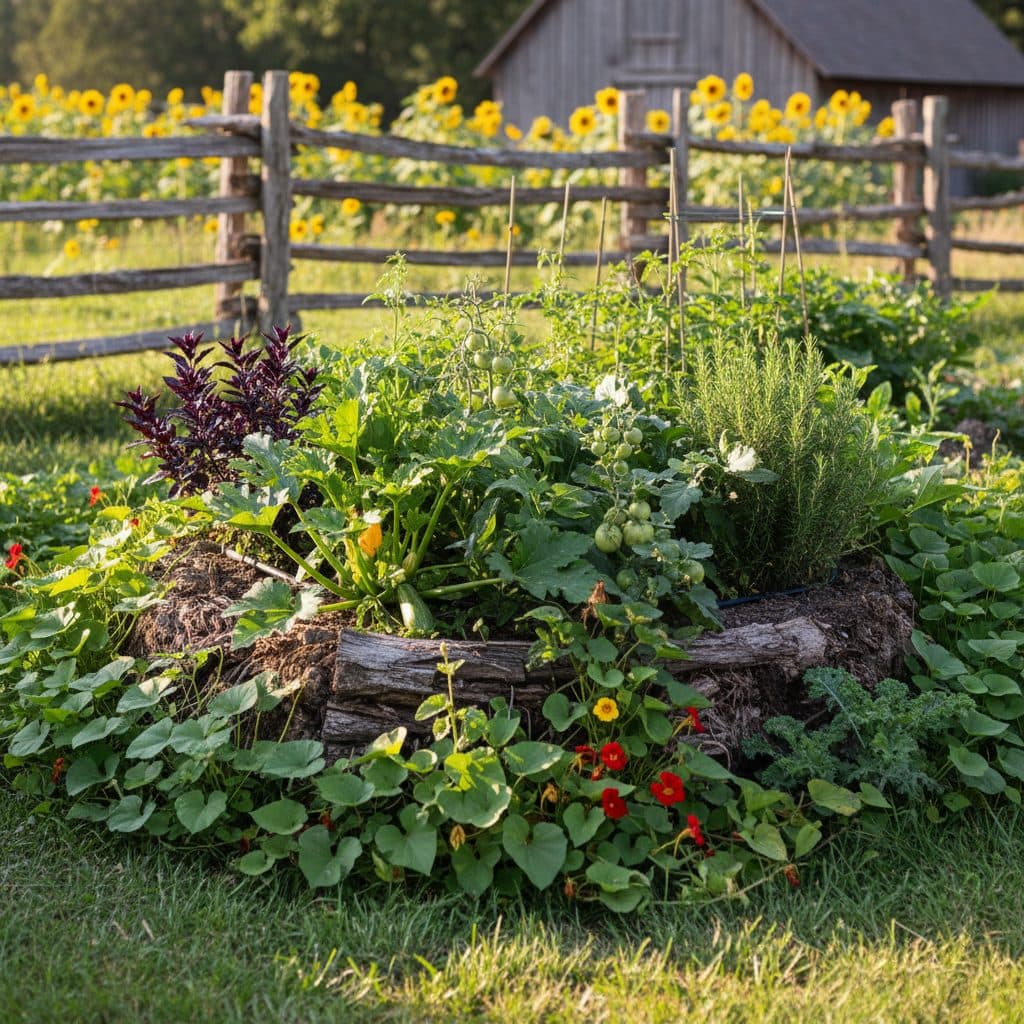
Key takeaways
- Hugelkultur mounds significantly improve water retention, reducing irrigation by 30-50% in arid regions like the Southwest.
- The core of a hugelkultur mound consists of decaying wood, which acts as a sponge, storing water and releasing nutrients over 10-20 years.
- Careful layering of wood, green waste, and soil creates a living system that builds fertility and extends the growing season by several weeks.
- Proper site selection and mound orientation (north-south in the Northern Hemisphere) affect sunlight exposure and drainage.
- Integrating passive irrigation methods like ollas or wicking beds can further improve water efficiency within the mound system.
- Mounds settle over time, requiring initial watering and careful plant selection, with drought-tolerant species on top and moisture-loving plants at the base.
Quick answer: Hugelkultur is a gardening method using raised beds with a core of decaying wood, which acts like a sponge to absorb and slowly release water and nutrients. This technique can reduce irrigation needs by 30-50% and build soil fertility for 10-20 years.
In arid regions of the United States, such as USDA zone 8 in Southern California or parts of Arizona, water conservation is a critical aspect of successful gardening. Traditional gardening often requires significant irrigation, with some estimates suggesting that outdoor watering accounts for 30% or more of household water use in many areas. Hugelkultur, a German term meaning “hill culture,” offers a powerful solution by creating raised garden beds centered around decaying wood, which acts as a massive sponge to store water and nutrients for plants [1].
A well-built hugelkultur mound can dramatically reduce your need for supplemental irrigation, sometimes by as much as 50% after the first year, especially in areas receiving less than 20 inches of annual rainfall. Beyond water savings, these mounds build soil fertility over a long period, often 10 to 20 years, and can even extend your growing season by several weeks due to the warmth generated by decomposition. Understanding the precise steps for layering wood, capping with soil, and managing the settling process determines whether you get these benefits in your own garden.
What is hugelkultur and why build one?
Hugelkultur is a gardening method that involves building raised beds with a core of decaying wood. This technique has been practiced in Central Europe for centuries, primarily in regions with cold winters and short growing seasons, but its benefits are now recognized globally, from USDA zone 3 in Minnesota to zone 10 in Florida. The primary advantage of a hugelkultur mound is its exceptional water retention capacity; the decomposing wood acts like a sponge, absorbing rainfall and irrigation water and slowly releasing it to plant roots over time [2]. This can lead to a 30-50% reduction in irrigation needs once the mound is established, especially in drier climates [5].
the benefits of a living mound
Beyond water harvesting, hugelkultur mounds offer several other significant advantages for growers. The decomposition process within the mound generates a small amount of heat, which can extend the growing season by two to four weeks in cooler climates, allowing for earlier spring planting and later fall harvests. As the wood breaks down, it releases a steady supply of nutrients, enriching the soil and reducing the need for external fertilizers for 10 to 20 years. This creates a highly fertile, self-sustaining ecosystem that supports robust plant growth and diverse microbial life. For example, a 6-foot long, 3-foot high mound can hold hundreds of gallons of water after a significant rain event, providing consistent moisture for plants even during dry spells.
- Enhanced Water Retention: Decaying wood absorbs and stores vast amounts of water, reducing irrigation by up to 50% in many gardens.
- Improved Soil Fertility: As wood decomposes, it releases nutrients, building rich, organic soil for 10-20 years.
- Extended Growing Season: Internal decomposition generates warmth, potentially extending planting seasons by several weeks.
- Better Drainage and Aeration: The mound structure prevents waterlogging and promotes healthy root development.
- Reduced Waste: Utilizes fallen branches and logs, turning yard waste into a productive garden feature.
Site selection and initial design
Choosing the right location for your hugelkultur mound matters for its long-term success, especially in diverse US climates ranging from USDA zone 4 to zone 9. Consider sunlight exposure; most vegetables and fruits require at least six to eight hours of direct sunlight per day. In cooler regions like the Pacific Northwest, a south-facing slope can maximize sun exposure, while in hotter areas like the Southwest, some afternoon shade might be beneficial for certain crops. Ensure the site has good air circulation but is not overly exposed to strong winds, which can dry out the mound prematurely. For larger mounds, consider access for wheelbarrows and tools during construction.
planning your mound’s dimensions and orientation
The size and shape of your hugelkultur mound will depend on your available space and gardening goals. A common size for backyard gardens is a mound that is 4 to 8 feet wide at the base, 10 to 20 feet long, and 3 to 6 feet high. Taller mounds tend to retain more moisture and offer more surface area for planting, but they also require more material and effort to build. Orienting your mound on a north-south axis in the Northern Hemisphere can help ensure that both sides receive adequate sunlight throughout the day. In a garden in central Texas, for example, a 5-foot high mound oriented north-south can provide diverse microclimates, with the east side warming up quickly in the morning and the west side retaining heat later into the afternoon. Remember to consider any local regulations regarding mound height or proximity to property lines, especially if you’re building a large structure.
- Sunlight: Select a spot receiving six to eight hours of direct sun for most crops.
- Drainage: Ensure the site has reasonable drainage to prevent waterlogging at the mound’s base.
- Orientation: Position mounds north-south for even sun exposure across both sides.
- Size: Plan for a base width of 4-8 feet, length of 10-20 feet, and height of 3-6 feet.
- Access: Leave adequate space around the mound for future maintenance and harvesting.
Layering the mound: wood, green matter, and soil
The heart of a hugelkultur mound is its layered structure, beginning with large pieces of wood. Start by placing substantial logs and thick branches at the base of your prepared trench. Hardwoods like oak, maple, or alder are excellent choices, as they decompose slowly and provide long-term benefits for 15-20 years [3]. Avoid woods that are known to inhibit plant growth, such as black walnut, or those that decompose too quickly, like willow. In a garden in the Ozark region of Missouri, using fallen oak and hickory logs is a common and effective practice. Ensure the largest pieces are at the bottom, creating air pockets for initial decomposition and drainage. You can use tools like an Expandable Hose with 7-Pattern Spray Nozzle to pre-soak the wood as you build.
building up the layers for fertility
Once the base layer of large wood is in place, begin adding smaller branches, twigs, and other woody debris. This layer helps fill in gaps and provides a more consistent base. Next, introduce a layer of green organic matter, such as grass clippings, leaves, straw, or old hay. This material adds nitrogen, which drives the initial decomposition of the carbon-rich wood. A layer of partially decomposed compost or manure, about 6 to 12 inches thick, should follow. This provides a nutrient boost and introduces beneficial microorganisms. Finally, cap the mound with a thick layer of topsoil, at least 6 to 12 inches deep, to provide a suitable medium for planting. This topsoil should be rich in organic matter, similar to what you’d find in organic gardening soil, to support healthy plant growth from day one. A mound built this way in a USDA zone 6 garden in Ohio can begin supporting crops within a few weeks of completion.
- Base Layer: Start with large logs (oak, maple) in a 6-12 inch trench.
- Mid-Layers: Add smaller branches, twigs, and woody debris to fill gaps.
- Green Material: Incorporate grass clippings, leaves, and straw for nitrogen.
- Compost/Manure: Apply a 6-12 inch layer of compost or aged manure.
- Topsoil Cap: Finish with 6-12 inches of rich topsoil for planting.
The soil cap, settling, and planting strategy
Once all the organic layers are in place, the final step is to apply a generous cap of topsoil. This layer should be at least 6 to 12 inches deep across the entire mound to provide sufficient depth for plant roots and to prevent the underlying wood from drying out too quickly. After applying the topsoil, thoroughly water the entire mound. This initial watering helps settle the layers, removes air pockets, and initiates the decomposition process. You might need to apply 50-100 gallons of water to a 10-foot long mound to ensure it is thoroughly saturated. This initial saturation is critical for the mound to begin acting as a water reservoir. Expect the mound to settle by 10-20% of its initial height over the first few months, and potentially more over the first year, as the organic materials compact and decompose.
planting for success and long-term care
When planting, consider the microclimates created by the mound. The top of the mound will be drier and warmer, suitable for drought-tolerant plants like herbs or some varieties of peppers. The sides and base, especially the north-facing side in the Northern Hemisphere, will retain more moisture and be cooler, ideal for water-loving plants such as squash, cucumbers, or even Chinese Water Chestnut if conditions are right. For example, a hugelkultur mound in a USDA zone 5 garden in Colorado could support tomatoes on the sunny south-facing slope and lettuce on the shadier north-facing side. Integrating passive irrigation methods, such as burying ollas (unglazed clay pots) into the mound, can further improve water delivery directly to the root zone and reduces surface evaporation by up to 70%. During the first year, you may need to water more frequently until the wood fully saturates and the internal ecosystem establishes. After that, watering needs will significantly decrease, often by 50% or more compared to a traditional garden bed [4].
- Topsoil Depth: Apply 6-12 inches of rich topsoil over the entire mound.
- Initial Watering: Thoroughly saturate the mound with 50-100 gallons of water to settle layers.
- Settling: Expect 10-20% height reduction in the first year as materials decompose.
- Planting Strategy: Place drought-tolerant plants on top, moisture-loving plants at the base.
- Long-Term Care: Monitor for settling, refill topsoil as needed, and enjoy reduced watering after the first year.
Integrating hugelkultur with other water harvesting techniques
Hugelkultur mounds are powerful water harvesters on their own, but their effectiveness can be amplified by integrating them with other passive irrigation and water harvesting strategies. For instance, designing your mound within a swale system, common in permaculture designs in regions like the high desert of New Mexico, allows it to capture and hold even more runoff water. A swale, which is a shallow ditch on contour, can direct hundreds of gallons of rainwater directly to the base of your hugelkultur mound during a significant storm event, ensuring deep saturation of the wood core. This combination is particularly effective in areas receiving seasonal heavy rainfall, like the monsoon season in Arizona, where a 1-inch rain event over a 100 square foot area yields over 60 gallons of water.
improving water efficiency with passive irrigation
Further improving water efficiency involves incorporating passive irrigation tools directly into the mound. Burying unglazed clay ollas near plants allows water to slowly seep out, directly to the root zone, reducing evaporation by up to 70% compared to surface watering. For a 10-foot long mound, placing three to five 1-gallon ollas can provide consistent moisture for several days between refills. Another option is to create small wicking beds at the base or along the sides of the mound, which use capillary action to draw water up from a reservoir. This can be especially useful for moisture-loving plants. Directing downspouts from your home’s rainwater harvesting system to irrigate new mounds can also provide the initial saturation new mounds need. In a USDA zone 7 garden in North Carolina, combining a hugelkultur mound with a 50-gallon rain barrel can virtually eliminate the need for municipal water during dry periods for many crops.
- Swale Integration: Build mounds within swales to capture and direct surface runoff water.
- Olla Irrigation: Bury unglazed clay ollas for efficient, targeted root-zone watering.
- Wicking Beds: Create small wicking sections for consistent moisture supply to specific plants.
- Rainwater Harvesting: Connect downspouts to direct collected rainwater to new mounds.
- Mulching: Apply a 2-4 inch layer of organic mulch on top to further reduce evaporation.
Comparison of Hugelkultur Mounds to Traditional Raised Beds
Feature | Hugelkultur Mound | Traditional Raised Bed |
|---|---|---|
Water Retention | Excellent (wood acts as sponge, 30-50% less irrigation) | Good (depends on soil mix, often requires daily watering) |
Soil Fertility | Self-fertilizing for 10-20 years (wood decomposition) | Requires annual amendment with compost/fertilizer |
Cost of Materials | Low (uses logs, branches, yard waste) | Moderate to High (lumber, purchased soil mix) |
Initial Labor | High (moving logs, layering materials) | Moderate (building frame, filling with soil) |
Lifespan | 10-20+ years (as wood slowly decomposes) | 5-15 years (frame integrity, soil depletion) |
Season Extension | Yes (internal heat, 2-4 weeks longer) | Minimal (unless specifically designed for heat) |
Water Savings: A mature hugelkultur mound can reduce irrigation needs by 30-50% in arid climates after its first year, saving hundreds of gallons of water annually.
Long-Term Fertility: The decomposing wood within a hugelkultur mound provides a steady supply of nutrients, sustaining soil fertility for 10 to 20 years without significant external inputs.
Season Extension: Internal heat generated by decomposition can extend the growing season by two to four weeks in temperate zones, allowing earlier planting in spring (USDA zone 5).
Explore water harvesting articles
Frequently asked questions
What kind of wood should I use for hugelkultur?
Use hardwoods like oak, maple, alder, or cottonwood, which decompose slowly and provide long-term benefits for 15-20 years. Avoid black walnut, black locust, or cedar, as they can inhibit plant growth, and softwoods like willow that decompose too quickly. Ensure wood is not treated or diseased.
How long does it take for a hugelkultur mound to settle?
A hugelkultur mound will settle significantly over its first year, typically losing 10-20% of its initial height as the organic materials compact and begin to decompose. Expect some minor settling to continue for several years after that, requiring occasional topsoil replenishment.
Do hugelkultur mounds attract pests?
Initially, the decomposing wood might attract some insects like termites or carpenter ants, but these are generally beneficial decomposers and typically do not bother healthy plants. If the mound is built correctly with a thick topsoil cap (6-12 inches), most garden pests won’t be an issue, and the overall ecosystem supports beneficial insects.
How much water do hugelkultur mounds save?
Once established, hugelkultur mounds can reduce irrigation needs by 30-50% compared to traditional garden beds, especially in drier climates or USDA zones 7-10. This is because the decaying wood acts as a sponge, storing hundreds of gallons of water and slowly releasing it to plants.
Can I build a hugelkultur mound in any climate?
Yes, hugelkultur can be adapted to most climates, from USDA zone 3 to zone 10. In very wet climates, ensure good drainage and avoid overly tall mounds. In very dry climates, focus on deep wood layers and integrate additional water harvesting techniques like swales to maximize water retention.
How often do I need to fertilize a hugelkultur mound?
A well-built hugelkultur mound will release nutrients from its decomposing wood core for 10 to 20 years, significantly reducing or even eliminating the need for external fertilization. You might consider light compost top-dressing every few years, especially for heavy feeders, but regular fertilization is generally not required.
References
- Chapter Nine. Mound Nests (2011). Chapter Nine. Mound Nests.
- Mound Nests (2011). Mound Nests.
- Mound Nests (2024). Mound Nests.
- Chapter nine. Mound Nests (2024). Chapter nine. Mound Nests.
- PEMBERDAYAAN MASYARAKAT MELALUI APLIKASI HUGELKULTUR UNTUK MENUNJANG KEMANDIRIAN EKONOMI DAN PANGAN RUMAH TANGGA (2022). PEMBERDAYAAN MASYARAKAT MELALUI APLIKASI HUGELKULTUR UNTUK MENUNJANG KEMANDIRIAN EKONOMI DAN PANGAN RUMAH TANGGA.
- USDA Natural Resources Conservation Service (2024). USDA Natural Resources Conservation Service.