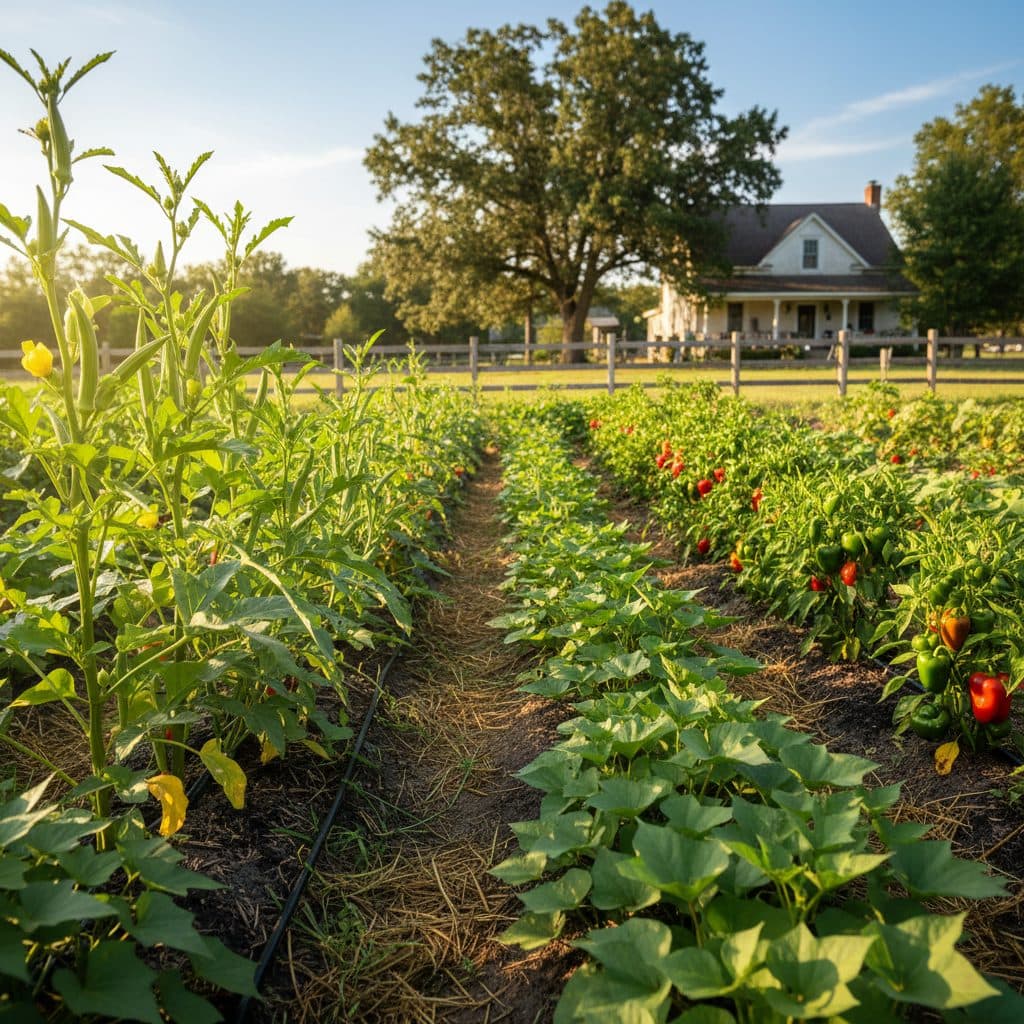
Key takeaways
- Avoid planting cool-season crops like broccoli and spinach when daytime temperatures consistently exceed 80°F, as they will bolt or produce poorly.
- Prioritize building soil organic matter to 5-8% to significantly improve water retention and nutrient availability for heat resilience.
- Choose heat-tolerant alternatives such as okra, sweet potatoes, southern peas, and specific tomato varieties for successful summer harvests in warmer zones.
- Implement efficient watering strategies, including deep, infrequent irrigation and 3-6 inches of organic mulch, to conserve up to 50% of water.
- Use succession planting and temporary shade cloth (30-50% shade) to extend harvest windows and protect sensitive plants from intense midsummer sun.
- Focus on drought-tolerant varieties and practices that support plant health in challenging conditions, ensuring a productive garden even in dry periods.
Quick answer: To garden successfully in USDA zones 6-9 during hot summers, prioritize heat-tolerant crops like okra and sweet potatoes, build soil organic matter, and implement efficient watering strategies. Avoid cool-season crops when temperatures consistently exceed 80°F to prevent bolting and poor yields.
In many parts of the US, from the humid southeast to the arid southwest, midsummer heat can be a formidable opponent for gardeners. For example, in USDA zones 7 and 8, July and August often bring average daily temperatures above 90°F, making it a poor time to plant cool-season vegetables. Attempting to grow crops like broccoli or spinach during these periods typically leads to disappointing results, with plants bolting quickly or producing bitter, stunted yields. Understanding which crops to skip and what to plant instead maintains a productive garden through the hottest months.
Midsummer gardening requires adapting crop choices to sustained heat. Focusing on heat-tolerant varieties, soil organic matter, and efficient watering keeps beds productive when temperatures climb past 95°F across the 35% of US growing regions facing extreme summer heat.
Why cool-season crops struggle in midsummer
Cool-season crops, including many popular leafy greens and brassicas, are bred for cooler temperatures, typically thriving between 55°F and 75°F. When daytime temperatures consistently exceed 80°F, these plants experience significant stress. For instance, lettuce varieties like ‘Black Seed Simpson’ often bolt (sending up a flower stalk) within days of a heatwave, leaving their leaves bitter and inedible. Spinach, a notoriously heat-sensitive crop, will also bolt rapidly, reducing its harvest window to mere weeks in warm climates like USDA zone 9.
The impact of heat on plant physiology
High temperatures accelerate the plant’s life cycle, pushing it towards reproduction rather than vegetative growth. This is particularly evident in crops like broccoli, where flower heads form prematurely and loosen, becoming unmarketable. Research indicates that broccoli yield can decrease by 30% or more when temperatures exceed its optimal range for prolonged periods. Furthermore, root vegetables such as beets, while somewhat tolerant, can become woody and lose their sweetness if planted too late into the summer in regions like central Texas, where soil temperatures regularly reach 85°F.
- Bolting: premature flowering, often triggered by heat stress.
- Bitter flavor: accumulation of compounds that make leaves unpalatable.
- Stunted growth: reduced leaf size and overall plant vigor.
- Poor head formation: in brassicas, heads may be loose or small.
- Increased pest pressure: stressed plants are more susceptible to insects.
Building soil resilience for hotter summers
A healthy soil ecosystem is the bedrock of a resilient garden, particularly when facing midsummer heat and potential drought. Soil rich in organic matter acts like a sponge, holding significantly more water than depleted soil. For every 1% increase in soil organic matter, the soil’s water-holding capacity can increase by 20,000 to 27,000 gallons per acre, according to the USDA Natural Resources Conservation Service [1]. This means a garden with 5% organic matter can retain substantially more moisture than one with just 1%, reducing the need for frequent irrigation by up to 30% during dry spells in places like arid Arizona.
Strategies for improving soil structure
Incorporating compost is one of the most effective ways to boost organic matter. Aim for a 2-inch layer annually, tilled into the top 6 inches of soil. Cover cropping during off-seasons, using plants like cereal rye or clover, also adds biomass and protects the soil from erosion. These practices improve soil structure, allowing roots to penetrate deeper, accessing moisture and nutrients more effectively. For instance, deep-rooted plants can reach water tables 2-3 feet below the surface, a major advantage in regions experiencing 45-day dry periods. Consider using a slow-release organic fertilizer like fermented soybean meal to continuously feed your soil’s microbial life, which is essential for nutrient cycling even in higher temperatures.
- Add compost: 2 inches annually, worked into the topsoil.
- Cover cropping: plant legumes or grains in fallow beds.
- Minimize tillage: protect soil structure and microbial networks.
- Mulch heavily: 3-6 inches of organic material to conserve moisture.
- Regular soil testing: monitor nutrient levels and pH every 2-3 years.
Heat-tolerant alternatives for summer planting
When cool-season crops are out of the question, a wealth of heat-loving vegetables can take their place, ensuring a continuous harvest through the summer. These plants are often native to warmer climates or have been bred for resilience in high temperatures, performing best when daily temperatures are consistently above 85°F. For example, okra, a staple in Southern gardens, thrives in temperatures up to 100°F and can produce pods daily once established. Sweet potatoes, which are tropical in origin, require a long, warm growing season of 90-120 days and tolerate dry conditions well once their vines cover the ground.
Cultivating successful summer crops
Consider planting varieties of southern peas (also known as cowpeas) like ‘California Blackeye’ or ‘Pinkeye Purple Hull’. These legumes are incredibly drought-tolerant and productive in heat, providing nitrogen to the soil while yielding abundant pods. Many pepper varieties, especially hot peppers, also flourish in intense summer sun, with some ‘Habanero’ types performing optimally at 90°F. Even some tomato varieties, particularly determinate types like ‘Celebrity’ or ‘Florida 91’, are bred for heat tolerance, setting fruit when night temperatures remain above 70°F.
- Okra: ‘Clemson Spineless’, ‘Burgundy’.
- Sweet Potatoes: ‘Beauregard’, ‘Covington’.
- Southern Peas: ‘Blackeye’, ‘Pinkeye Purple Hull’.
- Peppers: ‘Jalapeño’, ‘Habanero’, ‘Bell Boy’.
- Eggplant: ‘Black Beauty’, ‘Ichiban’.
Water management for drought resilience
Efficient water management is essential in midsummer, especially in regions prone to drought, like California or the Great Plains. Overwatering wastes resources and can lead to fungal diseases, while underwatering stresses plants and reduces yields by 20-40%. The goal is to provide deep, infrequent watering that encourages roots to grow downwards, seeking moisture. A good rule of thumb is to deliver about 1 inch of water per week, either from rainfall or irrigation, ensuring it penetrates 6-12 inches into the soil profile. This can be monitored effectively with a soil moisture meter, which provides precise readings at various depths.
Conserving moisture with mulching and irrigation
Mulching is a simple yet incredibly effective strategy for water conservation. Applying a 3-6 inch layer of organic mulch, such as straw, wood chips, or shredded leaves, around plants can reduce soil evaporation by up to 50% and keep soil temperatures up to 10°F cooler. Drip irrigation or soaker hoses are also far more efficient than overhead sprinklers, delivering water directly to the root zone with minimal loss to evaporation or runoff. These systems can save 30-50% more water compared to traditional methods, as noted by the EPA [2]. In areas with limited rainfall, consider rainwater harvesting systems; a 1,000 square foot roof can collect 600 gallons of water from a single inch of rain.
- Deep watering: 1 inch per week, penetrating 6-12 inches.
- Organic mulch: 3-6 inches of straw or wood chips.
- Drip irrigation: delivers water directly to root zones.
- Rainwater harvesting: collect runoff for garden use.
- Morning irrigation: reduces evaporation and disease risk.
Extending the harvest with shade and succession planting
Even with heat-tolerant varieties, midsummer’s intense sun can sometimes be too much, especially in regions like the desert southwest where temperatures can exceed 110°F. Strategic use of shade can protect plants from sunburn and reduce heat stress, allowing them to continue producing. Shade cloth, typically providing 30-50% shade, can be draped over hoops or frames to shield sensitive plants during the hottest parts of the day. This simple measure can lower leaf temperatures by 10-15°F, preventing wilting and promoting better fruit set for crops like tomatoes and peppers.
Maximizing yield with staggered planting
Succession planting involves staggering plantings of the same crop every 2-4 weeks to maintain a continuous harvest instead of a single concentrated yield. For example, planting bush beans every three weeks from late spring through midsummer can provide fresh beans from July until the first fall frost in USDA zone 6. This strategy is also effective for heat-tolerant greens like Malabar spinach or New Zealand spinach, which can be planted in batches to extend their availability. Starting seeds indoors in a controlled environment can give you a head start on seedlings for succession planting, ensuring sturdy young plants are ready when garden conditions are optimal.
- Shade cloth: 30-50% shade for sensitive crops.
- Succession planting: plant every 2-4 weeks for continuous harvest.
- Intercropping: taller plants provide natural shade for shorter ones.
- Morning sun exposure: ensure plants get at least 6 hours of morning sun.
- Windbreaks: protect plants from drying winds, especially in arid areas.
Midsummer performance: cool-season vs. heat-tolerant crops
crop | optimal temp range (°f) | midsummer performance (>85°f) |
|---|---|---|
broccoli | 60-75 | bolts, small heads, bitter taste. yield reduced by 30%. |
spinach | 50-70 | bolts rapidly, very bitter, short harvest window (weeks). |
lettuce | 55-75 | bolts quickly, leaves become tough and bitter. |
okra | 80-100 | thrives, high daily production, excellent drought tolerance. |
sweet potato | 75-95 | thrives, long growing season (90-120 days), good ground cover. |
southern peas | 70-90 | very productive, drought-tolerant, improves soil nitrogen. |
soil organic matter: Increasing soil organic matter by just 1% can boost water retention by 20,000-27,000 gallons per acre [1].
water savings: Drip irrigation systems can reduce water usage by 30-50% compared to traditional overhead sprinklers [2].
shade cloth benefits: Using 30-50% shade cloth can lower plant leaf temperatures by 10-15°F during peak summer heat.
Frequently asked questions
What temperature range is considered too hot for cool-season crops?
Cool-season crops typically suffer when sustained daytime temperatures exceed 80°F. For example, lettuce will often bolt rapidly when temperatures are consistently above 85°F for more than a few days, making it inedible.
How much organic matter should my soil have for optimal water retention?
For optimal water retention and overall soil health, aim for your garden soil to have 5-8% organic matter. This can increase its water-holding capacity significantly, potentially by thousands of gallons per acre [1].
What are some quick-growing heat-tolerant vegetables for midsummer planting?
Bush beans can mature in about 50-60 days, making them a good option for midsummer succession planting. Southern peas also grow quickly and are highly productive in hot weather, often ready for harvest in 60-70 days.
Can I still grow some leafy greens in summer?
Yes, but choose heat-tolerant greens like Malabar spinach, New Zealand spinach, or specific varieties of Swiss chard and collards. These can tolerate temperatures up to 90°F or more, especially with some afternoon shade.
How much water does a typical garden need per week in summer?
Most vegetable gardens require about 1 inch of water per week during the summer, either from rainfall or irrigation. This amount should penetrate 6-12 inches deep into the soil to encourage strong root development.
References
- USDA Natural Resources Conservation Service (2024). USDA Natural Resources Conservation Service.
- EPA — Soak Up the Rain (2024). EPA — Soak Up the Rain.
- SARE — Sustainable Agriculture Research & Education (2023). SARE — Sustainable Agriculture Research & Education.
- ATTRA / NCAT Sustainable Agriculture (2023). ATTRA / NCAT Sustainable Agriculture.
- USDA National Agroforestry Center (2023). USDA National Agroforestry Center.