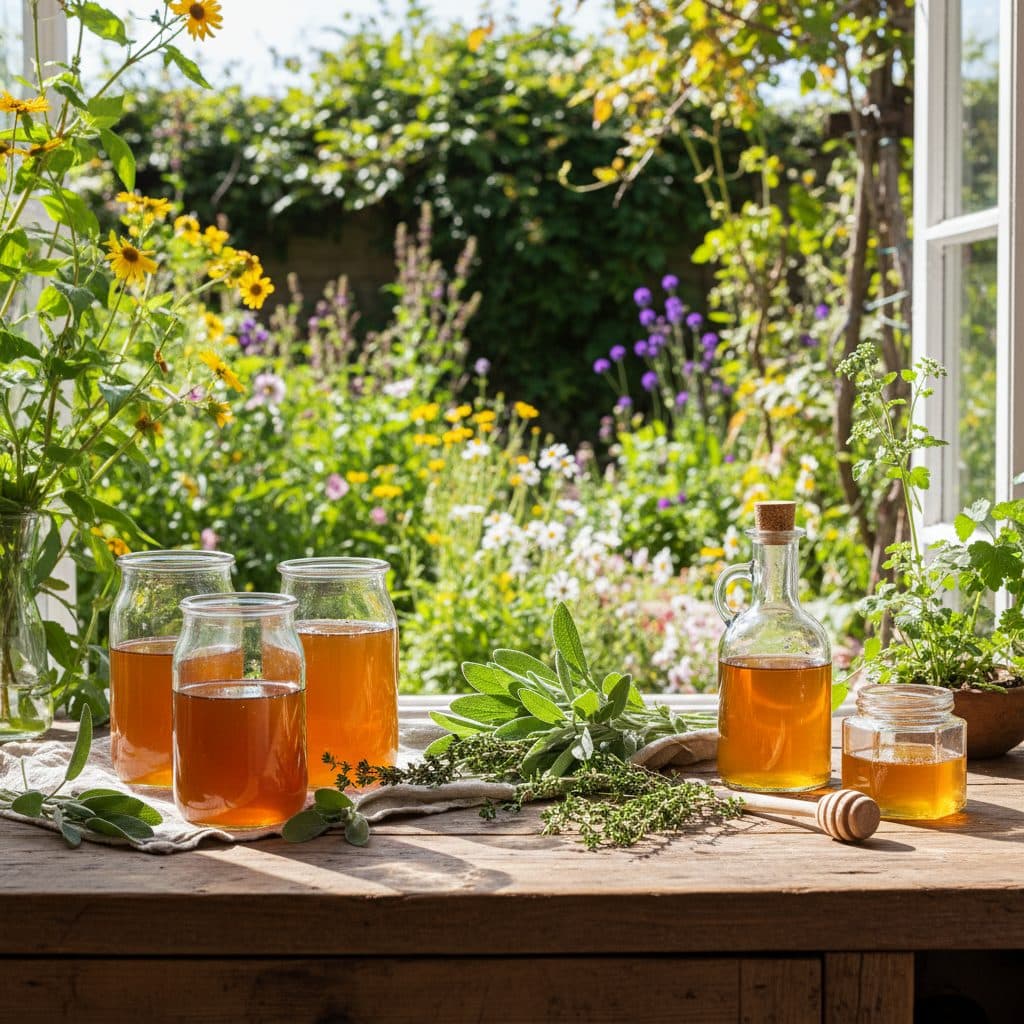
Key takeaways
- Oxymels are a blend of vinegar, honey, and herbs, often used for respiratory support and mineral delivery.
- Fire cider is a spicy, immune-boosting oxymel, traditionally made with pungent ingredients like ginger and horseradish.
- The typical ratio for an oxymel is 1:1:1 for vinegar, honey, and herb volume, though this can vary.
- Fermentation in fire cider can reduce foodborne pathogens by more than 99% within 24 hours [4].
- Many common garden herbs, like sage and thyme, are excellent for making effective herbal remedies.
- Proper storage in cool, dark conditions can extend the shelf life of these remedies to 12-18 months.
Quick answer: Oxymels and fire cider are traditional herbal remedies made by steeping herbs in a blend of vinegar and honey. These preparations are simple to craft at home, offering a natural way to support wellness and potentially save money on store-bought products.
For many gardeners in regions like the Pacific Northwest or the humid Southeast, where seasonal shifts bring a variety of wellness challenges, cultivating a medicinal herb garden offers more than just beauty. It provides a direct path to crafting potent, traditional remedies right from your backyard. Two such preparations, oxymels and fire cider, combine vinegar's preserving and extracting power with honey's soothing qualities. The tonics have been used for centuries. These remedies are simple to make, requiring minimal equipment and often using herbs you might already grow.
Historically, vinegar has been recognized for its antimicrobial properties, with studies noting its ability to inactivate foodborne pathogens, sometimes by more than 99% within 24 hours during fermentation [4]. This makes it an ideal base for extracting beneficial compounds from herbs. When combined with honey, a natural humectant and sweetener, the result is a palatable and effective herbal preparation. Learning to make these at home can significantly reduce reliance on store-bought options, potentially saving a household 25% or more on wellness expenditures over a year.
Understanding oxymels: the sweet and sour tonic
An oxymel is a traditional herbal preparation that literally means “acid and honey” from Greek roots. It’s a simple blend of vinegar, honey, and herbs, designed to extract both water-soluble and alcohol-soluble compounds from plants. This dual extraction makes oxymels particularly effective for drawing out a broad spectrum of beneficial constituents. For instance, a typical oxymel might use apple cider vinegar, known for its mild acidity of around 5%, which is gentle on the digestive system while still being an effective solvent. These tonics are particularly valued for respiratory support, helping to soothe coughs and clear congestion, and for delivering minerals.
The basic oxymel formula and its variations
The core ratio for an oxymel often starts at 1:1:1 for vinegar, honey, and herb volume, though this can be adjusted based on the herb’s potency and desired strength. For a strong tonic, you might use 1 part herb, 1 part vinegar, and 1 part honey. However, a more palatable daily tonic might lean towards 1 part herb, 2 parts vinegar, and 2 parts honey. The steeping time typically ranges from two to six weeks, allowing ample time for extraction. During this period, the mixture should be stored in a cool, dark place, ideally between 60 and 70°F. Common herbs for oxymels include thyme for coughs, sage for sore throats, and elderberries for immune support. The final product should be strained through cheesecloth, yielding a clear, amber liquid that can last for 12 to 18 months when stored correctly.
- Use organic apple cider vinegar with the ‘mother’ for best results, typically 5% acidity.
- Select raw, local honey for its additional beneficial enzymes and antioxidants.
- Chop fresh herbs finely, or use dried herbs at about half the volume of fresh ones.
- Steep the mixture in a clean, glass jar for at least two weeks, shaking daily.
- Strain thoroughly, pressing the herbs to extract all liquid, and bottle in dark glass.
Crafting your first oxymel: a step-by-step guide
Making your own oxymel is a rewarding process that connects you directly with your garden’s bounty. For a simple respiratory oxymel, consider using garden sage (Salvia officinalis), which thrives in USDA zones 4 through 8, or thyme (Thymus vulgaris), hardy in zones 5 through 9. Both are readily available and known for their beneficial properties. You’ll need a clean 1-quart glass jar, about 1 cup of fresh, chopped herbs, 1 cup of apple cider vinegar, and 1 cup of raw honey. Ensure your herbs are free from pesticides; a quick rinse and air dry is usually sufficient. Using a lightweight garden hand trowel can help with harvesting delicate herbs without damaging the plant.
Choosing and preparing your medicinal herbs
When selecting herbs, consider their specific actions. For example, garden sage is excellent for sore throats and coughs, while **peppermint** (Mentha piperita), hardy in zones 3-11, can help with digestive upset. If using dried herbs, reduce the quantity by about half, as their potency is more concentrated. For a 1-quart jar, you’d use approximately 0.5 cups of dried herbs. After loosely packing your chosen herbs into the jar, pour in the vinegar, ensuring the herbs are fully submerged. Then, add the honey. Stir well to combine, making sure there are no air pockets. Seal the jar with a non-metal lid, or place a piece of parchment paper between a metal lid and the jar to prevent corrosion from the vinegar. Store in a cool, dark cabinet, ideally around 65°F, for three to four weeks, shaking the jar gently every day or two to aid extraction.
- Harvest herbs in the morning after dew has dried for peak potency.
- Chop fresh herbs into 0.5-inch pieces to maximize surface area for extraction.
- Ensure all plant material is fully submerged in the liquid to prevent mold.
- Label your jar with the date and ingredients for future reference.
- Strain using a fine-mesh sieve or cheesecloth, pressing out all liquid, then bottle.
Fire cider: the pungent immune booster
Fire cider is a specific type of oxymel, known for its pungent, warming, and immune-supportive qualities. It typically features a robust blend of spicy and aromatic ingredients, all steeped in apple cider vinegar and sweetened with honey. The traditional recipe often includes horseradish, ginger, garlic, onions, and cayenne pepper, creating a powerful tonic that can help ward off seasonal sniffles, particularly during the colder months in regions like the Northeast, where winter illnesses are common. The vinegar acts as a potent extractor, pulling out the active compounds from these ingredients, while the honey balances the intense flavors and adds its own soothing properties. Studies on cider fermentation show that it can significantly reduce foodborne pathogens, with reductions of over 99% in just 24 hours [4].
Traditional ingredients and their benefits
Each ingredient in fire cider contributes unique benefits. Horseradish (Armoracia rusticana), hardy in USDA zones 3 through 9, is a powerful decongestant. Ginger (Zingiber officinale), often grown as an annual in cooler climates but perennial in zones 7-10, is known for its anti-inflammatory and anti-nausea effects. Garlic (Allium sativum), a staple in most gardens, offers broad-spectrum antimicrobial support. Onions (Allium cepa) provide similar benefits, and cayenne pepper (Capsicum annuum) adds a circulatory boost and warmth. A typical batch might use a 2-inch piece of ginger, a 2-inch piece of horseradish, one head of garlic, one medium onion, and one jalapeño pepper, all finely chopped. Some recipes also include citrus peels, like those from one organic lemon or orange, for added vitamin C and flavor. The synergy of these ingredients creates a potent tonic, often taken by the spoonful daily or diluted in water.
- Horseradish provides potent sinus-clearing and respiratory support.
- Ginger offers anti-inflammatory and digestive aid, often used for nausea.
- Garlic is a natural antimicrobial and immune stimulant, effective in small doses.
- Onions contribute similar immune-boosting properties and flavor.
- Cayenne pepper stimulates circulation and adds a warming effect to the tonic.
Making fire cider: a detailed recipe
Creating a batch of fire cider is an annual ritual for many home apothecaries, especially before the onset of winter. To make a 1-quart batch, you’ll need a clean 1-quart glass jar with a non-metal lid. Gather your ingredients: approximately 1/4 cup grated fresh horseradish, 1/4 cup grated fresh ginger, 5-6 cloves of garlic (minced), 1/4 cup chopped onion, 1-2 jalapeño peppers (sliced, seeds optional for less heat), and a pinch of cayenne pepper. You can also add 1/4 cup of fresh rosemary or thyme for additional benefits. Ensure all ingredients are finely chopped or grated to maximize surface area for extraction. A wooden-handle garden fork can be useful for digging up horseradish roots in the fall.
Fermentation and storage for optimal potency
Pack all the chopped ingredients into your 1-quart jar. Pour in enough raw, unfiltered apple cider vinegar to completely cover the herbs, typically about 2 to 3 cups. Seal the jar with a non-metal lid or use parchment paper under a metal lid to prevent corrosion. Store the jar in a cool, dark place, ideally between 60 and 70°F, for at least four weeks, but up to six weeks is often preferred for maximum potency. Shake the jar vigorously every day or two. After the steeping period, strain the mixture through a fine-mesh sieve or cheesecloth, pressing firmly on the solids to extract all the liquid. Discard the solids. Now, stir in 1/2 to 1 cup of raw honey, adjusting to your taste. The honey not only sweetens but also adds to the preserving qualities. Bottle the finished fire cider in dark glass bottles. When stored in a cool, dark pantry, it can last for 12 to 18 months. Some sources suggest that well-made cider can remain stable for up to two years [5].
- Use fresh, high-quality ingredients for the most potent fire cider.
- Ensure all ingredients are fully submerged in vinegar to prevent spoilage.
- Shake the jar daily to keep ingredients mixed and aid extraction.
- Taste and adjust honey content after straining to achieve desired sweetness.
- Store in dark glass bottles in a cool, consistent temperature for longevity.
Growing a medicinal herb garden for your remedies
Establishing a medicinal herb garden is the first step towards a self-sufficient home apothecary. Many of the herbs used in oxymels and fire cider are surprisingly easy to grow across various USDA zones. For instance, garden sage (Salvia officinalis) thrives in full sun and well-drained soil, tolerating temperatures down to -20°F in USDA zone 4. Thyme (Thymus vulgaris) is just as hardy, flourishing in zones 5-9. When planning your garden, consider the mature size of plants; a single sage plant can grow to 2 feet tall and wide. For optimal growth, ensure your soil pH is between 6.0 and 7.0, which can be easily monitored with a 3-in-1 soil pH, moisture & light meter. Learning about starting a herb garden can provide a solid foundation.
Essential herbs for your home apothecary
Beyond sage and thyme, several other herbs are invaluable for oxymels and fire cider. Horseradish is a perennial that can become quite vigorous, so consider planting it in a contained area or a large pot to prevent it from taking over your garden, especially in rich soils of the Midwest. It prefers full sun to partial shade and can grow roots up to 18 inches long. Garlic is typically planted in the fall in most US regions, yielding bulbs the following summer. For example, in USDA zone 6, garlic cloves are planted in October for a July harvest. Ginger, while tropical, can be grown in containers and brought indoors in cooler climates, or grown directly in the ground in zones 7-10. Even a small 4×4 foot raised bed can yield enough herbs for several batches of remedies throughout the year, providing a consistent supply of fresh ingredients. Regular watering, especially during dry spells, is crucial; a soil moisture meter can help prevent over or under-watering.
- Plant horseradish in a dedicated, contained space to manage its spread.
- Grow garlic in well-drained soil, planting cloves 2-3 inches deep in autumn.
- Cultivate ginger in large pots in cooler zones, moving indoors before frost.
- Consider companion planting; for example, chamomile can improve the growth of nearby herbs.
- Harvest herbs in the morning after the dew has dried for peak essential oil content.
Oxymels vs. Fire Cider: A Quick Comparison
Feature | Oxymels (General) | Fire Cider (Specific Oxymel) |
|---|---|---|
Primary Purpose | General wellness, respiratory support, mineral delivery | Immune boosting, warming, decongestant |
Flavor Profile | Sweet and sour, often milder | Pungent, spicy, warming, intense |
Key Ingredients | Vinegar, honey, various herbs (e.g., sage, thyme, elderberry) | Vinegar, honey, horseradish, ginger, garlic, onion, cayenne |
Typical Dosage | 1-2 tablespoons daily or as needed | 1 tablespoon daily during cold season |
Steeping Time | 2-6 weeks | 4-6 weeks |
Pathogen Reduction: Cider fermentation can inactivate over 99% of foodborne pathogens within 24 hours [4].
Shelf Life: Properly stored oxymels and fire ciders can maintain potency for 12 to 18 months, sometimes up to two years [5].
Frequently asked questions
How long do oxymels and fire ciders last?
When stored in a cool, dark place, away from direct sunlight, both oxymels and fire ciders can last for 12 to 18 months. Some well-made ciders have even been reported to remain stable for up to two years [5].
What is the best type of vinegar to use?
Raw, unfiltered apple cider vinegar with the ‘mother’ is generally recommended due to its beneficial bacteria and enzymes. It typically has an acidity of about 5%, which is ideal for extraction and preservation.
Can I use dried herbs instead of fresh ones?
Yes, you can use dried herbs. As dried herbs are more concentrated, use approximately half the volume of dried herbs compared to fresh herbs. For example, if a recipe calls for 1 cup of fresh herbs, use 0.5 cups of dried herbs.
How much fire cider should I take daily?
A common recommendation is to take 1 tablespoon of fire cider daily during cold and flu season. It can be taken straight, diluted in a small amount of water, or added to salads and other foods.
Do I need to refrigerate oxymels and fire ciders?
While not strictly necessary for long-term storage if kept in a cool, dark pantry, refrigerating your finished oxymels and fire ciders can help extend their freshness and potency, especially after opening. Maintaining a consistent temperature below 70°F is key.
References
- Cleaning and reliability of smoke-contaminated electronics (1993). Cleaning and reliability of smoke-contaminated electronics.
- CHEMICAL CONTROL OF FIRE BLIGHT ON CIDER APPLE, 1985 (1987). CHEMICAL CONTROL OF FIRE BLIGHT ON CIDER APPLE, 1985.
- BLOSSOM SUSCEPTIBILITY TO FIRE BLIGHT OF CIDER APPLE (1993). BLOSSOM SUSCEPTIBILITY TO FIRE BLIGHT OF CIDER APPLE.
- INACTIVATION OF FOODBORNE PATHOGENS DURING CIDER FERMENTATION, IN A CIDER MODEL SYSTEM AND COMMERICAL CIDER (2023). INACTIVATION OF FOODBORNE PATHOGENS DURING CIDER FERMENTATION, IN A CIDER MODEL SYSTEM AND COMMERICAL CIDER.
- CIDER (HARD CIDER) (1999). CIDER (HARD CIDER).
- USDA Natural Resources Conservation Service (2024). USDA Natural Resources Conservation Service.