Key takeaways
- Oxygen, light, heat, and moisture are the primary factors degrading dried herb quality and potency.
- Airtight glass jars stored in cool, dark places offer the best protection for most dried herbs.
- Dried herbs generally maintain peak quality for six to twelve months, with some lasting up to three years under ideal conditions.
- Maintaining low humidity, ideally below 60%, is necessary to prevent mold and mycotoxin formation.
- Regularly inspect stored herbs for signs of degradation like faded color, reduced aroma, or mold growth.
- Labeling jars with the herb name and drying date helps track shelf life and ensure freshness.
Quick answer: To store dried herbs effectively, use airtight glass jars in cool, dark places, minimizing exposure to oxygen, light, heat, and moisture. This method helps preserve their potency and flavor for six months to three years.
Across the United States, millions of home gardeners cultivate herbs for culinary and medicinal uses, with a significant portion of these plants harvested and dried for year-round enjoyment. In regions like the Pacific Northwest, where humidity can reach 80% during winter months, or the arid Southwest, where temperatures routinely hit 100°F in summer, understanding proper storage is critical for preserving the value of your harvest. Without careful attention to environmental factors, your meticulously dried basil or soothing chamomile could lose its potency and flavor within a few weeks.
The goal is to protect the delicate compounds that give herbs their aroma, taste, and medicinal properties. This means creating an environment that minimizes exposure to oxygen, light, heat, and moisture, which are the primary enemies of long-term herb preservation. Using straightforward storage practices extends the shelf life of dried herbs from a few months to several years, keeping your home supply in good condition.
The primary enemies of dried herbs: oxygen, light, heat, and moisture
When you take the time to grow and dry your own herbs, whether it’s a batch of peppermint from your USDA zone 6 garden or lavender from a field in Oregon, you want them to last. However, four environmental factors consistently work against the longevity and potency of dried plant material: oxygen, light, heat, and moisture. Each of these elements contributes to the degradation of volatile oils and other beneficial compounds, reducing both flavor and medicinal efficacy over time. Improper storage steadily strips essential oils out of dried herbs over a matter of months.
Understanding degradation pathways
Oxygen causes oxidation, a chemical process that breaks down aromatic compounds and leads to a stale, less potent product. Light, especially ultraviolet (UV) light, accelerates this degradation, often causing herbs to lose color and flavor rapidly. Heat, even at moderate room temperatures above 70°F, can volatilize essential oils, meaning they simply evaporate away. Lastly, moisture is arguably the most destructive enemy, as it can reactivate enzymes that cause spoilage and, more critically, promote the growth of mold and mycotoxins, which can be harmful if consumed [3]. For example, dried herbs with moisture content above 14% are at a significantly higher risk of mold contamination.
- Oxygen exposure leads to oxidation of volatile compounds.
- Direct light, particularly UV, degrades color and potency.
- High temperatures cause essential oils to evaporate.
- Excessive moisture promotes mold and bacterial growth.
- Pest infestations, though less common, can ruin a batch of herbs.
Choosing the right containers: glass jars, Mylar bags, and vacuum seals
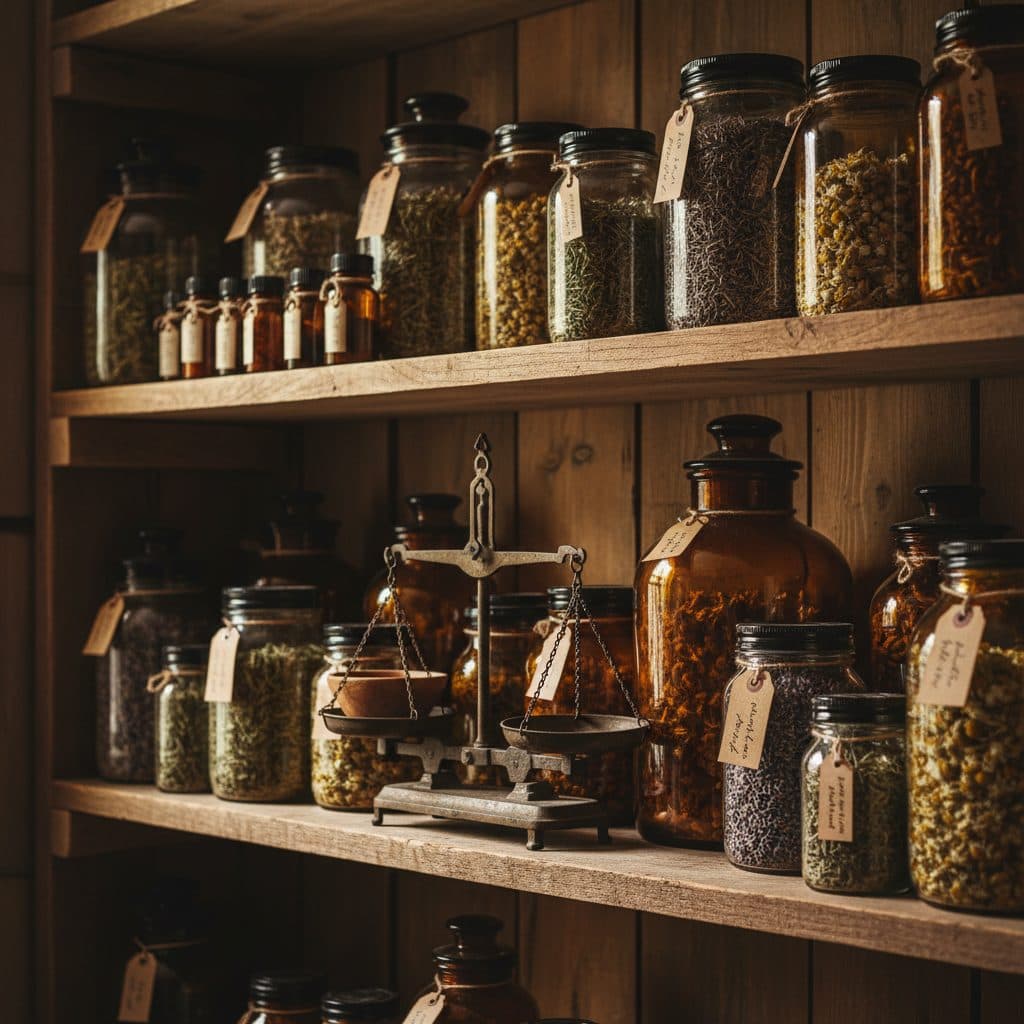
The container you choose for your dried herbs plays a pivotal role in their preservation, acting as a barrier against the environmental threats mentioned earlier. For most home apothecaries, glass jars are the gold standard, particularly those with airtight seals. Amber or dark-colored glass offers an additional layer of protection against light degradation, which can be a concern even in a dimly lit pantry. A one-quart mason jar, for example, can hold approximately four ounces of dried rosemary, providing excellent protection for years.
Airtight seals and material choices
When selecting glass jars, ensure the lids form a tight seal; a rubber gasket or a two-piece canning lid system works best. For larger quantities or longer-term storage, especially if you’re dealing with a significant harvest from a large garden in, say, central California, Mylar bags can be an excellent choice. These bags are opaque, providing complete light protection, and can be heat-sealed to create an oxygen-free environment, particularly when combined with oxygen absorbers. A five-gallon Mylar bag can store several pounds of dried chamomile, for example. Vacuum sealing, whether in bags or rigid containers, removes up to 99% of the air, drastically reducing oxidation. While plastic containers can be used, ensure they are food-grade and opaque, as clear plastic offers no light protection and some plastics can leach chemicals over long periods, especially if the herbs are stored for more than one year.
- Airtight glass jars are ideal for everyday use and medium-term storage.
- Dark-colored glass provides superior light protection compared to clear glass.
- Mylar bags offer excellent long-term storage, especially with oxygen absorbers.
- Vacuum sealing removes oxygen, significantly extending shelf life.
- Avoid clear plastic containers for long-term storage due to light exposure and potential leaching.
Optimal storage conditions: temperature, humidity, and darkness
Beyond the container itself, the environment where your herbs are stored is equally important. Think of your pantry or storage area as a controlled climate zone for your botanical treasures. The ideal temperature for storing most dried herbs is consistently cool, ideally between 50°F and 65°F. Temperatures above 70°F significantly accelerate the loss of volatile compounds, which is hardest on delicate herbs like lemon balm. For instance, a basement in a northern state like Minnesota often provides these cooler, more stable temperatures naturally.
Maintaining a stable environment
Humidity control is another critical factor. Dried herbs should be stored in an environment with low relative humidity, ideally below 60%. High humidity, especially above 70%, creates a prime breeding ground for mold and mildew, which can render your entire harvest unusable and potentially dangerous [3]. In humid climates, like Florida or the Gulf Coast, using desiccants or even a dehumidifier in your storage area might be necessary to maintain these levels. Darkness is also paramount; even indirect sunlight or prolonged exposure to fluorescent lights can degrade herbs. A cupboard, pantry, or a dark storage box is far superior to an open shelf. For those interested in monitoring their storage conditions, an inexpensive hygrometer placed beside the jars will show the ambient relative humidity.
- Maintain cool temperatures, ideally between 50°F and 65°F.
- Keep relative humidity low, below 60%, to prevent mold.
- Store herbs in absolute darkness to protect volatile compounds.
- Avoid areas with fluctuating temperatures, such as near stoves or windows.
- Ensure good air circulation in storage areas to prevent stagnant, humid pockets.
Realistic shelf life and knowing when to refresh your stock
That work on optimal storage conditions sets up what follows here.
While some sources might suggest dried herbs last indefinitely, a realistic approach for home apothecaries acknowledges a decline in quality over time. Most dried herbs will retain their peak potency and flavor for six to twelve months when stored correctly. Beyond this period, they don’t necessarily become unsafe, but their aromatic and medicinal qualities diminish significantly. For instance, a batch of dried basil harvested in July from a garden in Ohio will likely be noticeably less fragrant by the following August. Herbs with delicate essential oils, like mint or lemon balm, tend to degrade faster than more robust herbs like rosemary or thyme.
Assessing herb quality and rotation
A good rule of thumb is to use your senses to assess quality. If an herb has lost its color, its aroma is faint or nonexistent, or its flavor is noticeably bland, it is time to refresh your stock. Some herbs, particularly roots and barks, can last longer, sometimes up to two or three years, if conditions are truly ideal. It’s helpful to label all your containers with the herb name and the date it was dried or acquired. This simple practice allows for a first-in, first-out rotation system, ensuring you’re always using the freshest available material. For example, if you harvested garden sage in September 2023, aim to use most of it by September 2024. Regularly reviewing your stock, perhaps every six months, helps you identify older batches that need to be used or replaced.
- Peak potency typically lasts six to twelve months for most dried herbs.
- Aroma and color are key indicators of an herb’s freshness.
- Roots and barks can retain quality for up to three years under ideal conditions.
- Labeling with dates facilitates a proper rotation system.
- Refresh stock when sensory qualities like smell and taste are significantly diminished.
Preventing contamination: pests, mold, and mycotoxins
This builds directly on realistic shelf life.
Dried herbs are vulnerable to insect pests and mold. Preventing contamination starts at the drying stage by ensuring herbs reach a moisture content of 5% to 10% before storage. For example, if you’re drying herbs in a dehydrator in Arizona, this might take only a few hours at 100°F, but air-drying in a humid climate like Louisiana could take several days or even weeks. Any residual moisture, especially above 14%, significantly increases the risk of mold growth, which can produce mycotoxins that are harmful to human health [3].
Inspection and mitigation strategies
Before sealing herbs for long-term storage, a thorough visual inspection is necessary. Look for any signs of insect activity, such as tiny holes, webbing, or small insects themselves. Freezing freshly dried herbs for 48 to 72 hours can kill any latent insect eggs, a practice recommended by some for grains and legumes, and equally effective for herbs. For example, placing a one-gallon bag of dried calendula in a freezer at 0°F for three days can prevent future infestations. Store herbs away from other dry goods like flour or grains, which are common sources of pantry pests. If you notice any signs of mold (fuzzy patches, discoloration, or a musty smell), discard the entire batch, as mycotoxins can spread throughout the material even if not visibly present on every part. Regular checks, perhaps every three months, can catch issues early.
- Ensure herbs are fully dry to 5-10% moisture content before storage.
- Freeze freshly dried herbs for 48-72 hours to kill insect eggs.
- Inspect herbs thoroughly for pests or mold before sealing.
- Store away from other dry goods to minimize cross-contamination risks.
- Discard moldy herbs immediately to avoid potential mycotoxin exposure.
Comparison of Dried Herb Storage Methods
Method | Pros | Cons | Typical Shelf Life |
|---|---|---|---|
Airtight Glass Jars (Dark) | Excellent protection from oxygen and light, reusable, non-reactive. | Fragile, takes up space, heavier than bags. | 1-2 years |
Mylar Bags + Oxygen Absorbers | Superior long-term protection from all elements, lightweight, space-efficient. | Not reusable, requires heat sealing, opaque (can’t see contents). | 2-3+ years |
Vacuum-Sealed Bags/Containers | Removes most oxygen, good for short-medium term. | Bags can puncture, less light protection unless opaque, requires equipment. | 6-12 months |
Paper Bags/Cardboard Boxes | Breathable, inexpensive, good for very short-term (curing). | No protection from light, oxygen, moisture, or pests. | 1-3 months |
Optimal Temperature: Maintain storage temperatures between 50°F and 65°F to slow the loss of volatile compounds.
Humidity Control: Keep relative humidity below 60% to prevent mold growth and maintain herb quality for over one year.
Light Protection: Dark storage meaningfully extends the shelf life of delicate herbs compared with storing them in the light.
Frequently asked questions
How long do dried herbs typically last?
Most dried herbs maintain peak potency and flavor for six to twelve months when stored in optimal conditions. Some robust herbs, roots, and barks can last up to two or three years before their quality significantly diminishes.
What is the best type of container for storing dried herbs?
Airtight glass jars, especially dark-colored ones, are generally considered the best for storing dried herbs, offering excellent protection from oxygen and light. For very long-term storage, Mylar bags with oxygen absorbers can extend shelf life to three years or more.
Can I store dried herbs in the refrigerator or freezer?
While freezing can kill insect eggs, it’s generally not recommended for long-term storage of dried herbs due to potential moisture condensation when removed, which can lead to mold. Refrigerators are often too humid for dried herbs; a cool, dark pantry at 50°F to 65°F is usually better.
How can I tell if my dried herbs have gone bad?
You can tell if dried herbs have gone bad if they have lost their color, their aroma is faint or musty, or you see any signs of mold, such as fuzzy patches or discoloration. If any mold is present, discard the entire batch to avoid potential health risks from mycotoxins.
Is it important to label my dried herb containers?
Yes, labeling your containers with the herb name and the date it was dried or acquired is important. This practice helps you track the shelf life of each herb and follow a first-in, first-out rotation system so you use the material within its 6-12 month peak window.
What is the ideal humidity level for storing dried herbs?
The ideal relative humidity level for storing dried herbs is below 60%. Maintaining this low humidity is essential to prevent moisture absorption, which can reactivate enzymes causing spoilage and promote the growth of harmful mold and mycotoxins.
References
- Herbs and spices ready for food use (2023). Herbs and spices ready for food use.
- Herbs and spices ready for food use (2023). Herbs and spices ready for food use.
- A Review on Mycotoxin in Dried Herbs (2021). A Review on Mycotoxin in Dried Herbs.
- A Review on Mycotoxin in Dried Herbs (2021). A Review on Mycotoxin in Dried Herbs.
- Dried fruit; its care, protection from worms, packing, storing, etc (1902). Dried fruit; its care, protection from worms, packing, storing, etc.