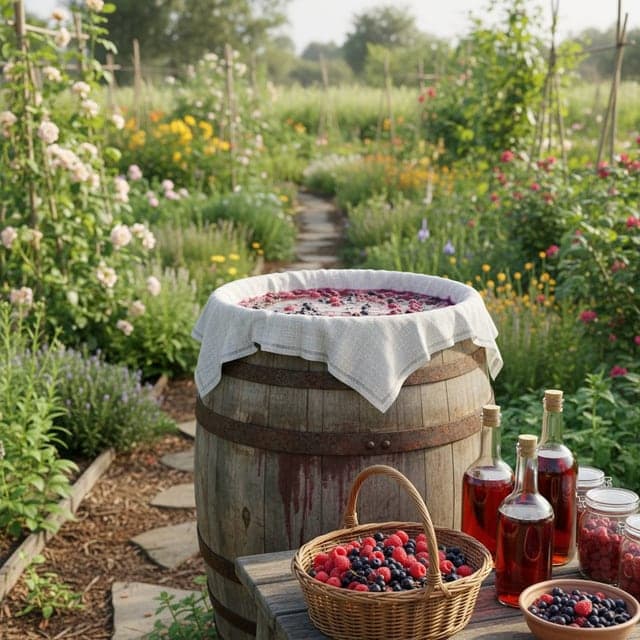
Homemade Fruit Vinegar: Preserve Berry Gluts
Transform excess berries into delicious homemade fruit vinegar. Learn a simple, two-stage fermentation process to preserve fruit gluts, reduce waste, and create a versatile pantry staple in USDA Zo…
Tag
627 articles in this tag on agripure. — page 11 of 27
Transform excess berries into delicious homemade fruit vinegar. Learn a simple, two-stage fermentation process to preserve fruit gluts, reduce waste, and create a versatile pantry staple in USDA Zo…
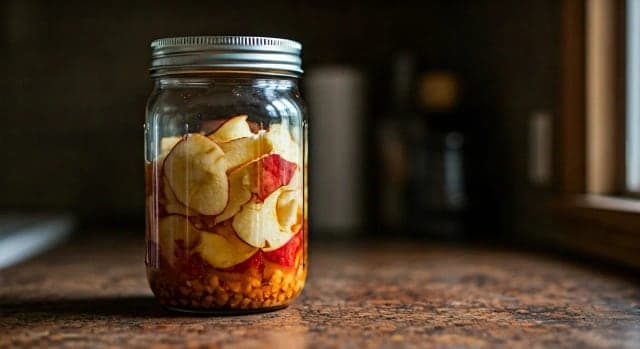
Learn to make homemade apple cider vinegar from apple scraps in the Pacific Northwest. Reduce waste, save money, and create a versatile staple for cooking, cleaning, and dressings.
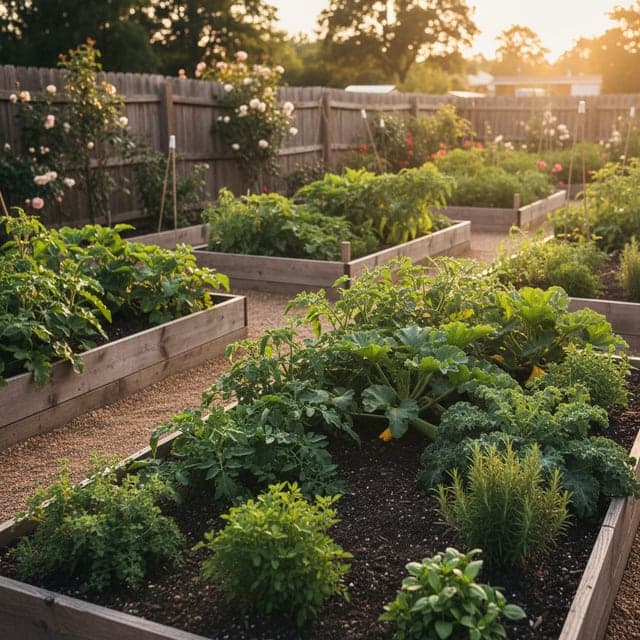
How to tell a safe ferment from a spoiled one. Read pH levels, distinguish harmless kahm yeast from dangerous mold, and identify spoilage signs on your Zone 6 homestead.
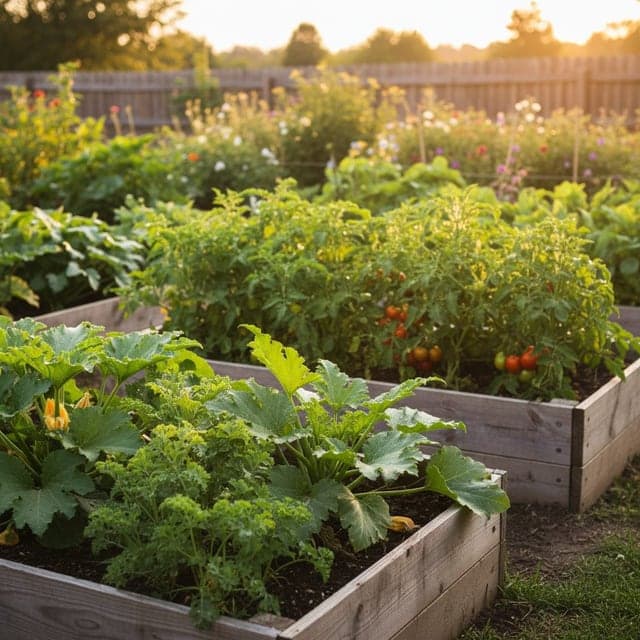
How to ferment carrots, beets, green beans, and radishes with a crisp texture, including salt ratios, temperatures, and storage for USDA Zone 6.
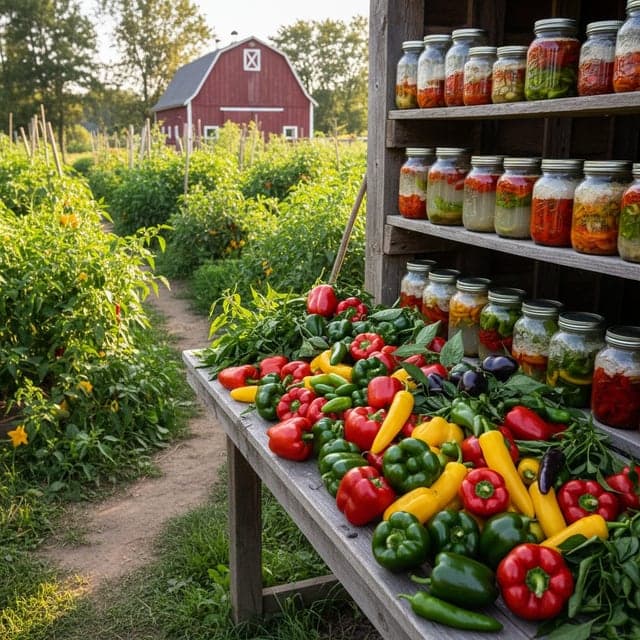
How to make shelf-stable fermented hot sauce from excess garden peppers in USDA Zone 7, covering salt ratios, pH thresholds, and bottling methods.
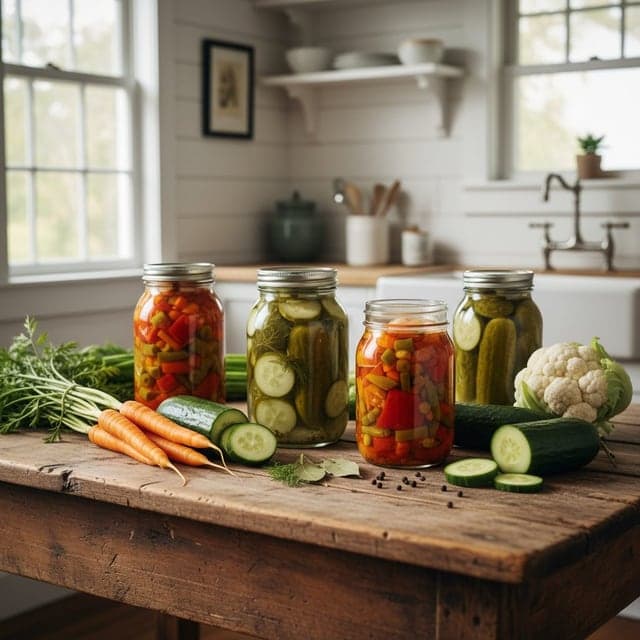
Learn to make delicious fermented dill pickles and giardiniera. This guide covers salt brine, temperature, and storage to preserve your harvest for 6-12 months.
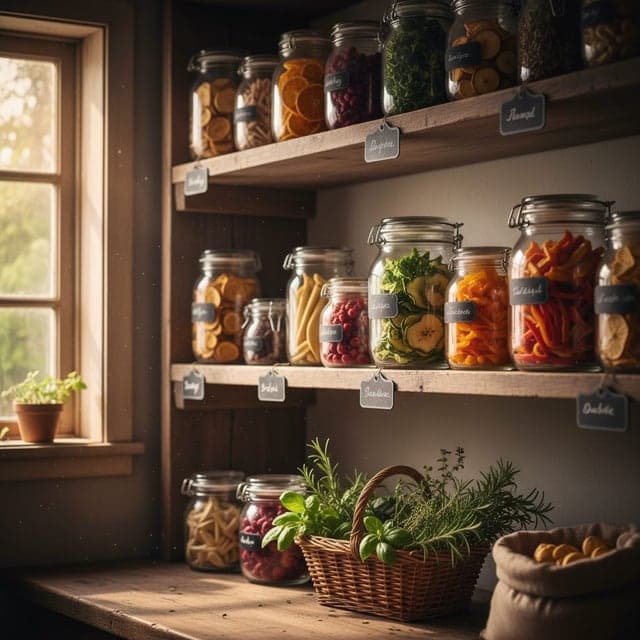
Follow the NCHFP 7–10 day glass-jar conditioning check, mandatory post-sun pasteurization, and safe Mason jar, Mylar, oxygen-absorber, and silica-gel rules to keep dehydrated food mold-free.
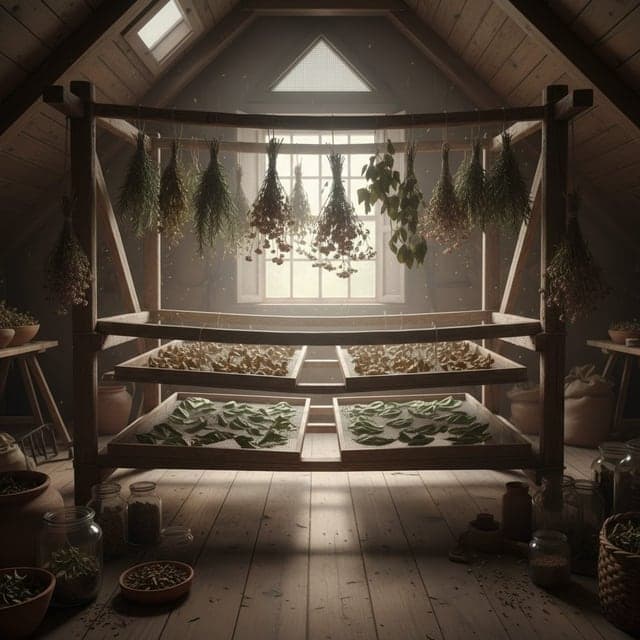
Preserve the vibrant green color and volatile essential oils of garden herbs using 95–115°F dehydrator targets, dark air drying, 7-day jar conditioning, and botulism-safe oil-cube freezing.
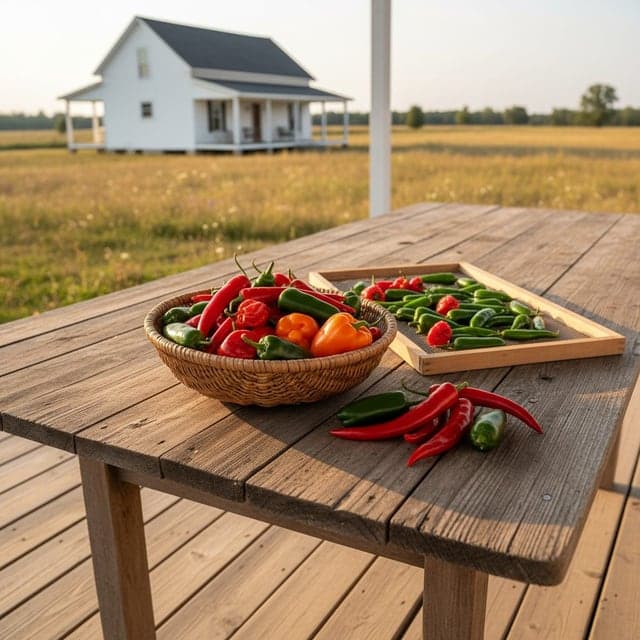
Dehydrate and mill homegrown chili peppers safely using NCHFP and NMSU 125–140°F temperatures, arid-only ristra humidity limits, ≤0.60 a_w crisp checks, 4–7 day jar conditioning, 5-minute grinder P…
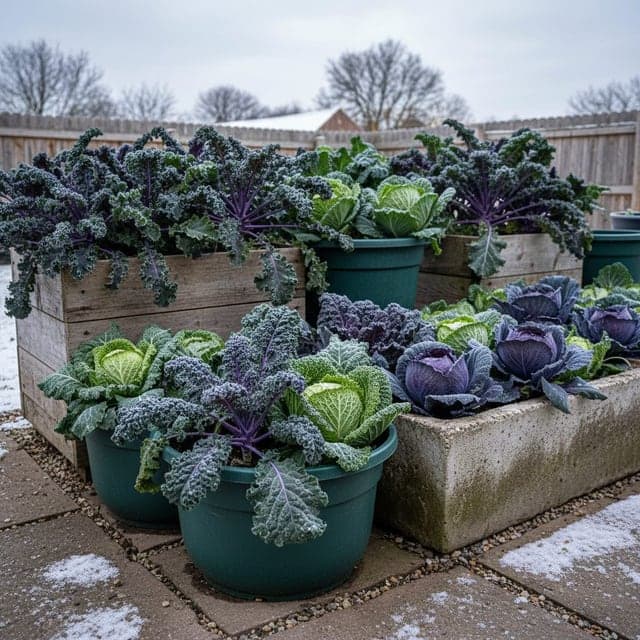
Select genuinely frost-proof outdoor planters for USDA Zones 3–8 using 9% water-to-ice expansion physics, an 8-material durability and US pricing matrix, rim geometry rules, 2-zone root hardiness m…
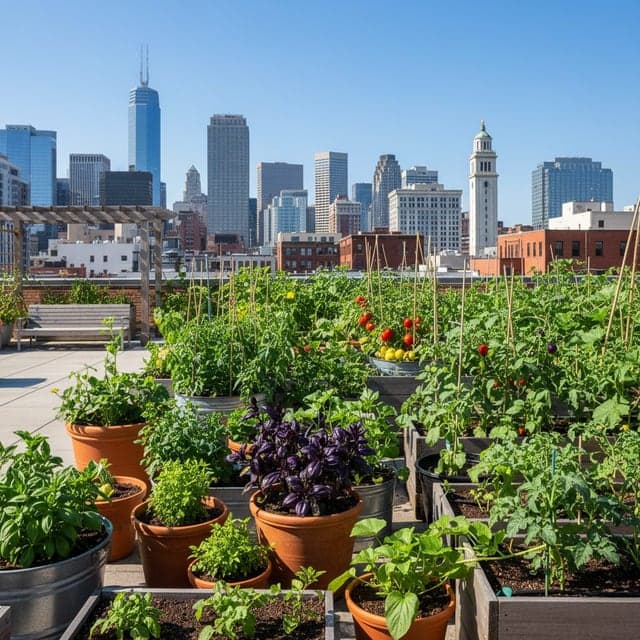
Self-pollinating crops for urban gardens in USDA Zone 7 allow growing tomatoes, peppers, and beans on balconies or rooftops without relying on bees.
Engineer a productive US balcony pollinator container garden across floors 1–10+: solve height and wind guild shifts, stop >110°F black-pot root bake, screen nursery neonicotinoids, avoid tropical…
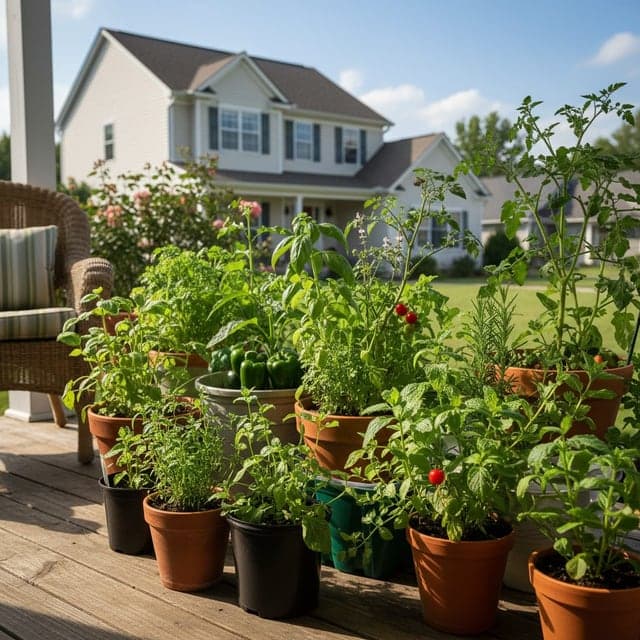
Master summer container gardening. Learn how to prevent overwatering, choose the right soil & containers, and protect plants from heat to ensure abundant harvests in challenging climates.
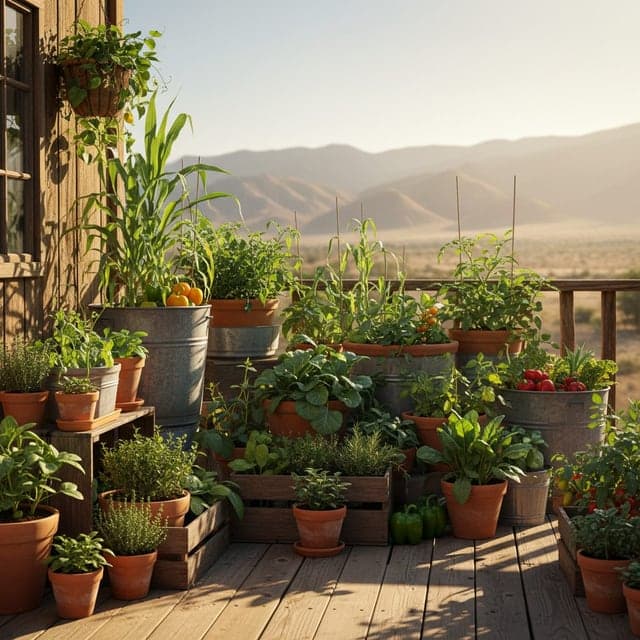
Cut container evaporation by 20–35% and drop rootzone temperatures 10–20°F using rim-to-rim pot grouping, sacrificial outer shields, pot-in-pot bark buffers, 1–2" foliage airflow gaps, drip manifol…
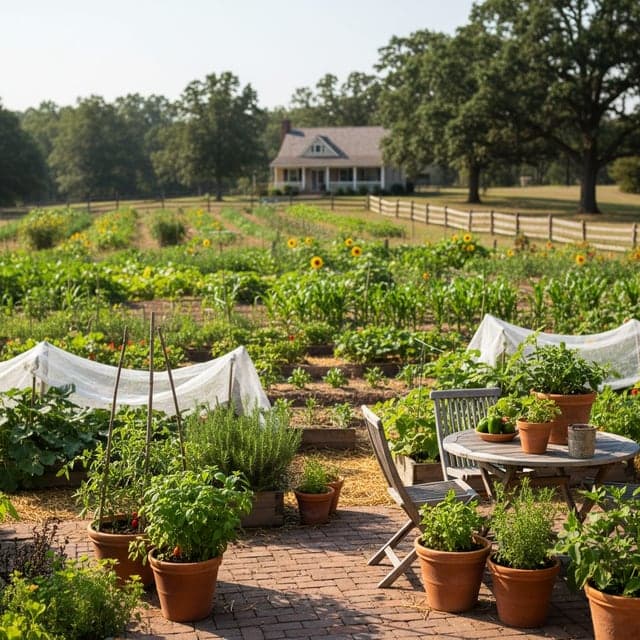
Grow productive patio vegetables past 95–100°F days and 85°F nights: heat-set tomatoes, true thermophilic crops, 10–25 gal light grow bags vs. >110°F black pots, 30–40% shade cloth, drip salt flush…

Learn how to protect container plants from extreme heat (100°F+) in USDA Zones 8-10. Discover shade cloth tips, watering strategies, and placement for container plant heat protection.
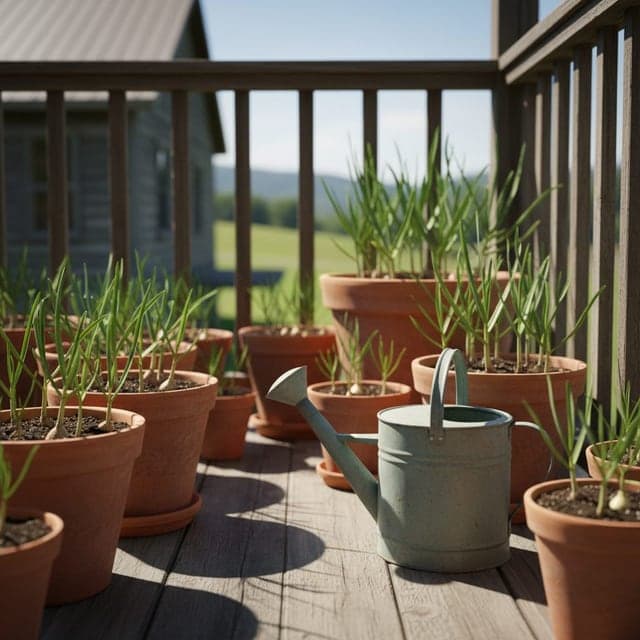
Grow full-sized garlic and multiplier shallots in 5-gallon pots across USDA Zones 4–9 with exact depths, spacing geometry, frost-proof containers, Zone 4–8 winter collars, and spring feeding.
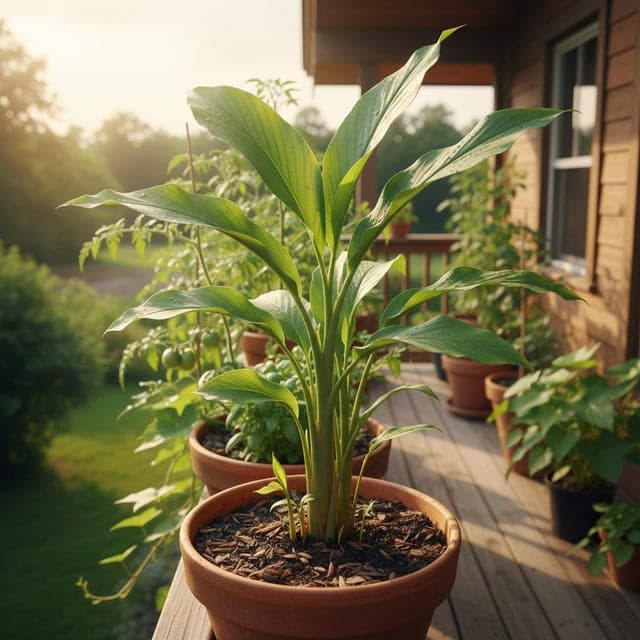
Grow plump turmeric rhizomes in pots across USDA Zones 3–9 with phase-by-phase watering schedules, indoor light and humidity care, Zone 8b–9a clay advice, and safe winter storage.
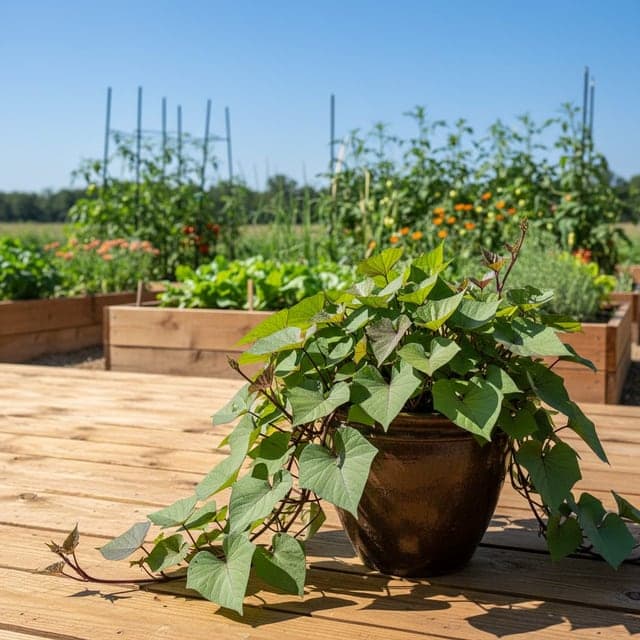
Learn to grow sweet potatoes in containers, even in short-season USDA Zones 4 & 5. Discover varieties, container sizes, and care tips for a successful harvest on your patio or balcony.
Separate fast 5–10 gal annual edible climbers from 15–30 gal woody perennial vines across US zones, prevent 15–20°F container root kill, anchor trellises against wind-sail tip-overs, and stay withi…
Low-tech container watering methods, including olla pots and DIY wicks, that reduce evaporation and keep container plants hydrated during absences in arid regions.
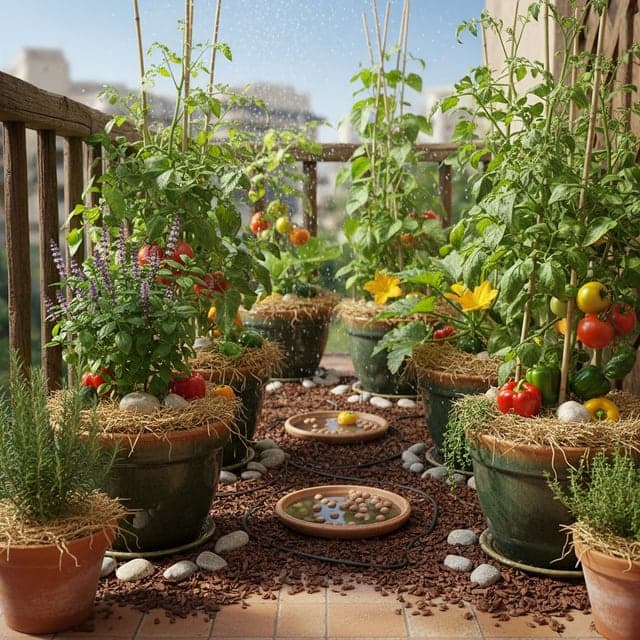
How double-potting and surface mulching reduce container root temperatures in USDA Zones 8-10, protecting plants from heat stress and stabilizing soil moisture.
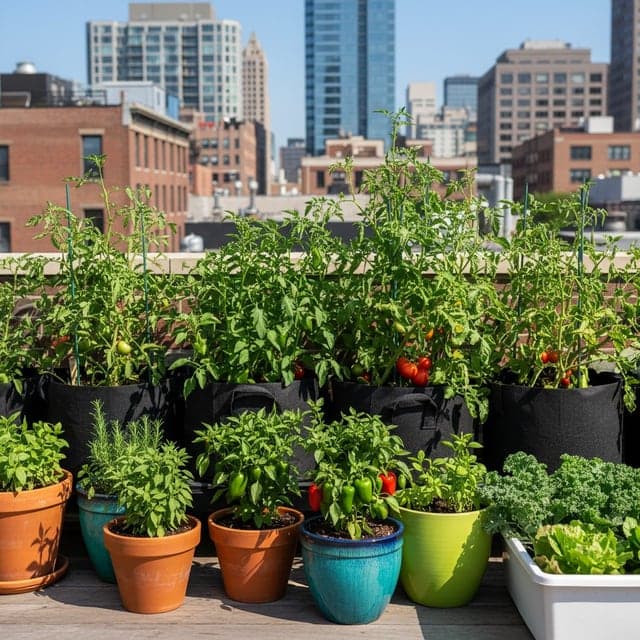
How fabric grow bags, black vs. white plastic, unglazed terracotta, and glazed pots perform in 95°F US summer heat: root-zone temperature thresholds, tomato gallon minimums, and cooling retrofits.
Start your 5-pot balcony garden in USDA Zone 7 with this budget-friendly guide. Learn to choose containers, soil, and plants for a productive urban oasis, all for $150-$250.