Key takeaways
- Porous container materials like unglazed terracotta absorb water, leading to cracking when temperatures drop below 32 degrees Fahrenheit.
- Concrete and stone containers offer significant durability and thermal mass, but their weight can exceed 150 pounds when filled.
- Wood containers, especially cedar and redwood, provide natural insulation and can last 15 to 20 years with proper care.
- Metal containers, such as galvanized steel, conduct heat rapidly, requiring insulation to protect roots from extreme temperature swings.
- High-density polyethylene (HDPE) and fiberglass containers offer lightweight, flexible, and frost-resistant options, often lasting 15 to 25 years.
- Layering insulation like straw, burlap, or bubble wrap around containers can raise soil temperatures by 3 to 5 degrees Fahrenheit, protecting roots.
Quick answer: Selecting frost-proof containers made from materials like concrete, wood, or HDPE can extend your growing season by protecting plant roots from freezing temperatures. This allows for earlier starts and later finishes than fragile pots allow.
For growers in colder regions like upstate New York or Minnesota, where winter temperatures routinely drop below zero degrees Fahrenheit, selecting the right container material matters. Many gardeners have experienced the frustration of finding their favorite terracotta pots shattered after a hard freeze, or their plants dead due to frozen root balls. These common setbacks can shorten your growing season by several weeks, especially during early spring and late fall.
This article explores the best container materials that can withstand frost, helping you protect your plants and extend your harvest. Choosing materials that resist ice expansion keeps pots intact and root balls from freezing through, which lets you start earlier and harvest later than fragile pots allow. Understanding the properties of different materials will help you make informed decisions for a more resilient container garden.
The science of frost damage and container vulnerability
Frost damage to containers is primarily a physical process driven by the unique properties of water. When water freezes, its volume increases by approximately nine percent, creating immense pressure within any confined space. In porous materials like unglazed terracotta or some types of concrete, water seeps into microscopic pores and capillaries. As temperatures drop below 32 degrees Fahrenheit, this absorbed water turns to ice, expanding and exerting outward force on the container walls, often leading to cracks or complete shattering.
Understanding root zone protection
Beyond the container itself, frost poses a significant threat to plant roots. In-ground plants benefit from the insulating properties of the surrounding soil, which maintains a more stable temperature. However, container plants, especially those in smaller pots less than 15 inches in diameter, are much more exposed to ambient air temperatures. Nursery research on “cold-trapping” under retractable roofs shows how fast container-grown crops give up the day’s heat once the sun goes down [1]. Protecting the root ball from freezing solid matters; root tissue of many perennial vegetables and herbs is damaged well before the air reaches the plant’s rated hardiness temperature.
- Water absorption: Key factor in material degradation.
- Volume expansion: Water expands by 9% when freezing.
- Thermal mass: Larger containers offer more stability.
- Root vulnerability: Exposed roots freeze faster than in-ground plants.
Concrete and stone: durable but demanding
Concrete and natural stone containers offer substantial frost resistance and a long lifespan, often exceeding 50 years for well-maintained pieces. These materials possess high thermal mass, meaning they absorb and release heat slowly, which helps to stabilize soil temperatures during fluctuating conditions. However, their primary drawback is weight; a single cubic foot of concrete can weigh between 100 to 200 pounds, making large containers extremely difficult to move once filled with soil and water. For instance, a 24-inch diameter concrete pot can easily weigh over 300 pounds when planted.
Selecting and maintaining concrete containers
When choosing concrete, look for containers made with a dense mix and proper curing, which reduces porosity and improves frost resistance. Some concrete containers are sealed, providing an extra layer of protection against water absorption. Hypertufa, a lighter concrete alternative made from Portland cement, peat moss, and perlite, weighs about 25% less than solid concrete and offers good insulation due to its porous structure. Regardless of type, ensuring adequate drainage is critical — that means open drainage holes and a free-draining mix, not a gravel layer. Gravel at the base of a pot raises the saturated zone rather than lowering it. For those interested in starting a vegetable garden, understanding soil and drainage is a foundational step, and you can find more information at Vegetable gardening for beginners: your questions answered.
- High thermal mass: Stabilizes root temperatures.
- Exceptional longevity: Can last 50+ years.
- Significant weight: Requires careful placement.
- Porosity varies: Dense mixes are more frost-resistant.
Wood containers: natural insulation and drainage
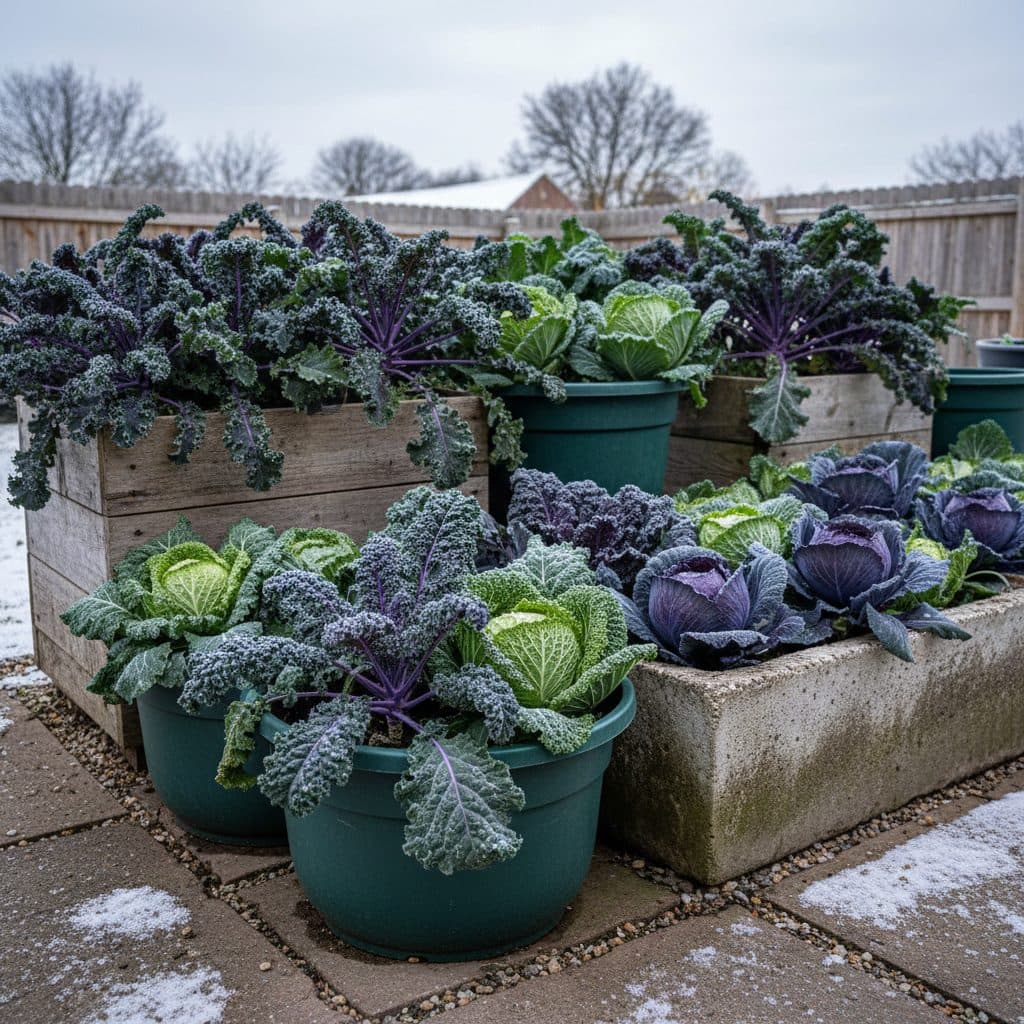
Wood containers, particularly those made from rot-resistant species like cedar or redwood, offer excellent natural insulation for plant roots. The cellular structure of wood traps air, which acts as a buffer against temperature extremes, helping to keep soil warmer in winter and cooler in summer. Untreated pine containers might last 5 to 10 years, but cedar and redwood can endure for 15 to 20 years, even in challenging climates like USDA zone 4, if properly maintained. The insulating capacity of wood can be particularly beneficial for cold-hardy plants, such as kale, which can sweeten after a light frost; learn more about growing it at How to grow kale.
Extending the life of wood containers
To maximize the lifespan of wood containers, ensure they are elevated off the ground by at least 1 inch to prevent moisture wicking and rot. Applying a non-toxic, food-safe sealant to the interior and exterior surfaces every two to three years can significantly extend their durability. Good drainage is paramount; drill several 0.5-inch diameter holes in the bottom, spaced every 6 inches, to prevent water from pooling and freezing. For very cold areas, consider lining the interior with a layer of rigid foam insulation, adding an R-value of 3 to 5 per inch of thickness, to further protect roots from temperatures below 20 degrees Fahrenheit.
- Natural insulation: Air pockets in wood buffer temperature.
- Rot resistance: Cedar and redwood are superior choices.
- Elevated placement: Prevents moisture wicking from the ground.
- Regular sealing: Extends container lifespan by several years.
Metal containers: thermal properties and rust management
Metal containers, often made from galvanized steel, aluminum, or copper, can be visually striking and durable. However, their high thermal conductivity is a double-edged sword in cold climates. While metal quickly absorbs heat from the sun, warming the soil on a sunny winter day, it also rapidly dissipates heat when temperatures drop, potentially freezing roots faster than other materials. A 20-gauge galvanized steel container, for example, will transfer heat much more efficiently than a 1-inch thick wooden barrel, making insulation critical for plant survival below 25 degrees Fahrenheit.
Mitigating thermal conductivity and rust
To use metal containers successfully in cold climates, insulation is non-negotiable. Lining the interior with a 1-inch layer of rigid foam insulation or bubble wrap can create an air gap that reduces heat loss. For rust prevention, galvanized steel is a superior choice over untreated steel, as its zinc coating provides a protective barrier that can last 10 to 20 years. Aluminum and copper naturally resist rust but are typically more expensive, with a 16-inch copper planter often costing over $100. Always ensure proper drainage holes are present, as standing water will accelerate rust and lead to freeze damage. For growers considering more permanent solutions, understanding the hardiness of certain trees is also important, as discussed in Best Cold-Hardy Fruit and Nut Trees for USDA Zones 4-6.
- High thermal conductivity: Heats and cools rapidly.
- Galvanized steel: Offers rust resistance for 10-20 years.
- Insulation required: Essential for root protection.
- Drainage: Prevents rust and freeze-thaw damage.
Plastics and fiberglass: lightweight durability for cold climates
Modern plastics and fiberglass containers have become popular choices for cold climates due to their inherent flexibility and resistance to cracking. High-density polyethylene (HDPE) stays flexible well below freezing and shrugs off freeze-thaw cycles. Polypropylene is stiffer and does turn brittle in hard cold, so PP pots can crack if they are knocked or lifted while frozen. Fiberglass, a composite material, offers similar benefits with even greater structural integrity, often lasting 15 to 25 years compared to 5 to 15 years for many plastic pots. These materials are also significantly lighter than concrete or stone, with a 20-inch plastic pot weighing only 5 to 10 pounds empty.
Choosing and maintaining synthetic containers
When selecting plastic or fiberglass containers, look for products labeled as UV-resistant, as prolonged exposure to sunlight can degrade the material over 3 to 5 years, making it brittle and prone to cracking. Thicker walls, typically 0.25 inches or more, also contribute to durability and provide a small amount of insulation. Ensure that containers have ample drainage holes; if not, you can easily drill them with a 0.5-inch bit. While these materials are generally low maintenance, occasionally wiping them down with a mild soap solution can prevent algae buildup. For gardeners needing to move containers frequently, a lightweight garden hand trowel can be a useful tool, available at Lightweight Garden Hand Trowel.
- Extreme cold tolerance: Flexible down to -70°F.
- Lightweight: Easy to move and reposition.
- UV resistance: Important for long-term outdoor use.
- Long lifespan: Fiberglass can last 15-25 years.
Strategies for insulating and protecting containers
Even with frost-resistant container materials, additional insulation can provide a critical buffer for plant roots, especially in USDA zones 3-6 where winter temperatures can plummet. Wrapping containers with burlap, bubble wrap, or old blankets slows how fast the root ball gives up heat, which is often enough to keep it from freezing solid. For instance, a 2-inch layer of straw mulch around the container can keep the root ball several degrees warmer than the ambient air. This simple step can make the difference between plant survival and loss when temperatures dip below 20 degrees Fahrenheit for extended periods.
Advanced protection techniques
For maximum protection, consider creating a “pot-in-pot” system. This involves placing your planted container inside a larger, empty container, filling the gap with insulating material such as shredded leaves, straw, or wood chips. This method can add an R-value of 5 to 10, significantly insulating the roots. In commercial nurseries, retractable-roof houses are used to trap daytime heat and hold it over the crop on frost nights, protecting container-grown stock from spring frost [1]. For home growers, moving smaller containers to a sheltered location, like against a warm house wall or into an unheated garage, when temperatures are forecast to drop below 25 degrees Fahrenheit, can be highly effective. Elevating containers on pot feet or bricks also prevents direct contact with cold ground, which can draw heat away from the roots.
- Burlap or bubble wrap: Provides 3-5°F temperature buffer.
- Pot-in-pot system: Creates an insulating air gap.
- Sheltered locations: Reduces exposure to extreme cold.
- Elevating containers: Prevents heat loss to cold ground.
Comparison of Frost-Resistant Container Materials
Material | Frost Resistance | Weight (Empty) | Lifespan (Years) | Insulation Value |
|---|---|---|---|---|
Concrete/Stone | Excellent (if dense) | Very Heavy (100-200 lbs/cu ft) | 50+ | High Thermal Mass |
Wood (Cedar/Redwood) | Good (with insulation) | Medium (20-40 lbs/cu ft) | 15-20 | Good Natural Insulation |
Metal (Galvanized Steel) | Poor (without insulation) | Medium (10-30 lbs/cu ft) | 10-20 | Very Low (High Conductivity) |
Plastic (HDPE/PP) | Excellent | Light (5-10 lbs for 20-in pot) | 5-15 | Moderate |
Fiberglass | Excellent | Light (5-15 lbs for 20-in pot) | 15-25 | Moderate to Good |
Concrete Weight: A 24-inch diameter concrete planter can weigh over 300 pounds when filled with soil and water, requiring careful placement and planning.
Mulch Protection: A 6-inch layer of organic mulch over the surface of a container slows heat loss from the top of the root ball, where roots are most exposed.
Frequently asked questions
Can I leave terracotta pots out in winter?
Unglazed terracotta pots are generally not frost-proof because they are very porous and absorb a significant amount of water. When this absorbed water freezes and expands by nine percent, it creates immense pressure that often causes the pots to crack or shatter below 32 degrees Fahrenheit.
What’s the best container size for frost protection?
Larger containers, typically those 18 inches in diameter or more, offer better frost protection due to their increased thermal mass. A greater volume of soil takes longer to freeze solid, providing a buffer against temperatures below 25 degrees Fahrenheit for several hours longer than smaller pots.
How do I prepare my containers for winter?
To prepare containers for winter, ensure excellent drainage by clearing holes and elevating pots 1 inch off the ground. For non-frost-proof materials, empty and store them indoors. For frost-proof containers, consider insulating them with burlap or a pot-in-pot system to protect roots from temperatures below 20 degrees Fahrenheit.
Are self-watering containers good for cold climates?
Self-watering containers can be problematic in cold climates because they often retain a reservoir of water at the bottom, which can freeze solid. This frozen water can damage the container’s structure and lead to root rot once it thaws, making them unsuitable for temperatures consistently below 32 degrees Fahrenheit.
What about glazed ceramic pots?
Glazed ceramic pots are generally more frost-resistant than unglazed terracotta because the glaze creates a non-porous barrier, preventing water absorption. However, if there are hairline cracks in the glaze or if water seeps into unglazed areas, they can still be susceptible to cracking when temperatures drop below 32 degrees Fahrenheit.
References
- “Cold-Trapping” in Retractable Roof Structures To Avoid Spring Frost Damage of Container-grown Nursery Crops (1998). “Cold-Trapping” in Retractable Roof Structures To Avoid Spring Frost Damage of Container-grown Nursery Crops.
- Frost hardening in white cedar container seedlings exposed to intermittent short days and cold temperatures (1991). Frost hardening in white cedar container seedlings exposed to intermittent short days and cold temperatures.
- USDA Natural Resources Conservation Service (2024). USDA Natural Resources Conservation Service.