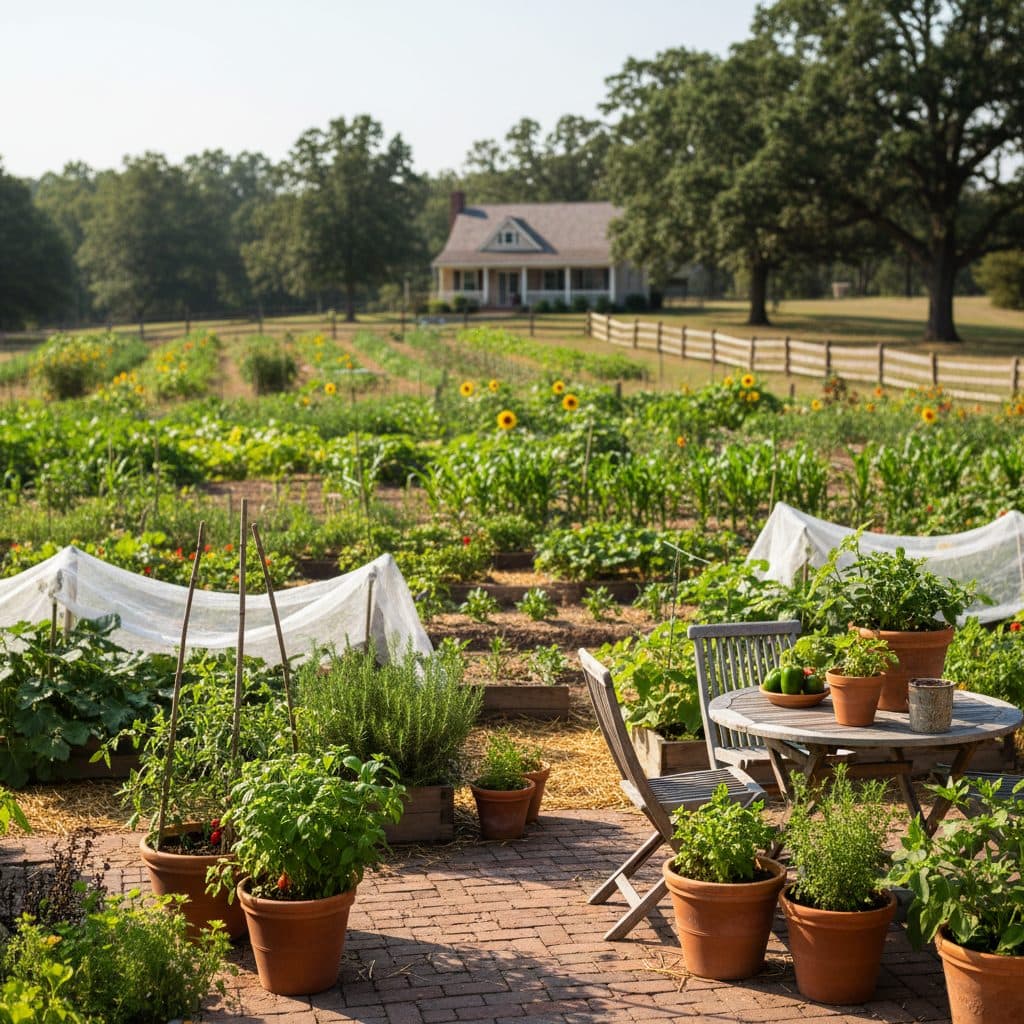
Key takeaways
- Select specific heat-tolerant vegetable and herb varieties that thrive in high temperatures.
- Choose appropriate container materials and sizes to mitigate heat stress and support plant growth.
- Implement consistent and effective watering strategies, often requiring daily attention in hot conditions.
- Utilize mulching and strategic shading to reduce soil temperature and conserve moisture.
- Monitor plants regularly for signs of heat stress, pests, or nutrient deficiencies to ensure a productive harvest.
Quick answer: To grow heat-tolerant vegetables and herbs on a hot patio, select specific heat-tolerant varieties, use light-colored, large containers, implement consistent watering, and utilize mulching and strategic shading. Monitor plants regularly for stress to ensure a productive harvest.
For many growers in the American Southwest and Southeast, particularly those in USDA zones 7 through 10, a hot patio can feel like a gardening challenge rather than an opportunity. Summer temperatures frequently climb above 90°F, and reflected heat from concrete or brick surfaces can push ambient temperatures even higher, sometimes reaching 120°F directly around containers. Despite these conditions, a thriving container garden is entirely possible with the right plant selections and care strategies.
This guide offers practical advice for cultivating a productive garden on a sun-drenched patio. We will explore specific vegetables and herbs that not only tolerate but often flourish in intense heat, along with proven techniques for container choice, watering, and pest management. Our goal is to help you enjoy fresh produce, even when the thermometer consistently reads above 85°F for weeks on end.
Understanding your patio’s microclimate
Before selecting plants, take time to understand the specific microclimate of your patio. A south-facing patio in Phoenix, Arizona, for example, will experience significantly more intense and prolonged sun exposure than an east-facing balcony in Seattle, Washington. Concrete and brick surfaces absorb and radiate heat, often increasing the localized temperature by 10-15°F compared to surrounding areas. This radiant heat can stress plants, leading to wilting and reduced fruit set, especially when temperatures exceed 95°F for several consecutive days.
Sun exposure and reflected heat
Observe your patio throughout the day to determine how many hours of direct sunlight it receives. Most heat-tolerant vegetables require at least six to eight hours of direct sun, but intense afternoon sun (from 1 p.m. to 5 p.m.) can be detrimental without some form of shade. Consider the materials of your patio — dark pavers or walls will absorb more solar radiation than lighter surfaces, further elevating temperatures around your containers. A simple outdoor thermometer placed near your containers can provide valuable data, showing temperature fluctuations that might exceed the general weather forecast by several degrees, sometimes up to 10°F during peak summer afternoons.
- Direct sunlight duration (hours per day)
- Surface material (concrete, brick, wood)
- Proximity to reflective walls or windows
- Air circulation patterns
- Average daily high temperature
Choosing the right containers and soil
The choice of container significantly impacts how well your plants withstand high temperatures. Dark-colored containers, such as black plastic, absorb more solar radiation, heating the soil to potentially damaging levels. Opting for lighter colors like white, terracotta, or light gray can reduce soil temperature by 10-15°F compared to dark containers on a hot patio. Container size is equally critical; larger containers hold more soil volume, which insulates roots better and retains moisture for longer periods. A 15-gallon container is generally sufficient for mature heat-tolerant vegetable plants like eggplant or determinate tomatoes.
Container materials and soil composition
Terracotta pots, while aesthetically pleasing, are porous and allow water to evaporate quickly, requiring more frequent watering. Plastic or glazed ceramic pots retain moisture better. Self-watering containers, which feature a water reservoir at the bottom, can be particularly beneficial for hot patios, extending watering intervals by several days. For soil, a high-quality potting mix designed for containers is essential. It should offer excellent drainage while retaining sufficient moisture. Amending your potting mix with 20-30% perlite or vermiculite can improve aeration and drainage, which helps prevent root rot in frequently watered containers. Container gardening lets you control the mix itself, so you can build something that drains faster than most native ground soil.
- Light-colored plastic or glazed ceramic pots
- Self-watering containers with large reservoirs
- Fabric grow bags for breathability
- Containers with a minimum volume of 5 gallons for herbs
- Containers with a minimum volume of 15 gallons for vegetables
Heat-tolerant vegetables for your patio
Some vegetables thrive when temperatures soar. Many heat-tolerant vegetable varieties, such as okra and sweet potatoes, flourish in temperatures consistently above 85°F. These plants have evolved mechanisms to cope with intense sun and high heat, making them ideal candidates for a hot patio garden. Consider varieties specifically bred for hot climates, often indicated on seed packets or nursery tags.
Top picks for hot climates
Okra (‘Clemson Spineless’, ‘Burgundy’) is a star performer, producing abundant pods when temperatures are consistently above 80°F. Sweet potatoes (‘Beauregard’, ‘Georgia Jet’) are another excellent choice, providing both edible tubers and attractive foliage that can cascade over container edges. Eggplants (‘Black Beauty’, ‘Long Purple’) are also heat lovers, producing glossy fruits even when daytime temperatures reach 90°F. Certain pepper varieties, particularly Capsicum chinense types such as ‘Habanero’, keep setting fruit when daytime temperatures exceed 95°F. Don’t forget about specific tomato varieties known for heat set, such as ‘Florida 91’ or ‘Heatwave II’, which continue to set fruit when night temperatures remain above 75°F, a common challenge for many tomato types. You can find more information on plant varieties at Vegetable gardening for beginners: your questions answered.
- Okra (e.g., ‘Clemson Spineless’)
- Sweet potatoes (e.g., ‘Beauregard’)
- Eggplant (e.g., ‘Black Beauty’)
- Hot peppers (e.g., Habanero, Jalapeño)
- Yardlong beans
Heat-tolerant herbs for your patio
Herbs are often more forgiving in hot conditions than vegetables, with many Mediterranean varieties naturally adapted to arid, sunny environments. These herbs typically require at least six to eight hours of direct sunlight and can tolerate less frequent watering once established. Zones 7-10 generally have long, hot summers that suit these robust herbs.
Resilient herb varieties
Rosemary, thyme, and oregano are excellent choices, thriving in full sun and well-drained soil. They are relatively drought-tolerant and can withstand temperatures well into the 90s°F without significant stress. Basil, while generally a heat-lover, can sometimes struggle with intense, direct afternoon sun above 95°F. However, varieties like ‘Thai Basil’ or ‘African Blue Basil’ are more resilient to heat and continue to produce flavorful leaves. Sage and lavender are also good options, requiring minimal care once established and adding aromatic beauty to your patio. For more details on starting an herb garden, visit Starting a herb garden: the easiest herbs to grow.
- Rosemary (‘Arp’, ‘Tuscan Blue’)
- Thyme (Common Thyme, Lemon Thyme)
- Oregano (Greek Oregano, Italian Oregano)
- Thai Basil or African Blue Basil
- Sage (Garden Sage, Purple Sage)
Watering and care strategies for hot conditions
Consistent and appropriate watering is the single most critical factor for container gardening on a hot patio. Daily watering for container plants in temperatures above 90°F is often necessary, sometimes requiring 1-2 gallons per plant. In extreme heat, some plants may even benefit from watering twice a day—once in the early morning before the sun gets intense, and again in the late afternoon after the peak heat has passed. Avoid watering during the hottest part of the day, when much of the water evaporates before it reaches the roots. Using a soil moisture meter can help you accurately assess when your plants need water, preventing both overwatering and underwatering.
Mulching and shading techniques
Applying a 2-3 inch layer of organic mulch, such as straw, shredded leaves, or wood chips, to the top of your container soil noticeably slows moisture loss from the surface and helps regulate soil temperature. Mulch acts as an insulating layer, keeping roots cooler in summer and warmer in cooler weather. For plants struggling with intense afternoon sun, consider providing temporary shade during the hottest hours. This can be achieved with shade cloth, an umbrella, or by strategically moving containers to a shadier spot on the patio. Even a few hours of afternoon shade can make a substantial difference in plant health and productivity, especially when temperatures consistently exceed 95°F.
- Water deeply and consistently, often daily.
- Water in the early morning or late evening.
- Use a soil moisture meter to guide watering.
- Apply 2-3 inches of organic mulch.
- Provide afternoon shade for sensitive plants.
Pest and disease management in heat
Hot, dry conditions can sometimes exacerbate pest issues and plant stress. Spider mites, for instance, thrive in dry, dusty environments and can quickly infest heat-stressed plants, causing significant damage. Aphids and whiteflies can also multiply rapidly in warm weather. Regular inspection of your plants, especially the undersides of leaves, is key to early detection. A strong spray of water can dislodge many soft-bodied pests, and organic insecticidal soaps can be effective for more persistent infestations, used according to label directions, typically every 5-7 days for two to three applications. Spray in the early morning or evening — most soap and oil labels warn against applying above roughly 90°F or in direct sun, when the spray burns foliage.
Recognizing and addressing heat stress
Heat stress manifests in several ways: wilting leaves even after watering, yellowing foliage, blossom drop, and stunted growth. If temperatures are consistently above 90°F, and your plants are showing these symptoms, consider increasing watering frequency, providing afternoon shade, or moving containers to a cooler location. Ensuring adequate air circulation around containers can also help reduce fungal diseases, which can sometimes appear after heat stress weakens a plant’s defenses. A healthy plant, well-hydrated and protected from extreme conditions, is much more resilient to pest and disease pressures, even when daily temperatures are above 88°F.
- Inspect plants daily for pests and disease.
- Use strong water sprays to dislodge pests.
- Apply organic insecticidal soaps as needed.
- Provide afternoon shade to reduce heat stress.
- Ensure good air circulation around containers.
Comparison of Container Materials for Hot Patios
Material | Pros | Cons | Heat Management Score (1-5, 5=best) |
|---|---|---|---|
Plastic (light-colored) | Lightweight, retains moisture well, affordable | Can become brittle over time, less breathable | 4 |
Terracotta | Breathable, classic aesthetic, heavy/stable | Dries out quickly, heavy, can break easily | 2 |
Glazed Ceramic | Retains moisture well, decorative, heavy/stable | Heavy, expensive, can crack in freezing weather | 4 |
Fabric Grow Bags | Excellent aeration, prevents root circling, lightweight | Dries out very quickly, less aesthetic, short lifespan | 3 |
Soil Temperature: A dark-colored container can heat soil by an additional 10-15°F compared to a light one, stressing plant roots.
Watering Frequency: Regular watering in temperatures above 90°F may mean two applications per day for some plants, totaling 1-2 gallons per large container.
Frequently asked questions
What are the best container sizes for heat-tolerant vegetables?
For most heat-tolerant vegetables like eggplant or determinate tomatoes, a minimum 15-gallon container is recommended. Herbs can often thrive in smaller 5-gallon pots, providing ample space for root development and moisture retention in hot conditions.
How often should I water container plants on a hot patio?
In temperatures above 90°F, container plants often require daily watering. Some plants may even need watering twice a day, once in the early morning and again in the late afternoon, to ensure they receive 1-2 gallons of water.
Can I use dark-colored containers on a hot patio?
While possible, dark-colored containers absorb significantly more solar heat, increasing soil temperature by 10-15°F compared to light-colored options. This can stress roots and lead to faster drying, requiring more frequent watering.
What is the benefit of mulching container plants in hot weather?
Mulching container plants with a 2-3 inch layer of organic material noticeably slows evaporation from the soil surface. It also helps regulate soil temperature, keeping roots cooler and promoting healthier plant growth during hot periods.
Which herbs are most resilient to high heat on a patio?
Mediterranean herbs like rosemary, thyme, and oregano are highly resilient to high heat and full sun, thriving in temperatures well into the 90s°F. Thai basil is also a good choice, tolerating more heat than common sweet basil.
What are common signs of heat stress in container vegetables?
Common signs of heat stress include wilting leaves even after watering, yellowing foliage, blossom drop, and stunted growth. These symptoms often appear when temperatures consistently exceed 95°F for several days.
References
- Fruits, vegetables, and herbs (2016). Fruits, vegetables, and herbs.
- Nursery stock (2023). Nursery stock.
- Nursery stock (2023). Nursery stock.
- USDA Natural Resources Conservation Service (2024). USDA Natural Resources Conservation Service.