Key takeaways
- Selecting the right chicken bedding protects flock respiratory health, controls moisture, and insulates coop floors during severe sub-zero winters.
- Kiln-dried coarse pine shavings and chopped hemp provide the best balance of absorbency, low dust, and rapid decomposition.
- Never use cedar shavings in a chicken coop; cedar releases volatile aromatic compounds (phenols and terpenes) that irritate airways, and rodent studies show liver-enzyme induction.
- The deep litter method starts at 10-15 cm in autumn and builds to 20-30 cm by midwinter through weekly additions, insulating the floor and breaking down manure in place.
- Washed construction sand works well in summer runs, but acts as a cold thermal sink that can freeze solid in Canadian winter coops.
- High-eave cross-ventilation must remain open year-round to exhaust rising moisture and ammonia without creating direct drafts over roosting birds.
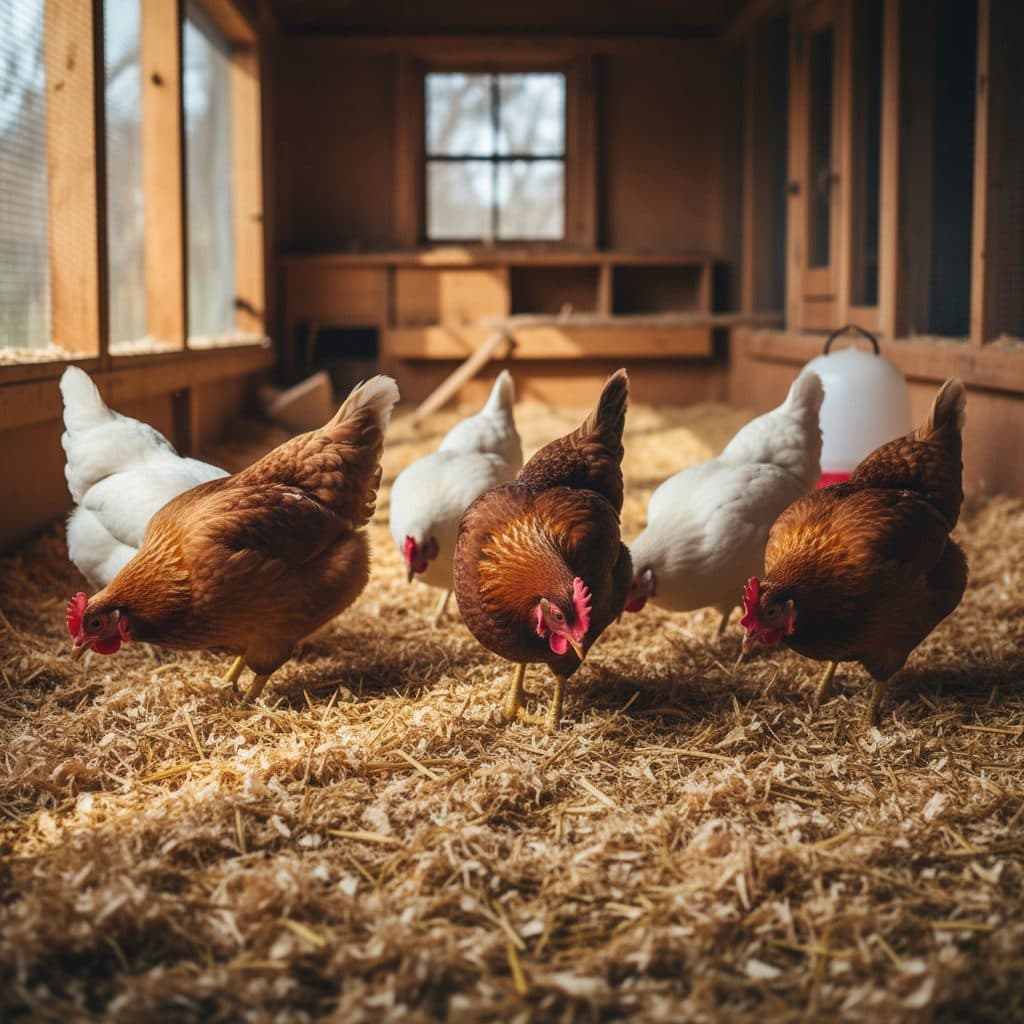
Quick answer: The best chicken bedding for cold climates combines kiln-dried coarse pine shavings or chopped hemp bedding, both of which absorb moisture rapidly without creating respiratory dust. In freezing winters, start at 10-15 cm (4 to 6 inches) in autumn and build to 20-30 cm (8 to 12 inches) by midwinter through weekly additions, allowing beneficial microbes to break down manure inside the coop while insulating the floor.
Managing poultry in cold northern climates presents distinct challenges. With winter temperatures across Canadian provinces regularly plunging between -15°C and -30°C, coop moisture management becomes a matter of flock survival. High relative humidity combined with freezing temperatures creates the exact conditions that lead to severe comb frostbite and respiratory distress in laying hens.
Choosing suitable chicken bedding is your first line of defence against cold, dampness, and ammonia fumes. Quality bedding absorbs liquid from droppings, cushions feet against bumblefoot lesions, and locks carbon into the manure to prepare it for garden composting.
This guide compares the primary bedding options, outlines winter deep-litter protocols, and details safe sanitation practices for cold-climate homesteaders.
+-------------------------------------------------------------+
|              CHICKEN COOP BEDDING COMPARISON MATRIX         |
|                                                             |
|   MATERIAL        ABSORBENCY   DUST LEVEL   WINTER INSULATION|
|   --------        ----------   ----------   ----------------|
|   Pine Shavings   High         Low-Moderate High (deep pack)|
|   Hemp Bedding    Very High    Very Low     High (spongy)   |
|   Chopped Straw   Moderate     Moderate     Very High (air) |
|   Long Straw      Low          High (spores)Moderate (mats) |
|   Coarse Sand     Zero (drains)Low          Poor (freezes)  |
|   Cedar Shavings  [TOXIC]      DO NOT USE   DO NOT USE      |
+-------------------------------------------------------------+
How do pine shavings, straw, hemp, and sand compare?
Every bedding material behaves differently under the wear and moisture load of active poultry.
1. Kiln-dried pine shavings (coarse flake)
Coarse pine shavings are the most common choice for backyard coops and barns:
- Pros: Readily available in compressed bales, highly absorbent, and easy to fork and turn. The coarse flake allows droppings to fall through the surface where they dry quickly.
- Cons: Fine pine sawdust can cause respiratory irritation; buy large, screened flake shavings instead of powdery mill sweepings.
- Toxicity warning: Never use cedar shavings. Cedar releases volatile aromatic compounds (phenols and terpenes) that irritate airways, and rodent studies show liver-enzyme induction. Avoid it as a precaution.
2. Chopped straw vs long whole straw
- Chopped straw: Straw mechanically chopped into 2 to 5 cm lengths exposes the hollow inner core of wheat or oat stems, increasing absorbency and creating micro air pockets that insulate concrete or wood floors.
- Long whole straw: Long stalks mat down rapidly into a slick, damp surface that traps manure on top. Under damp conditions, unchopped straw harbours Aspergillus fungal moulds, leading to respiratory aspergillosis (brooder pneumonia). If using straw, ensure it is dry, dust-free, and chopped.
3. Industrial hemp bedding
Hemp bedding is made from the chopped inner core (hurd) of industrial hemp stalks:
- Pros: Absorbs four to five times its weight in moisture and produces virtually zero airborne dust; its very low dust makes it easier to spot mites on birds and perches, but no bedding controls mites — treat the birds and the coop structure. It breaks down into rich humus in garden compost piles faster than wood shavings.
- Cons: Higher initial purchase price per bale compared to pine shavings, though it lasts significantly longer before requiring complete replacement.
4. Construction sand
- Pros: Washed medium-to-coarse construction sand functions like cat litter in warm weather; droppings dry out and can be sifted daily with a slotted scoop.
- Cons: Sand has zero thermal insulation value. In freezing Canadian winters, damp sand freezes into solid blocks of ice, chilling the coop floor and causing foot frostbite. Sand is best reserved for covered outdoor runs or summer shelters.
+-------------------------------------------------------------+
|                  BEDDING SUITABILITY BY SEASON              |
|                                                             |
|   SEASON         PREFERRED BEDDING TYPE   MANAGEMENT        |
|   ------         ----------------------   ----------        |
|   Summer / Dry   Hemp, Pine, Sand in Run  Spot-sift droppings|
|   Winter / Sub-0 Deep Pine Flake or Hemp  Deep Litter pack  |
|   Brooder Box    Paper Towels then Hemp   Non-slip surface  |
+-------------------------------------------------------------+
How does the deep litter method work during sub-zero winters?
The deep litter method is an ancient biological technique where carbon bedding and nitrogen-rich poultry droppings are allowed to build up and partially compost inside the coop throughout the winter months.
+-------------------------------------------------------------+
|             THE DEEP LITTER COMPOSTING PROFILE              |
|                                                             |
|   [Surface]    Fresh top layer of pine/hemp (dry, odorless) |
|   [Active Mid] Scratch zone: hens turn & aerate carbon/manure|
|   [Base Layer] Decomposed pack: warmer than bare floor and  |
|                resists freezing solid (do not count on it   |
|                to heat coop air)                            |
+-------------------------------------------------------------+- Autumn startup (September to October): Clean the coop thoroughly. Start at 10-15 cm (4 to 6 inches) of clean pine shavings or chopped hemp in autumn and build to 20-30 cm (8 to 12 inches) by midwinter through weekly additions.
- Weekly additions: Once or twice a week, scatter a fresh 2 to 5 cm layer of dry bedding directly over the roosting droppings.
- Flock aeration: Throw a handful of scratch grains or black oil sunflower seeds onto the bedding each morning. The chickens will vigorously scratch, turning and aerating the litter pack. For balanced feeding guidelines, explore what to feed chickens.
- Microbial heat generation: Aerobic microbes in the lower pack break down carbon and nitrogen. The base of an active pack runs warmer than the bare floor and resists freezing solid. Do not count on it to heat the coop air.
- Spring cleanout: In late spring (April or May), shovel out the rich, partially composted base pack. Leave a small handful of the old litter on the floor to inoculate next autumn's bedding with beneficial microbes.
To integrate this flock management with broader smallholding infrastructure, review our guide on how to build a chicken coop.
Why ventilation matters when managing deep litter
A common mistake in cold climates is sealing every coop crack and vent to "keep the warmth in." Sealing a coop traps the moisture produced by chicken respiration and fresh droppings, turning bedding damp and filling the air with caustic ammonia gas.
- Avian moisture production: Layers drink roughly 200-250 ml a day each, and nearly all of that leaves the bird as vapour and droppings — so ten hens put a couple of litres of water into the coop every day.
- The frostbite mechanism: High humidity inside a closed coop condenses onto cold combs and wattles. When temperatures drop overnight, this surface condensation freezes, causing tissue necrosis (frostbite).
- High-eave ventilation: Ensure continuous, open ventilation gaps at the highest points of the coop roof or eaves (covered with 1/2-inch hardware cloth). Warm, moist air and ammonia naturally rise and exhaust through the roof, while the roosting zone below remains completely draft-free.
+-------------------------------------------------------------+
|              WINTER COOP AIRFLOW & VENTILATION              |
|                                                             |
|          Moist Air & Ammonia Exhaust Out Roof Vents         |
|                     ^               ^                       |
|                   [   ROOF RIDGE VENTS   ]                  |
|                                                             |
|   [Cold Wall]       Roosting Birds Zone      [Cold Wall]    |
|   (Draft-Free)     (Below Airflow Stream)    (Draft-Free)   |
|                                                             |
|           =======================================           |
|            Deep Litter Carbon Pack (Insulating Base)        |
+-------------------------------------------------------------+
How do you transition coop bedding into garden compost?
Spent chicken bedding is a useful organic amendment for cold-climate gardeners, but it must be composted before application to vegetable beds.
- High nitrogen warning: Raw chicken manure contains concentrated uric acid and soluble nitrogen that will scorch tender plant roots if applied directly to growing beds.
- Balanced carbon-to-nitrogen ratio: When using pine shavings or hemp bedding, the carbonaceous wood materials balance the high nitrogen of poultry manure.
- Compost pile curing: For a genuine hot compost, the core must reach 55-65°C and the pile must be turned so all material passes through the hot centre. If you compost passively instead, treat the material as raw manure and allow at least 90 days before harvesting crops whose edible part does not touch the soil, and 120 days where it does.
For exact application rates and safety intervals, consult our complete reference on composting chicken manure rates and application, and discover flock pasture systems in raising pastured chickens.
High-absorbency bedding paired with regular turning and high-eave ventilation keeps the flock dry and minimizes frostbite risk through cold winters.