Key takeaways
- Drain and blow out all irrigation lines, hoses, and outdoor taps before the first hard freeze.
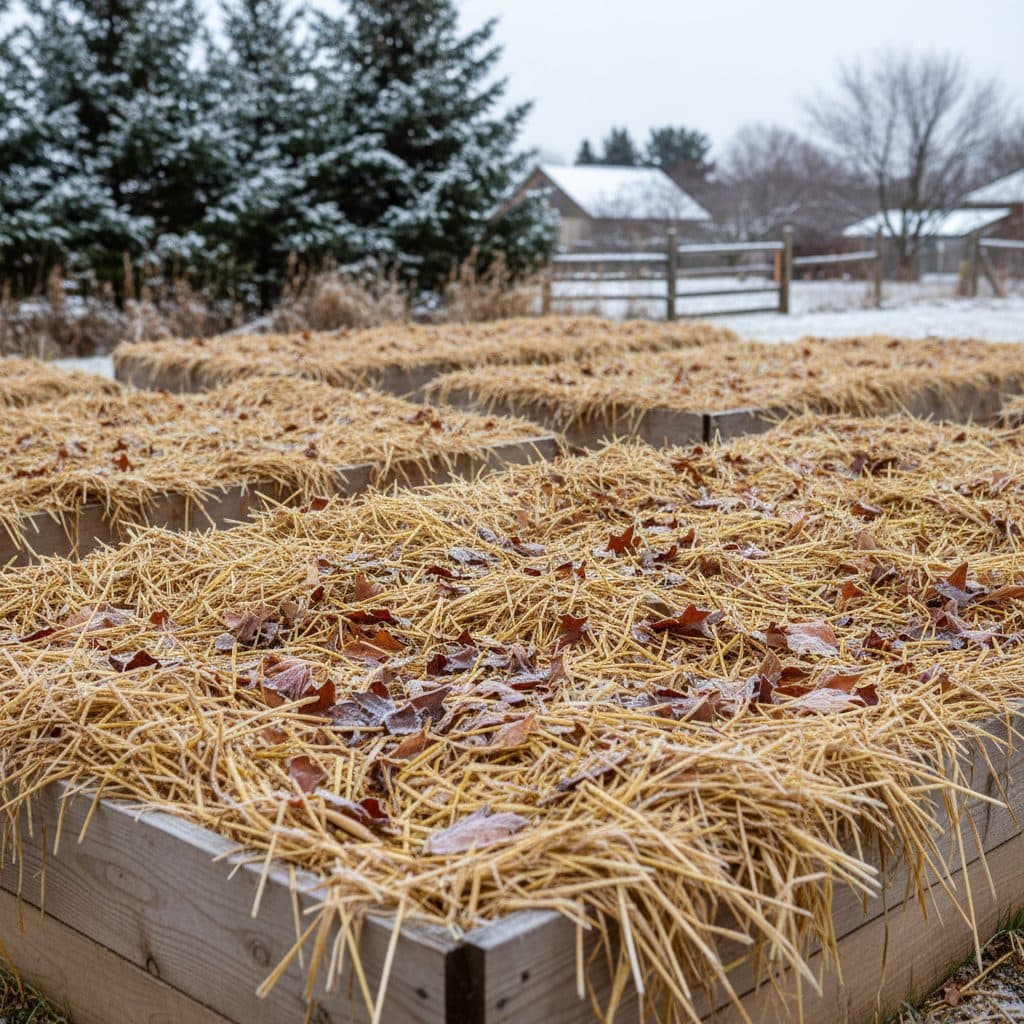
- Apply a 10 cm to 15 cm layer of organic mulch across vegetable beds to prevent severe frost heaving.
- Bank straw bales or heavy mulch around raised bed exterior walls to insulate vulnerable root zones.
- Wrap fruit tree trunks above expected snow depth to protect bark from voles below snow and rabbits above.
- Remove diseased plant debris while leaving sturdy hollow perennial stems intact for overwintering native insects.
- Store unglazed terracotta pots, ollas, and ceramic containers in a frost-free garage or basement.
Quick answer: To master how to winterize your garden in Canadian climates, drain all water systems and irrigation lines before ground freeze, apply 10 cm to 15 cm of clean straw or shredded leaves across garden beds, and insulate raised bed walls. Protect perennial crowns with compost mounds and install tree guards to shield woody trunks from rodent damage beneath the snowpack.
Preparing a garden for winter in Canada is a critical ritual of seasonal stewardship. Across the Prairies, northern Ontario and Quebec, winter temperatures regularly sit between -20°C and -40°C, while the Maritimes and coastal BC are considerably milder but face repeated freeze-thaw cycles instead. Cold-climate soils experience deep freezing that can penetrate over a metre into the subsoil, subjecting plant roots and infrastructure to intense thermal stress.
Understanding how to winterize your garden properly ensures your soil biology, perennial plantings, and growing beds stay healthy and ready for planting when spring thaws arrive. Winterization insulates the ground, protects infrastructure, and supports beneficial overwintering wildlife, without sterilizing the garden or stripping every leaf from the soil.
By draining irrigation systems, applying deep protective mulches, and safeguarding woody perennials against rodent damage, you can protect your garden assets through the most punishing Canadian winters.
+--------------------------------------------------------------------------+
|                  CANADIAN GARDEN WINTERIZATION TIMELINE                  |
+-------------------+-----------------------------+------------------------+
| Seasonal Window   | Key Focus Area              | Core Action Tasks      |
+-------------------+-----------------------------+------------------------+
| Early Autumn      | Sanitation & Planting       | Clear diseased crops   |
| Late Autumn(Freeze| Water Shutdown & Mulch      | Drain lines; mulch beds|
| Late Autumn       | Perennial & Trunk Guards    | Wrap trees & rose care |
| Early Winter      | Snow Management             | Bank snow as insulator |
+-------------------+-----------------------------+------------------------+
Draining irrigation, hoses, and water systems
The expansion of freezing water is one of the most destructive forces in a cold-climate garden. Water trapped in pipes, valves, brass fixtures, and drip lines will freeze, expand by roughly 9% in volume, and split heavy metal fittings and plastic emitters.
Follow this systematic shutdown procedure before the first sub-zero freeze:
- Disconnect hoses: Disconnect all garden hoses from exterior bibs immediately after the first light frost. Drain hoses by stretching them downhill, coil them neatly, and store them indoors.
- Shut off outdoor water supplies: Close the interior isolation shutoff valve inside your basement or utility room that feeds outside spigots. Open the outside taps fully, then open the small bleeder cap on the interior valve to drain residual water into a bucket.
- Purge drip irrigation lines: Open the flush valves at the ends of your drip lines and use a small air compressor (regulated below 30 psi) to blow out remaining moisture.
- Store porous containers: Move unglazed terracotta pots, birdbaths, and subsurface irrigation ollas into a frost-free shed or basement. Frozen soil moisture inside clay vessels will shatter ceramics. For detailed storage guidelines, read our resource on winterizing-storing-ollas-freezing-zones.
To manage winter rainwater storage barrels in freezing regions, consult our guide on cold-climate-rainwater-storage.
Soil protection: deep mulching and no-till bed care
Leaving garden soil bare through a Canadian winter is a recipe for nutrient loss and structural degradation. Freezing winds desiccate exposed topsoil, while repeated freeze-thaw cycles cause frost heaving, which shears perennial roots and damages soil aggregate stability.
Applying a thick protective mulch blanket provides essential insulation:
- Clean straw: Apply 10 cm to 15 cm of weed-free oat or wheat straw over cleared vegetable beds. Straw traps air pockets, buffering soil temperature fluctuations.
- Shredded deciduous leaves: Run dry autumn leaves through a lawnmower or shredder and spread a 10 cm layer over beds. Shredded leaves break down slowly, feeding earthworms and beneficial fungi beneath the snow.
- Arborist woodchips: Ideal for perennial beds and pathways, providing long-lasting insulation and erosion control.
Bare-bed mulch for erosion can go down in mid-autumn, but mulch intended to stop frost heaving around perennials should wait until the top few centimetres of soil have frozen hard.
Avoid tilling or rototilling soil in autumn. Leaving soil structure undisturbed preserves fungal networks and microscopic earthworm channels, allowing spring snowmelt to percolate deeply into the water table rather than running off as surface mud.
+--------------------------------------------------------------------------+
|                  WINTERIZED RAISED BED INSULATION PROFILE                |
+--------------------------------------------------------------------------+
|  [ Heavy Snow Cover Layer (Natural Thermal Insulator) ]                  |
|  [ 10-15 cm Shredded Leaves or Clean Straw Mulch ]                       |
|  [ 5 cm Aged Compost Layer (Feeds Soil Microbiology During Thaw) ]       |
|  [ Timber Bed Wall Exterior (Insulated with Straw Bales or Soil Berm) ]   |
|  [ Undisturbed Native Ground Subsoil ]                                   |
+--------------------------------------------------------------------------+
Winterizing raised beds in cold climates
Raised beds present unique winterization challenges because elevated timber and metal sidewalls are exposed to freezing ambient air on all sides. Soil in raised beds freezes faster, deeper, and harder than in-ground soil, which can kill perennial herbs and beneficial microbes.
Steps to winterize raised beds:
- Top-dress with compost: Spread a 5 cm layer of finished compost across the bed surface. The nutrients will slowly incorporate into the soil profile during early spring snowmelts.
- Deep surface mulch: Add 10 cm to 15 cm of straw or shredded leaves over the compost layer.
- Insulate perimeter walls: On freestanding raised beds containing perennial crops, stack straw bales against the exterior sidewalls or bank fallen leaves in mesh cylinders along the frame to prevent deep lateral freezing.
- Weight down mulches: Lay natural burlap sheets, heavy branches, or wire netting across the mulch to prevent strong winter gales from blowing loose straw away before snow cover establishes.
If you maintain container plants that must endure northern winters, see our specialist instructions in overwintering-container-gardens-northern-us.
Protecting fruit trees, shrubs, and perennial crowns
Woody fruit trees and herbaceous perennials require specific physical interventions to survive freezing prairie temperatures and winter wildlife pressure.
- Rodent trunk guards: Voles and mice tunnel beneath the snowpack and gnaw bark at ground level, while rabbits and hares stand on top of packed snow and browse bark well above it. Wrap trunks from the soil line to at least 15 cm above your usual maximum snow depth — often 90 cm or more on the Prairies — using rigid white spiral guards or 6 mm hardware cloth.
- Sunscald prevention: Intense late winter sunshine reflecting off white snow can warm south-facing tree bark during the day, which then freezes rapidly at sunset, causing bark splitting (sunscald). White tree guards or painting lower trunks with diluted white latex paint reflects winter sunlight and moderates bark temperature swings. For selecting resilient varieties for Canadian hardiness zone 3, explore our guide on fruit-trees-for-zone-3.
- Perennial crown protection: Mound 15 cm of well-rotted compost over the crowns of asparagus, rhubarb and hardy roses after hard frost. Cover strawberries instead with 10 cm to 15 cm of loose, clean straw once plants are dormant and the soil has started to freeze — compost packs down and holds moisture against strawberry crowns.
- Burlap windbreaks: Wrap sensitive broadleaf evergreens and young shrubs with natural burlap attached to timber stakes (keeping fabric from touching the foliage) to protect against desiccating winter winds.
Ecological cleanup: balancing sanitation and insect habitat
Traditional gardening advice recommended stripping every dead plant stem from the garden in autumn. Modern ecological horticulture recognizes that hollow stems and leaf litter are critical winter habitat for beneficial insects.
Balance garden sanitation and ecological care with this approach:
+--------------------------------------------------------------------------+
|                  WINTER CLEANUP: REMOVE VS LEAVE CHECKLIST               |
+-------------------+------------------------------------------------------+
| Action            | Target Plant Material                                |
+-------------------+------------------------------------------------------+
| REMOVE & DESTROY  | Blighted tomato foliage, mildewed squash vines,      |
|                   | brassica roots with clubroot, insect-infested stalks |
+-------------------+------------------------------------------------------+
| LEAVE STANDING    | Hollow flower stalks (Echinacea, sunflowers),        |
|                   | native grasses, seed heads for birds, clean mulches  |
+-------------------+------------------------------------------------------+
Remove and dispose of diseased foliage from nightshades, cucurbits, and brassicas in household waste rather than home compost to break pathogen cycles. Meanwhile, leave healthy, hollow perennial flower stems standing 30 cm to 45 cm tall. Solitary native bees, ladybugs, and predatory wasps use these hollow stems as dry, insulated nesting chambers through freezing weather.
For broader strategies on planning late-season harvests and crop transitions, read our comprehensive guide on fall-winter-gardening-midsummer-sowing.