Key takeaways
- Rocky and gravelly soils, often containing over 30% rock fragments, suffer from poor water retention and nutrient leaching, making plant growth difficult.
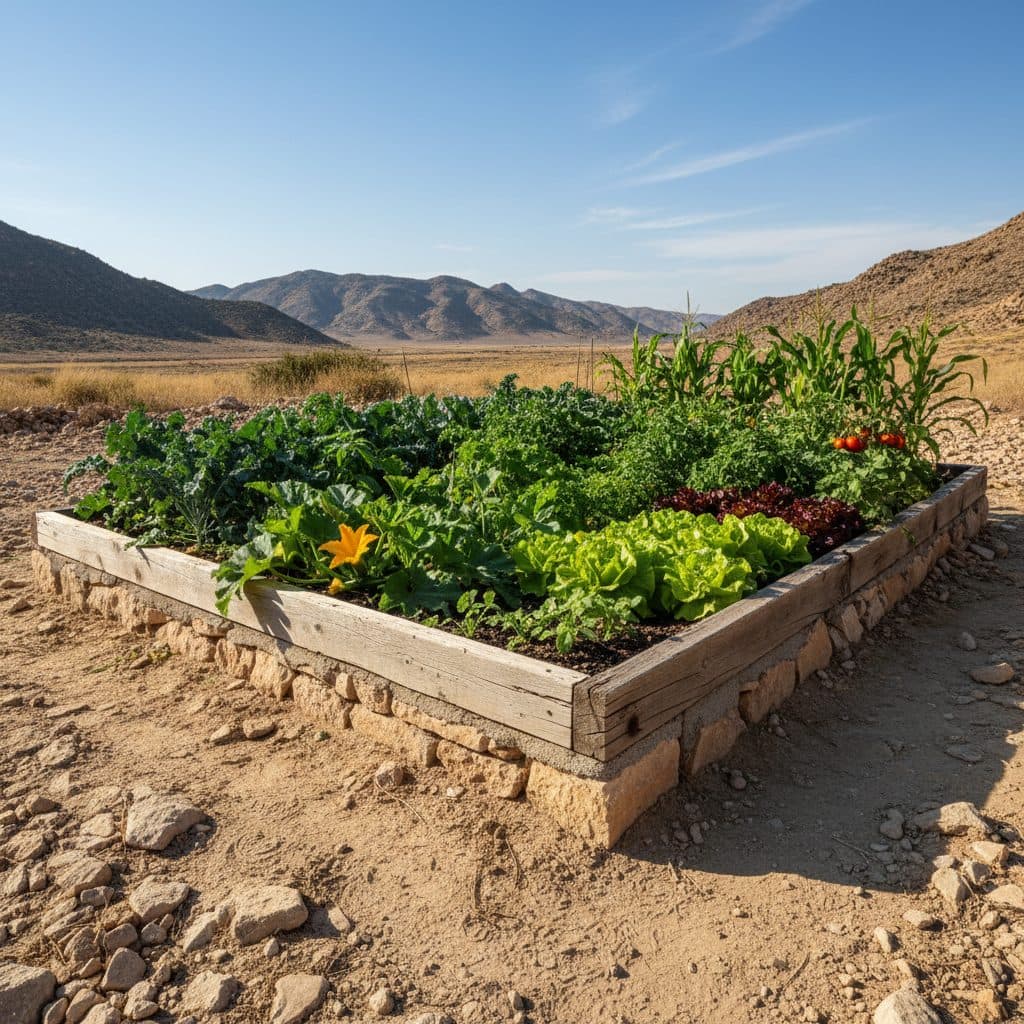
- Raised beds provide a controlled environment, allowing you to build nutrient-rich soil to a depth of 10-18 inches, bypassing native challenging ground.
- Lasagna gardening builds soil fertility directly on site by layering organic materials, significantly increasing organic matter from less than 1% to 3-5% over 6-12 months.
- Strategic crop selection, focusing on drought-tolerant and heat-resistant varieties like rosemary or bush beans, matters for success in amended rocky soils.
- Mulching and cover cropping are essential practices to conserve moisture, suppress weeds, and continuously enrich the soil in challenging garden environments.
Quick answer: To grow food in rocky, gravelly soil, employ strategies like building raised beds with amended soil, utilizing lasagna gardening for fertility, and selecting drought-tolerant crops. These methods help overcome poor water retention and nutrient leaching, creating productive growing environments.
Across vast stretches of the US, from the arid plains of Arizona to the glacial till of New England, gardeners often contend with rocky and gravelly soils. These challenging conditions, characterized by rapid drainage and low organic matter, can make growing food seem like an uphill battle. However, with thoughtful strategies like raised beds, lasagna gardening, and smart crop selection, you can transform these seemingly barren landscapes into productive food-growing spaces, even in regions receiving less than 15 inches of annual rainfall.
Understanding the inherent properties of these soils — often containing more than 30% rock fragments by volume, similar to some coastal areas [1] — is the first step. This article will guide you through practical, proven methods to overcome these hurdles, focusing on building soil fertility and choosing resilient plants that thrive in conditions that mimic their native environments, helping your garden flourish through heat and drought in USDA zones 4 through 10.
Understanding the challenges of rocky and gravelly soils
Rocky and gravelly soils present a unique set of challenges for food production, fundamentally differing from the rich loams many gardeners envision. These soils, often defined by having more than 30% rock fragments by volume, as seen in some Aegean coastal areas [1], have distinct physical properties [2]. The primary issue is often poor water retention. Gravel, by its nature, drains water rapidly, meaning moisture can disappear from the root zone within hours of irrigation or rainfall. This rapid drainage also leaches nutrients quickly, leaving plants starved unless amendments are regularly applied. In regions like the Sonoran Desert, where annual rainfall might be less than 10 inches, this becomes a critical factor for plant survival.
limited organic matter and root penetration
Furthermore, the high percentage of inert rock means less space for organic matter and beneficial soil organisms. A typical healthy garden soil might contain 3-5% organic matter, but rocky soils often fall well below 1% without intervention [4]. This lack of biological activity hinders nutrient cycling and soil structure development, making it difficult for plant roots to establish and access what they need. Soil compaction can also be an issue, especially in gravelly soils with finer particles, making root penetration difficult for many crops. Even in areas like the Appalachian foothills, where topsoil might be thin, gardeners contend with a high rock content that impedes cultivation and plant growth, often requiring significant effort for just 6 inches of planting depth.
- poor water retention, leading to rapid moisture loss within hours
- nutrient leaching, depleting essential plant nutrients quickly
- limited root penetration, hindering plant establishment and growth
- low organic matter, often below 1% without intervention
- increased soil temperatures, stressing plant roots in summer
Raised beds for controlled growing environments
One of the most effective strategies for gardening in rocky or gravelly soil is to bypass it entirely by building raised beds. This approach allows you to create an optimal growing environment from scratch, tailored to your plants’ needs. For most vegetables, a raised bed depth of 10 to 12 inches is sufficient, providing ample space for root development and soil volume. For root crops like carrots or potatoes, 18 inches is better to allow for full development. You can find more details on optimal depths at https://agripure.org/articles/raised-bed-gardening.
filling and material choices for raised beds
Filling a raised bed correctly matters most. A good mix typically consists of 60% high-quality topsoil, 30% compost, and 10% other amendments like perlite or vermiculite for aeration and moisture retention. This blend provides a rich, well-draining, and nutrient-dense medium that is far superior to native rocky soil. In a 4×8 foot bed that is 12 inches deep, this translates to about 32 cubic feet of soil mix, costing roughly $150-$300 for materials. Raised beds also offer advantages in managing water and temperature. The elevated structure promotes better drainage, preventing waterlogging, which is a common issue even in rocky soils if the underlying layer is impermeable. In cooler climates, like USDA zone 4 in Minnesota, raised beds can warm up faster in spring, extending the growing season by one to two weeks. For hot climates, like USDA zone 9 in Arizona, consider lighter-colored materials to reflect heat. When choosing materials for your raised beds, options range from untreated lumber to stone, concrete blocks, or metal. Metal raised garden beds, for instance, offer durability and can be a cost-effective choice over a 10-year lifespan, as explored at https://agripure.org/articles/metal-raised-garden-beds. Ensure any wood is untreated to avoid leaching chemicals into your soil over time.
- better drainage control, preventing waterlogging in heavy rains
- custom soil composition, tailored to specific plant needs
- extended growing season, warming up 1-2 weeks faster in spring
- easier access for planting, weeding, and harvesting
- reduced weed pressure from surrounding native soil
Lasagna gardening for deep soil improvement
For those who prefer to build soil directly on top of challenging ground, or to fill larger raised beds economically, lasagna gardening offers a powerful solution. This no-dig method involves layering organic materials directly onto the soil surface, mimicking natural decomposition processes. Over time, these layers break down, creating a rich, fertile growing medium that can be several feet deep. This method is a core principle of https://agripure.org/articles/permaculture-gardening.
balancing layers for optimal decomposition
The key to successful lasagna gardening is balancing ‘green’ (nitrogen-rich) and ‘brown’ (carbon-rich) materials. Aim for a carbon-to-nitrogen ratio of approximately 30:1 for optimal decomposition, though a range of 20:1 to 40:1 works well. Start with a layer of cardboard to suppress weeds, followed by alternating layers of about 4 to 6 inches each. For example, a layer of dried leaves (brown) followed by a layer of grass clippings (green), then shredded newspaper (brown), and kitchen scraps (green). This layering process creates an active environment for microorganisms, earthworms, and other beneficial soil life, which are critical for transforming raw organic matter into nutrient-rich humus. Within six to twelve months, a lasagna bed can be ready for planting, significantly increasing the soil’s organic matter content from potentially less than 1% to 3-5% or even higher, as observed in some urban gardening projects [4]. Regular additions of organic material will maintain this fertility. Lasagna beds are particularly effective in improving water retention in gravelly soils. The accumulating organic matter acts like a sponge, holding moisture that would otherwise quickly drain away. This reduces the need for frequent irrigation by up to 25%, a significant advantage in drought-prone areas like California’s Central Valley. You can learn more about feeding your soil at https://agripure.org/articles/organic-gardening-fertilizer.
- cardboard or newspaper, as a weed-suppressing base layer
- dried leaves, providing a carbon-rich ‘brown’ layer
- grass clippings, offering a nitrogen-rich ‘green’ layer
- kitchen scraps, adding diverse nutrients and moisture
- aged manure, boosting nitrogen and microbial activity
Smart crop selection for resilience
Even with improved soil, selecting the right crops for hot, dry, or otherwise challenging conditions in rocky soil is paramount. Focus on plants known for their drought tolerance, heat resistance, and adaptability to less-than-perfect soil. Many Mediterranean herbs, for example, thrive in conditions that mimic their native rocky, sun-baked environments. For regions like USDA zone 7 in Texas, consider herbs such as rosemary (Rosmarinus officinalis), lavender (Lavandula angustifolia), and thyme (Thymus vulgaris), which require minimal water once established. These plants often have deep taproots or fibrous root systems that can explore a larger soil volume for moisture and nutrients, sometimes reaching 12-18 inches deep.
vegetables and root crops for challenging sites
Certain vegetables also perform surprisingly well. Bush beans (Phaseolus vulgaris) are relatively shallow-rooted and can produce a good harvest in a 10-inch deep raised bed, maturing in about 50-60 days. Zucchini (Cucurbita pepo) and other summer squash are vigorous growers that, with consistent watering, can tolerate heat and less fertile soil, yielding abundant fruit over a 90-day season. Tomatoes (Solanum lycopersicum) — especially determinate varieties — can also be productive, though they will benefit from deeper soil and consistent moisture. Root vegetables like carrots (Daucus carota) and radishes (Raphanus sativus) can be grown in well-amended raised beds, provided the soil is loose and free of large rocks. In a 12-inch deep bed filled with a good soil mix, you can expect carrots to reach their full 6-8 inch length. Consider also planting cover crops like clover or vetch in empty beds to further build soil organic matter and suppress weeds, as detailed at https://agripure.org/articles/living-mulch-cover-crop-legumes-by-zone. Mulching with 3-4 inches of straw or wood chips can reduce water evaporation by 10-25%.
- mediterranean herbs, like rosemary (USDA zone 7-10) and lavender (USDA zone 5-9)
- bush beans, maturing in 50-60 days with shallow roots
- summer squash varieties, vigorous and heat-tolerant producers
- determinate tomatoes, often more compact and resilient
- radishes and carrots, when grown in loose, deep soil mixes
Comparison: Raised Beds vs. In-Ground Rocky Soil
Feature | Raised Bed Advantage | In-Ground Rocky Soil Challenge |
|---|---|---|
Soil Quality | Customizable, nutrient-rich mix (60% topsoil, 30% compost) | Low organic matter (<1%), poor fertility |
Water Retention | Improved by organic matter, reduced evaporation by 10-25% | Rapid drainage, moisture loss within hours |
Root Penetration | Loose soil allows roots to grow 10-18 inches deep | Compaction and rocks impede growth, often <6 inches |
Weed Control | Easier to manage, cardboard base suppresses weeds for 6-12 months | Persistent weeds, difficult to remove around rocks |
Season Extension | Soil warms faster in spring, extending season by 1-2 weeks | Slower to warm, shorter effective growing period |
Soil Organic Matter: Urban gardening projects have shown an increase in soil organic matter from below 1% to 3-5% through consistent organic amendments [4].
Water Savings: Mulching a garden bed with 3-4 inches of organic material can reduce water evaporation by 10-25% in hot climates.
Raised Bed Depth: Most vegetables thrive in raised beds 10-12 inches deep, while root crops benefit from 18-inch depths for full development.
Frequently asked questions
What defines a rocky or gravelly soil?
Rocky or gravelly soil is generally characterized by having more than 30% rock fragments by volume. These fragments can range from small pebbles to larger stones, significantly impacting water retention and nutrient availability in the top 12 inches of soil.
How deep should a raised bed be for rocky soil?
For most common vegetables, a raised bed depth of 10 to 12 inches is sufficient. However, for deep-rooted crops like carrots, potatoes, or tomatoes, a depth of 18 inches provides optimal space for root development and nutrient uptake.
What is the ideal carbon-to-nitrogen ratio for lasagna gardening?
For optimal decomposition in a lasagna garden, aim for a carbon-to-nitrogen (C:N) ratio of approximately 30:1. This balance ensures efficient breakdown of organic materials, creating fertile soil within six to twelve months.
Which crops are best for drought-prone rocky gardens?
Drought-tolerant crops like rosemary (USDA zone 7-10), lavender (USDA zone 5-9), bush beans, and summer squash are excellent choices. These plants are adapted to less frequent watering and can thrive in well-amended rocky soils, producing good yields.
How much can urban gardening improve soil quality?
Urban gardening initiatives have demonstrated significant improvements in soil quality, often increasing soil organic matter content by 1-3% over several years. This boost in organic matter improves water retention and nutrient cycling, making soil much more productive [4].
Can I grow root vegetables in rocky soil?
Yes, but it’s best done in raised beds or lasagna beds where you can control the soil composition. With a loose, well-amended soil mix at least 12 inches deep, you can successfully grow root vegetables like carrots and radishes to their full 6-8 inch size.
References
- Rocky shore-gravelly beach transition, and storm/post-storm changes of a holocene gravelly beach (Kos island, Aegean sea): Stratigraphic significance (2000). Rocky shore-gravelly beach transition, and storm/post-storm changes of a holocene gravelly beach (Kos island, Aegean sea): Stratigraphic significance.
- Physical Properties of Gravelly Soils (2004). Physical Properties of Gravelly Soils.
- gravelly soil (2014). gravelly soil.
- Impacts of urban gardening on soil quality, soil fauna and soil multifunctionality (2023). Impacts of urban gardening on soil quality, soil fauna and soil multifunctionality.
- USDA Natural Resources Conservation Service (2024). USDA Natural Resources Conservation Service.
- EPA — Soak Up the Rain (2024). EPA — Soak Up the Rain.