Key takeaways
- Choose large containers or HDPE grow bags measuring at least 45 cm to 60 cm in depth and diameter.
- Select proven Indian varieties such as Bhagwa, Ganesh, Arakta, or dwarf cultivars for container success.
- Provide 6 to 8 hours of direct, unfiltered sunlight to stimulate continuous blossoming and fruit set.
- Distinguish between naturally dropping male bell flowers and fruit-bearing female vase flowers.
- Maintain steady, even watering during fruit development to prevent severe fruit cracking and skin splitting.
- Prune out root suckers and internal crossing branches annually during late winter dormancy.
Quick answer: To master how to grow pomegranate in pot across India, plant grafted cultivars like Bhagwa or Ganesh into a 50-litre container filled with 40% red soil, 30% vermicompost, 20% coarse sand and 10% cocopeat. Place the pot in full sun (6 to 8 hours daily), water consistently without waterlogging, and prune suckers to maintain a compact, productive framework.
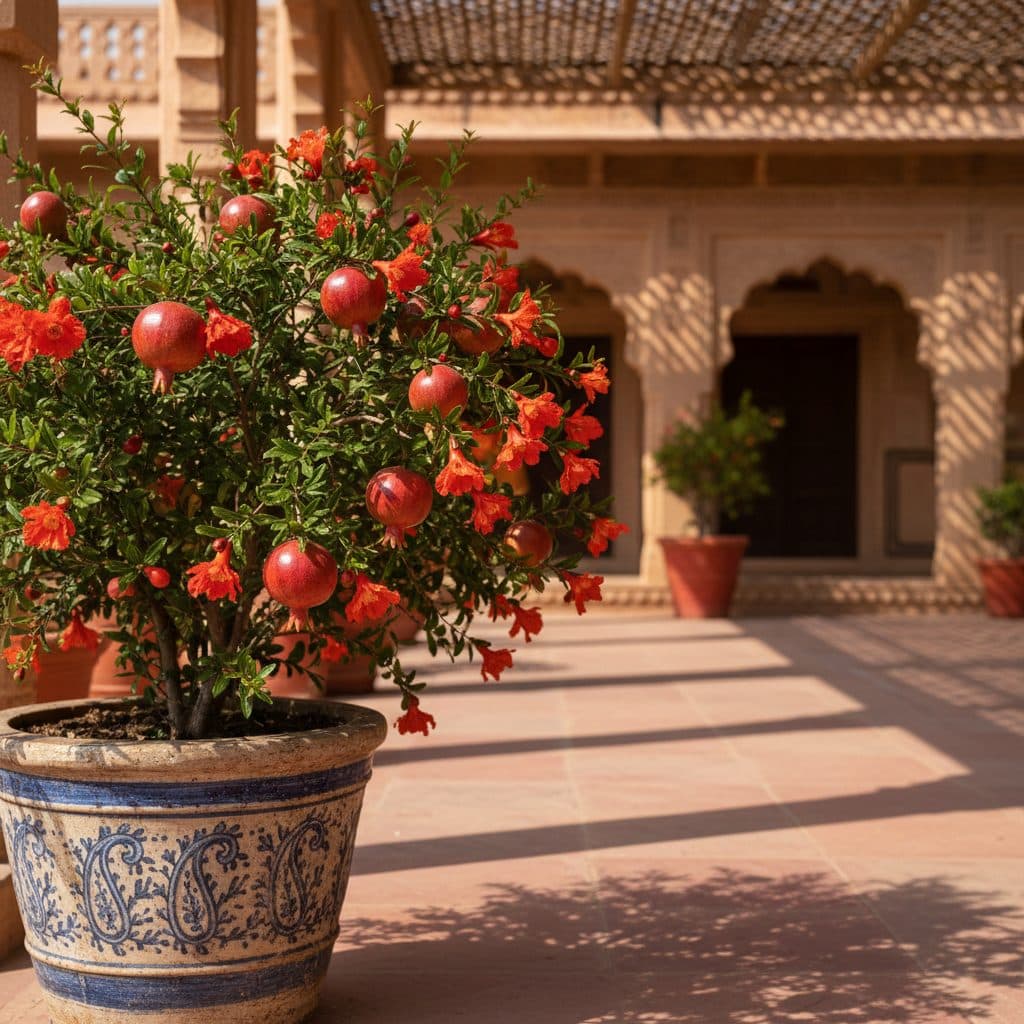
The pomegranate, known across India as anar (Punica granatum), is one of the most resilient and drought-tolerant fruit trees you can cultivate on a home terrace garden or sunny balcony. With its dark green leaves, orange blossoms, and ruby arils, a potted anar tree offers both a decorative plant and homegrown fruit.
Because pomegranates naturally originate in warm, semi-arid subtropical regions, they thrive under the intense sun and heat of Indian summers. However, learning how to grow pomegranate in pot successfully requires specific container management techniques. Restricting a fruit-bearing tree to a container demands sharp soil drainage, disciplined pruning to control vigorous water shoots, and careful irrigation rhythms to prevent flower drop and fruit splitting.
By selecting the right container, formulating a gritty, nutrient-rich potting medium, and managing pollination and seasonal feeding, you can harvest crisp, juicy pomegranates directly from your rooftop.
+--------------------------------------------------------------------------+
|                  POMEGRANATE CONTAINER CARE PROFILE (INDIA)              |
+-------------------+------------------------------------------------------+
| Feature           | Specification                                        |
+-------------------+------------------------------------------------------+
| Container Size    | 45 cm to 60 cm depth (40 to 60 litre volume)         |
| Soil Medium       | 40% Red Soil, 30% Vermicompost, 20% Sand, 10% Cocopeat|
| Sunlight Needs    | Minimum 6 to 8 hours direct hot sun daily            |
| Ideal Varieties   | Bhagwa, Ganesh, Arakta, Nana (Dwarf)                 |
| Common Issue      | Fruit splitting from irregular watering swings       |
| Annual Pruning    | Late winter (January-February)                       |
+-------------------+------------------------------------------------------+
Choosing pomegranate varieties for Indian containers
Selecting the right cultivar determines fruit size, aril sweetness, rind colour, and structural suitability for container cultivation.
Top pomegranate varieties for Indian home pots:
- Bhagwa (Sindhuri): The gold standard commercial variety in Maharashtra and Gujarat. Bhagwa produces large, glossy, deep red fruits with soft seeds and sweet, juicy arils. It responds exceptionally well to pot pruning and fruits prolifically in warm climates.
- Ganesh: A celebrated variety developed in Maharashtra known for its yellowish-pink rind, soft pinkish-white seeds, and very sweet, low-acid flavour. Highly adaptable to terrace containers.
- Arakta: Features dark red arils with a sweet-tart balance and heavy early fruiting characteristics.
- Punica granatum var. nana: A true dwarf botanical variety reaching only 60 cm to 90 cm in height. It flowers profusely with miniature bright red blossoms and produces small, edible (though somewhat tart) fruits. Ideal for compact balconies.
Always buy cutting-raised or air-layered (gootee) saplings of a named variety from a reliable nursery. Seedling-grown pomegranates rarely come true to type and take several years longer to bear, while a cutting-raised plant usually begins fruiting in its second or third year.
If you are cultivating seasonal vegetables alongside container fruits, review our growing guide on how-to-grow-lady-finger-in-pots.
Container sizing and rooftop setup
Pomegranates develop extensive fibrous root systems alongside anchoring taproots. A small container will quickly become root-bound, stalling vegetative growth and aborting developing fruits.
Container specifications:
- Starting saplings (Year 1): Begin with a 30 cm to 35 cm pot (15 to 20 litres).
- Permanent fruiting size (Year 2 onward): Pot up into a 45 cm to 60 cm diameter pot or heavy-duty HDPE fabric grow bag (45 to 60 litres).
- Drainage: Pomegranates are vulnerable to root rot in stagnant water. Ensure your container features at least 4 to 6 large drainage holes covered with curved terracotta shards (crocks) to prevent soil from clogging the outlets.
- Terrace protection: Place pots on clay bricks or elevated metal pot stands to allow air to prune bottom roots and protect your terrace roof coating from moisture damage.
+--------------------------------------------------------------------------+
|                  IDEAL POTTING MEDIUM FOR CONTAINER ANAR                |
+--------------------------------------------------------------------------+
|  [ 40% Good Garden Soil or Red Soil (Mineral Body & Weight) ]            |
|  [ 30% Aged Vermicompost or Cow Dung Manure (Organic Nutrition) ]        |
|  [ 20% Coarse River Sand or Perlite (Sharp Internal Drainage) ]          |
|  [ 10% Washed Cocopeat (Moisture Buffering) ]                            |
|  [ + 100g Neem Cake Powder + 50g Steamed Bone Meal per 50L Pot ]         |
+--------------------------------------------------------------------------+
Potting mix formulation: drainage is paramount
Pomegranates thrive in loose, slightly alkaline to neutral soil (pH 6.5 to 7.5) with exceptional porosity. Heavy garden clay that remains sodden will suffocate roots and cause leaf chlorosis.
Recommended pot mix ratio by volume:
- 40% Loamy Garden Soil or Red Soil: Provides physical body and trace minerals.
- 30% Well-Rotted Vermicompost or Aged Cow Dung Manure: Delivers biological activity and steady macro-nutrients.
- 20% Coarse River Sand (Badarpur / Bajri): Ensures water drains through rapidly.
- 10% Washed Cocopeat: Holds baseline moisture in blazing terrace sun.
- Additions: Mix in 100 grams of neem cake powder (to prevent root-knot nematodes and grubs) and two tablespoons of bone meal or single superphosphate for phosphorus.
To explore quick-cropping companions for your terrace space, check our guide on fast-growing-vegetables-in-india.
Solving "pomegranate flowering but no fruit"
One of the most frequent frustrations for terrace gardeners is an anar plant covered in red blooms that drop off completely without setting fruit. Understanding flower biology resolves this issue.
Pomegranates produce two distinct types of flowers on the same bush:
- Male flowers (bell-shaped): Narrow and tapered at the base, with no swelling beneath the petals. They contain pollen-bearing stamens but lack a functional ovary. Once they release pollen, they naturally drop to the ground. A large share of the early blooms on a young tree are male flowers, so heavy petal drop early in the season is normal.
- Hermaphrodite / Female flowers (Vase-shaped): Broader, flask-shaped flowers with a distinct swollen bulb (the embryonic fruit) at the base. These are the only flowers that develop into pomegranates.
+--------------------------------------------------------------------------+
|                  TROUBLESHOOTING FLOWER DROP AND FRUIT SET               |
+-------------------+-----------------------------+------------------------+
| Observed Problem  | Primary Underlying Cause    | Corrective Action      |
+-------------------+-----------------------------+------------------------+
| Male Bloom Drop   | Natural biological shedding | No action needed       |
| Female Bloom Drop | Lack of insect pollination  | Hand-pollinate brush   |
| Flower Abortion   | Irregular drought/soak      | Maintain steady water  |
| No Blooms Form    | Excessive nitrogen feeding  | Switch to high-K feed  |
| Total Fruit Drop  | Low sunlight (<6 hrs)       | Move to full direct sun|
+-------------------+-----------------------------+------------------------+
To maximize fruit set:
- Hand-pollination: Take a soft artist paintbrush, gently swirl it inside open male flowers to collect yellow pollen, and dab it onto the central sticky stigma of open vase-shaped female flowers in the morning.
- Balanced feeding: Avoid high-nitrogen fertilisers during flowering. High nitrogen forces green leaf flushes while triggering flower drop. Apply a potassium-rich organic fertiliser, such as wood ash tea, sulphate of potash, or fermented banana peel liquid.
Preventing fruit splitting and cracking
Fruit splitting is a common disorder where nearly ripe pomegranates crack open on the tree, exposing the arils to rot and fruit flies.
Fruit splitting is primarily caused by fluctuating soil moisture. When a potted pomegranate is allowed to dry out completely during hot weather and is then suddenly drenched with heavy water (or sudden monsoon rain), the inner arils absorb water rapidly and swell faster than the outer leathery rind can stretch, causing the skin to burst open.
Preventing split fruit:
- Maintain consistent soil moisture throughout fruit expansion. Never let the pot dry to the point of severe wilting.
- Apply a 5 cm mulch of dry leaves or sugarcane bagasse across the pot surface to buffer soil moisture swings.
- During heavy monsoon deluges, move pots under a sheltered balcony or tilt them slightly so excess rainwater runs off the surface rather than saturating the root ball.
For wider methods on protecting rooftop crops from heatwave stress, see our advice in container-gardens-summer-survival.
Pruning and shaping the potted framework
Pomegranates naturally grow as multi-stemmed, sprawling shrubs. In a container, disciplined pruning keeps the plant compact, aerated, and productive.
Pruning guidelines:
- Timing: Prune annually in late winter (January to mid-February) when the plant slows growth before the spring flush.
- Remove suckers: Vigorously remove all root suckers and watersprouts growing from the base of the trunk or soil line.
- Open vase shape: Maintain 3 to 5 sturdy main scaffold branches, pruning away inward-growing, crossing, and dead twigs to allow sunlight to penetrate the interior canopy.
- Tip pinching: Lightly pinch back branch tips in early spring to encourage lateral branching, as pomegranates produce flowers on new short spurs.
For broader fruit tree pruning strategies, explore our detailed resource on pruning-care-pomegranates-figs-persimmons-mulberries.
When integrating root crops into your home garden alongside fruit trees, learn planting and curing steps in how-to-grow-turmeric-at-home.