Key takeaways
- Select UV-stabilized HDPE grow bags with a minimum fabric weight of 200 to 250 GSM for durability across several seasons under intense Indian sun.
- Match bag dimensions to root architecture: use shallow 30x15 cm bags for leafy greens and deep 38x38 cm bags for fruiting vegetables.
- Prepare a lightweight potting medium containing 40 percent cocopeat, 30 percent vermicompost, 20 percent garden soil, and a handful of neem cake per bag.
- Elevate grow bags on interlocking polypropylene drain cell sheets or stands to prevent roof slab moisture damage and maintain root oxygenation.
- Apply a 3 cm mulch layer of dry leaves or sugarcane bagasse during peak summer (40°C+) to conserve moisture and prevent root baking.
Quick answer: Grow bags are the standard container format for Indian terrace and rooftop gardens because they are lightweight, durable, and cost-effective compared to clay or concrete pots. UV-stabilized HDPE grow bags (200 to 350 GSM) withstand harsh Indian summers and heavy monsoon rain without cracking. Selecting the correct volume per crop (such as 30x30x38 cm for brinjal and bhindi) and using a cocopeat-based lightweight potting mix ensures high vegetable yields in containers.
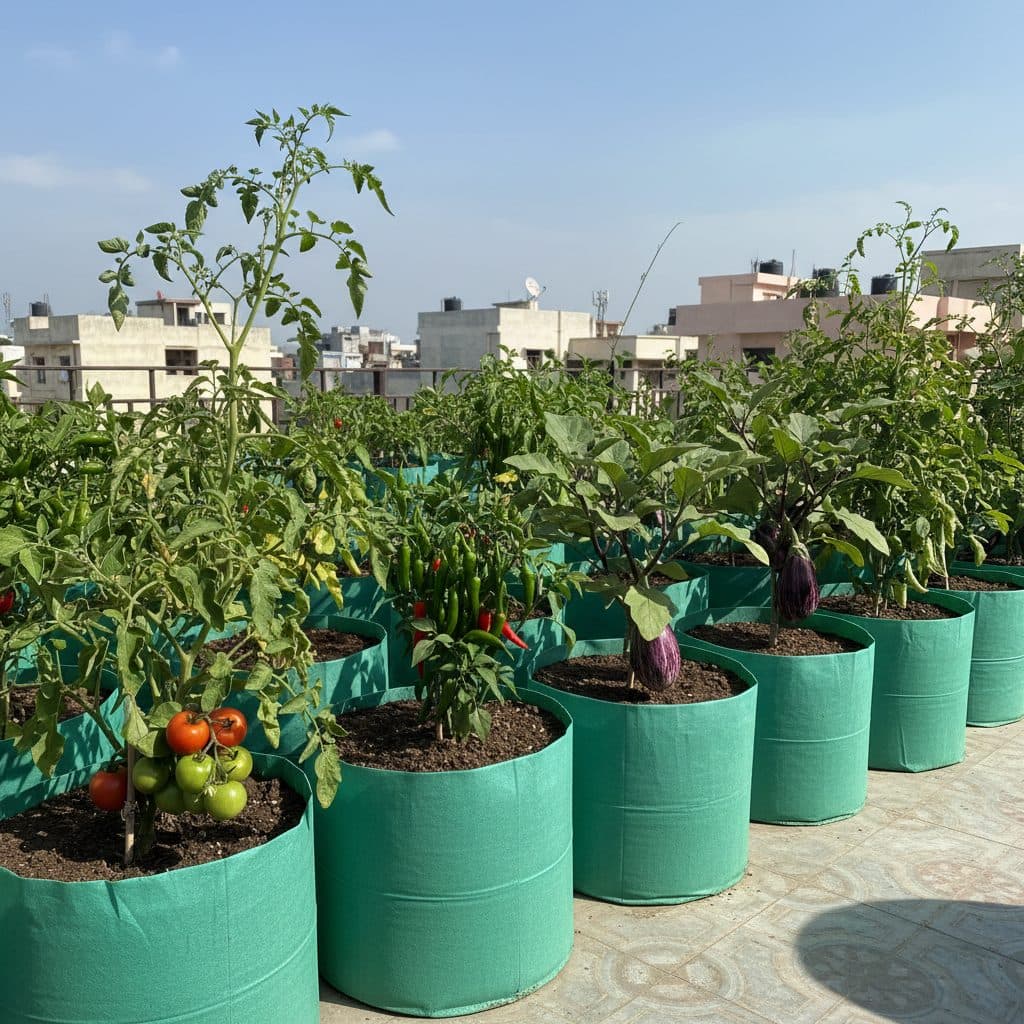
Cultivating a productive terrace garden across Indian cities requires managing roof structural loads, extreme summer heat, and heavy monsoon rains. Traditional terracotta and cement pots are heavy, prone to cracking under thermal stress, and difficult to reconfigure across a roof.
High-density polyethylene (HDPE) and geotextile fabric grow bags have transformed urban terrace farming. Weighing only a fraction of rigid containers, these flexible bags offer excellent root aeration, prevent circling root balls, and fold away flat when empty.
Understanding GSM ratings, crop-specific container sizing, and balanced potting formulations ensures your terrace garden thrives through both the scorching pre-monsoon summer (zaid) and the productive winter (rabi) growing seasons.
HDPE vs fabric grow bags: comparing materials
Selecting the right grow bag material depends on your local climate, budget, and water availability.
+------------------------+-----------------------------------+-----------------------------------+
| Feature                | HDPE UV-Treated Grow Bags         | Geotextile Fabric Grow Bags       |
+------------------------+-----------------------------------+-----------------------------------+
| Material Composition   | Woven high-density polyethylene   | Non-woven recycled polypropylene  |
| GSM Thickness          | 200 to 350 GSM (heavy-duty)       | 300 to 450 GSM                    |
| Lifespan in Indian Sun | Several seasons of sun exposure   | Typically shorter (UV-degrades)   |
| Moisture Retention     | High (impermeable sidewalls)      | Moderate (evaporates from sides)  |
| Root Air-Pruning       | None (drainage holes only)        | Exceptional (360-degree aeration) |
| Cleaning & Storage     | Easily washed with water; folds   | Requires brushing; absorbs salts  |
+------------------------+-----------------------------------+-----------------------------------+
HDPE grow bags (typically recognizable by their green exterior and orange interior) are engineered for intense ultraviolet radiation. the opaque inner layer keeps light out of the root zone, and the UV-stabilised outer layer resists sunlight degradation.
Geotextile fabric bags provide superior root aeration through air-pruning, preventing root binding. However, because fabric sidewalls evaporate moisture rapidly, they require more frequent watering during dry 40°C summer months in central and northern India.
Grow bag sizing guide by crop
Using undersized grow bags restricts root development, leading to stunted plants, nutrient deficiencies, and frequent wilting.
+-------------------------------------------------------------------+
|               GROW BAG SIZING MATRIX FOR VEGETABLES               |
+-------------------------------------------------------------------+
| [Small / Shallow]  30 cm x 15 cm  --> Methi, Palak, Coriander     |
| [Medium Standard]  24 cm x 24 cm  --> Chillies, Capsicum, Bush Pea|
| [Large Deep]       30 cm x 38 cm  --> Brinjal, Bhindi, Tomatoes   |
| [Extra Large]      45 cm x 45 cm  --> Gourds, Papaya, Lemon Bush  |
| [Rectangular Bed]  90 x 30 x 30 cm--> Mixed Root Veg (Radish/Beet)|
+-------------------------------------------------------------------+
+------------------------+-------------------+-------------------------------------------+
| Crop Category | Recommended Size | Ideal Sowing Count per Bag |
+------------------------+-------------------+-------------------------------------------+
| Leafy Greens (Methi) | 30 x 30 x 15 cm | Broadcast 30 to 40 seeds evenly |
| Chillies & Capsicum | 24 x 24 x 30 cm | 1 vigorous plant per bag |
| Brinjal & Bhindi | 30 x 30 x 38 cm | 1 brinjal or 2 bhindi plants |
| Tomatoes (Staked) | 38 x 38 x 38 cm | 1 indeterminate plant with bamboo stake |
| Cucurbits (Turai/Lauki)| 45 x 45 x 45 cm | 2 plants trained onto vertical trellis |
| Fruit Trees (Lime/Fig) | 60 x 60 x 60 cm | 1 grafted specimen |
+------------------------+-------------------+-------------------------------------------+Formulating a balanced terrace potting mix
Never fill terrace grow bags with heavy, unamended topsoil. Soil dug from agricultural fields compacts into dense brick-like blocks inside containers, suffocating roots and placing excessive weight on the terrace slab.
+-------------------------------------------------------------------+
|              OPTIMAL TERRACE GROW BAG POTTING MIX                 |
+-------------------------------------------------------------------+
| 1. Washed Cocopeat (40%): Expands to provide moisture retention   |
| 2. Vermicompost (30%): Delivers active biology and organic N-P-K  |
| 3. Sieved Red Soil / Earth (20%): Supplies clay minerals & zinc   |
| 4. Neem Cake Powder (5%): Protects against soil fungi & nematodes |
| 5. Bone Meal / Rock Phosphate (5%): Provides slow-release calcium |
+-------------------------------------------------------------------+
Enhancing biological soil fertility using vermicompost vs regular compost worms win provides earthworm castings packed with beneficial enzymes.
Cocopeat preparation
Always expand compressed cocopeat blocks in clean water and wash them thoroughly twice to flush out residual sodium salts before blending. Squeeze out excess moisture so the coir feels like a damp sponge.
Terrace placement, drain cells, and waterproofing
Proper layout and waterproofing protect your building structure while optimizing sunlight exposure.
+------------------------+-----------------------------------+-----------------------------------+
| Infrastructure Layer   | Purpose                           | Best Practice Recommendation      |
+------------------------+-----------------------------------+-----------------------------------+
| Roof Surface           | Structural roof slab              | Verify elastomeric waterproofing  |
| Drain Cell Matting     | Air gap under grow bags           | 30 mm interlocking polypropylene  |
| Potting Placement      | Weight distribution               | Align bags along perimeter beams  |
| Walking Paths          | Maintenance access                | Keep 60 cm clear aisles           |
+------------------------+-----------------------------------+-----------------------------------+
Distributing weight safely
A 45 cm bag holds roughly 90 litres of mix and can weigh 60 kg or more when saturated. Before loading a roof, have the slab's design live load confirmed by a structural engineer or the building's builder — a terrace intended for foot traffic is not automatically rated for rows of filled grow bags. Always arrange your heaviest grow bags (45 cm and larger) directly above load-bearing structural columns and exterior perimeter beams rather than clustering them in the unsupported center of a roof slab.
Managing drainage outflow
Never place grow bags directly onto bare terrace screed. Over time, standing moisture under bags causes dampness and hairline seepage into the ceiling below. Lay interlocking 30 mm drain cell sheets across growing zones or place bags on raised metal wire stands. This air gap ensures free airflow, promotes air-pruning, and lets excess monsoon runoff flow directly to rainwater drains.
Seasonal maintenance and soil rejuvenation
Container soil naturally loses volume and biological nutrients after harvesting heavy crops like tomatoes or gourds.
Post-harvest soil recharging
After clearing a crop, you do not need to discard the potting mix:
- Empty the bag onto a clean tarpaulin in the sun.
- Remove old root clumps and break up compact lumps.
- Spread and sun-dry the mix in thin layers for two days under hot sun to reduce pest and pathogen carry-over.
- Re-enrich by mixing in 20 percent fresh vermicompost, two tablespoons of neem cake powder, and a handful of bone meal before refilling.
To automate watering across large terrace bag layouts, integrate a low-pressure manifold as detailed in drip irrigation for terrace garden. If managing urban pests or monkeys, explore physical protection strategies in how to protect terrace garden from monkeys and explore general container methods in rooftop patio container gardening.