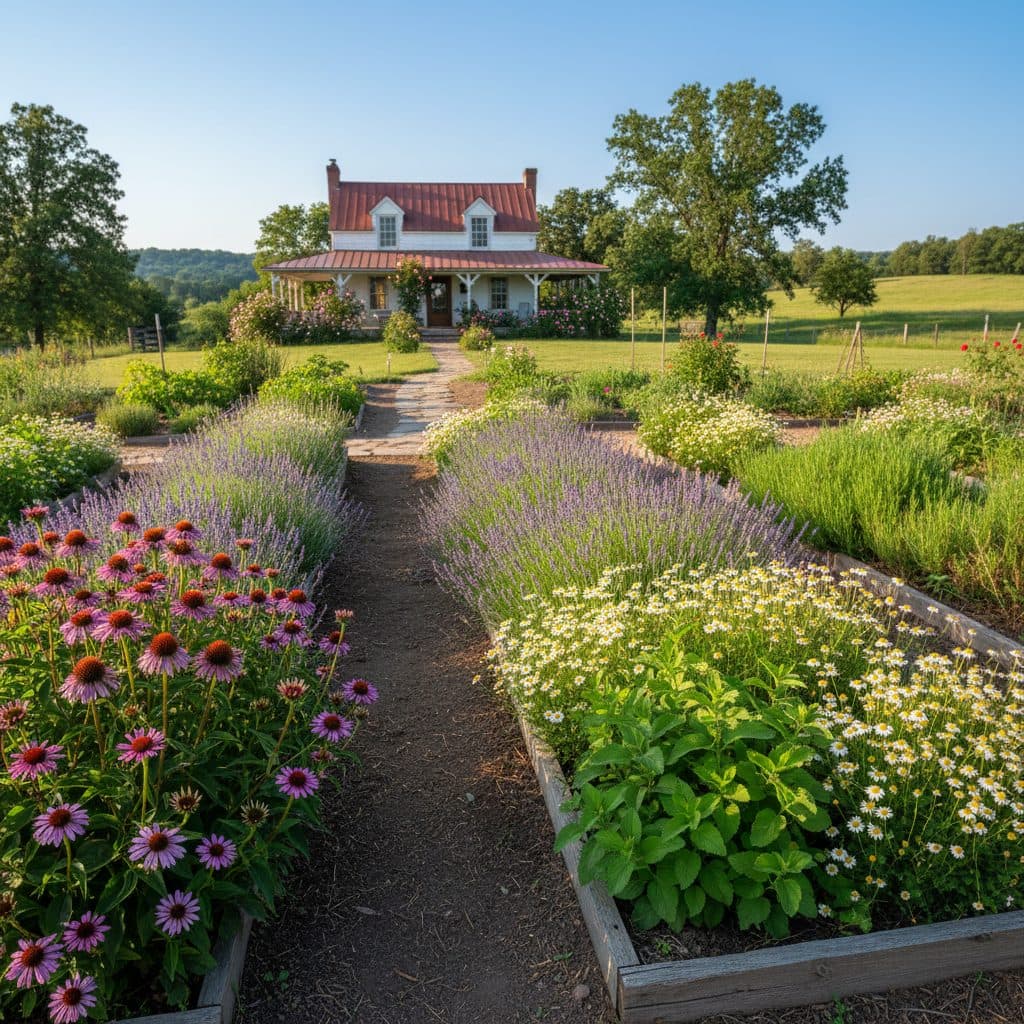
Key takeaways
- Select a garden site with at least six hours of direct sunlight daily for optimal herb growth.
- Cultivate immune-boosting herbs like echinacea and elderberry, which can reduce cold symptoms by up to 30%.
- Grow calming herbs such as chamomile and lavender, known for their ability to promote relaxation and improve sleep quality.
- Ensure proper soil drainage and pH levels between 6.0 and 7.0 for most medicinal herbs.
- Harvest herbs at their peak (typically in the morning after dew dries) to maximize their aromatic and medicinal compounds.
- Dry herbs thoroughly at temperatures below 95°F (35°C) to preserve their potency for up to 12 months.
Quick answer: To grow immune-boosting and calming herbs for home tea blends, select a garden site with at least six hours of direct sunlight and well-draining soil (pH 6.0-7.0). Cultivate varieties like echinacea and elderberry, harvesting them at their peak to maximize medicinal compounds.
Across the United States, from the humid summers of Florida (USDA zone 9) to the colder winters of Minnesota (USDA zone 4), more home gardeners are discovering the practical benefits of cultivating medicinal herbs. A well-planned herb garden, even one as small as 10 square feet, can provide a consistent supply of ingredients for comforting and health-supporting teas, potentially reducing reliance on store-bought options by 50% or more.
An apothecary garden focuses on herbs with immune-boosting and calming properties. Selecting species suited to your USDA zone simplifies growing, harvesting, and blending infusions at home. At least 12 common herbs thrive in typical US garden conditions, providing ingredients for over 20 distinct tea blends throughout the year.
Establishing your medicinal herb garden foundation
Starting a medicinal herb garden begins with careful planning and understanding your local conditions. Most herbs, especially those used for tea, require at least six hours of direct sunlight daily to thrive and develop their potent compounds. In regions like the arid Southwest (USDA zones 8-10), some afternoon shade might be beneficial to prevent scorching, while in cooler climates like the Northeast (USDA zones 4-6), full sun is usually ideal. Soil quality is essential; a well-draining loam rich in organic matter is preferred, with a pH level generally between 6.0 and 7.0. Testing soil pH and moisture levels helps guide amendments. Incorporating 2-3 inches of compost annually improves soil structure and nutrient availability, supporting steady plant growth. For those new to gardening, focusing on a few easy-to-grow herbs first can build confidence before expanding to a larger selection of 10 or more varieties.
Site selection and soil preparation
Choosing the right location is an essential first step. Consider proximity to your home for easy access, especially during harvesting. Ensure the area has good air circulation to prevent fungal diseases, which can be a problem in humid climates like the Southeast (USDA zones 7-9). For smaller spaces, raised beds or containers offer excellent control over soil conditions and can be ideal for herbs that prefer specific environments. For instance, mint (Mentha spp.) is a vigorous spreader and is often best contained in pots or with root barriers, preventing it from taking over a 3-foot by 3-foot garden bed. Before planting, amend your soil with aged compost or other organic materials to a depth of 8-12 inches, ensuring a rich, friable medium for root development. This preparation can boost initial plant growth by 20-30% compared to unamended soil.
- Assess sunlight exposure for at least six hours daily.
- Test soil pH and drainage; aim for 6.0-7.0.
- Amend soil with 2-3 inches of organic compost.
- Consider raised beds for better soil control.
- Ensure good air circulation around plants.
Immune-boosting herbs for your tea blends
Supporting immune function is important for overall health, and several garden herbs offer practical benefits. Echinacea (Echinacea purpurea), a native prairie plant thriving in USDA zones 3-9, is well-regarded for its ability to help the body fight off infections. Studies indicate that echinacea can reduce the duration and severity of common cold symptoms by as much as 30% [1]. The roots and flowers are typically used for tea. Another powerful ally is elderberry (Sambucus nigra), which grows vigorously in USDA zones 3-7. Its berries and flowers are packed with antioxidants and have been shown to support immune function, with some research suggesting a 50% reduction in flu symptoms when taken early [4]. For optimal growth, elderberry shrubs can reach 6-10 feet tall and wide, requiring ample space. Ginger (Zingiber officinale), though often grown as an annual in most US zones, can be overwintered indoors in colder climates or grown year-round in USDA zones 8-11. Its rhizomes provide a warming, pungent flavor and are known for their anti-inflammatory properties, which can indirectly support immune health.
Cultivating immune herbs
Holy Basil (Ocimum tenuiflorum), also known as Tulsi, is a tender perennial in USDA zones 10-11 but is widely grown as an annual elsewhere. It is revered for its adaptogenic qualities, helping the body manage stress, which in turn supports immune resilience. Planting holy basil in full sun and well-drained soil will yield abundant leaves for tea. Thyme (Thymus vulgaris), a hardy perennial in USDA zones 5-9, offers antiseptic properties and is a common ingredient in respiratory health teas. It prefers full sun and dry, sandy soil, making it a low-maintenance addition to many gardens. To maximize potency, harvest these herbs in the morning after the dew has dried, just before they flower, which is when their essential oil content is often highest. Drying them quickly and gently at temperatures below 95°F (35°C) helps preserve their beneficial compounds for up to 12 months.
- Echinacea (root, flower): immune support, cold symptom reduction.
- Elderberry (berry, flower): antioxidant, flu symptom reduction.
- Ginger (rhizome): anti-inflammatory, warming.
- Holy Basil (leaf): adaptogen, stress reduction, immune support.
- Thyme (leaf, flower): antiseptic, respiratory health.
Calming and soothing selections for stress reduction
In our often-busy lives, finding moments of calm is essential, and certain herbs excel at promoting relaxation and reducing stress. Chamomile (Matricaria chamomilla), an annual or short-lived perennial in USDA zones 3-9, is perhaps the most widely recognized calming herb. Its small, daisy-like flowers contain compounds that can help soothe nerves and improve sleep quality [2]. A single plant can produce hundreds of flowers over a growing season, providing ample material for nightly teas. Lavender (Lavandula angustifolia), a fragrant perennial hardy in USDA zones 5-9, is cherished for its beautiful purple blooms and its ability to reduce anxiety. Planting lavender in full sun and well-drained, slightly alkaline soil (pH 6.7-7.3) will encourage vigorous growth and abundant flowers, which are best harvested when just opening. Lemon Balm (Melissa officinalis), a vigorous perennial in USDA zones 4-9, offers a delightful citrusy aroma and is known for its mood-lifting and calming effects. It can spread readily, so consider containing it in a dedicated bed or large container, similar to how one might manage mint to prevent overgrowth in a 2-foot by 2-foot area.
Cultivating peace-promoting herbs
Valerian (Valeriana officinalis) is a powerful calming herb, often used for sleep support, and is hardy in USDA zones 4-9. Its roots are the primary medicinal part, typically harvested in the fall of its second year of growth. Be aware that valerian can have a strong, distinct odor, which some find unpleasant. Passionflower (Passiflora incarnata), a beautiful vine native to the Southeast US (USDA zones 6-9), is another excellent choice for anxiety and sleep. Its intricate flowers and leaves are used for tea. To encourage strong growth and flowering, passionflower requires full sun and a trellis or support structure, often growing 10-20 feet in a single season. Harvesting these calming herbs (flowers, leaves, or roots) at their peak ensures maximum therapeutic benefit, often resulting in a 15-25% higher concentration of active compounds compared to early or late harvests.
- Chamomile (flower): promotes relaxation, improves sleep.
- Lavender (flower): reduces anxiety, calming aroma.
- Lemon Balm (leaf): mood-lifting, antiviral.
- Valerian (root): sleep aid, nervous tension relief.
- Passionflower (leaf, flower): reduces anxiety, mild sedative.
Cultivating, harvesting, and blending for optimal teas
Successful tea blending starts long before harvest, with proper cultivation practices. Ensuring your herbs receive adequate water (typically 1 inch per week, either from rain or irrigation) is essential for healthy growth and potent essential oil production. Overwatering, especially in clay soils, can lead to root rot, while underwatering can stunt growth and reduce medicinal compounds by up to 40%. For perennials like echinacea and lavender, applying a 2-3 inch layer of organic mulch can help retain soil moisture, suppress weeds, and regulate soil temperature, especially in fluctuating climates like the Midwest (USDA zones 5-7). Annuals such as holy basil and chamomile benefit from consistent feeding with a balanced organic fertilizer every 4-6 weeks during their active growing season. Consider incorporating cover crops for the home garden in off-seasons to improve soil health and fertility naturally, which can increase subsequent herb yields by 10-15%.
Harvesting and drying techniques
The timing of harvest significantly impacts the potency and flavor of your herbal teas. Most leaves and flowers are best harvested in the morning, after the dew has evaporated but before the intense midday sun, when their essential oil content is highest. For roots, like valerian or echinacea, harvest in the fall of the plant’s second or third year, after the plant has stored maximum energy. After harvesting, clean your herbs gently and dry them promptly to prevent mold and preserve their medicinal qualities. Air drying in a well-ventilated, dark space at temperatures between 60-75°F (15-24°C) is ideal for many herbs. For faster drying, a dehydrator set to a low temperature (below 95°F or 35°C) can be used. Properly dried herbs should be brittle and crumble easily, retaining much of their original color and aroma. Store them in airtight containers away from direct sunlight and heat, where they can maintain potency for up to 12 months.
- Harvest leaves and flowers in the morning after dew.
- Harvest roots in the fall of the second or third year.
- Clean herbs gently before drying.
- Air dry in a dark, well-ventilated area at 60-75°F.
- Store dried herbs in airtight containers for up to 12 months.
Crafting thoughtful tea blends
Once you have a supply of dried herbs, the art of blending begins. A good blend balances flavor, aroma, and therapeutic properties. For an immune-boosting blend, consider combining pungent ginger with earthy echinacea and a touch of elderflower for sweetness. A common ratio might be 2 parts echinacea, 1 part ginger, and 1 part elderflower. For a calming evening tea, a blend of chamomile, lavender, and lemon balm works wonderfully. Try a ratio of 3 parts chamomile flowers, 1 part lavender flowers, and 2 parts dried lemon balm leaves. Always start with smaller quantities (perhaps 1 teaspoon of total dried herbs per 8 ounces of hot water) and adjust to your taste and desired strength. Experimenting helps find preferred balances; adding a pinch of dried mint from your garden in USDA zone 5 can bring a refreshing note to many blends. Remember that some herbs, like valerian root, have very strong flavors and are best used in smaller proportions, often less than 0.5 parts in a blend.
Storage and safety considerations
Proper storage maintains the potency of your home-grown tea blends. Store dried herbs and blends in airtight glass jars, away from direct sunlight and heat, in a cool, dry pantry. Label each jar with the herb name and date of harvest; most dried herbs will retain their efficacy for up to 12 months. After this period, their potency can decrease by 15-20% annually. While home-grown herbal teas are generally safe, it is wise to research potential contraindications, especially if you are pregnant, nursing, or taking prescription medications. For example, some herbs, like valerian, can interact with sedatives. Always consult a healthcare professional if you have concerns. The USDA Natural Resources Conservation Service (NRCS) provides extensive resources on plant identification and cultivation, which can be invaluable for ensuring you are growing and using the correct species safely [6].
- Start with simple blends like 2:1:1 ratios.
- Use 1 teaspoon of dried herbs per 8 ounces of water.
- Store dried herbs in airtight glass jars, dated.
- Keep jars away from sunlight and heat.
- Consult a healthcare professional for contraindications.
Comparison of popular immune-boosting and calming herbs
Herb | Primary Benefit | USDA Hardiness Zones | Sunlight Needs | Key Part Used |
|---|---|---|---|---|
Echinacea | Immune support | 3-9 | Full sun | Root, flower |
Elderberry | Immune support | 3-7 | Full sun to partial shade | Berry, flower |
Chamomile | Calming, sleep | 3-9 (annual/perennial) | Full sun | Flower |
Lavender | Anxiety relief | 5-9 | Full sun | Flower |
Lemon Balm | Calming, mood-lifting | 4-9 | Full sun to partial shade | Leaf |
Valerian | Sleep aid | 4-9 | Full sun to partial shade | Root |
Echinacea Efficacy: Echinacea can reduce the duration of common cold symptoms by up to 30%, making it a valuable addition to your immune-boosting garden [1].
Elderberry Benefits: Studies suggest elderberry can reduce flu symptoms by 50% when taken at the onset, demonstrating antiviral properties [4].
Frequently asked questions
What are the easiest immune-boosting herbs to grow for beginners?
For beginners, ginger (grown as an annual in most zones), thyme (USDA zones 5-9), and holy basil (annual in zones below 10) are relatively easy. They require full sun and well-drained soil, and can provide abundant harvests for tea within a single growing season, often yielding 1-2 pounds of fresh material per plant.
How much space do I need for a productive herb tea garden?
You can start a productive herb tea garden in a surprisingly small area. A dedicated raised bed of 4 feet by 8 feet can comfortably house 10-12 different herb varieties, providing enough material for dozens of tea blends throughout the year. Even a few containers on a sunny patio can yield a significant amount, perhaps 50-75% of a small bed’s output.
Can I grow these herbs indoors during winter in colder zones?
Yes, many herbs can be brought indoors or started from seed indoors. Lemon balm, holy basil, and even small chamomile plants can thrive near a sunny window or under grow lights, especially in USDA zones 3-5 where outdoor growing is limited for 5-6 months. Ensure they receive at least 4-6 hours of direct light or 12-14 hours under artificial light.
What is the best way to dry herbs to preserve their potency for tea?
The best way to dry herbs is by air drying them in a dark, well-ventilated room where temperatures stay between 60-75°F (15-24°C). Hang small bundles upside down or spread leaves on drying screens. This method helps retain up to 90% of their volatile oils and medicinal compounds, ensuring maximum potency for up to 12 months.
Are there any herbs I should avoid if I am pregnant or on medication?
Yes, several herbs should be avoided or used with caution if you are pregnant, nursing, or taking certain medications. For example, valerian can interact with sedatives, and large doses of elderberry might not be suitable for everyone. Always consult with a healthcare professional before incorporating new herbal remedies into your routine, especially if you have existing health conditions or are on prescription drugs, to avoid potential adverse effects in 5-10% of cases.
References
- Role of Herbal Medicine in Boosting Immune System (2023). Role of Herbal Medicine in Boosting Immune System.
- Calming the Spirit Herbs (2004). Calming the Spirit Herbs.
- Role of the Ayurvedic clock in boosting the immune system (2023). Role of the Ayurvedic clock in boosting the immune system.
- Herbal Medicine: Boosting Immunity (2024). Herbal Medicine: Boosting Immunity.
- Herbal Tranquilizers: Nourishing the Heart and Calming the Liver (2012). Herbal Tranquilizers: Nourishing the Heart and Calming the Liver.
- USDA Natural Resources Conservation Service (2024). USDA Natural Resources Conservation Service.