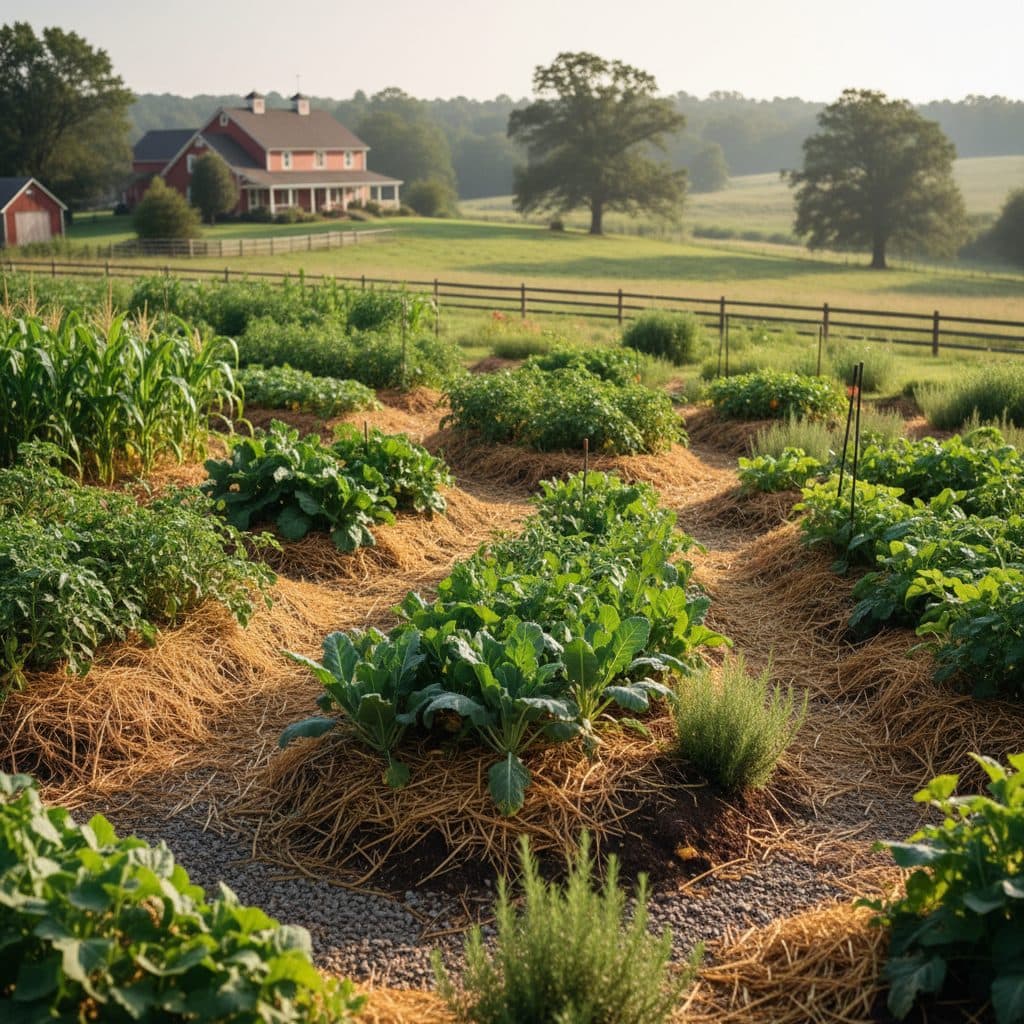
Key takeaways
- Straw, wood chips, leaves, and living mulches each offer distinct benefits for soil health and pest management.
- Organic mulches significantly suppress weeds, reducing competition for nutrients and water by up to 80%.
- Proper mulch application can conserve soil moisture by 25-50%, reducing irrigation needs and improving plant resilience.
- Living mulches, particularly legumes, enrich soil nitrogen content and provide continuous ground cover, benefiting long-term soil structure.
- Wood chips are excellent for perennial beds and pathways, offering slow decomposition and habitat for beneficial organisms.
- Consider the carbon-to-nitrogen ratio of mulches to avoid temporary nitrogen depletion in the soil, especially with fresh wood chips.
Quick answer: Organic mulches like straw, wood chips, and leaves offer distinct benefits for pest control, weed suppression, and soil health in USDA Zone 6. Each type has unique properties for moisture retention, temperature regulation, and nutrient contribution.
Down here in central Missouri, where we see hot, humid summers and cold winters, managing soil health and keeping pests at bay is a constant job. For years, I’ve relied on organic mulches to do a lot of that heavy lifting. They’re not just about looking tidy; they’re a cornerstone of a healthy, productive garden, helping to manage weeds, conserve water, and even deter some pests. The right mulch can make a 30% difference in soil moisture retention during a dry spell, which is critical when you’re growing tomatoes or peppers.
But not all mulches are created equal. Each type — from the humble straw to sturdy wood chips, fallen leaves, and even living plants — brings its own set of pros and cons. Understanding these differences, grounded in real-world results and research, helps us make informed decisions that benefit our plants and soil for the long haul. For instance, a study in 1999 showed that while synthetic mulches could increase strawberry yields, organic options offer broader ecological benefits [1].
Straw mulch: light, airy, and effective
Straw, particularly wheat or oat straw, is a go-to for many vegetable growers. It’s relatively inexpensive, easy to spread, and breaks down at a moderate rate, enriching the soil with organic matter. In my experience, a 4- to 6-inch layer of straw can suppress 70-85% of annual weeds in a vegetable bed, especially around crops like potatoes and squashes. It also keeps soil temperatures more stable, which is a big plus in USDA zone 6 where we can get temperature swings of 30°F in a single day.
benefits and considerations for straw
Straw’s light color helps reflect sunlight, keeping soil cooler in summer, which is beneficial for shallow-rooted crops. It also provides a clean surface for fruits like strawberries, preventing soil splash and reducing disease transmission. However, it’s important to use weed-free straw to avoid introducing new problems. I always source mine from a local farmer who guarantees it’s not full of viable weed seeds. While it’s great for moisture retention, sometimes a very thick layer can harbor slugs, so I monitor it closely, especially during wet periods. Straw generally has a high carbon-to-nitrogen ratio, around 80:1, meaning it can temporarily tie up nitrogen as it decomposes, so I often supplement with a balanced organic fertilizer like fermented soybean meal early in the season.
- Excellent for vegetable gardens, especially around fruiting plants.
- Reflects sunlight, keeping soil up to 10°F cooler.
- Suppresses 70-85% of annual weeds.
- Breaks down moderately, adding organic matter.
- Can be a habitat for beneficial insects like ground beetles.
Wood chips: durable, aesthetic, and long-lasting
Wood chips are a staple in my perennial beds, around trees, and on pathways. They’re incredibly durable, breaking down much slower than straw, often lasting for two to three years before needing replenishment. In my experience, a 3- to 4-inch layer of wood chips can virtually eliminate annual weeds and significantly reduce perennial weed growth in established areas. The USDA Natural Resources Conservation Service notes wood chips as an effective mulch for moisture retention, reducing evaporation by 30-50% [6].
sourcing and application of wood chips
I often get wood chips from local arborists, sometimes for free, or I make my own using a portable wood chipper. When applying, I make sure to keep them a few inches away from tree trunks and plant stems to prevent moisture buildup and potential disease issues. Fresh wood chips have a high carbon-to-nitrogen ratio, sometimes 400:1, which can temporarily deplete soil nitrogen as microbes work to break them down. This is less of a concern for established trees and shrubs, but for annuals, I prefer aged chips or supplement with nitrogen. Research from 2009 suggests that organic mulches like wood chips can improve tree chemical defenses against pests [4].
- Excellent for perennial beds, trees, shrubs, and pathways.
- Lasts for two to three years, reducing reapplication frequency.
- Suppresses nearly 100% of annual weeds when applied thickly.
- Conserves soil moisture by 30-50%, reducing watering needs.
- Provides habitat for beneficial soil organisms and fungi.
Leaf mulch: free, nutrient-rich, and locally sourced
Fallen leaves are arguably the most accessible and cost-effective mulch available, especially in suburban areas. Every autumn, I collect bags of leaves from my property and neighbors, shredding them with a lawnmower or a branch wood chipper before applying them. A 2- to 3-inch layer of shredded leaves around my blueberries and hostas works wonders. They break down relatively quickly, usually within a year, adding a rich supply of micronutrients and organic matter back into the soil. This helps build the living soil that grows everything.
advantages of shredded leaves
Shredded leaves are fantastic for improving soil structure, increasing water infiltration, and providing a slow-release source of nutrients. They also create a welcoming environment for earthworms and other beneficial soil organisms. In my experience, a good layer of shredded leaves can reduce weed germination by 60-75%, though it’s less effective against aggressive perennial weeds than wood chips. The carbon-to-nitrogen ratio of leaves varies by species, but it’s generally lower than wood chips, often around 30:1 to 60:1, so nitrogen tie-up is less of a concern. They’re particularly effective for acid-loving plants, as they tend to lower soil pH slightly as they decompose.
- Free and abundant, especially in autumn.
- Adds significant organic matter and micronutrients to soil.
- Improves soil structure and water infiltration by up to 20%.
- Suppresses 60-75% of annual weeds.
- Supports a diverse community of soil microbes and invertebrates.
Living mulch: dynamic, long-term soil builders
Living mulches, essentially cover crops grown between or under cash crops, are a more dynamic approach to soil management. Instead of applying dead organic matter, you’re growing plants that actively contribute to the ecosystem. I’ve had great success using clover as a living mulch in my corn and squash beds here in Missouri. A well-established living mulch can reduce weed pressure by over 90%, outcompeting unwanted plants for light and nutrients. They also provide continuous soil cover, preventing erosion and maintaining consistent soil temperatures, which is a huge benefit during our hot summers.
choosing and managing living mulches
Legumes like clover (e.g., crimson clover, white clover) are particularly valuable because they fix atmospheric nitrogen, providing a natural fertilizer source for companion plants. This can reduce the need for external nitrogen inputs by 20-30%. For detailed guidance on species, check out Best Living-Mulch and Cover-Crop Legumes by USDA Zone. The key to success with living mulches is management; you need to choose species that won’t outcompete your main crops. For example, I keep my clover mowed to about 4 inches tall to prevent it from shading out my vegetables. Some grasses, like certain varieties of Bermuda grass, can also be used as living mulches in warmer zones, as explored in Can You Grow Bermuda Grass in Your Zone? [2].
- Actively suppresses weeds by competing for resources.
- Fixes atmospheric nitrogen, enriching soil by 20-30%.
- Prevents soil erosion and improves soil structure.
- Provides continuous ground cover, stabilizing soil temperature.
- Can attract beneficial insects and pollinators.
Comparison of Organic Mulch Types
Mulch Type | Primary Use | Weed Suppression | Soil Moisture Retention | Decomposition Rate | C:N Ratio (Approx.) |
|---|---|---|---|---|---|
Straw | Vegetable gardens, annuals | Good (70-85%) | Good (25-40%) | Moderate (6-12 months) | 80:1 |
Wood Chips | Perennials, trees, pathways | Excellent (90-100%) | Excellent (30-50%) | Slow (2-3 years) | 100-400:1 |
Shredded Leaves | Perennials, shrubs, general beds | Fair-Good (60-75%) | Good (20-35%) | Moderate-Fast (6-18 months) | 30-60:1 |
Living Mulch | Row crops, orchards, long-term beds | Excellent (90% +) | Excellent (30-50%) | Continuous | Varies (often low for legumes) |
Weed Reduction: A 4-inch layer of straw mulch can reduce annual weed growth by up to 85% in vegetable beds, saving hours of weeding time.
Water Savings: Applying 3 inches of wood chips can reduce soil moisture evaporation by 30-50%, potentially cutting irrigation needs by 20-30% in a typical growing season.
Frequently asked questions
What is the best organic mulch for a vegetable garden?
For most annual vegetable gardens, straw is an excellent choice. A 4- to 6-inch layer effectively suppresses weeds, conserves moisture by 25-40%, and breaks down to enrich the soil within a single growing season. Ensure it is weed-free to prevent introducing new problems.
Can I use fresh wood chips as mulch?
Yes, you can use fresh wood chips, especially around established trees and shrubs. However, be aware that fresh chips have a high carbon-to-nitrogen ratio (up to 400:1), which can temporarily deplete soil nitrogen as they decompose. For annuals or young plants, consider aged chips or supplement with a nitrogen source like compost or a balanced organic fertilizer to avoid nitrogen deficiency.
How thick should organic mulch be applied?
The ideal thickness varies by mulch type and application area. For straw, a 4- to 6-inch layer is effective in vegetable beds. Wood chips work well at 3 to 4 inches around perennials and trees. Shredded leaves can be applied 2 to 3 inches thick. Always keep mulch a few inches away from plant stems and tree trunks to prevent rot and pest issues.
Do organic mulches attract pests?
While organic mulches can provide shelter for some pests like slugs and voles, especially in very thick or consistently wet layers, they also harbor beneficial insects like ground beetles and spiders that prey on pests. Proper application, such as keeping mulch away from plant bases and not applying excessively thick layers (over 6 inches), can mitigate pest issues while maximizing benefits like 30-50% moisture conservation.
How often should I replenish organic mulch?
Replenishment frequency depends on the mulch’s decomposition rate. Straw and shredded leaves typically need to be topped up annually, often in spring or fall, as they break down within 6-18 months. Wood chips are much slower, usually lasting two to three years before a new 1-2 inch layer is needed. Living mulches are continuous and only require management like mowing to prevent overgrowth.
What are the benefits of living mulch compared to other organic mulches?
Living mulches offer dynamic benefits beyond passive mulches. They actively fix atmospheric nitrogen (especially legumes, contributing 20-30% of crop needs), prevent erosion, build soil organic matter continuously, and provide habitat for beneficial insects. They also offer superior weed suppression, often reducing weed pressure by over 90% in crop rows, without needing annual reapplication.
References
- 175 Synthetic Mulches Increase Strawberry Yields Compared with Organic Mulches (1999). 175 Synthetic Mulches Increase Strawberry Yields Compared with Organic Mulches.
- Alternative Media and Mulches in Organic Vegetable Production (2023). Alternative Media and Mulches in Organic Vegetable Production.
- 8Chapter Mulches (2016). 8Chapter Mulches.
- Ecological Implications of Organic Mulches in Arboriculture: A Mechanistic Pathway Connecting the Use of Organic Mulches with Tree Chemical Defenses (2009). Ecological Implications of Organic Mulches in Arboriculture: A Mechanistic Pathway Connecting the Use of Organic Mulches with Tree Chemical Defenses.
- Use of Mulches in Soil Moisture Conservation: A Review (2015). Use of Mulches in Soil Moisture Conservation: A Review.
- USDA Natural Resources Conservation Service (2024). USDA Natural Resources Conservation Service.