Key takeaways
- The rabi season (October through March) is India's most productive vegetable growing window, offering mild temperatures, clear sunshine, and low pest pressure.
- Timing shifts regionally: December and January night minimums in the northern plains typically run about 4°C to 10°C with ground frost on clear nights in Punjab, Haryana, Rajasthan and western UP, while southern peninsular and coastal regions enjoy mild, frost-free weather (20°C to 28°C).
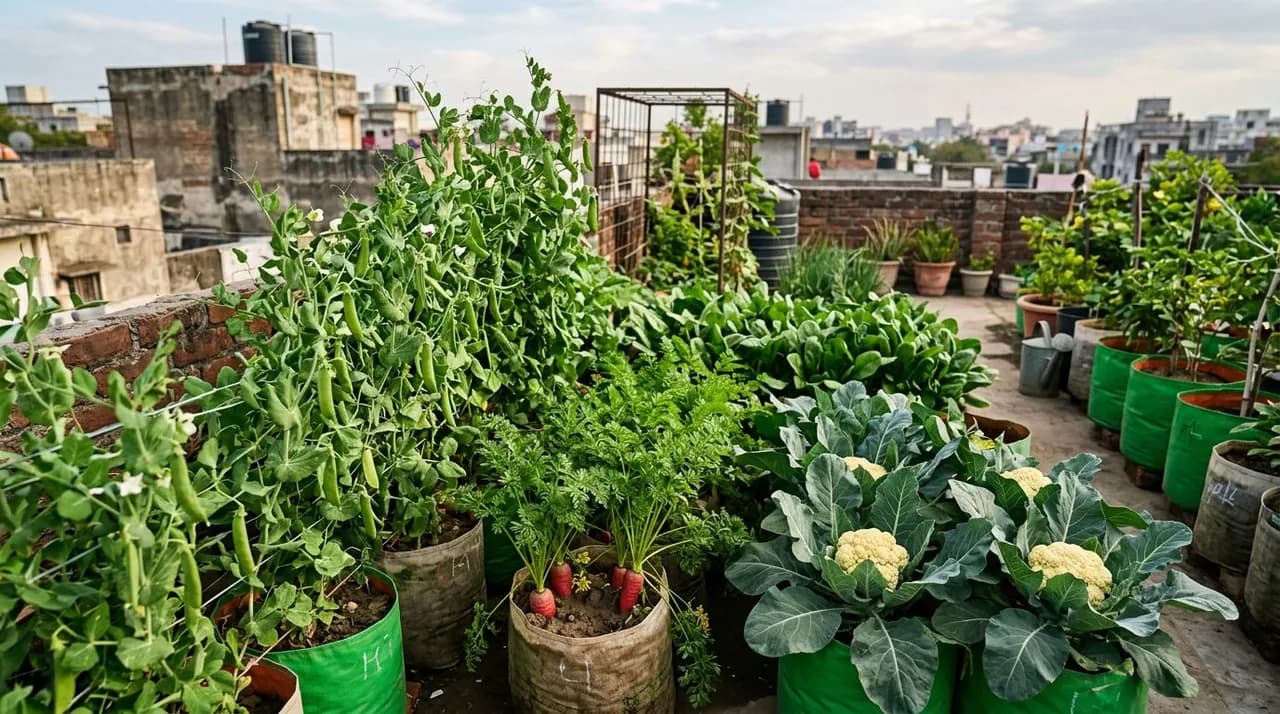
- Sow winter leafy greens (palak, methi, sarson, coriander) and root crops (mooli, red carrots, beetroot) directly into shallow, wide containers.
- Transplant cool-season brassicas (cauliflower, cabbage, broccoli, knol khol) into 30 cm grow bags; in the north, protect frost-sensitive tomatoes and brinjals under cover.
- Water terrace containers early in the morning, avoiding over-saturation during cool or foggy periods to prevent damping off and fungal root rot.
Quick answer: The best winter vegetables in India grown during the rabi season include palak, methi, sarson, coriander, red carrots, mooli, green peas, cauliflower, cabbage, and tomatoes. Sowing begins in October and November across the plains, taking advantage of cool weather and clear sunshine.
Growing winter vegetables in India is an active period in the home gardening calendar. Known agriculturally as the rabi season, the months spanning October through March bring a welcome relief from the sweltering heat of summer and the torrential, waterlogging downpours of the kharif monsoon.
During winter, ambient daytime temperatures moderate across the country, providing good conditions for European and traditional desi cool-season vegetables. Pests like whiteflies, aphids, and fruit flies decrease in intensity, while cool night temperatures stimulate natural sugar accumulation, making winter-grown carrots, green peas, and radishes exceptionally crisp and sweet.
Whether you cultivate in a traditional ground kitchen garden or manage container grow bags on an urban terrace, following a structured rabi vegetables list ensures a continuous supply of fresh, organic produce all winter long.
Regional climate shifts and the rabi sowing timeline
India has wide geographic variations. Sowing schedules must be adapted to your local regional climate:
+-------------------+--------------------+------------------+-------------------------+
| Region            | Winter Climate     | Prime Sowing     | Key Crop Highlights     |
|                   | Characteristics    | Window           |                         |
+-------------------+--------------------+------------------+-------------------------+
| Northern Plains   | Cold nights (4-10°C)| Late Sept - Nov  | Cauliflower, red carrot,|
| (Delhi, UP, PB)   | Frost risk, fog    |                  | peas, sarson, bathua    |
+-------------------+--------------------+------------------+-------------------------+
| Central & Western | Mild winter        | Oct - Dec        | Tomatoes, brinjal,      |
| (MH, GJ, MP)      | (15°C to 28°C)     |                  | beans, palak, beetroot  |
+-------------------+--------------------+------------------+-------------------------+
| Southern & Coast  | Tropical mild      | Oct - Jan        | Keerai, capsicum, beans,|
| (TN, KA, KL, AP)  | (20°C to 30°C)     |                  | brinjal, radish, chillies|
+-------------------+--------------------+------------------+-------------------------+
| Hill Regions      | Severe frost, snow | Aug - Oct        | Garlic, overwintering   |
| (UK, HP, J&K)     | Low temperatures   | (or Polyhouse)   | cabbage, hardy onions   |
+-------------------+--------------------+------------------+-------------------------+
1. Northern Plains (Delhi, Punjab, Haryana, Uttar Pradesh, Bihar)
December and January night minimums in the northern plains typically run about 4°C to 10°C, with ground frost on clear nights in Punjab, Haryana, Rajasthan and western Uttar Pradesh. Sowing starts in late September and October to establish root systems before peak winter fog.
2. Central and Western India (Maharashtra, Gujarat, Madhya Pradesh)
Enjoys mild, pleasant winter weather (15°C to 28°C) without freezing chills. Sowing extends from October through December, with rapid crop turnover for leafy greens and beans.
3. Southern Peninsula and Coastal Zones (Tamil Nadu, Karnataka, Kerala, Andhra Pradesh)
Winter is mild and warm (20°C to 30°C). In Tamil Nadu and coastal Andhra Pradesh, the northeast monsoon brings rain from October to December; rabi planting focuses on well-drained grow bags under mild tropical sunshine.
4. Hill and Alpine Regions (Himachal Pradesh, Uttarakhand, Kashmir)
Sub-zero nights and snow require starting crops in late summer (August–September) or using polyhouses and cold frames to extend the season.
To compare seasonal transitions leading into the hot months, consult our parallel guide to summer vegetables in India.
Complete rabi vegetables list: top crops for home gardens
The winter season vegetables grown across India fall into five core culinary categories:
1. Traditional leafy greens (saag & keerai)
Winter greens grow rapidly and can be harvested repeatedly using the cut-and-come-again method:
- Palak (Spinach - Spinacia oleracea): Thrives in cool weather. Ready for first harvest 30 to 35 days after sowing.
- Methi (Fenugreek - Trigonella foenum-graecum): Highly aromatic, fast-growing green ready in 25 to 30 days.
- Sarson (Mustard Greens - Brassica juncea): The backbone of winter saag in North India. It has pungent, broad leaves harvested 40 days after sowing.
- Bathua (Chenopodium) & Coriander: Sown continuously in shallow trays. For step-by-step indoor and container methods, see how to grow coriander at home.
2. Cruciferous brassicas (gobhi family)
- Phool Gobhi (Cauliflower) & Patta Gobhi (Cabbage): Start in seedling trays in October and transplant sturdy 4-week-old seedlings into individual 30 cm grow bags.
- Broccoli: Grows well on urban terraces during winter, producing large central heads followed by tender side shoots.
- Knol Khol (Ganth Gobhi / Kohlrabi): Fast-maturing bulbous brassica ready in 45 to 55 days.
3. Desi and hybrid root vegetables
Root crops develop tender, fiber-free flesh in cool, loose soil:
- Desi Red Carrots (Gajar): Long, deep-red, sweet roots ideal for salads and halwa. At least 35 cm of loose mix depth for long desi red carrots. Shallower containers of 25 to 30 cm only suit short or half-long types.
- Mooli (White Radish): Desi white and Japanese Mino-early varieties mature in just 35 to 45 days.
- Beetroot (Chukandar) & Turnip (Shalgam): Easy direct-seeded crops providing both earthy roots and nutritious edible tops.
4. Legumes and fruiting Solanaceae
- Matar (Green Peas - Pisum sativum): A winter staple. Dwarf and climbing varieties fix nitrogen while yielding sweet pods from December through February.
- Tamatar (Tomato), Brinjal, and Capsicum: Tomato, brinjal and capsicum crop well through winter in central, western and southern India. In the northern plains they are frost-sensitive; either grow them under a low tunnel or plastic cover through December and January, or hold the transplant until late January for a spring crop.
5. Alliums
- Garlic (Lahsun): Plant individual cloves pointed end up, 3 cm deep, in October; bulbs mature in about 120 to 150 days.
- Onion (Pyaaz): Sow in a nursery tray and transplant six to eight week old seedlings into a deep bag; onions are grown from seed or sets, not from cloves.
For urban rooftop spatial planning, review our comprehensive walkthrough on terrace garden design in India.
Soil preparation, container sizing, and nutrition for winter crops
Cool-season vegetables grow vigorously and require rich, porous potting media that balances drainage with fertility.
Formulating the ideal winter potting mix
Avoid heavy field soil that turns into dense, cold mud when watered:
- 40% washed coco peat (keeps containers light and retains moisture)
- 40% aged vermicompost or well-rotted cow dung manure (Gobar ki Khaad)
- 10% red soil or river sand (provides mineral anchor)
- 10% organic amendments: 2 handfuls of neem cake powder (to deter root nematodes) and 100 g of steamed bone meal or rock phosphate per bag.
+---------------------------------------------------------+
|                  [Container Sizing Guide]               |
|                                                         |
|  [Shallow Trays (60x30x15 cm)]  [Medium Bags (30x30 cm)]|
|  Palak, Methi, Coriander,       Cauliflower, Cabbage,   |
|  Sarson, Radish (Mooli)         Broccoli, Tomato, Brinjal|
|                                                         |
|  [Deep Bags (30x45 cm)]         [Climbing Trellis]      |
|  Desi Red Carrots, Beetroot,    Green Peas (Matar),     |
|  Garlic, Winter Onions          Broad Beans (Sem)       |
+---------------------------------------------------------+
Container sizing rules
- Leafy greens: Wide, shallow rectangular grow bags (60 cm length by 30 cm width by 15 cm depth).
- Brassicas & Tomatoes: Individual 30 cm by 30 cm (12x12 inch) round HDPE grow bags.
- Carrot Containers: At least 35 cm of loose mix depth for long desi red carrots. Shallower containers of 25 to 30 cm only suit short or half-long types.
If you have limited square footage on a balcony or rooftop, check our space-saving advice in small home terrace garden.
Winter watering, pest management, and harvesting tips
Managing moisture and light correctly during cool weather ensures trouble-free growth:
1. Winter irrigation rules
- Morning watering: Always water early in the morning between 7:00 AM and 9:00 AM.
- Avoid evening saturation: Evening watering leaves cold water sitting around roots all night, inviting damping off and fungal root rot.
- Finger moisture check: Check the top 2 cm of potting mix before watering; containers dry out much slower in December than in summer.
2. Sucking pest management
While monsoon caterpillars subside, dry winter sunshine can encourage aphids (maahu) on mustard greens and cabbage:
- Inspect the undersides of leaves and developing heads weekly.
- Spray cold-pressed neem oil (5 ml per litre of water mixed with 2 ml organic liquid soap) at the first sign of clustered aphids.
- Interplant flowering marigolds and culinary herbs like mint to repel pests and attract pollinators. Learn propagation tips in how to grow mint at home.
3. Harvesting at peak sweetness
Harvest leafy greens early in the morning when leaves are fully hydrated. Pick green peas when pods are plump and bright green before they become starchy, and lift root vegetables when shoulders crown 2 cm above the soil surface.