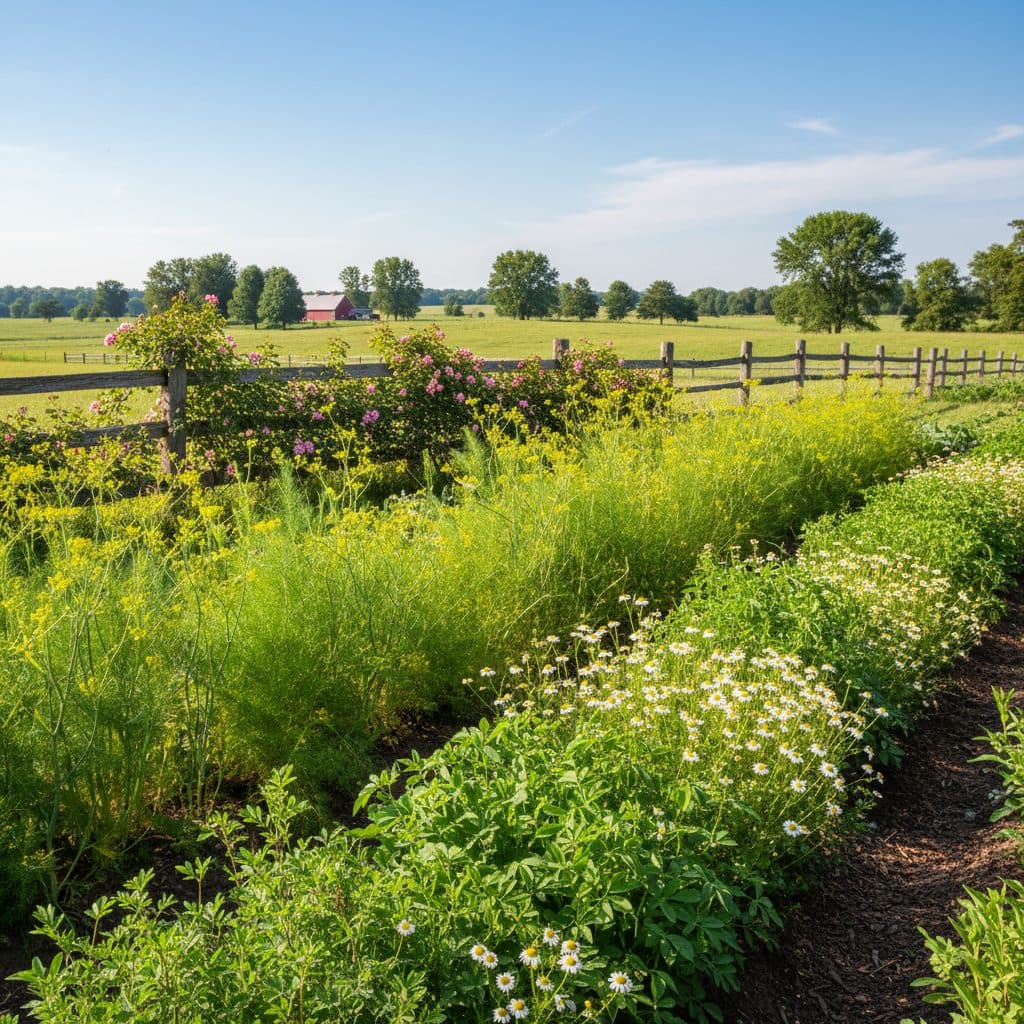
Key takeaways
- Chamomile and fenugreek are annuals, and Florence fennel is grown as an annual for its bulb; all three adapt well to diverse US climates, generally thriving in USDA zones 4 through 10.
- Optimal soil conditions for these herbs include a pH between 6.0 and 7.0, with good drainage and 2 to 3 inches of organic matter.
- Consistent sunlight of six to eight hours daily and about one inch of water per week are important for good growth and flavor development.
- Proper spacing, such as 6 to 8 inches for chamomile and 6 to 12 inches for fennel, prevents overcrowding and promotes air circulation, reducing disease risk.
- Harvesting at the correct stage (chamomile flowers when fully open, fennel bulbs at 2 to 4 inches, and fenugreek leaves young or seeds dry) maximizes yield and quality.
- Integrating cover crops and practicing crop rotation every two to three years helps manage pests, improve soil health, and reduce reliance on chemical interventions.
Quick answer: Chamomile, fennel, and fenugreek are annual herbs that thrive in USDA zones 4-10 with well-drained soil (pH 6.0-7.0), 6-8 hours of daily sunlight, and about one inch of water per week. Proper spacing and timely harvesting maximize yield and quality.
Cultivating annual herbs like chamomile, fennel, and fenugreek can add unique flavors and aromas to your US garden. These plants offer a rewarding experience for growers across a wide range of climates, from the cooler summers of USDA zone 4 in northern states to the extended growing seasons of USDA zone 10 in Florida and California. With careful planning and attention to detail, you can achieve a bountiful harvest, enriching your culinary endeavors and potentially contributing to local food systems.
This guide provides practical, numbers-based advice for successfully growing these three distinct annual herbs. We will cover everything from preparing your soil to managing common garden challenges, so your efforts yield a productive crop. Many growers in the Midwest, for example, find success by starting seeds indoors four to six weeks before their last frost date, a common practice for extending the growing season by up to two months.
Foundation for annual herb success: soil, sun, and water
Successful cultivation of chamomile, fennel, and fenugreek begins with establishing the right environmental conditions. These annual herbs, like many others, perform best in well-drained soil with a slightly acidic to neutral pH, ideally between 6.0 and 7.0. Incorporating two to three inches of aged compost or other organic matter into the top six to eight inches of soil before planting significantly improves soil structure and nutrient availability. In heavy clay soils in particular, organic matter is what opens up structure and lets water move down through the profile rather than sitting on top.
Optimizing soil and light for robust growth
All three herbs require a minimum of six to eight hours of direct sunlight daily for optimal growth and flavor development. In hotter climates, such as USDA zone 9 in Arizona, some afternoon shade can prevent scorching, though full sun is generally preferred. Consistent moisture is also vital; aim for about one inch of water per week, either through rainfall or irrigation. Checking soil moisture at a depth of two inches can help determine if watering is necessary, preventing both overwatering and drought stress. For more on preparing your garden beds, consider resources like Starting a herb garden: the easiest herbs to grow.
- test soil pH annually for accurate nutrient management
- amend heavy clay soils with 2-3 inches of compost
- ensure 6-8 hours of direct sunlight for maximum yield
- provide 1 inch of water weekly, adjusting for rainfall
- consider raised beds for improved drainage in wet areas
Growing chamomile: a calming annual crop
German chamomile (Matricaria chamomilla) is the annual variety most commonly grown for its medicinal and culinary uses, thriving across USDA zones 4 to 9. Unlike Roman chamomile, which is a perennial, German chamomile completes its life cycle in one season, producing abundant small, daisy-like flowers. Seeds are tiny and require light for germination, so sow them thinly on the soil surface or cover with just 0.125 inches of fine soil. Starting seeds indoors four to six weeks before the last expected frost, at a soil temperature of 68-70°F, can give plants a significant head start, leading to earlier harvests in regions like the Pacific Northwest.
Planting and care for abundant blooms
When transplanting chamomile seedlings outdoors, space them about 6 to 8 inches apart in rows 12 inches apart. This spacing allows for good air circulation, which is crucial in preventing fungal issues, especially in humid climates like the southeastern US. Chamomile is relatively low-maintenance once established, requiring about one inch of water per week. It typically begins flowering 60 to 90 days after planting. Harvesting the flowers when they are fully open, but before the petals begin to droop, ensures the highest concentration of beneficial compounds. A single plant can produce hundreds of flowers over a two-month period.
- start seeds indoors 4-6 weeks before last frost
- sow seeds thinly, covering with no more than 0.125 inches of soil
- maintain soil temperature around 68-70°F for germination
- space plants 6-8 inches apart in the garden
- harvest flowers when fully open for best quality
Cultivating fennel: bulb and herb varieties
Florence fennel (Foeniculum vulgare var. azoricum) is the form grown as an annual for its crisp, edible bulb. Common fennel, the leaf-and-seed form, is a hardy perennial in zones 6-10 that self-seeds heavily, and it is rated an invasive plant in California and has escaped gardens in parts of the Pacific Northwest, so cut the seed heads before they dry if you grow it there. Fennel of either type also inhibits the growth of many neighbors, including beans, tomatoes, dill and coriander, so give it a bed of its own rather than a slot in the vegetable rows. It thrives in cooler temperatures, ideally between 60-70°F, making it suitable for spring planting in northern states like Michigan and fall planting in warmer regions such as USDA zone 9 in Texas. Direct sowing is generally preferred, as fennel can be sensitive to transplanting. Plant seeds 0.25 to 0.5 inches deep, spacing them 6 to 12 inches apart in rows 18 to 24 inches apart. For more detailed information on this specific plant, refer to Fennel.
Blanching and harvesting fennel bulbs
To encourage the development of a tender, white bulb, practice blanching when the bulb reaches about 1-2 inches in diameter. This involves mounding soil 3-4 inches around the base of the plant, shielding it from direct sunlight. This process, similar to blanching celery, can take two to three weeks. Fennel bulbs are typically ready for harvest 80 to 100 days after planting, when they reach a size of 2 to 4 inches in diameter. Bolting, where the plant prematurely sends up a flower stalk, can occur if temperatures consistently exceed 80°F, leading to a bitter flavor and woody texture. Consistent watering, about one inch per week, helps prevent bolting.
- direct sow seeds 0.25-0.5 inches deep after last frost
- space plants 6-12 inches apart in rows 18-24 inches apart
- blanch bulbs by mounding 3-4 inches of soil around the base
- harvest bulbs when they reach 2-4 inches in diameter
- maintain consistent moisture to prevent premature bolting
Raising fenugreek: a dual-purpose annual
Fenugreek (Trigonella foenum-graecum) is a unique annual herb valued for both its aromatic leaves and its pungent seeds. It’s a warm-season crop, best grown in USDA zones 6 to 10, and thrives in full sun with well-drained soil. In cooler climates like New England, wait until the soil temperature consistently reaches 60°F before direct sowing. Plant seeds 0.5 inches deep and 4 to 6 inches apart, in rows 12 to 18 inches apart. Fenugreek is a nitrogen-fixing legume, meaning it can improve soil fertility, though most of the nitrogen it fixes leaves the bed again with the leaf and seed harvest. For more details on this plant, visit Fenugreek.
Harvesting leaves and seeds
Fenugreek leaves can be harvested as microgreens in as little as 10 days, or as mature greens within 30 to 45 days after planting. For microgreens, sow seeds densely and cut them when they are 1-2 inches tall, as described in How to grow microgreens at home: setup, varieties, and a 10-day harvest. For seed production, allow the plants to mature fully, which typically takes 90 to 120 days. The pods will turn yellow and then brown, and the seeds inside will become hard. Harvest the entire plant when about 75% of the pods are dry, then hang them upside down in a dry, well-ventilated area for another one to two weeks to fully dry. A single plant can produce dozens of seed pods, each containing 10-20 seeds.
- direct sow seeds when soil temperature reaches 60°F
- plant seeds 0.5 inches deep, 4-6 inches apart
- harvest leaves as microgreens at 10 days or mature greens at 30-45 days
- allow 90-120 days for seed production
- harvest seed pods when 75% are dry and brown
Managing pests and diseases in annual herbs
Even with the best care, annual herbs can encounter pests and diseases. Common culprits for chamomile, fennel, and fenugreek include aphids, spider mites, and occasional fungal issues like powdery mildew. Aphids, small sap-sucking insects, can multiply rapidly, with a single female capable of producing 50-100 offspring in a week. Inspect your plants regularly, especially the undersides of leaves, for signs of infestation. In USDA zone 7, for example, pest pressure can increase significantly during hot, dry spells.
Preventative measures and organic controls
Good garden hygiene is your first line of defense. Remove plant debris, ensure proper air circulation by maintaining adequate spacing (6-12 inches depending on the crop), and avoid overhead watering, which can promote fungal growth. For aphid and spider mite outbreaks, a solution of insecticidal soap (1-2% concentration) can be effective. Spray in the early morning or late evening to avoid harming beneficial insects. Crop rotation, moving these annual herbs to a different bed each year for two to three years, helps break pest and disease cycles. Using cover crops, as discussed in Cover crops for the home garden: best species, timing, and termination, can also improve soil health and suppress some pests.
- inspect plants weekly for early signs of pests
- ensure 6-12 inches of spacing for air circulation
- use insecticidal soap at 1-2% concentration for aphids
- practice crop rotation every 2-3 years to interrupt pest cycles
- encourage beneficial insects like ladybugs for natural pest control
Harvesting and storing your annual herb crops
Timely harvesting and proper storage are key to enjoying the full flavor and potency of your homegrown chamomile, fennel, and fenugreek. For chamomile, harvest the flowers when they are fully open and the petals are still firm, typically 60-90 days after planting. Pinch off the flower heads with about 0.5 inches of stem. To dry, spread them in a single layer on a screen or tray in a well-ventilated area, away from direct sunlight, until the flowers are papery and crumble easily, which takes one to two weeks at room temperature, or a few hours in a dehydrator set no higher than 100°F. Once thoroughly dry, store them in airtight containers for up to 12 months.
Preserving freshness and flavor
Fennel bulbs are best used fresh, harvested when they reach 2-4 inches in diameter, usually 80-100 days from seeding. They can be stored in the refrigerator’s crisper drawer for five to seven days. Fenugreek leaves can be harvested young for fresh use or dried. For seeds, allow the plants to mature for 90-120 days until the pods turn brown and dry. After harvesting the entire plant, hang it upside down in a dry, airy place for one to two weeks. Once completely dry, thresh the seeds from the pods and store them in airtight containers in a cool, dark place for six to twelve months. Proper drying reduces moisture content to below 10%, preventing mold growth.
- harvest chamomile flowers when fully open, with 0.5 inches of stem
- dry chamomile at 90-100°F for 3-5 days until crisp
- store dried chamomile in airtight containers for up to 12 months
- refrigerate fresh fennel bulbs for 5-7 days
- dry fenugreek seeds in pods for 1-2 weeks before threshing
Comparative Growing Conditions for Annual Herbs
Herb | Soil pH | Sunlight | Spacing (in) | Days to Harvest |
|---|---|---|---|---|
Chamomile (German) | 6.0-7.0 | 6-8 hours full sun | 6-8 | 60-90 (flowers) |
Fennel (Florence) | 6.0-7.0 | 6-8 hours full sun | 6-12 | 80-100 (bulbs) |
Fenugreek | 6.0-7.0 | 6-8 hours full sun | 4-6 | 30-45 (leaves), 90-120 (seeds) |
Soil pH Range: Most annual herbs, including chamomile, fennel, and fenugreek, thrive in soil with a pH range of 6.0 to 7.0, which is slightly acidic to neutral.
Sunlight Needs: These herbs require a minimum of six to eight hours of direct sunlight daily for optimal growth and flavor development.
Watering Requirement: Consistent moisture is important; aim for about one inch of water per week, adjusting for natural rainfall.
Frequently asked questions
What USDA zones are best for growing these annual herbs?
Chamomile, fennel, and fenugreek generally thrive across USDA zones 4 through 10. Chamomile is hardy in zones 4-9, fennel prefers 6-10, and fenugreek performs well in zones 6-10, though specific planting times vary by region and last frost dates.
How much sunlight do chamomile, fennel, and fenugreek need?
All three herbs require a minimum of six to eight hours of direct sunlight daily for optimal growth and flavor. In very hot climates, such as USDA zone 9, some afternoon shade can be beneficial to prevent scorching, especially for fennel.
Can I grow these herbs in containers?
Yes, all three can be grown in containers, provided they are large enough to accommodate root growth. Chamomile and fenugreek do well in 8-10 inch pots, while fennel, especially bulb varieties, benefits from a 12-14 inch container to allow for bulb development.
What is the ideal soil pH for these annual herbs?
The ideal soil pH for chamomile, fennel, and fenugreek is between 6.0 and 7.0. A soil test can confirm your current pH, and lime or elemental sulfur will shift it, though how far depends heavily on your soil texture and the change takes months to register — apply at the rate your soil test report specifies.
When should I harvest fenugreek for leaves versus seeds?
For fenugreek leaves, you can harvest young microgreens in 10-14 days or mature greens in 30-45 days. For seed production, allow the plants to mature for 90-120 days until the pods turn yellow-brown and dry.
How often should I water these herbs?
These herbs require consistent moisture, aiming for about one inch of water per week. This can be achieved through rainfall or supplemental irrigation, keeping the top 2-3 inches of soil consistently moist but not waterlogged.
References
- Thoughts About Cover Crops (2020). Thoughts About Cover Crops.
- Cover Crops and Soil Health (2018). Cover Crops and Soil Health.
- Cover Crops and Soil Health (2019). Cover Crops and Soil Health.
- Managing Wildlife in Ag Crops (2022). Managing Wildlife in Ag Crops.
- USDA Natural Resources Conservation Service (2024). USDA Natural Resources Conservation Service.