Key takeaways
- Identify male and female cucurbit flowers by observing the small fruit behind the female bloom.
- Hand-pollinate in early morning, between 6 AM and 10 AM, for optimal pollen viability.
- Use a soft brush or cotton swab to transfer pollen from male anthers to female stigmas.
- Maintain consistent soil moisture, providing 1 to 2 inches of water per week, especially during fruiting.
- Attract natural pollinators by planting diverse flowering species within 20 feet of your cucurbits.
- Ensure adequate nutrient levels, particularly potassium and phosphorus, for robust fruit development.
Quick answer: Hand-pollinating cucumbers and melons ensures fruit development and boosts yields when natural pollinators are scarce. This is done by transferring pollen from male anthers to female stigmas, ideally between 6 AM and 10 AM.
In the humid summers of the Southeast, from USDA zone 7b up to 9a, many home gardeners face the frustration of cucumber and melon plants producing abundant flowers but few, if any, substantial fruits. This common issue, often due to insufficient pollination, can reduce expected yields by 50% or more. Even in regions like the Central Valley of California, where commercial cucurbit operations thrive, inconsistent fruit set can impact up to 35% of a crop in challenging seasons.
While natural pollinators like bees are important, their populations can fluctuate due to weather patterns, pesticide use, or habitat loss, leaving cucurbit plants (including cucumbers, melons, squash, and pumpkins) unpollinated. For gardeners across the US, from the arid West to the fertile Midwest, hand-pollination provides a reliable harvest when natural conditions are poor, bringing fruit set to nearly 100% in controlled environments. This technique is useful for early season crops or when growing in enclosed spaces.
Why hand-pollination becomes necessary
In many US garden plots, particularly those in suburban areas or regions experiencing extreme weather, a noticeable decline in pollinator activity has been observed, with some areas reporting a 30% reduction in wild bee populations over the last two decades [3]. This reduction directly impacts cucurbit plants, which rely heavily on insect pollination for fruit development. Without adequate pollen transfer, female flowers may simply shrivel and drop off, leading to a significant loss in potential yield, sometimes as high as 70% of the crop in a single season. For example, in parts of the Great Lakes region (USDA zones 5-6), cool, wet springs can keep bees from foraging effectively for several days, causing early female flowers to be unpollinated.
Common signs of poor fruit set
Recognizing the signs of poor pollination early can help you intervene effectively. Often, you’ll observe numerous flowers, but the small fruit behind the female bloom will yellow and drop off within 2 to 3 days of opening, instead of swelling. This is particularly common in varieties like ‘Marketmore 76’ cucumbers or ‘Ambrosia’ melons. Another indicator is misshapen or partially developed fruit, which often results from incomplete pollination where only a few ovules receive pollen. Early detection allows for timely hand-pollination, so that a larger percentage of your crop, perhaps 80% or more, reaches maturity.
- Female flowers shrivel and drop without fruit development.
- Small, immature fruits yellow and fall off the vine.
- Fruits are misshapen, stunted, or narrow at one end.
- Abundant male flowers but very few developing fruits.
- Less than 10% of female flowers develop into marketable fruit.
Understanding cucurbit flower anatomy
Cucurbit plants, including most cucumber and melon varieties grown in USDA zones 4 through 11, produce separate male and female flowers on the same plant, a characteristic known as monoecious. Typically, male flowers emerge first, often appearing 7 to 10 days before female flowers develop, providing pollen when the females are receptive. You can often spot 10 to 20 male flowers for every female flower on a healthy plant, especially during the early stages of flowering in a ‘Sugar Baby’ watermelon plant. This ratio helps ensure ample pollen availability for the fewer female blooms.
Identifying male versus female flowers
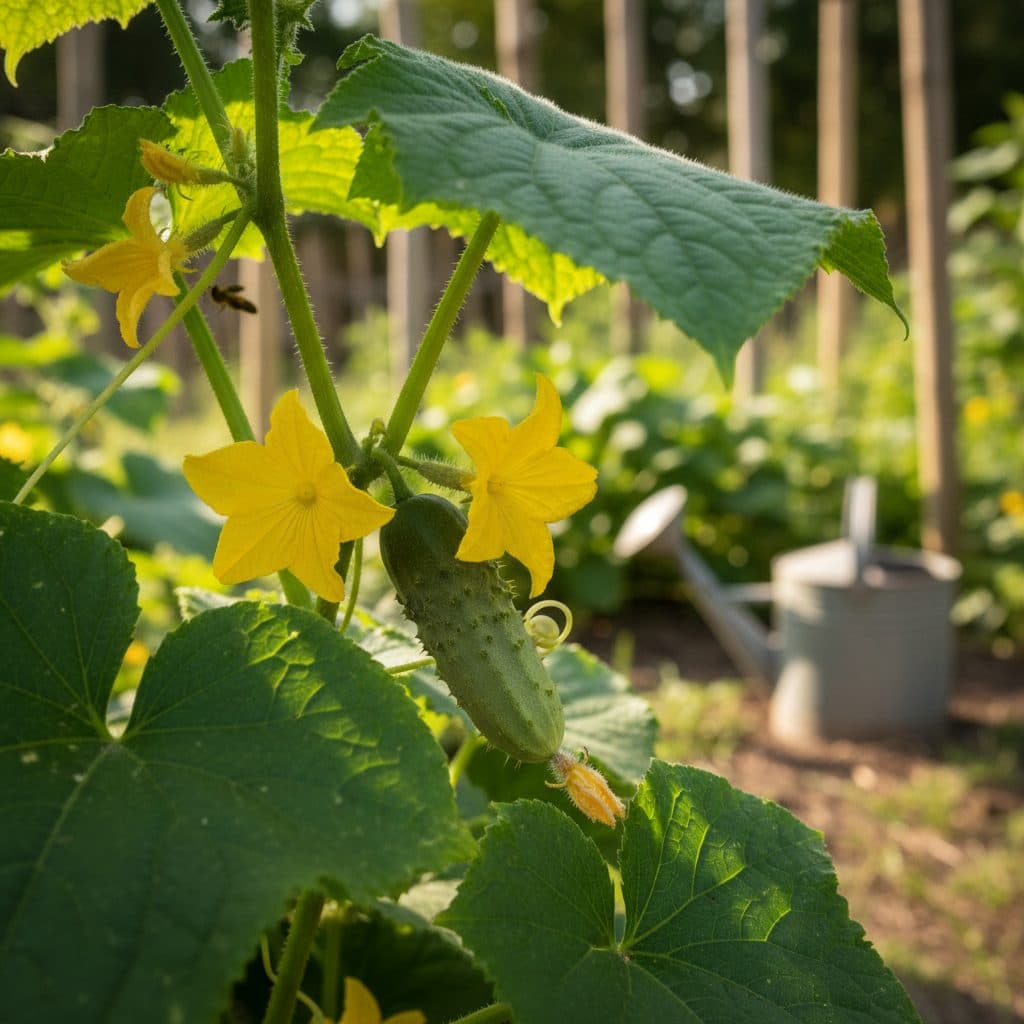
Distinguishing between male and female flowers is straightforward once you know what to look for. Male flowers have a slender stem directly behind the petals and contain a central stamen covered in pollen. Female flowers, on the other hand, are easily identified by the presence of a miniature fruit (a tiny cucumber or melon) located directly behind the petals and below the ovary. This small fruit, often 0.5 to 1 inch long, will swell into a full-sized fruit if successfully pollinated. The female flower also has a prominent stigma, which is the receptive part for pollen. For comparison, a Tomato flower has both male and female parts within a single bloom.
- Male flowers: Slender stem, prominent stamen with pollen.
- Female flowers: Small, swollen fruit (ovary) behind the petals, sticky stigma.
- Female flowers appear 7-10 days after male flowers.
- Ratio of male to female flowers can be 10:1 or higher.
- Only female flowers will develop into fruit.
The hand-pollination process, step-by-step
The most effective time to hand-pollinate is in the early morning, typically between 6 AM and 10 AM, after the dew has dried but before the midday heat causes flowers to close or pollen to become less viable. During these hours, the pollen grains are most abundant and receptive, and the female flower’s stigma is most sticky. For best results, aim to pollinate within 4 hours of a female flower opening. You’ll need a few simple tools easily found in any gardener’s kit.
Performing the transfer
First, locate a freshly opened male flower. Gently pluck it from the plant, or if you prefer to keep it attached, carefully remove its petals to expose the central stamen. The stamen will be covered in fine yellow pollen. Next, identify a receptive female flower, characterized by its sticky stigma. Gently dab or brush the pollen directly onto the stigma of the female flower. Ensure thorough contact; you want to see visible pollen grains on the stigma. One male flower can often provide enough pollen for 3 to 5 female flowers, depending on the size and pollen load. Repeat this process daily for newly opened female flowers to ensure a consistent fruit set, targeting at least 90% success rate for pollinated flowers.
- Gather your tools: small paintbrush or cotton swab.
- Identify fresh male and female flowers.
- Collect pollen from male flower’s stamen.
- Transfer pollen to female flower’s sticky stigma.
- Repeat daily for new blooms, ideally before 10 AM.
Optimizing growing conditions for fruit set
Even with perfect hand-pollination, plants need optimal growing conditions to support fruit development. Adequate soil moisture is essential, particularly during flowering and fruiting stages, with most cucurbits requiring 1 to 2 inches of water per week, either from rainfall or irrigation [2]. Consistent moisture prevents blossom drop and ensures the plant has enough resources to support developing fruit. Inconsistent watering, especially dry spells followed by heavy irrigation, can stress plants and lead to a 20% to 40% reduction in fruit set, even with successful pollination.
Nutrient management and temperature control
Proper nutrient balance is equally important. While nitrogen promotes leafy growth, excessive amounts can reduce flowering and fruiting. Focus on balanced fertilizers or those slightly higher in phosphorus and potassium, such as a 5-10-10 or 10-20-20 NPK ratio, especially once flowering begins. Incorporating organic amendments like fermented soybean meal can provide a slow-release nutrient boost. Cucurbits thrive in temperatures between 70°F and 85°F; prolonged temperatures above 90°F or below 55°F can inhibit pollen viability and fruit set, sometimes reducing it by 60% or more. Providing partial shade during extreme heat in USDA zones 8-11 can be beneficial.
- Provide 1-2 inches of water per week consistently.
- Use balanced fertilizers (e.g., 5-10-10 NPK) during fruiting.
- Maintain soil pH between 6.0 and 6.8.
- Ensure daytime temperatures are between 70°F and 85°F.
- Monitor for pests that can damage flowers or young fruit.
Beyond hand-pollination: supporting natural pollinators
While hand-pollination provides a reliable backup, supporting a healthy ecosystem for natural pollinators is a long-term strategy for steady yields in USDA zones 3 through 11. Planting pollinator-friendly flowers like borage, marigolds, or sunflowers within 10 to 20 feet of your cucurbit patch can significantly increase visits from honeybees and native bees. Studies show that planting a diverse range of flowering plants can increase pollinator visits by up to 40% in a garden space [4]. Reducing pesticide use, especially broad-spectrum insecticides, is essential, as these can harm beneficial insects for up to 7 days after application.
Creating a pollinator-friendly habitat
Consider dedicating a small section of your garden, perhaps a 5 ft by 5 ft area, to a pollinator garden. Include plants that bloom throughout the growing season to provide a continuous food source. Providing a shallow water source, like a bird bath with pebbles, can also attract and sustain pollinators. Additionally, practicing sustainable agriculture techniques, such as cover cropping with species like sesbania, can improve soil health and overall plant vigor, indirectly supporting a more resilient ecosystem [5]. For instance, a Punjab field needs twelve weeks of sesbania to significantly boost soil nitrogen. A healthy plant is more attractive to pollinators and produces more flowers, increasing the chances of successful natural pollination alongside your hand-pollination efforts.
- Plant diverse flowering plants near cucurbits.
- Avoid broad-spectrum pesticides, especially during bloom.
- Provide shallow water sources for insects.
- Incorporate native plants to attract local pollinators.
- Leave some areas undisturbed for ground-nesting bees.
Comparison of Natural vs. Hand-Pollination for Cucurbits
Feature | Natural Pollination | Hand-Pollination |
|---|---|---|
Reliability | Variable, depends on pollinator presence (e.g., 40-70% fruit set) | High, nearly 90-100% fruit set for pollinated flowers |
Effort Required | Low (if pollinators are abundant) | Moderate (daily effort during flowering, 10-20 minutes for a small patch) |
Cost | Minimal (unless attracting pollinators) | Minimal (small brush or cotton swabs, <$5) |
Ideal Conditions | Warm, sunny, calm days (70-85°F), active pollinators | Any weather, as long as flowers are open and pollen is viable |
Yield Impact | Can be significantly reduced by pollinator scarcity (up to 70% loss) | Ensures maximum fruit set from available female flowers |
Best Use | Large fields, established ecosystems, good pollinator populations | Small gardens, early season crops, poor weather, enclosed spaces |
Pollinator Decline: Wild bee populations have seen a 30% reduction over the last two decades in some US regions, impacting cucurbit yields [3].
Optimal Pollination Time: Hand-pollination is most effective between 6 AM and 10 AM, when pollen is most viable and female stigmas are receptive, resulting in up to a 90% success rate.
Frequently asked questions
How can I tell if my cucumber or melon plant has been successfully pollinated?
A successfully pollinated female flower will show its small fruit (the ovary behind the petals) beginning to swell and grow within 24 to 48 hours. If it yellows, shrivels, and drops off, it was likely not pollinated, or pollination was incomplete, resulting in less than 20% of ovules fertilized.
What time of day is best for hand-pollinating cucurbits?
The ideal time for hand-pollinating is in the early morning, typically between 6 AM and 10 AM. During these hours, the flowers are fully open, pollen is most abundant and viable, and the female stigma is most receptive, potentially increasing fruit set by 30%.
Do all cucumber and melon varieties need hand-pollination?
Not all varieties strictly require it, especially if natural pollinator activity is high. However, hand-pollination can significantly boost yields for most monoecious varieties, and it is essential for gynoecious varieties if no pollinator plants are present, or in environments with low bee presence, supporting up to 95% fruit development.
Can I use the same male flower to pollinate multiple female flowers?
Yes, a single healthy male flower, especially from a vigorous plant in USDA zone 6, can often provide enough pollen to pollinate 3 to 5 female flowers. Just ensure there is visible pollen on your brush or swab each time you transfer.
What happens if I don’t hand-pollinate my plants?
If natural pollination is insufficient, your plants will produce many flowers but very few, if any, fruits. The small fruits behind female flowers will yellow and drop off, leading to a yield reduction that can be as high as 70% in some seasons, particularly for plants grown in urban areas with fewer pollinators.
How can I attract more natural pollinators to my garden?
To attract more natural pollinators, plant a diverse array of flowering plants that bloom throughout the season, such as borage or zinnias, within 10 to 20 feet of your cucurbits. Provide a shallow water source and avoid using broad-spectrum pesticides, which can harm beneficial insects for up to 7 days.
References
- USDA Natural Resources Conservation Service (2024). USDA Natural Resources Conservation Service.
- EPA — Soak Up the Rain (2024). EPA — Soak Up the Rain.
- SARE — Sustainable Agriculture Research & Education (2023). SARE — Sustainable Agriculture Research & Education.
- ATTRA / NCAT Sustainable Agriculture (2023). ATTRA / NCAT Sustainable Agriculture.
- USDA National Agroforestry Center (2023). USDA National Agroforestry Center.