Key takeaways
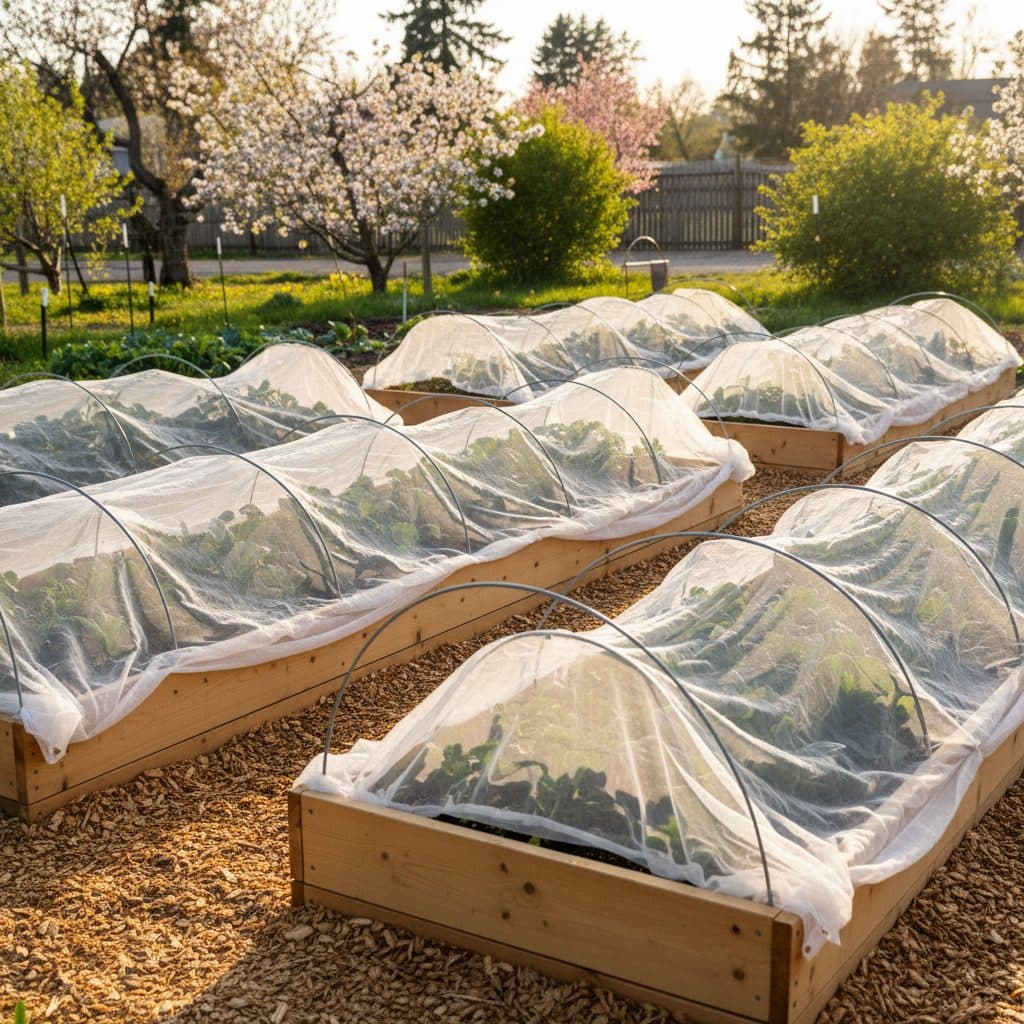
- Floating row covers are lightweight spunbond fabrics that create microclimates, shield crops from frost, and exclude insect pests.
- Choose lightweight fabric (15 to 19 gsm / 0.5 oz/yd²) for summer insect exclusion without trapping excess heat.
- Select medium (30 to 34 gsm / 1.0 oz/yd²) or heavy (50 to 70 gsm / 1.5–2.0 oz/yd²) fleece for 2°C to 6°C (4°F to 10°F) frost protection.
- Float fabric directly on mature leafy crops, or install wire or PVC support hoops to protect tender growing tips from friction.
- Seal all fabric edges completely with soil, stones, or landscape pins to prevent creeping or flying insects from entering.
- Remove row covers during flowering for insect-pollinated crops such as squash, cucumbers, melons, and strawberries.
Quick answer: Floating row covers are permeable spunbond fabrics draped over crops to provide frost protection and exclude insect pests like flea beetles and cabbage moths. Choose lightweight fabric (15–19 gsm) for summer pest exclusion and heavier fleece (30–70 gsm) for spring and autumn frost defense.
Floating row covers, also known as horticultural fleece, frost cloth, or agro-textile, are among the most versatile, cost-effective tools available to organic vegetable growers and homesteaders worldwide. Made from spunbond polypropylene or polyester, these breathable fabrics allow sunlight, air, and water to pass through while creating a protective physical barrier above your growing beds.
Whether your goal is to advance spring planting dates by several weeks, protect autumn crops from sudden sub-zero freezes, or exclude devastating insect pests without spraying chemical pesticides, understanding fabric grades and installation methods ensures optimal results across every growing season.
How floating row covers work: light, heat, and water physics
Spunbond row covers function by manipulating microclimate variables at the plant canopy level.
+-------------------------------------------------------------+
|                ROW COVER MICROCLIMATE DYNAMICS              |
|                                                             |
|            [ Incoming Sunlight (70% - 90% Transmitted) ]    |
|            [ Rain & Overhead Water (100% Penetration) ]     |
|                               |                             |
|     ===================================================     |
|     [ Permeable Spunbond Polypropylene Fabric Layer ]       |
|        \                                             /      |
|         \  Trapped Soil Heat (+2°C to +6°C / 4-10°F)/       |
|          \ Wind speed at the crop substantially reduced/    |
|           v                                       v         |
|     +-------------------------------------------------+     |
|     |  Vegetable Crop Protected from Pests & Frost    |     |
|     +-------------------------------------------------+     |
+-------------------------------------------------------------+- Light transmission: Spunbond fibers diffuse sunlight, delivering 70% to 90% of available light to leaves while shielding seedlings from intense solar scorching and desiccating winds.
- Thermal heat trapping: The fabric slows radiant heat loss from the soil at night, maintaining ambient temperatures beneath the cover that are 2°C to 6°C (4°F to 10°F) warmer than the surrounding air.
- Water permeability: Rain and overhead irrigation pass directly through the microscopic pores without requiring gardeners to remove the fabric for routine watering.
For pest management context, see our guide on flea beetles and row covers.
Choosing fabric weights: insect barrier versus frost protection
Row cover fabrics are categorized by weight, measured in grams per square metre (gsm) or ounces per square yard (oz/yd²). Selecting the correct weight for your seasonal objective is critical.
+-------------------------------------------------------------+
|                 ROW COVER FABRIC COMPARISON                 |
|                                                             |
|   LIGHTWEIGHT (15-19 gsm / 0.5 oz):                         |
|   - Purpose: Summer insect exclusion                        |
|- Light: 85-90% | Frost: ~1°C (2°F) | Heat build-up: LOW  |
|                                                             |
|   MEDIUM WEIGHT (30-34 gsm / 1.0 oz):                       |
|   - Purpose: Spring/Autumn season extension                 |
|- Light: 70-80% | Frost: 2-4°C (4-6°F) | Heat: MODERATE   |
|                                                             |
|   HEAVYWEIGHT FLEECE (50-70 gsm / 1.5-2.0 oz):              |
|   - Purpose: Severe winter freeze protection                |
|- Light: 50-60% | Frost: 4-6°C (8-10°F) | Heat: HIGH      |
+-------------------------------------------------------------+
Fabric Grade | Weight (gsm / oz) | Light Transmission | Frost Protection | Best Uses & Season |
|---|---|---|---|---|
Ultralight fleece | 15–19 gsm (0.5 oz/yd²) | 85%–90% | Minimal (1°C / 2°F) | Summer pest exclusion (flea beetles, aphids, cabbage moths) without overheating crops |
Medium Season Extender | 30–34 gsm (1.0 oz/yd²) | 70%–80% | Moderate (2°C–4°C / 4°F–6°F) | Spring seedling establishment, autumn salad extension, light overnight frost defense |
Heavy Thermal Blanket | 50–70 gsm (1.5–2.0 oz/yd²) | 50%–60% | High (4°C–6°C / 8°F–10°F) | Overwintering root crops, surviving hard freezes, protecting dormant perennials |
Fine insect mesh is a separate product, rated by aperture rather than weight; use mesh of about 0.8 mm or finer for carrot fly and allium leaf miner.
In cool temperate climates: Medium and heavyweight row covers extend spring and autumn growing windows by up to four weeks on each end of the season.
In subtropical and tropical climates: Lightweight 15 to 19 gsm covers are used year-round primarily to exclude aggressive insect vectors without causing heat stress inside the tunnel.
Direct floating versus low-tunnel hoop support
Row covers can be installed either by draping them directly over crops or by supporting them on low hoops.
+-------------------------------------------------------------+
|                DIRECT FLOATING VS LOW TUNNEL HOOPS          |
|                                                             |
|   DIRECT FLOATING:                LOW TUNNEL HOOPS:         |
|   - Fabric rests on leaf canopy   - Wire or PVC support ribs|
|   - Needs extra slack for growth  - Fabric held above plants|
|   - Suited for rugged crops       - Suited for tender crops |
|     (Brassicas, root crops)         (Tomatoes, peppers, etc)|
+-------------------------------------------------------------+
1. Direct floating method:
Lay the fabric loosely over established crops, leaving generous slack so expanding foliage can push the cover upward as it grows.
- Best for: Sturdy, non-delicate crops like cabbage, kale, radishes, carrots, leeks, and potatoes.
- Caution: Avoid direct floating over young, delicate seedlings or crops with fragile terminal growing points (like tomatoes and peppers), as wind flutter can abrade leaves and snap tender stems.
2. Supported low-tunnel hoops:
Bend 9-gauge galvanized high-tensile wire, 1/2-inch electrical conduit (EMT), or flexible PVC pipes into semicircular hoops spaced 1.2 m to 1.5 m (4 to 5 ft) apart along the garden bed. Drape the fabric over the hoops to create a clean, rigid tunnel.
- Best for: Tender nightshades, cucumbers, delicate salad greens, and windy growing sites.
For specific pest management applications, explore our guides on leaf miners and how to grow leeks.
Securing edges against wind and insect intrusion
An unsecured row cover will blow away in moderate winds and allow insect pests to crawl underneath.
- Soil mounding: Shovel 5 cm (2 in) of soil over fabric edges every 30 cm (12 in) along the perimeter. Seal the edges so pests cannot crawl or fly in — but only cover ground that did not grow the same crop family last season, or you trap emerging soil-stage pests under the fabric with the crop.
- Sandbags and stones: Fill woven poly bags with gravel or sand to pin fabric edges flat on raised timber beds or rocky soil without tearing the cloth.
- Metal landscape staples: Press U-shaped steel landscape pins through the fabric hem into the soil every 1 metre (3 ft).
Pollination management: when to remove covers
Row covers exclude beneficial pollinators just as effectively as they exclude insect pests.
+-------------------------------------------------------------+
|                 POLLINATION TIMING PROTOCOL                 |
|                                                             |
|   CROPS REQUIRING REMOVAL AT BLOOM:                         |
|   - Cucumbers, Squash, Zucchini, Melons, Pumpkins           |
|   - Strawberries, Blueberries, Fruit Bushes                 |
|   (Must open covers in morning to allow bee pollination)    |
|                                                             |
|   CROPS COVERED EARLY THEN UNCOVERED AT FLOWERING:          |
|   - Tomatoes, Peppers (cover early for warmth/wind; uncover |
|     at bloom for air movement and pollination)              |
|                                                             |
|   CROPS KEPT COVERED UNTIL HARVEST:                         |
|   - Leafy Greens: Spinach, Kale, Lettuce, Chard, Cabbage    |
|   - Root Crops: Carrots, Radishes, Beets, Turnips, Leeks    |
|   - Bush & Pole Beans                                       |
+-------------------------------------------------------------+- Bee-dependent crops: For cucurbits (squash, cucumbers, melons) and fruiting berries, uncover the beds in the morning as soon as the first female flowers open to allow bees to pollinate. Alternatively, remove covers during the day and replace them at dusk.
- Tomatoes and peppers: Cover early for warmth and wind protection, then remove once flowering begins (tomatoes require air movement or vibration to shed pollen and set fruit, peppers set better with insect visits, and heat build-up under fabric during fruiting weather causes flower drop and poor pollen viability).
- Vegetative and self-pollinated crops: Leafy greens, brassicas, root vegetables, and beans can remain covered from planting all the way through to final harvest.
For seedling care under covers, review seedling care and direct sowing.
Care, cleaning, and storage for longevity
Quality spunbond row covers can last three to five seasons when managed properly:
- Prevent tearing: Avoid snagging fabric on rough wooden stakes or wire ends. Secure edges smoothly.
- Drying before storage: Never fold and store damp row covers. Allow fabric to dry completely in the sun to prevent mildew and rotting.
- Storage: Roll dry fabric around cardboard tubes or store inside rodent-proof plastic bins away from direct UV sunlight during off-seasons.
By selecting the right fabric weight, supporting tunnels against wind friction, and timing pollination windows accurately, floating row covers provide non-toxic pest protection and reliable season extension in any garden climate.