Key takeaways
- Check local municipal, county, and state environmental health regulations before installing a humanure system; many jurisdictions strictly regulate or prohibit non-septic human waste processing.
- Base safe humanure management on thermophilic pasteurization, maintaining internal core temperatures between 130°F and 150°F (55°C to 65°C) to destroy pathogens.
- Use a dry bucket receptacle with a generous cover layer of clean, untreated hardwood or softwood sawdust (never cedar or treated wood) after every deposit.
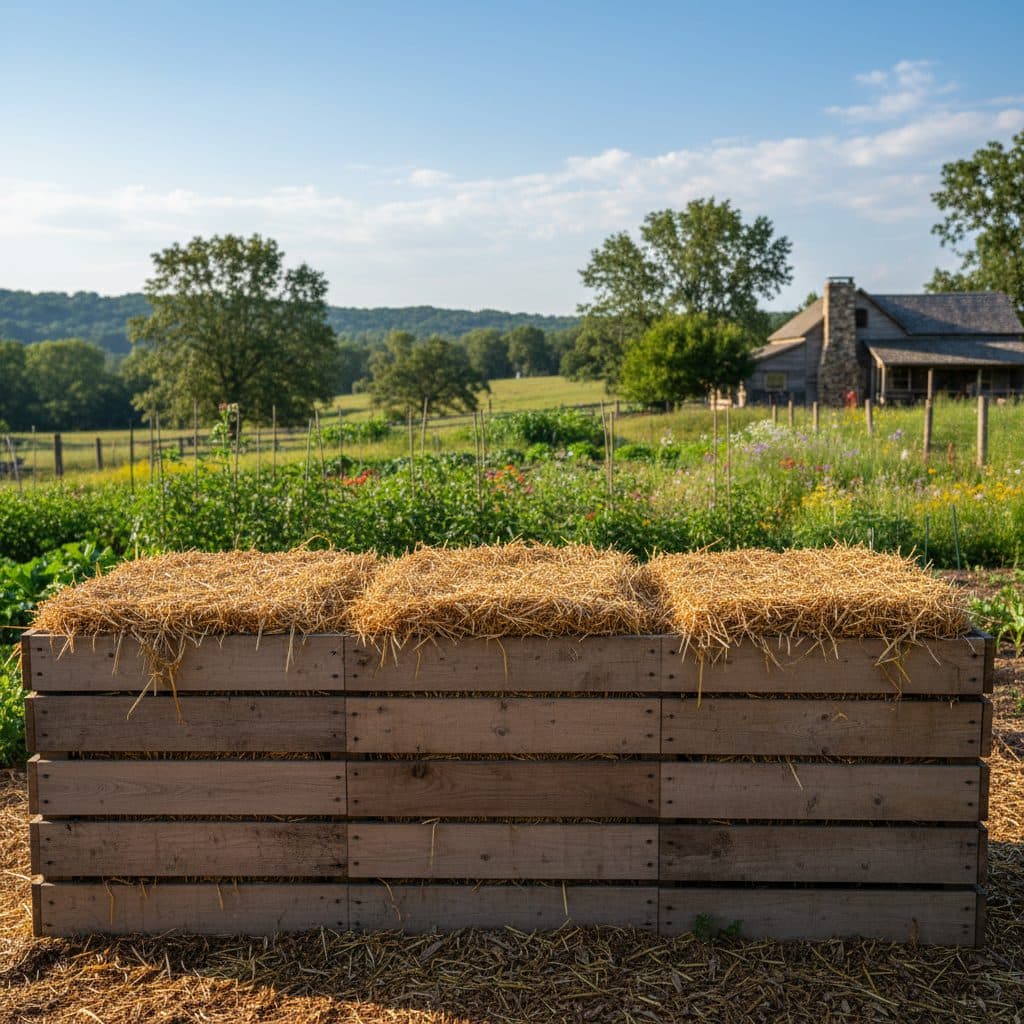
- Build a dedicated, predator-proof outdoor bin enclosure with a minimum 4-foot by 4-foot footprint to ensure adequate thermal mass.
- Cap every new deposit with a thick biofilter layer of clean straw, dry hay, or leaves to trap evaporating ammonia and insulate core heat.
- Follow a strict two-year timeline: fill a designated bin for one full year, then allow the mass to rest and cure undisturbed for a second full year before soil application.
- Apply finished humanure only to fruit trees, berry canes, agroforestry, and ornamental plantings; never apply to salad greens or root vegetables.
Quick answer: Humanure composting is the thermophilic aerobic biological processing of human toilet deposits and high-carbon cover materials (sawdust) into stable, pathogen-free humus. Popularized by Joseph Jenkins in The Humanure Handbook, the system relies on dry bucket toilets, a 30:1 carbon-to-nitrogen ratio, sustained internal core heat above 130°F (55°C) to destroy enteric pathogens, and a mandatory one-year curing period. Always verify local environmental health ordinances before establishing an off-grid humanure system.
In modern centralized infrastructure, human waste is treated as a hazardous municipal byproduct and mixed with billions of gallons of clean drinking water. On an off-grid homestead or sustainable property, organic human waste represents valuable nitrogen, phosphorus, potassium, and carbon.
However, improperly managed human waste poses severe biological hazards, including transmission of viral pathogens, enteric bacteria (Salmonella, E. coli), and persistent parasitic eggs (Ascaris lumbricoides). Furthermore, local ordinances in many counties prohibit the unauthorized surface discharge of human waste.
Rigorous thermophilic temperatures, adequate carbon cover, and proper curing times let homesteaders recycle organic nutrients safely without contamination.
The biology of pathogen pasteurization
The defining safety mechanism of humanure composting is biological heat generated by aerobic thermophilic bacteria (Bacillus, Thermus spp.).
+-------------------------------------------------------------------+
|               THERMAL PASTEURIZATION THRESHOLDS                   |
|                                                                   |
|   Core Temp    | Duration Needed | Pathogen Destruction Scope     |
|   140°F (60°C) | 1 Hour          | Destroys all enteric viruses   |
|   131°F (55°C) | 24 Hours        | Kills Salmonella, E. coli      |
|   122°F (50°C) | 7 Days          | Destroys Protozoan cysts       |
|   120°F (49°C) | Extended months | Inactivates Ascaris helminths  |
+-------------------------------------------------------------------+
+------------------------+-----------------------------------+-------------------------+
| Pathogen Class | Target Organisms | Inactivation Mechanism |
+------------------------+-----------------------------------+-------------------------+
| Enteric Bacteria | *Salmonella*, *Shigella*, *E. coli*| Denatures proteins >55°C|
| Intestinal Viruses | Norovirus, Rotavirus, Hepatitis A | Thermal capsid rupture |
| Protozoan Cysts | *Giardia lamblia*, *Cryptosporidium*| Sustained 50°C+ desiccation|
| Helminth Parasites | *Ascaris lumbricoides* (roundworm)| 1-year cure + heat |
+------------------------+-----------------------------------+-------------------------+Ascaris lumbricoides (human roundworm) eggs possess microscopic, triple-layered protective shells capable of surviving years in cold soil. However, exposure to thermophilic temperatures above 130°F (55°C) combined with a mandatory one-year ambient curing cycle reliably renders all ova non-viable.
The dry receptacle toilet and bulking cover
A successful humanure system begins inside the dwelling with a simple dry collection toilet.
+-------------------------------------------------------------------+
|                 DRY BUCKET RECEPTACLE DESIGN                      |
|                                                                   |
|          +==================== Toilet Seat ===================+   |
|          |                                                    |   |
|          |   +--------------------------------------------+   |   |
|          |   |  [5-Gallon (20L) Food-Grade HDPE Bucket]   |   |   |
|          |   |                                            |   |   |
|          |   |  [ ~~~~ Clean Dry Hardwood Sawdust ~~~~ ]  |   |   |
|          |   |  [ ---- Fresh Deposit + Sawdust Cover ---- ]  |   |   |
|          |   |  [ ======================================= ]  |   |   |
|          |   +---+--------------------------------------------+---+   |
|          +==================== Timber Box ====================+   |
+-------------------------------------------------------------------+
+------------------------+-----------------------------------+-------------------------+
| Cover Material | Absorbency & Porosity | Odor Suppression |
+------------------------+-----------------------------------+-------------------------+
| Hardwood Sawdust | Excellent; fine particles coat waste| Superior (wood lignins)|
| Softwood Sawdust (Pine)| Good; mild aromatic terpenes | High |
| Peat Moss / Coco Coir | High absorbency; acidic pH | Good (low odor) |
| Cedar / Redwood Dust | PROHIBITED: antimicrobial terpenes| Halts microbial digestion|
| Treated Wood Dust | PROHIBITED: heavy metals/chemicals| Severe toxicity hazard |
| Garden Soil / Wood Ash | Dense; heavy; zero fiber porosity | Ineffective; ammonia gas|
+------------------------+-----------------------------------+-------------------------+Clean, untreated hardwood or non-aromatic softwood sawdust from local sawmills or woodshops is the gold standard cover material. Never use cedar or redwood sawdust (which contains antimicrobial compounds that kill composting bacteria) or treated lumber sawdust (which contains toxic preservatives). When every deposit is immediately blanketed with 2 to 3 cups of sawdust, the carbon binds volatile ammonia molecules, preventing foul odors and completely deterring houseflies.
Review household zero-odor strategies and small-scale recycling in small space composting no odor and container options in how to use a compost tumbler.
Constructing the outdoor thermophilic compost bin
The outdoor compost bin must provide adequate volume to insulate the self-heating core. Small heaps lose heat faster than microbes can generate it.
+-------------------------------------------------------------------+
|               THREE-BIN SYSTEM ARCHITECTURE                       |
|                                                                   |
|   +-------------------+ +-------------------+ +-------------------+
|   |   BIN 1: FILLING  | |   BIN 2: CURING   | |   BIN 3: FINISHED |
|   |  Active additions | |  Sealed, resting  | |  Cured humus,     |
|   |  (Year 1)         | |  (Year 2)         | |  ready for soil   |
|   |  4ft x 4ft x 4ft  | |  4ft x 4ft x 4ft  | |  4ft x 4ft x 4ft  |
|   +-------------------+ +-------------------+ +-------------------+
+-------------------------------------------------------------------+
+------------------------+-------------------------------------------------------------+
| Construction Feature | Engineering Specification |
+------------------------+-------------------------------------------------------------+
| Minimum Bin Footprint | 4 feet by 4 feet by 4 feet (64 cubic feet / 1.8 cubic metres)|
| Wall Material | Untreated rough-sawn timber, pallet wood, or concrete block |
| Ground Contact | Bare soil base (connects directly with native earthworms) |
| Interior Liner | Hardware cloth (1/2-inch mesh) to exclude burrowing rodents |
| Biological Cap | 8 to 12 inches of clean straw, meadow hay, or dry leaves |
+------------------------+-------------------------------------------------------------+Always build the bin directly on bare soil. The soil base absorbs excess leachate, inoculates the bottom layers with beneficial mycorrhizae, and allows native earthworms to enter the pile once core heat subsides.
Compare heat retention and pile layering with agricultural protocols in hot composting method and evaluate biological worm breakdown in vermicompost vs regular compost worms win.
Operating routine, temperature monitoring and biofilters
Managing the pile requires a simple, repeatable deposit routine.
+-------------------------------------------------------------------+
|               DEPOSIT WORKFLOW AND BIOFILTER PROTOCOL             |
|                                                                   |
| Step 1: Pull back the top straw biofilter cap with a pitchfork.   |
| Step 2: Empty bucket contents directly into the center depression.|
| Step 3: Rinse bucket with 1 quart of water; pour wash onto pile.  |
| Step 4: Immediately cover fresh deposit with 2 inches of sawdust. |
| Step 5: Replace thick 8-inch straw biofilter over the entire top. |
+-------------------------------------------------------------------+
The role of the straw biofilter cap
The straw cap acts as an insulated roof and biological filter. It captures rising water vapor, traps volatile organic compounds, and keeps flies and scavengers from accessing the fresh organic material beneath.
Use a long-stem (20 to 36-inch) stainless steel compost thermometer inserted directly into the central thermal core of the pile to log internal temperatures weekly. Documenting temperatures exceeding 130°F (55°C) across multiple consecutive weeks confirms that thermophilic pasteurization has occurred.
The two-year cycle: filling, resting and soil application
Humanure management strictly separates fresh biological inputs from aging humus.
+-------------------------------------------------------------------+
|               THE 24-MONTH HUMANURE PRODUCTION CYCLE              |
+-------------------------------------------------------------------+
| [Month 01 - 12]  Fill Bin 1 with daily deposits, kitchen scraps,  |
|                  garden waste, and sawdust covers.                |
| [Month 12]       Seal Bin 1 completely; add 1 foot clean straw cap.|
| [Month 13 - 24]  Bin 1 rests undisturbed for 12 months (Curing).  |
|                  Fill Bin 2 with new household deposits.          |
| [Month 24]       Bin 1 is fully matured, dark, sweet-smelling     |
|                  humus. Harvest and apply to property.            |
+-------------------------------------------------------------------+
Agronomic application guidelines
Even after two years of complete thermophilic decomposition and biological curing, conservative homestead practices restrict where humanure compost is applied.
+------------------------+-----------------------------------+-------------------------+
| Application Zone       | Recommended Use                   | Safety Rationale        |
+------------------------+-----------------------------------+-------------------------+
| Fruit Tree Orchards    | Spread around drip lines          | High above ground       |
| Berry Cane Rows        | Base mulch for raspberries/black  | High nutrient demand    |
| Agroforestry / Timber  | High-volume soil restoration      | Zero food contact       |
| Ornamental Shrubs      | Top-dress perennial landscape     | Long-term carbon sink   |
| Salad Greens & Roots   | PROHIBITED (Lettuce, Carrots)     | Direct ingestion risk   |
+------------------------+-----------------------------------+-------------------------+
Never apply humanure compost directly onto leafy greens (spinach, lettuce) or short-season root vegetables (such as radishes, carrots, scallions, or potatoes) eaten raw. Apply mature humanure exclusively around perennial fruit trees, berry bushes, agroforestry plantings, and ornamental landscapes.
Integrate closed-loop fertility with off-grid homestead infrastructure in self-sufficient-living and collective sanitation planning in off-grid-living-communities.