Key takeaways
- The Kratky method is a passive hydroponic system requiring no pumps or electricity, ideal for beginners.
- You can grow leafy greens like lettuce, spinach, and basil in simple containers like 5-gallon buckets.
- Maintaining the correct nutrient solution level and pH between 5.5 and 6.5 matters for plant health.
- This method uses far less water than growing the same crop in soil, because nothing drains away or evaporates from bare ground.
- Initial setup costs are low, often under 50 dollars for a basic system, making it accessible.
- Harvesting can begin in as little as 30 days for fast-growing plants like many lettuce varieties.
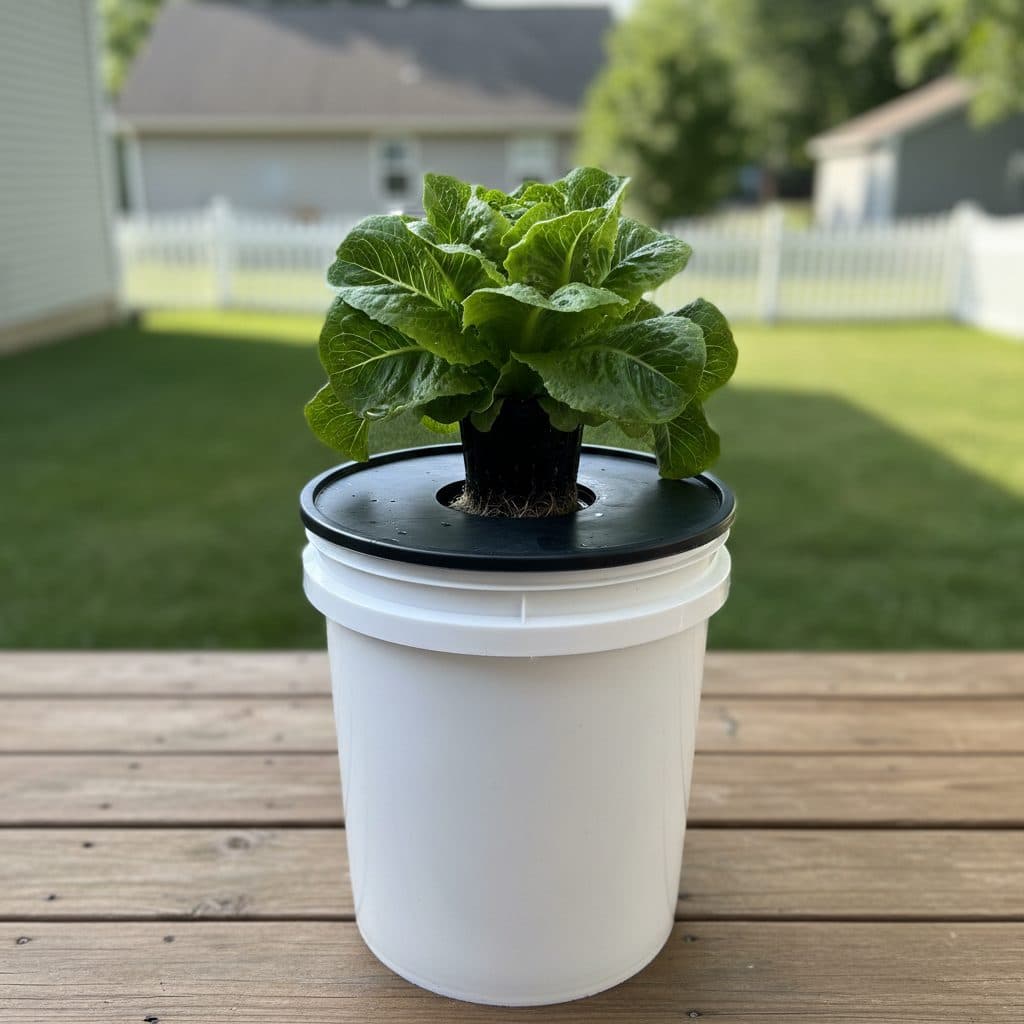
Quick answer: The Kratky method is a passive hydroponic system that allows you to grow lettuce in a 5-gallon bucket without pumps or electricity. It involves maintaining a static nutrient solution and an optimal pH between 5.5 and 6.5, creating an air gap for roots as the water level drops.
In the arid regions of the American Southwest, where water conservation is paramount, or even in a typical backyard in Ohio, growing food can present challenges. Traditional gardening often requires significant water resources, with outdoor plants needing about one inch of water per week, totaling around 620 gallons for a 100 square foot garden over a growing season. Hydroponics offers a compelling alternative, allowing plants to grow without soil and often with far less water. One of the simplest and most accessible hydroponic methods for new growers is the Kratky deep-water culture (DWC) system.
The Kratky method stands out because it’s entirely passive, meaning it operates without electricity, pumps, or air stones. This simplicity drastically reduces initial costs and maintenance, making it an excellent starting point for anyone interested in soilless gardening. With just a few basic supplies—a container, a net pot, a growing medium, and nutrient solution—you can cultivate fresh produce in your home or garden, often yielding harvests in 30 to 45 days for common leafy greens.
Understanding Kratky deep-water culture
The Kratky method, named after Dr. Bernard Kratky from the University of Hawaii, is a non-circulating hydroponic technique. Unlike other deep-water culture systems that use air pumps to oxygenate the water, the Kratky method relies on a static nutrient solution. As the plant grows and consumes water, the solution level drops, creating an air gap between the remaining solution and the bottom of the net pot. This air gap allows the roots to access oxygen directly from the air, while the lower roots remain submerged in the nutrient-rich water. This ingenious design eliminates the need for complex equipment, removing both the recurring cost and the failure points of pumps and air stones.
How the passive system works
For a successful Kratky setup, the initial nutrient solution must be sufficient to sustain the plant through its entire growth cycle, or at least a substantial portion of it. For a single head of lettuce, a 5-gallon bucket filled with 4 gallons of nutrient solution can often last from seedling to harvest, typically 30 to 45 days. The key is to never refill the reservoir to its original level once the air gap has formed, as this would re-submerge the air roots and potentially suffocate the plant. This method is particularly well-suited for leafy greens and herbs, which have relatively short growth cycles and moderate nutrient demands, making it a reliable choice for a first-time grower in any USDA zone from 3 to 10.
- No electricity needed: Operates without pumps or air stones, reducing utility bills.
- Low maintenance: Set it up, and largely leave it until harvest, often for 30 days or more.
- Cost-effective: The bucket and net pot cost only a few dollars, and most of the outlay is nutrient concentrate and a pH kit that will serve many more grows.
- Water efficient: Uses far less water than growing the same crop in soil, because the solution sits in a closed bucket and nothing drains away.
- Beginner-friendly: Simple design makes it easy for new growers to start quickly.
Gathering your materials for a simple setup
Starting your first Kratky system requires only a handful of readily available items, many of which you might already have around the house or can purchase for under 50 dollars. The most crucial component is the container, which needs to be opaque to block light from reaching the nutrient solution. Light promotes algae growth, which competes with your plants for nutrients and can lead to issues. A standard 5-gallon plastic bucket, often available for five to ten dollars at hardware stores, works exceptionally well. For smaller setups, a one-gallon opaque jug can support a single small herb plant, though a 5-gallon bucket offers more stability and nutrient volume for larger leafy greens.
Essential components for success
You will also need a net pot, typically 3 or 4 inches in diameter, which holds your plant and growing medium. Rockwool cubes are a popular choice for starting seeds and providing initial support, costing about 10-15 dollars for a pack of 50. Soak new cubes for an hour before sowing, in water adjusted to the low end of the range above, around pH 5.5: rockwool comes out of the bag strongly alkaline and will otherwise push your solution out of range and stall the seedlings. Other inert growing media like coco coir or hydroton clay pebbles can also be used. A high-quality hydroponic nutrient solution, formulated for general vegetative growth, is essential; a one-liter bottle often costs 20-30 dollars and will last for many setups. Finally, a pH testing kit or meter, costing 10-20 dollars, is vital to ensure your nutrient solution remains in the optimal range of 5.5 to 6.5 for most plants. Consider a reflective indoor grow tent if you plan to grow indoors, as it helps manage light and temperature efficiently.
- Opaque container: A 5-gallon bucket is ideal, preventing light from reaching the roots and solution.
- Net pots: 3-inch or 4-inch net pots provide support for seedlings and allow roots to grow into the solution.
- Growing medium: Rockwool cubes are common for starting seeds, offering good aeration and moisture retention.
- Hydroponic nutrients: A balanced, multi-part nutrient solution designed for hydroponics, not soil.
- pH testing kit: Strips or a digital meter to monitor and adjust the solution’s acidity.
Setting up your first Kratky system
Once you have all your materials, assembling a Kratky system is straightforward and can be completed in under 30 minutes. Begin by drilling a hole in the lid of your 5-gallon bucket. The hole saw size should match the diameter of your net pot, typically a 3-inch or 4-inch hole saw. Ensure the net pot fits snugly into the hole, with its rim resting on the lid, allowing the bottom of the pot to dip into the bucket. This precise fit is important for stability and to prevent light leaks, which can encourage undesirable algae growth. For outdoor setups in regions like Florida or California, consider painting the bucket light colors to reflect sunlight and keep the solution cooler, ideally below 75°F.
Step-by-step assembly and planting
Next, prepare your nutrient solution. Follow the manufacturer’s instructions carefully for mixing the concentrated hydroponic nutrients with water; a common ratio might be 10 milliliters of nutrient concentrate per gallon of water. Fill your 5-gallon bucket with approximately 4 gallons of this mixed solution. After mixing, test the pH of the solution. For most leafy greens, a pH between 5.5 and 6.5 is optimal for nutrient uptake. Adjust the pH using pH up or pH down solutions as needed, adding small amounts and retesting until the desired range is achieved. Once the solution is ready, place your pre-sprouted seedling, usually in a rockwool cube, into the net pot. The bottom of the rockwool cube should be submerged about one inch into the nutrient solution initially. This ensures the young roots have immediate access to water and nutrients, which promotes rapid growth within the first 7-10 days.
- Prepare container: Drill a hole in the lid of your opaque 5-gallon bucket to fit the net pot.
- Mix nutrients: Follow manufacturer instructions to mix hydroponic nutrients with 4 gallons of water.
- Adjust pH: Use a pH kit to ensure the solution is between 5.5 and 6.5 for optimal plant health.
- Plant seedling: Place a sprouted seedling (e.g., in a rockwool cube) into the net pot.
- Submerge roots: Ensure the bottom one inch of the net pot and seedling roots are in the nutrient solution.
Plant care and maintenance in a passive system
One of the primary appeals of the Kratky method is its minimal maintenance, but ‘minimal’ does not mean ‘none.’ While you won’t be adjusting pumps or checking water flow, monitoring your plants and their environment remains important. The most critical factor is the nutrient solution level. As the plant grows, it will consume water and nutrients, causing the solution level to drop. This is a natural and desired process that creates the air gap for oxygenation. For a single head of lettuce in a 5-gallon bucket, the initial 4 gallons of solution should be sufficient for the entire 30-45 day growth cycle without refilling. If you notice plants struggling or wilting before maturity, it might indicate insufficient solution volume or nutrient concentration, particularly in warmer climates like those found in USDA zones 8-10, where evaporation rates are higher.
Troubleshooting and harvest readiness
Regularly check the plant’s leaves for any signs of nutrient deficiencies, such as yellowing or stunted growth, which might indicate an incorrect pH or depleted nutrients. The ideal water temperature for most hydroponic plants is between 65°F and 75°F; temperatures outside this range can stress plants and reduce nutrient uptake. While the Kratky method is passive, a quick visual inspection every few days—checking for pests, disease, or extreme leaf discoloration—can prevent small issues from becoming major problems. When your lettuce, spinach, or basil reaches a desirable size, typically 6-8 inches tall for leafy greens, it’s ready for harvest. Many varieties can be harvested using a ‘cut and come again’ method, allowing you to snip outer leaves and extend the plant’s productivity for another 10-14 days before it needs to be fully removed. For those interested in year-round growing, exploring options like a four-season greenhouse design can provide consistent conditions.
- Monitor solution level: Allow the water level to drop naturally, creating an air gap for roots.
- Observe plant health: Check leaves for discoloration or signs of nutrient deficiency every 2-3 days.
- Maintain temperature: Keep water temperature between 65°F and 75°F for optimal growth.
- Inspect for pests: Regularly check for common hydroponic pests like aphids or fungus gnats.
- Harvest strategically: Use ‘cut and come again’ for leafy greens to extend yield over 10-14 days.
Best plants for your Kratky garden
The Kratky method excels with plants that have relatively short growth cycles and moderate nutrient demands. Leafy greens are the undisputed champions of this passive system. Varieties of lettuce, such as romaine, butterhead, and loose-leaf, are particularly well-suited, often reaching harvestable size in 30 to 45 days. Spinach, kale, and Swiss chard also perform admirably. These plants typically require a consistent supply of nitrogen for lush foliage, which is readily available in standard hydroponic vegetative nutrient formulations. For a 4×4 foot grow space, you could easily fit 10-12 Kratky buckets, each yielding a full head of lettuce.
Expanding your plant selection
Herbs like basil, mint, and cilantro are another excellent choice for Kratky systems. Basil, in particular, grows vigorously and can be harvested repeatedly by pinching off the top growth, encouraging bushier plants. Many herbs can be grown in smaller 1-gallon containers, making them perfect for a kitchen counter setup. While fruiting plants like tomatoes or peppers can technically be grown, they require a much larger nutrient reservoir, more precise nutrient formulations, and often benefit from a more active system with aeration, making them less ideal for a beginner’s Kratky setup. However, some growers in warmer climates, like parts of Texas, have successfully grown small cherry tomato varieties in 10-gallon Kratky containers. For water-loving plants, consider varieties like Water Hyssop, which can thrive in these conditions.
- Lettuce (Romaine, Butterhead, Loose-leaf): Fast-growing, low nutrient demand, ready in 30-45 days.
- Spinach and Kale: Similar to lettuce, providing consistent leafy harvests.
- Basil and Mint: Aromatic herbs that grow well and can be harvested repeatedly.
- Swiss Chard: Another sturdy leafy green that thrives in passive hydroponics.
- Bok Choy: Quick-growing and compact, ideal for smaller Kratky setups.
Expanding your hydroponic journey
Once you’ve successfully grown a few cycles of lettuce or basil in a Kratky system, you might find yourself eager to explore other hydroponic methods or scale up your production. The experience gained from managing nutrient solutions and observing plant health in a passive system provides a solid foundation for more complex setups. Many growers transition from Kratky to active Deep Water Culture (DWC) systems, which incorporate an air pump and air stone to continuously oxygenate the nutrient solution. This active aeration can lead to faster growth and allows for growing a wider range of plants, including some fruiting varieties like strawberries or even small cucumbers, particularly in controlled environments like those found in commercial greenhouses in California or Arizona.
Beyond the bucket: advanced systems and benefits
Other popular systems include Nutrient Film Technique (NFT) and Drip Systems, which are often used in larger commercial operations and can support dozens or hundreds of plants. These systems typically require more initial investment, including pumps, timers, and plumbing, but offer greater control and efficiency. Regardless of the system, hydroponics generally uses significantly less water than traditional agriculture. Hydroponic systems use far less water than soil-based farming, because the solution is enclosed or recirculated rather than draining away, a critical advantage in many parts of the US facing water scarcity. This water efficiency, combined with faster growth and higher yields per square foot, makes hydroponics a compelling option for future food production, whether in a small urban apartment in New York City or a large agricultural facility in the Midwest. For larger scale operations, consider the principles of four-season greenhouse design to maximize year-round output.
- Active DWC: Introduces air pumps for increased oxygenation, leading to faster growth and more plant options.
- Nutrient Film Technique (NFT): A thin film of nutrient solution flows over roots, often used for leafy greens at scale.
- Drip Systems: Deliver nutrient solution directly to the base of each plant, suitable for larger fruiting plants.
- Aeroponics: Roots are suspended in air and misted with nutrient solution, offering high oxygenation and rapid growth.
- Aquaponics: Combines aquaculture (raising fish) with hydroponics, using fish waste as plant nutrients.
Kratky vs. Active Deep Water Culture (DWC)
Feature | Kratky Method | Active DWC |
|---|---|---|
Pumps/Electricity | None required, passive | Air pump and air stone needed |
Complexity | Very low, ideal for beginners | Low to moderate, some equipment setup |
Initial Cost | Low (under $50 for one system) | Moderate (starts around $70-$100 for one system) |
Maintenance | Minimal, set and forget for many plants | Regular pH/EC checks, pump maintenance |
Oxygenation | Relies on air gap as water level drops | Continuous aeration via air stone |
Plant Suitability | Leafy greens, herbs (short cycle) | Wider range, including some fruiting plants |
Growth Rate | Good, consistent | Often 10-20% faster due to constant oxygenation |
Water Efficiency: Hydroponic systems use far less water than soil farming because nothing drains away, a real advantage in drought-prone areas like California.
Quick Harvest: Many leafy greens, such as lettuce, can be ready for harvest in a Kratky system in as little as 30 to 45 days from seeding, providing rapid returns for your effort.
Frequently asked questions
How often do I need to change the nutrient solution in a Kratky system?
For most leafy greens like lettuce, you typically do not change the solution; instead, the initial fill of 4-5 gallons is designed to last the entire 30-45 day growth cycle. The solution level drops, creating an air gap for roots. If you must top up before harvest, add only enough to wet the bottom of the root mass — refilling to the original level re-submerges the air roots the plant now depends on and will drown it.
Can I grow fruiting plants like tomatoes in a Kratky system?
While it is possible to grow small fruiting plants like cherry tomatoes in very large Kratky containers (e.g., 10-gallon buckets), it is generally not recommended for beginners. Fruiting plants have higher nutrient demands and require more oxygen, making active DWC systems with air pumps a more reliable choice for consistent yields.
What is the ideal pH range for Kratky hydroponics?
The optimal pH range for most plants in a Kratky hydroponic system is between 5.5 and 6.5. Maintaining this range ensures that plants can absorb essential nutrients effectively from the solution, contributing to healthier growth and better yields.
How much light do Kratky plants need?
Most leafy greens and herbs grown in Kratky systems require at least 14-16 hours of light per day for optimal growth. If growing indoors, a full-spectrum LED grow light providing 300-400 PPFD (Photosynthetic Photon Flux Density) is recommended to achieve strong growth and a full harvest in 30-45 days.
What are the common problems with Kratky systems?
Common issues include algae growth due to light leaks, nutrient deficiencies from incorrect pH or depleted solution, and root rot if the air gap doesn’t form correctly or the water temperature exceeds 75°F. Addressing these issues promptly can help maintain a healthy system and ensure a successful harvest.
Can I use tap water for my Kratky system?
Yes, tap water can often be used, but it’s advisable to let it sit for 24 hours to allow chlorine to dissipate. Additionally, test your tap water’s pH and EC (electrical conductivity) to understand its baseline. Hard water, common in many US regions, might require more frequent pH adjustments to stay within the optimal 5.5-6.5 range.
References
- USDA Natural Resources Conservation Service (2024). USDA Natural Resources Conservation Service.
- EPA — Soak Up the Rain (2024). EPA — Soak Up the Rain.
- SARE — Sustainable Agriculture Research & Education (2023). SARE — Sustainable Agriculture Research & Education.
- ATTRA / NCAT Sustainable Agriculture (2023). ATTRA / NCAT Sustainable Agriculture.
- USDA National Agroforestry Center (2023). USDA National Agroforestry Center.