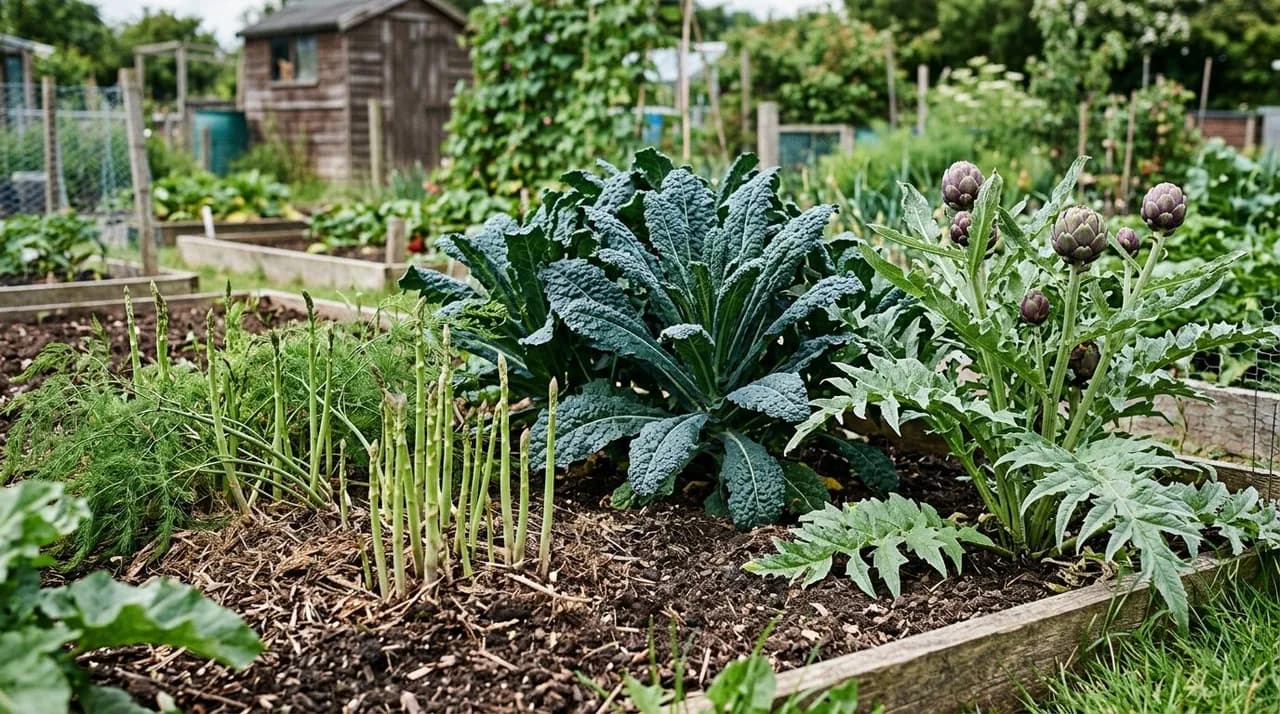
Key takeaways
- Perennial vegetables remain productive for years without the annual disturbance of seed sowing and soil cultivation.
- Top performing species for the UK climate include Daubenton kale, Nine Star perennial broccoli, asparagus, and sea kale.
- Prepare planting beds thoroughly with well-rotted organic matter, as perennial crops occupy the same ground for up to two decades.
- Position perennial beds along allotment borders or within dedicated forest garden zones to prevent accidental disturbance.
- Propagate perennial brassicas and alliums through vegetative cuttings and bulbils instead of seed to preserve genetic vigour.
Quick answer: Growing perennial vegetables in the UK provides reliable, low-maintenance harvests from early spring through winter. Crops such as Taunton Deane kale, asparagus, sea kale, and Nine Star broccoli thrive in temperate maritime conditions, demanding minimal annual soil disturbance once established.
Perennial vegetables can make a kitchen garden or allotment productive with less annual replanting. Unlike annual crops that require repetitive seed starting, ground tilling, and delicate seedling care every spring, perennial edibles develop extensive root systems that access moisture and subsoil minerals over multiple seasons.
In the damp, maritime climate of the British Isles, perennial greens and roots offer exceptional resilience against erratic weather patterns, late spring frosts, and heavy winter rainfall. Once planted and mulched, these stalwart plants produce abundant harvests during the notorious spring 'hungry gap' (typically April to early June, when winter brassicas run to seed and the first spring sowings have not yet yielded).
Integrating perennial crops into your growing space creates permanent soil biology, reduces weed pressure, and delivers fresh greens with minimal labour. Permanent planting works well in small backyard beds as well as full ten-pole allotment plots.
Why perennial vegetables suit the British climate
The UK climate presents distinct opportunities and challenges for food growers. Cool summers, mild damp winters, and long shoulder seasons can frustrate heat-loving annuals, but they provide ideal conditions for hardy perennial crops.
Deep, uninterrupted root networks allow perennial vegetables to establish symbiotic relationships with mycorrhizal fungi and beneficial soil bacteria. This underground network improves nutrient uptake and builds resilient soil structure that resists erosion during heavy Atlantic rainfall. Because you avoid annual digging around their crowns, the soil carbon remains locked in place, supporting earthworm populations and beneficial ground beetles.
Furthermore, perennial plants emerge far earlier in the season than annual seeds can germinate in cold British soils. Species such as sea kale and wild alliums begin pushing tender growth in February and March, supplying fresh nutrition weeks ahead of the first annual lettuce or radish harvests. Permanent root systems reduce seasonal labour while holding topsoil in place.
Top 9 perennial vegetables for UK plots and gardens
Selecting the right species ensures strong establishment and high culinary value. The following nine perennial crops have proven track records across British allotments and kitchen gardens.
1. Perennial Kale (Daubenton and Taunton Deane)
Perennial kale varieties are legendary workhorses in UK permaculture. Taunton Deane produces massive, architectural shrubs reaching up to 2 metres in height, yielding thousands of tender, nutty leaves throughout all four seasons. Daubenton kale remains slightly more compact, forming a bushy mound of sweet, ruffled greens that survive severe winter frosts. Because these brassicas rarely set viable seed, propagate them every three to four years by taking semi-ripe side shoot cuttings in late summer.
2. Nine Star Perennial Broccoli
This unique heirloom brassica produces a large central creamy-white cauliflower-like head in early spring, followed by numerous smaller sprouting florets around the perimeter. To keep Nine Star broccoli productive for four to six years, harvest every head before the flowers open. Allowing the plant to go to seed triggers senescence and shortens its perennial lifespan.
3. Asparagus (Asparagus officinalis)
A traditional stalwart of the British kitchen garden, asparagus crowns take two years to establish but reward growers with succulent spears for fifteen to twenty years. Asparagus requires well-drained, sandy-loam soil with a neutral pH. Keep the bed hand-weeded, apply a thick mulch of garden compost every autumn, and allow the feathery ferns to grow unhindered after the June harvest cutoff to recharge the root crowns.
4. Sea Kale (Crambe maritima)
Native to the shingle beaches of Britain, Ireland and northern Europe, sea kale is exceptionally hardy and drought-tolerant. Cover mature three-year-old crowns in January or February with an upturned bucket, dustbin or traditional terracotta forcing pot, excluding all light. Within six to eight weeks (by late March or April) the blanched, tender ivory stems are ready to cut. Leaving covers on from November is unnecessary and risks fungal rot in wet winter weather. Unforced summer leaves are tougher, but the early flower buds can be cooked exactly like sprouting broccoli.
5. Globe Artichoke (Cynara cardunculus var. scolymus)
Globe artichokes combine striking architectural beauty with gourmet edible flower buds. Seed-grown globe artichokes vary; many produce small or thorny heads. Buying named micropropagated plants or taking spring root offsets (suckers) from a reliable plant gives you an exact genetic clone of a good cropper. Thriving in sunny, sheltered locations with rich, moist soil, a single healthy plant yields four to eight plump heads from early summer into autumn. Cut back dying foliage in late autumn and protect crowns with straw in cold, exposed northern districts.
6. Rhubarb (Rheum rhabarbarum)
Rhubarb provides the first tart, harvests of the year. Forcing dormant crowns under bins in January yields tender pink stems by early March. Plant crowns in rich soil heavily amended with well-rotted manure, ensure generous summer moisture, and avoid harvesting any stems during the first year after planting to build crown stamina.
7. Good King Henry (Blitum bonus-henricus)
Historically cultivated across English cottage gardens, Good King Henry is an undemanding perennial spinach substitute. Young spring shoots can be peeled and steamed like asparagus, while the iron-rich leaves are used as cooked greens throughout spring and summer. It thrives in partial shade and tolerates damp, heavy ground.
8. Babington's Leek (Allium ampeloprasum var. babingtonii)
Native to coastal Britain, Babington leek produces tasty garlicky leek-like stems every winter and spring. In summer, the plant dies back and produces heads of small bulbils. Harvest the mature stems at ground level with a sharp knife, leaving the underground bulb intact to multiply and produce new shoots every autumn.
9. Turkish Rocket (Bunias orientalis)
Turkish rocket has a deep taproot that draws up subsoil minerals while surviving prolonged dry spells. In early spring, it produces clusters of miniature yellow flower buds that taste remarkably like mustard-spiced broccoli raab. It handles poor soils and accumulates nutrients around orchard trees.
Soil preparation and site selection for permanent beds
Because perennial vegetables occupy the same ground for many years, thorough initial bed preparation is essential. Correcting drainage issues, eliminating persistent weeds, and boosting organic matter must occur before a single root is planted.
- Eliminate perennial weeds: Clear couch grass, bindweed, and creeping buttercup completely. Once a perennial vegetable crown grows through perennial weed roots, separating them becomes nearly impossible without lifting the entire plant.
- Incorporate generous organic matter: Dig in liberal quantities of well-rotted garden compost, leaf mould, or aged farmyard manure to a depth of 30 cm. This improves structure and moisture retention in sandy soils while opening up heavy British clay.
- Check soil drainage: While perennial crops tolerate damp winters, standing water during freezing periods rots dormant root crowns. If your plot suffers from seasonal waterlogging, construct raised beds or plant along gently sloped mounds.
- Select dedicated zones: Position your perennial vegetable patch where it will not interfere with annual crop rotations. Border beds, hedgerow edges, or the sunny margins of an orchard are ideal locations.
Managing pests and diseases organically on UK plots
Perennial crops generally exhibit greater pest resistance than succulent annual seedlings, but specific pests require mindful organic management in British conditions.
Slugs and snails
Damp British springs bring intense slug pressure just as perennial crowns produce tender new shoots. Protect emerging sea kale and perennial kale shoots by clearing overwintering debris around crowns in late winter. Encourage natural predators including songbirds, frogs, and ground beetles by maintaining small wild patches and log piles nearby. Hand-picking on damp evenings and applying wool waste pellets or copper barriers around delicate specimens provides effective mechanical deterrence.
Cabbage white caterpillars and blackfly
Perennial brassicas such as Taunton Deane kale host cabbage white butterflies (Pieris brassicae and Pieris rapae). Protect valuable plants using fine insect mesh draped over timber hoops during summer egg-laying periods. If blackfly colonise young flower stalks on broad beans or perennial brassicas, knock them off with a firm jet of clean water or introduce beneficial predatory ladybird larvae.
Club root prevention
Club root (Plasmodiophora brassicae) is a soil-borne organism affecting brassicas across many historic UK allotment grounds. If your soil harbours club root, raise soil pH to 7.0 or above by applying garden lime, improve drainage, and grow brassicas in large containers or heavily amended raised beds.
Propagation, maintenance, and long-term care
Maintaining a productive perennial vegetable patch requires simple, predictable seasonal tasks:
- Spring Mulching: Apply a 5 cm layer of rich garden compost around the base of all plants each spring. This feeds the soil biology, retains summer moisture, and suppresses weed seed germination.
- Vegetative Propagation: Take semi-hardwood cuttings of perennial kale every three to four years to maintain vigorous juvenile stock. Plant cuttings directly into gritty compost during July or August.
- Dividing Crowns: Divide congested rhubarb and globe artichoke clumps every five years during the dormant period between November and February. Replant the vigorous outer sections into freshly composted soil and gift excess divisions to neighbouring plot holders.
- Autumn Cleanup: Remove diseased foliage in late autumn, but leave hollow stems and seed heads intact on architectural perennials to provide overwintering shelter for beneficial pollinating and predatory insects.
By investing in permanent, deeply rooted edible crops, you build an allotment or garden ecosystem that yields resilient, mineral-dense food with a fraction of the seasonal effort required by standard annual vegetables.