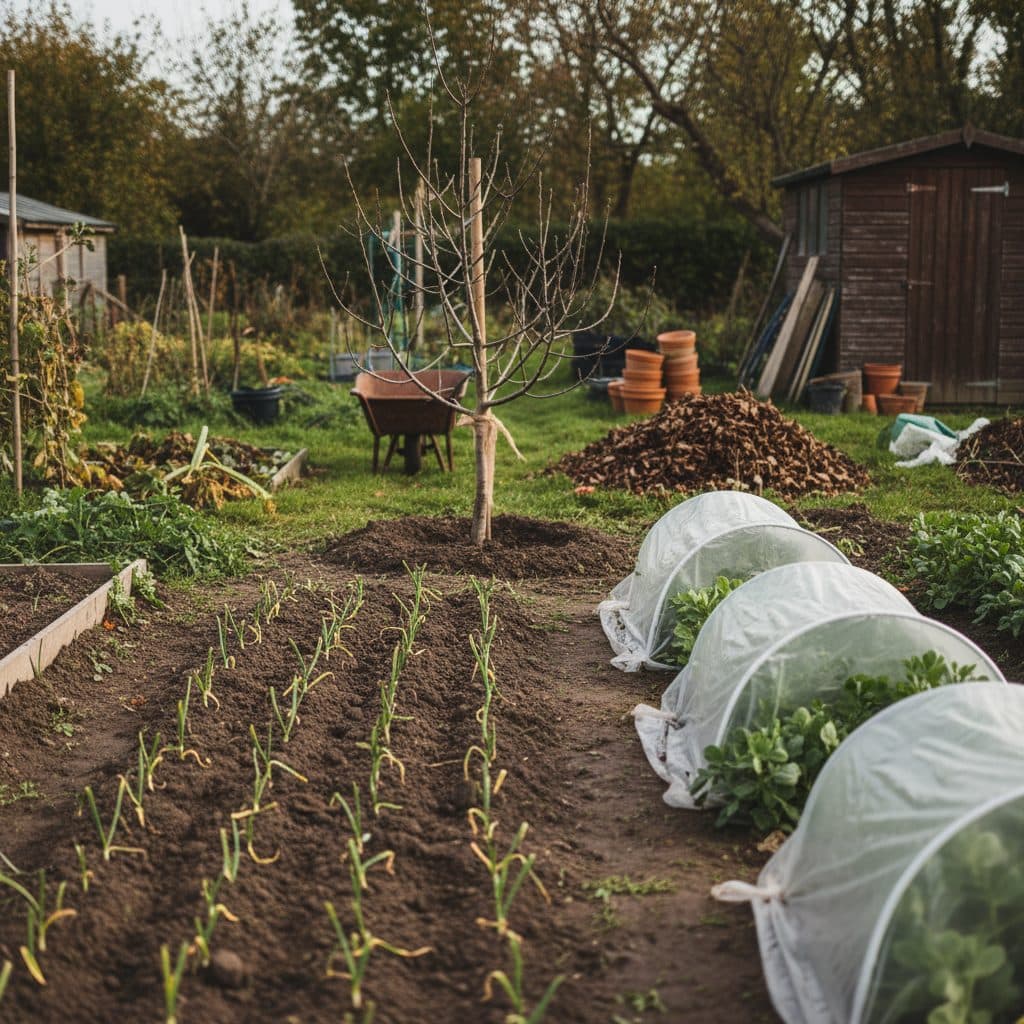
Key takeaways
- Plant autumn garlic cloves (both hardneck and softneck varieties) in November so winter frosts can satisfy their chilling requirement (vernalization).
- Direct-sow cold-hardy overwintering broad beans like 'Aquadulce Claudia' to establish robust roots and harvest three weeks earlier in May.
- Plant bare-root fruit trees, fruit bushes (currants, gooseberries), and raspberry canes while trees are fully dormant and the soil remains unfrozen.
- Sow hardy winter salad leaves—including corn salad (lamb's lettuce), winter purslane, and land cress—inside unheated cold frames or beneath polythene cloches.
- Mulch empty allotment vegetable beds with 5 to 7 cm of well-rotted farmyard manure or garden compost to protect soil structure from winter rain leaching.
Quick answer: Deciding what to plant in November UK centers on cold-hardy crops and dormant perennials that benefit from winter establishment. November is the primary month to plant autumn garlic cloves, overwintering broad beans ('Aquadulce Claudia'), autumn onion sets, and bare-root fruit trees and soft fruit bushes. Hardy winter salads like lamb's lettuce and land cress can also be sown under cloches or in cold frames.
November is often viewed as the month when British allotments and kitchen gardens go to sleep. Deciduous trees drop their final leaves, daylight hours shorten dramatically, and morning frosts become frequent across the UK.
However, experienced British growers treat November as an essential planting window. Planting specific cold-tolerant crops now harnesses remaining autumn soil warmth, giving roots time to anchor before deep winter freezes arrive.
By establishing garlic, overwintering legumes, and bare-root fruit stock before December, you ensure vigorous spring growth and a reliable early harvest next season.
British November planting matrix
Match your November sowing and planting tasks to the microclimate and protection level of your garden or allotment.
+--------------------+-------------------------+--------------------+------------------------+
| Crop Group         | Specific Varieties      | Planting Location  | Harvest Window         |
+--------------------+-------------------------+--------------------+------------------------+
| Autumn Garlic      | 'Picardy Wight', 'Solent'| Open beds or ridges| June to July           |
| Overwintering Bean | 'Aquadulce Claudia'     | Open beds / cloches| May to June (early)    |
| Autumn Onion Sets  | 'Senshyu Yellow', 'Radar| Free-draining plot | June to July           |
| Bare-Root Trees    | Apples, Pears, Plums    | Open orchard ground| Autumn in future years |
| Bare-Root Canes    | Summer/Autumn Raspberry | Trellised post rows| July to October        |
| Winter Salads      | Lamb's Lettuce, Mizuna  | Cold frame / cloche| December to March pick |
+--------------------+-------------------------+--------------------+------------------------+
+-------------------------------------------------------------------+
| UK NOVEMBER PLANTING LOGIC |
| |
| [November Soil Unfrozen] ---> Plant Garlic & Bare-Root Trees |
| | |
| v |
| [Winter Frost & Chilling] ---> Vernalises Cloves / Anchors Roots|
| | |
| v |
| [Early Spring Burst] ---> Rapid Canopy & Early May Crop |
+-------------------------------------------------------------------+Planting autumn garlic: vernalization and drainage
Garlic (Allium sativum) requires a prolonged period of cold temperatures (below 10°C for at least six weeks) to trigger the physiological process known as vernalization. Without this winter chilling, a planted garlic clove simply swells into a single round bulb without dividing into individual cloves.
+------------------------+-----------------------------------+-------------------------+
| Garlic Classification  | Top UK Cultivars                  | Agronomic Character     |
+------------------------+-----------------------------------+-------------------------+
| Softneck Varieties     | 'Wight Cristo', 'Solent Wight'    | Long storage; no scapes |
| Hardneck Varieties     | 'Chesnok Red', 'Kingsland Wight'  | Bold flavour; hardy cold|
| Elephant Garlic        | *Allium ampeloprasum*             | Giant mild bulbs        |
+------------------------+-----------------------------------+-------------------------+
+-------------------------------------------------------------------+
| HOW TO PLANT GARLIC CLOVES IN NOVEMBER |
| |
| 1. Separate Cloves: Break bulbs apart immediately before planting;|
| select only the largest, firmest outer cloves.|
| 2. Orientation: Plant clove with pointed tip facing UP and |
| flat basal root plate facing DOWN. |
| 3. Planting Depth: Bury cloves 4 to 5 cm below soil surface. |
| 4. Spacing: Space 15 cm apart in rows 20 cm apart. |
| 5. Drainage Ridges: On heavy UK clay, plant on 10 cm raised mounds|
| to prevent waterlogged bulbs rotting in winter|
+-------------------------------------------------------------------+If your plot suffers from waterlogged clay, start garlic cloves individually in 5 cm module trays filled with gritty compost and keep them in an unheated cold frame. Transplant the rooted plugs out into raised beds in February once the worst of the winter waterlogging has drained.
Pair allium crops with late-season allium guidance in growing leeks and salad crops in growing spring onions.
Sowing overwintering broad beans
Broad beans (Vicia faba) are remarkably frost-hardy legumes. Sowing in November produces short, sturdy seedlings that survive sub-zero British winter temperatures under snow cover.
+-------------------------------------------------------------------+
|               BENEFITS OF OVERWINTERING BROAD BEANS               |
+-------------------------------------------------------------------+
| - 3-Week Earlier Crop: Harvest fresh tender pods in late May      |
| - Avoids Black Bean Aphid: Plants mature before blackfly swarms   |
| - Root Nodule Nitrogen: Fixes soil nitrogen during winter rains   |
| - Weed Suppression:    Occupies empty soil, blocking winter weeds |
+-------------------------------------------------------------------+
Cultivar selection: 'Aquadulce Claudia'
Always select 'Aquadulce Claudia' for November sowings. This historic Spanish heirloom variety possesses unmatched cold tolerance, surviving frosts down to -10°C without foliage collapse.
Sow seeds 5 cm deep in double staggered rows spaced 25 cm apart. If field mice or pigeons threaten sown seeds, cover the row with wire mesh or fleece cloches until seedlings reach 10 cm tall.
For soil preparation and stale seedbed routines, see weed smart sowing stale seedbed.
Planting bare-root fruit trees and soft fruit canes
From November through March, nursery growers lift fruit trees and berry bushes from field soil and sell them as bare-root stock. Bare-root specimens are substantially cheaper than container-grown trees, offer a larger, natural root architecture, and establish more rapidly in garden soil.
+------------------------+-------------------+-----------------------------------------+
| Fruit Category         | Rootstock / Type  | Soil Preparation Needed                 |
+------------------------+-------------------+-----------------------------------------+
| Apple & Pear Trees     | M9, M26, MM106    | Dig hole twice root width; add compost  |
| Plum & Damson Trees    | St Julien A       | Ensure neutral to slightly alkaline loam|
| Summer Raspberry Canes | Bare-root bundles | Trench 30 cm wide with aged manure      |
| Blackcurrant Bushes    | 2-year bare-root  | Plant 5 cm deeper than nursery soil mark|
| Gooseberry Bushes      | Open goblet bush  | Plant onto clean stem (clear of suckers)|
+------------------------+-------------------+-----------------------------------------+
+-------------------------------------------------------------------+
| STEP-BY-STEP BARE-ROOT PLANTING PROTOCOL |
| |
| 1. Rehydrate Roots: Soak bare roots in a bucket of water for 2 hrs|
| 2. Inspect & Prune: Trim off broken or damaged root tips cleanly |
| 3. Drive the Stake: Drive a low wooden tree stake into windward |
| side of hole BEFORE setting the tree inside. |
| 4. Match Soil Line: Position tree so the nursery root flare sits |
| exactly level with the surrounding soil. |
| 5. Backfill Firmly: Sift soil around roots; heel in to firm out |
| air pockets; water heavily to settle earth. |
+-------------------------------------------------------------------+Learn how to manage young fruit tree canopies and formative frameworks in how to prune fruit trees.
Winter salads under cloches and cold frames
You can continue harvesting crisp fresh greens throughout the coldest British months by using simple passive cloche protection.
+--------------------+-------------------------+--------------------+------------------------+
| Winter Salad Crop  | Botanical Name          | Cold Hardiness     | Flavour Profile        |
+--------------------+-------------------------+--------------------+------------------------+
| Lamb's Lettuce     | *Valerianella locusta*  | Down to -15°C      | Nutty, buttery rosette |
| Winter Purslane    | *Claytonia perfoliata*  | Down to -10°C      | Succulent, mild, crisp |
| Land Cress         | *Barbarea verna*        | Highly frost-proof | Peppery watercress bite|
| Mizuna             | *Brassica rapa nippon*  | Cold hardy         | Feathery mustard spice |
+--------------------+-------------------------+--------------------+------------------------+
Sow seeds in shallow drills inside an unheated glass cold frame or beneath a corrugated PVC cloche. Ventilate cloches on bright, sunny winter mornings to prevent stagnant humid air from encouraging fungal grey mould (Botrytis).
Compare cool-season root crop storage with our guide on growing beetroot.
Winter allotment soil protection and manuring
Never leave cultivated allotment soil bare over a British winter. Heavy winter rainfall leaches soluble nitrogen and compacts the topsoil into a dense, airless crust.
+-------------------------------------------------------------------+
|               WINTER SOIL PROTECTION STRATEGIES                   |
+-------------------------------------------------------------------+
| - Spread 5 to 8 cm well-rotted farmyard manure over vegetable beds|
|- Cover empty beds with breathable woven ground cover or silage tarps|
| - Dig clay plots roughly in late November ("rough digging"),      |
|   allowing winter frosts to shatter dense clay clods into tilth   |
| - Clean and oil all garden spades, forks, and hoes for storage    |
+-------------------------------------------------------------------+
By completing your November planting and winter bed protection, your garden will emerge fertile, weed-free, and ahead of the spring rush.