Key takeaways
- Cabbage fermentation in Mason jars is a simple, effective preservation method for home growers.
- Maintaining a 2% salt concentration by weight is essential for safe and successful fermentation.
- Ideal fermentation temperatures range from 60-70°F, taking three to four weeks for classic sauerkraut.
- Fermented cabbage products, like sauerkraut, offer significant health benefits, including improved gut flora and nutrient absorption.
- Proper storage at 35-40°F can extend the shelf life of fermented cabbage for six to twelve months.
- Monitoring for kahm yeast versus mold is important; kahm yeast is harmless, but mold indicates spoilage.
Quick answer: Fermenting cabbage in Mason jars involves shredding, salting to 2% by weight, packing tightly into jars, and allowing beneficial bacteria to convert sugars into lactic acid, preserving it for 6-12 months.
Across the United States, from the fertile valleys of California to the cool plains of Wisconsin, cabbage is a staple crop for many growers. In 2022, US farmers harvested over 1.9 billion pounds of cabbage, a significant portion of which finds its way into home kitchens. While fresh cabbage is versatile, fermenting it in Mason jars offers a straightforward, low-tech method to preserve its goodness for many months when the finished jars are held cold.
This traditional preservation technique transforms fresh cabbage into foods like sauerkraut and kimchi. Controlling the environment within a glass jar allows beneficial bacteria to thrive, creating a tangy, flavorful food that keeps longer and provides dietary benefits. This guide explains the process to keep your fermented cabbage safe and well preserved.
Why ferment cabbage in Mason jars?
Fermenting cabbage extends its shelf life while improving its nutritional profile and digestibility. When lactic acid bacteria, naturally present on cabbage leaves, begin to work, they convert sugars into lactic acid. This acid acts as a natural preservative, keeping harmful microbes at bay and giving fermented cabbage its characteristic tangy flavor. Fermentation makes cabbage easier to digest and produces B vitamins and lactic acid, though vitamin C generally sits at or below the level in the fresh head it came from.
Health benefits and preservation
Beyond preservation, the health benefits are substantial. The fermentation process creates probiotics, beneficial microorganisms that support gut health, aid digestion, and may even boost the immune system [3, 4]. A single 4 oz serving of quality sauerkraut can introduce billions of these helpful bacteria into your digestive tract. For home growers in USDA zones 4-8, fermenting cabbage in Mason jars needs no special equipment, and the finished jars stay good for six to twelve months when held at 35-40°F. This method is particularly useful for those without large root cellars, offering a compact, accessible alternative to traditional root-cellar storage.
- extends vegetable shelf life by 6-12 months
- improves nutrient bioavailability and adds B vitamins
- introduces beneficial probiotics for gut health
- reduces food waste from garden surpluses
- requires minimal equipment and no electricity
Choosing and preparing your cabbage
The foundation of great fermented cabbage is, naturally, great cabbage. For classic sauerkraut, firm, dense green cabbage heads are ideal, often weighing between three and five pounds. Varieties like ‘Danish Ballhead’ or ‘Late Flat Dutch’ perform exceptionally well in cooler climates, thriving in USDA zones 3-9. Red cabbage also ferments well, producing a colorful, slightly earthier product. After harvesting or purchasing, remove any bruised or damaged outer leaves, reserving one or two clean, intact outer leaves for later use in the jar. Wash the cabbage thoroughly under cool running water to remove any soil or debris.
Shredding and salting for success
Once cleaned, quarter the cabbage and remove the tough inner core. Shred the cabbage thinly, ideally to a thickness of about 1/8 inch. A mandoline slicer can achieve uniform results quickly, but a sharp knife works just as well. The most important step is salting. Use a non-iodized salt, such as canning and pickling salt or fine sea salt, as iodine can inhibit fermentation. The general rule is to use two percent salt by weight. For five pounds of shredded cabbage, this translates to about 1.6 ounces of salt. Weigh it if you can — three tablespoons is only a rough stand-in, because tablespoon weights vary a great deal between salt types.
- select firm, dense green or red cabbage heads
- remove outer leaves and core before shredding
- shred cabbage to an approximate 1/8 inch thickness
- weigh cabbage to calculate 2% non-iodized salt
- massage salt into cabbage until brine forms, about 10 minutes
The classic sauerkraut method: salt and time
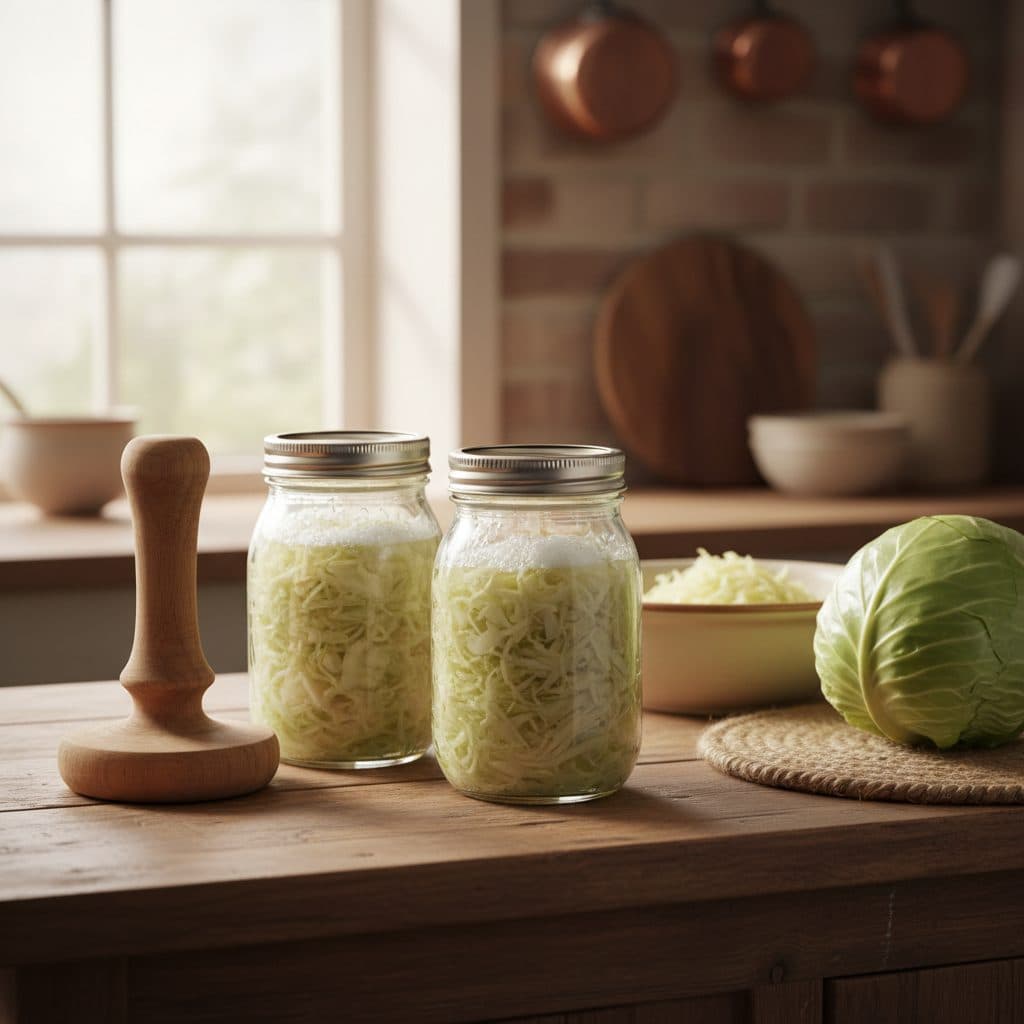
With your salted cabbage and brine ready, it’s time to pack your Mason jars. For a typical batch of five pounds of cabbage, you’ll need two to three quart-sized (32 oz) Mason jars. Pack the cabbage tightly into each jar, pressing down firmly with your fist or a tamper to remove air pockets and encourage more brine to rise. Continue packing until the cabbage is about one inch below the rim of the jar, ensuring there’s enough headspace for expansion during fermentation. The goal is to have all the shredded cabbage submerged under its own brine; this anaerobic environment is essential for preventing spoilage and encouraging the right bacteria to grow.
Packing, weighting, and fermenting
If the natural brine doesn’t completely cover the cabbage, you can make a supplemental brine by dissolving one teaspoon of non-iodized salt in one cup of non-chlorinated water. Pour just enough to cover the cabbage. Place one of the reserved outer cabbage leaves on top of the shredded cabbage, then add a fermentation weight or a small, clean glass jar filled with water to keep everything submerged. Secure the jar with a fermentation airlock lid or a standard canning lid that you ‘burp’ daily to release built-up gases. Store the jars at a consistent room temperature between 60-70°F, away from direct sunlight. At the warm end of that range fermentation typically takes three to four weeks; at 60°F expect five to six weeks. Taste before you call it done instead of going by the calendar. You’ll notice bubbles forming, indicating active fermentation. For more detailed guidance on various fermentation techniques, consider exploring resources on fermenting and pickling vegetables.
- pack salted cabbage tightly into quart Mason jars
- ensure cabbage is submerged under brine, adding more if needed
- use a fermentation weight or small jar to keep cabbage down
- seal with an airlock lid or burp daily
- ferment at 60-70°F for 3-4 weeks
Beyond sauerkraut: other fermented cabbage options
While classic sauerkraut is a beloved staple, the world of fermented cabbage extends far beyond. With a few simple additions, you can create a variety of flavorful ferments tailored to your taste. For a spicy kick, consider making a simple kimchi-style ferment. Instead of just salt, incorporate ingredients like garlic, ginger, red pepper flakes (gochugaru for an authentic touch), and green onions into your shredded cabbage. Napa cabbage is traditionally used for kimchi, but green cabbage works well too, offering a firmer texture. This variation typically ferments faster, often ready in one to two weeks at room temperature.
Flavor variations and additions
Other popular additions include caraway seeds, often used in traditional German sauerkraut, at a rate of one teaspoon per five pounds of cabbage. Juniper berries, dill, or even sliced apples can add complex layers of flavor. For a sweeter, milder ferment, consider adding shredded carrots or beets, which also contribute bright color. Experimenting with different spice blends allows for endless possibilities. Remember to maintain the 2% salt ratio based on the total weight of all vegetables combined. These mixed ferments offer different flavors and contribute a broader spectrum of beneficial microorganisms to your diet. For those interested in other fermented products, exploring options like homemade fermented chicken feed highlights the versatility of fermentation across different applications.
- add garlic, ginger, and red pepper for kimchi-style ferments
- incorporate caraway seeds or juniper berries for traditional flavors
- mix in shredded carrots or beets for color and sweetness
- experiment with different herbs like dill or mustard seeds
- maintain a 2% salt ratio for all vegetable additions
Troubleshooting and storage
Even experienced fermenters encounter issues occasionally. One common concern is the appearance of white film on the surface of the brine. This is usually kahm yeast, a harmless, aerobic yeast that indicates oxygen exposure. While not harmful, it can impart an off-flavor. Skim it off, ensure your cabbage is submerged, and check your airlock. True mold, however, appears fuzzy, green, black, or pink, and indicates spoilage. If you see mold, it’s best to discard the entire batch to avoid potential health risks. Maintaining the correct salt concentration (2% by weight) prevents unwanted microbial growth and encourages beneficial bacteria [3].
Optimal storage conditions for longevity
Once your fermented cabbage has reached your desired tanginess, typically after three to four weeks, it’s time for storage. Transfer the jars to a cool, dark place. An ideal storage temperature is between 35-40°F. A refrigerator holds this reliably; few root cellars do, and at cellar temperatures the ferment keeps slowly working and softens well before the twelve-month mark. At these temperatures, the fermentation process slows significantly, preserving the product’s quality and extending its shelf life for six to twelve months. Ensure the cabbage remains submerged in brine during storage; if necessary, top off with a small amount of salted water (1 teaspoon salt per 1 cup water). Properly stored fermented cabbage will continue to develop flavor over time, offering a delicious and nutritious food source throughout the colder months, especially for those in USDA zones 3-7 where fresh produce is scarce in winter.
- distinguish kahm yeast (white film) from mold (fuzzy, colored growth)
- discard moldy ferments immediately to prevent illness
- store finished ferments at 35-40°F in a cool, dark place
- ensure cabbage remains submerged in brine during storage
- expect a shelf life of 6-12 months under ideal conditions
Comparison of fermented cabbage products
Product | Key ingredients | Typical fermentation time | Flavor profile |
|---|---|---|---|
Classic sauerkraut | Green cabbage, 2% non-iodized salt | 3-4 weeks | Tangy, sour, savory |
Kimchi (basic) | Napa/green cabbage, salt, garlic, ginger, red pepper | 1-2 weeks | Spicy, pungent, umami |
Caraway sauerkraut | Green cabbage, 2% salt, caraway seeds | 3-5 weeks | Tangy, earthy, aromatic |
probiotic powerhouse: A 4 oz serving of fermented sauerkraut can introduce billions of beneficial lactic acid bacteria, supporting gut health and digestion [5].
extended shelf life: Properly fermented and stored cabbage at 35-40°F can remain viable and delicious for six to twelve months, offering year-round access to fresh flavors [3].
Frequently asked questions
What kind of salt should I use for fermenting cabbage?
Always use a non-iodized salt, such as canning and pickling salt or fine sea salt. Iodine can interfere with the beneficial bacteria responsible for fermentation, potentially leading to an unsuccessful batch. A 2% salt concentration by weight of the cabbage is generally recommended.
How long does it take for cabbage to ferment in a Mason jar?
The fermentation time for cabbage in a Mason jar typically ranges from three to four weeks for classic sauerkraut. This can vary based on ambient temperature, with warmer temperatures (around 70°F) speeding up the process and cooler temperatures (around 60°F) slowing it down. Some quick ferments can be ready in one week.
What is the white film on top of my ferment, and is it safe?
The white film is most likely kahm yeast, a harmless type of yeast that can grow on the surface of fermented foods when exposed to oxygen. While not dangerous, it can impart an off-flavor. You can skim it off. True mold, however, appears fuzzy and can be green, black, or pink, and indicates the batch should be discarded for safety.
How do I know when my fermented cabbage is ready?
Your fermented cabbage is ready when it reaches your desired level of tanginess and flavor. Taste it periodically after about two weeks of fermentation. It should have a pleasant sour aroma and a firm, crisp texture. Once it’s to your liking, move it to cold storage (35-40°F) to slow down the fermentation process.
Can I use red cabbage for sauerkraut?
Yes, red cabbage can be fermented into sauerkraut, producing a deep red, slightly earthier product compared to green cabbage. The process is identical: shred the cabbage, add 2% non-iodized salt by weight, and ferment in a Mason jar at 60-70°F for three to four weeks. The color will intensify during fermentation.
References
- Some Special Properties of Fermented Products with Cabbage Origin: Pickled Cabbage, Sauerkraut and Kimchi (2019). Some Special Properties of Fermented Products with Cabbage Origin: Pickled Cabbage, Sauerkraut and Kimchi.
- Sauerkraut and fermented cabbage juices (2025). Sauerkraut and fermented cabbage juices.
- Sauerkraut (2003). Sauerkraut.
- Health Benefits of Kimchi, Sauerkraut, and Other Fermented Foods of the Genus Brassica (2024). Health Benefits of Kimchi, Sauerkraut, and Other Fermented Foods of the Genus Brassica.
- Fermented food: why eating sauerkraut helps your gut stay healthy (2022). Fermented food: why eating sauerkraut helps your gut stay healthy.
- USDA Natural Resources Conservation Service (2024). USDA Natural Resources Conservation Service.