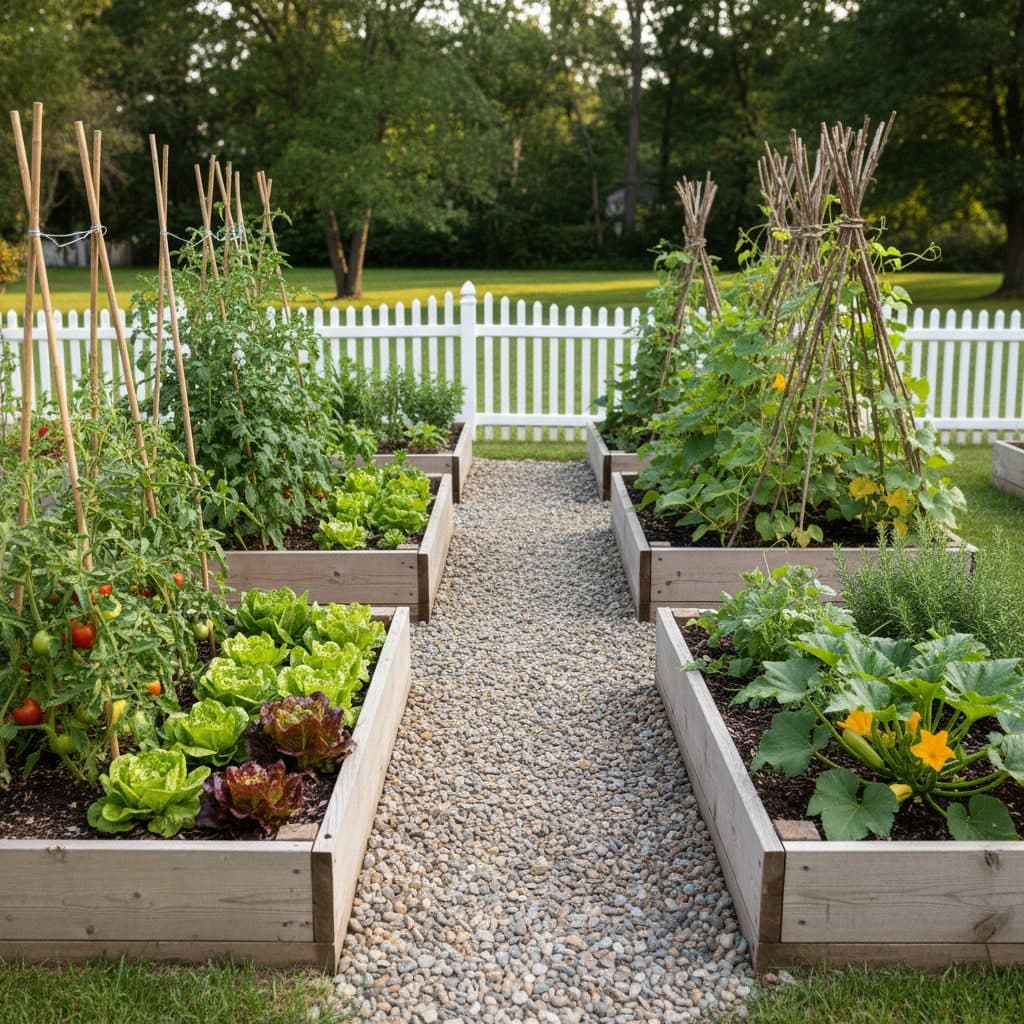
Key takeaways
- Implement a three-bed rotation for consistent soil health and pest management.
- Group plants by family and nutrient needs, such as heavy feeders and nitrogen fixers, to simplify rotation planning.
- Utilize succession planting to harvest multiple crops from the same bed annually.
- Amend soil with 1-2 inches of compost and appropriate cover crops to maintain fertility in small spaces.
- Consult USDA zone 6 planting calendars for optimal timing of planting and harvesting, working with a frost-free season of roughly 150-180 days.
Quick answer: A three-bed crop rotation system, combined with succession planting and soil amendments, keeps a small backyard or raised-bed garden productive and eases pest and disease pressure. This method rotates plant families based on nutrient needs across a single zone 6 season.
In the fertile valleys of Pennsylvania, where USDA zone 6 prevails, many small-scale growers aim to maximize their garden’s output. A typical backyard might feature two or three raised beds, each measuring 4 ft by 8 ft, offering around 32 square feet of growing space per bed. This modest footprint can produce a surprising amount of food for a family, but it requires careful planning to maintain soil health and prevent pest and disease buildup over time.
This article outlines a straightforward three-bed crop rotation system designed for small backyard or raised-bed gardens, particularly effective in regions like the Midwest or Northeast, which often fall within USDA zones 5 to 7. By rotating plant families through different beds each year, you can cut down on common gardening problems, improve soil fertility, and increase your overall harvest. We will also explore the benefits of succession planting and the strategic use of cover crops to keep your small garden productive year after year.
Understanding the three-bed rotation principle
A three-bed rotation is a fundamental practice in sustainable gardening, particularly beneficial for small plots or raised beds that might only offer 30-100 square feet of growing area. The core idea involves dividing your garden into three distinct sections, or ‘beds,’ and rotating different plant groups through these beds over a three-year cycle. This strategy helps to break pest and disease cycles, which can otherwise build up in the soil if the same crop is grown in the same spot year after year.
For example, if you have three raised beds, each 4 ft by 8 ft, you’d designate one bed for heavy feeders, another for light feeders, and the third for nitrogen-fixing legumes. This simple system ensures that no single plant family depletes specific nutrients from one bed for too long, or allows soil-borne pathogens specific to that family to establish a permanent foothold. Over three years, each bed hosts each type of plant group once, allowing for a natural replenishment of soil nutrients and disruption of pest life cycles. In USDA zone 6, this rotation fits a frost-free season of roughly 150-180 days, making it highly effective.
Why a three-bed system works
The three-bed system is effective because it mimics natural ecological processes, preventing the monoculture issues often seen in larger agricultural operations. It’s a manageable scale for most home gardeners, even those with just two 4 ft by 8 ft beds, which total 64 square feet of growing space. This approach helps maintain a balanced soil ecosystem, which supports long-term garden productivity.
- Pest and disease reduction: Rotating crops lowers soil-borne disease incidence, as pathogens specific to certain crops can’t persist in the absence of their host plant.
- Nutrient management: Different plants have varying nutrient demands; rotation helps distribute these demands across beds, preventing localized nutrient depletion.
- Improved soil structure: Diverse root systems from different plant families contribute to better soil aeration and water infiltration.
- Weed suppression: Rotating crops with different growth habits can naturally suppress certain weed species that thrive under specific crop conditions.
- Increased yields: Healthy soil and reduced pest pressure lift overall garden productivity over several seasons.
Grouping plants for effective rotation
For a successful three-bed rotation, understanding how to group your plants is key. We categorize them based on their nutrient demands and family characteristics. This helps ensure that a bed isn’t repeatedly depleted of the same nutrients and that pest cycles specific to a plant family are broken. Consider a 4 ft by 12 ft bed, which offers 48 square feet of space; grouping plants wisely can maximize every square inch. The three primary groups are heavy feeders, light feeders, and nitrogen fixers.
Heavy feeders are plants that require a significant amount of nitrogen, phosphorus, and potassium from the soil to produce large fruits or substantial foliage. Examples include tomatoes, corn, squash, and cabbage. These crops can deplete soil nutrients rapidly, often requiring 1-2 inches of compost and additional organic fertilizers during their 90-120 day growing cycle. Light feeders, such as carrots, radishes, and most herbs, have lower nutrient demands and can thrive in soil that has been moderately depleted by heavy feeders. They often mature in 30-60 days. Finally, nitrogen fixers, primarily legumes like beans and peas, have a unique ability to convert atmospheric nitrogen into a usable form in the soil through symbiotic bacteria in their root nodules, potentially adding 50-150 pounds of nitrogen per acre [2].
Designing your rotation beds
Once you’ve grouped your plants, assign them to your three beds for the first year. For instance, in year one, Bed 1 could host heavy feeders, Bed 2 light feeders, and Bed 3 nitrogen fixers. In year two, Bed 1 would move to light feeders, Bed 2 to nitrogen fixers, and Bed 3 to heavy feeders. By year three, each bed would have hosted each group once, completing the cycle. This systematic approach is especially beneficial in USDA zone 6, where a long growing season allows for robust plant growth and nutrient cycling.
- Heavy feeders: Tomatoes, corn, squash, broccoli, kale, peppers, potatoes. These often need a soil pH between 6.0 and 6.8.
- Light feeders: Carrots, radishes, lettuce, spinach, most herbs. These thrive in less nutrient-dense soil. Onions sit apart from this group: their tops are small but their shallow roots need steady nitrogen right through bulbing.
- Nitrogen fixers: Beans, peas, clover, vetch. These enrich the soil, preparing it for heavy feeders in subsequent years.
- Root crops: Beets, turnips, parsnips. Treat these as light feeders when you assign beds; their deep roots also help open the soil.
- Brassicas: Cabbage, cauliflower, Brussels sprouts. These are heavy feeders but also share specific pest challenges, making rotation important.
Maximizing yields with succession planting
Succession planting is a powerful technique that works hand-in-hand with crop rotation to maximize the productivity of small garden spaces, such as a 4 ft by 8 ft raised bed. Instead of planting a crop once and waiting for its full harvest before planting something new, succession planting involves staggering plantings of the same crop or following a harvested crop with a different one. This allows you to get two, three, or even four harvests from a single bed within a USDA zone 6 growing season, which runs roughly 150-180 frost-free days. For instance, you could plant radishes, which mature in 25-30 days, harvest them, and then immediately plant a second round, or switch to a different fast-growing crop like spinach.
The key to successful succession planting is timing. In a zone 6 climate, you can start cool-season crops like lettuce and spinach as early as March, and continue planting every two to three weeks until temperatures consistently exceed 80°F. Once summer crops like beans (which mature in 50-60 days) or cucumbers are established, you can plan for a fall succession of cool-season crops as temperatures drop. This continuous cycle lifts your annual yields. Consider using a tool like a lightweight garden hand trowel for efficient planting and transplanting in these tight schedules.
Planning your succession calendar
To implement succession planting effectively, create a planting calendar tailored to your specific USDA zone. For zone 6, this means understanding your average last and first frost dates, typically around mid-April and mid-October, respectively. Fast-growing crops are ideal for this method. For example, after harvesting an early crop of peas (which mature in 60-70 days), you could follow with bush beans, then a fall crop of kale. This strategy ensures that your garden beds are rarely left fallow for extended periods, making the most of every square foot.
- Fast-maturing vegetables: Radishes (25-30 days), spinach (30-45 days), lettuce (30-60 days), bush beans (50-60 days).
- Staggered plantings: Plant small batches of the same crop every 2-3 weeks to ensure a continuous harvest rather than a single large one.
- Cool-season follow-ups: After summer crops, plant hardy greens like kale or collards, which can tolerate light frosts down to 25°F.
- Utilize vertical space: Grow vining crops like cucumbers or pole beans on trellises to free up ground space for other successions.
- Intercropping: Plant quick-growing crops between slower-growing ones, such as lettuce between young tomato plants, harvesting the lettuce before the tomatoes need the full space.
Maintaining soil fertility with cover crops and amendments
Healthy soil is the foundation of a productive garden, especially in a small, intensively cultivated space like a 4 ft by 8 ft raised bed. In a three-bed rotation system, maintaining soil fertility matters most. This involves regularly adding organic matter and strategically using cover crops. Compost is your best friend here; adding 1-2 inches of high-quality compost to your beds annually can increase soil organic matter by 0.5-1% per year, improving soil structure, water retention, and nutrient availability [1]. For a 4×8 ft bed, this means about 2.7 to 5.3 cubic feet of compost per year.
Cover crops help prevent soil erosion, suppress weeds, and add organic matter and nutrients when tilled under or ‘chopped and dropped.’ For USDA zone 6, cool-season cover crops like crimson clover or hairy vetch can be planted in late summer or early fall after your main harvest, growing through winter and providing significant benefits. Leguminous cover crops, such as crimson clover, can fix 50-150 pounds of nitrogen per acre [2], which is invaluable for the heavy feeders that will follow in the rotation. For more options, explore best living-mulch and cover-crop legumes by USDA zone.
Strategic soil amendments
Beyond compost and cover crops, consider other amendments based on soil tests, which are recommended every 2-3 years. For instance, if your soil pH is too low (below 6.0), you might need to add agricultural lime. If it’s too high (above 7.0), elemental sulfur can help. These adjustments ensure your plants can access the nutrients they need, leading to healthier growth and higher yields. In a small garden, precise application of these amendments is easy to manage, so every plant benefits.
- Compost: Apply 1-2 inches annually to all beds to build organic matter and improve soil structure.
- Leguminous cover crops: Plant crimson clover or hairy vetch in fall for nitrogen fixation, benefiting subsequent heavy feeders. Kill both before they set seed — hairy vetch has hard seed that survives in the soil and volunteers through later crops for years.
- Cereal cover crops: Oats or winter rye can add significant biomass and suppress weeds, especially in beds designated for light feeders.
- Mulching: Use straw, wood chips, or shredded leaves as a 2-4 inch layer to conserve soil moisture and suppress weeds.
- Mineral amendments: Based on soil tests, add rock phosphate or greensand to replenish specific minerals over a 2-3 year cycle.
Common plant families and their nutrient needs for rotation
Plant family | Nutrient demand | Common examples |
|---|---|---|
Solanaceae (Nightshades) | Heavy feeder | Tomatoes, peppers, potatoes, eggplant |
Cucurbitaceae (Gourds) | Heavy feeder | Squash, pumpkins, cucumbers, melons |
Brassicaceae (Mustards) | Heavy feeder | Cabbage, broccoli, kale, collards |
Fabaceae (Legumes) | Nitrogen fixer | Beans, peas, clover, vetch |
Apiaceae (Carrot family) | Light feeder | Carrots, parsley, celery, dill |
Asteraceae (Composites) | Light feeder | Lettuce, endive, sunflowers |
Alliaceae (Onion family) | Light to moderate feeder | Onions, garlic, leeks, chives |
Compost power: Regularly adding 1-2 inches of compost to your garden beds can increase soil organic matter by 0.5-1% annually, significantly boosting fertility [1].
Water efficiency: Organic matter improves how much water a soil holds, so building it up stretches the time between waterings.
Frequently asked questions
How often should I rotate crops in a 3-bed system?
You should rotate your plant groups annually, moving each group to a different bed each year. This completes a full rotation cycle over three years, interrupting pest and disease cycles.
What if I only have two raised beds?
While a three-bed system is ideal, you can adapt with two beds by rotating heavy feeders and nitrogen fixers in one bed, and light feeders in the other, then switching. Ensure you add 2 inches of compost annually to both beds.
Can this rotation system be used for container gardening?
Yes, a modified rotation can work for containers. Dedicate specific containers to plant groups and rotate them annually, or simply replace the soil in each container with fresh, nutrient-rich soil and 1 inch of compost every year to prevent nutrient depletion.
What are good beginner crops for this rotation system?
For beginners in USDA zone 6, consider bush beans (nitrogen fixer, 50-60 days), lettuce (light feeder, 30-60 days), and cherry tomatoes (heavy feeder, 60-70 days). These are relatively easy to grow and fit well into the rotation categories.
How much compost do I need for a 4 ft by 8 ft raised bed?
For a 4 ft by 8 ft raised bed, applying 1-2 inches of compost annually requires approximately 2.7 to 5.3 cubic feet of compost. This consistent application helps maintain soil organic matter levels by 0.5-1% each year.
References
- USDA Natural Resources Conservation Service (2024). USDA Natural Resources Conservation Service.
- ATTRA / NCAT Sustainable Agriculture (2023). ATTRA / NCAT Sustainable Agriculture.
- USDA National Agroforestry Center (2023). USDA National Agroforestry Center.