Key takeaways
- Select specific heat-tolerant varieties like Heatmaster, Solar Fire, and Phoenix for successful growing in USDA zones 7-10.
- Implement soil health practices, including 3-4 inches of compost and mulching, to retain moisture and regulate soil temperature.
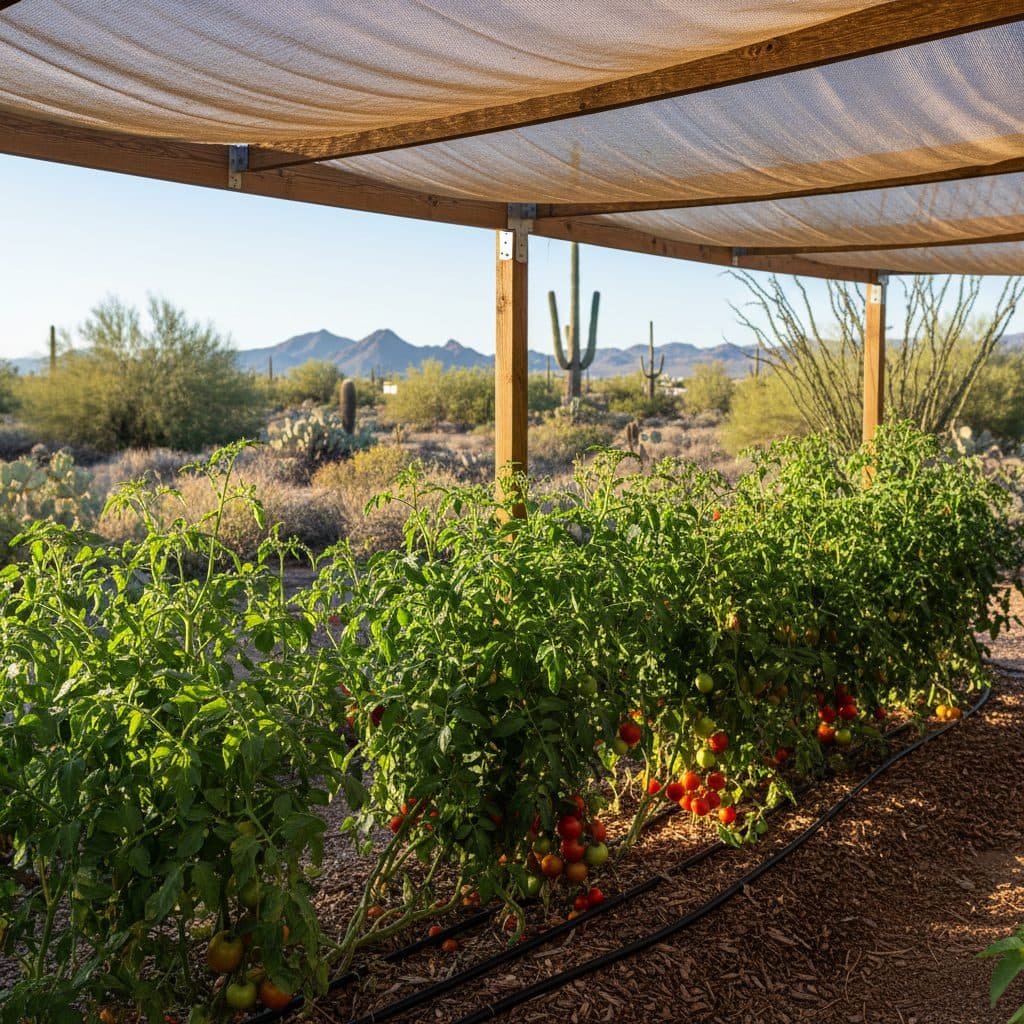
- Provide afternoon shade using 30-50% shade cloth when temperatures consistently exceed 90°F to prevent flower drop.
- Practice efficient watering, aiming for 1-2 inches of water per week, delivered deeply to encourage robust root systems.
- Monitor for common pests and diseases, employing integrated pest management (IPM) to protect plants in hot, humid conditions.
- Consider container gardening or raised beds for better soil control and drainage in challenging growing environments.
Quick answer: To grow tomatoes successfully in hot US climates (USDA zones 7-10), select heat-tolerant varieties like Heatmaster, Solar Fire, and Phoenix. Implement practices such as mulching, afternoon shade, and efficient watering to ensure a productive harvest.
Growing tomatoes in the scorching heat of the US South and Southwest presents a unique set of challenges. Regions like Arizona, Texas, and Florida, often experiencing summer temperatures well above 90°F for extended periods, can stress traditional tomato varieties, leading to poor fruit set and reduced yields. For many growers in USDA zones 7 through 10, the dream of a bountiful tomato harvest often clashes with the reality of intense summer sun and limited rainfall.
However, with careful variety selection and strategic cultivation practices, it is entirely possible to achieve a productive tomato patch even in these demanding conditions. This article will focus on specific heat-tolerant varieties—Heatmaster, Solar Fire, and Phoenix—and outline the essential growing techniques that allow them to flourish where others fail. We will cover everything from soil preparation to watering strategies, so you end up with delicious, homegrown tomatoes.
Understanding heat stress in Southern gardens
Tomato plants, scientifically known as Solanum lycopersicum, are sensitive to temperature extremes. When air temperatures consistently rise above 90°F during the day and stay above 75°F at night, many common tomato varieties experience significant stress. This stress often manifests as blossom drop, where flowers fail to pollinate and simply fall off the plant, leading to little to no fruit production. In regions like central Texas, where summer days can reach 100°F or more for weeks on end, this is a common sight for unprepared gardeners.
The impact of high temperatures on tomato plants
High temperatures affect tomatoes in several ways. Pollen viability decreases sharply above 90°F, meaning fewer flowers are successfully fertilized. The plant’s overall metabolism can also slow down, redirecting energy away from fruit development. Intense direct sunlight can also scald developing fruits, causing white or yellow patches that render them inedible. Soil temperatures also play a critical role; root systems prefer temperatures between 65°F and 85°F, and prolonged exposure to soil above 90°F can inhibit water and nutrient uptake. For growers in USDA zone 9, managing these conditions is paramount, often requiring proactive measures like afternoon shade and consistent soil moisture.
- Pollen sterility: Temperatures above 90°F reduce pollen viability by up to 70%.
- Blossom drop: Flowers fall off before setting fruit, often due to poor pollination.
- Fruit scalding: Direct sun exposure can damage fruit, causing a 5-10% yield loss.
- Reduced photosynthesis: Plant growth slows significantly when temperatures exceed optimal ranges.
- Root stress: Soil temperatures over 85°F can impair nutrient absorption, impacting plant vigor.
Selecting resilient tomato varieties for the South and Southwest
The key to successful tomato growing in heat-prone regions lies in choosing varieties specifically bred or identified for their heat tolerance. These varieties possess genetic traits that allow them to set fruit at higher temperatures, maintain pollen viability, and resist common heat-related stresses. For growers in USDA zones 8 and 9, selecting the right variety can mean the difference between a sparse harvest and a plentiful one. Three reliable options stand out: Heatmaster, Solar Fire, and Phoenix.
Top heat-tolerant tomato varieties
Heatmaster is a hybrid variety known for its excellent fruit set in hot conditions. It produces medium-to-large, firm, red globe-shaped fruits, typically weighing 7-8 ounces. This variety is indeterminate, meaning it continues to grow and produce fruit throughout the season until frost, offering a continuous harvest from early summer through fall in areas like central Florida. Heatmaster also resists common diseases such as Fusarium wilt (races 1 and 2) and Verticillium wilt, which makes it a solid choice for challenging environments. Its maturity period is around 75 days from transplanting.
Solar Fire is another outstanding choice for hot climates, particularly in the Southeast. This determinate variety produces large, firm, red fruits, often weighing 8-12 ounces, with good flavor. Solar Fire is highly productive even when temperatures consistently exceed 90°F. It matures in approximately 72 days and offers strong disease resistance, including to Fusarium wilt (races 1, 2, and 3), Verticillium wilt, and gray leaf spot. Its determinate growth habit means it produces a concentrated flush of fruit, which can be advantageous for canning or processing in USDA zone 9b.
Phoenix is a determinate hybrid that performs exceptionally well in the heat, producing medium-sized, round, red fruits that average 6-7 ounces. It matures quickly, in about 70 days, making it suitable for regions with shorter growing seasons within a hot climate, such as high-desert areas of Arizona. Phoenix offers good disease resistance to Fusarium wilt (races 1 and 2) and Verticillium wilt. Its compact growth habit also makes it a good candidate for container gardening, especially for urban growers in USDA zone 10.
- Heatmaster: Indeterminate, 7-8 oz fruit, 75 days to maturity, excellent disease resistance.
- Solar Fire: Determinate, 8-12 oz fruit, 72 days to maturity, broad disease resistance.
- Phoenix: Determinate, 6-7 oz fruit, 70 days to maturity, good disease resistance.
- Florida 91: Another strong heat-tolerant option, known for large, firm fruit and disease resistance.
- Arkansas Traveler: An heirloom variety with good heat tolerance and crack resistance, producing pinkish-red fruit.
Cultivating healthy tomatoes in challenging conditions
Beyond selecting the right varieties, implementing specific cultivation strategies is essential for success in hot, dry, or poor-soil environments. For growers in the arid Southwest, water management is critically important, while those in the humid South must also contend with disease pressure. A holistic approach, focusing on soil health, efficient watering, and protective measures, can significantly improve yields in USDA zones 7-10.
Key practices for heat and drought resilience
Soil preparation is the foundation of a resilient garden. Tomatoes thrive in well-drained, fertile soil with a pH between 6.0 and 6.8. Incorporating 3-4 inches of high-quality compost or well-rotted manure into your garden beds before planting can dramatically improve soil structure, water retention, and nutrient availability. This organic matter acts like a sponge, holding moisture for longer periods and reducing the need for frequent watering. For new beds, consider a soil test to understand existing nutrient levels and adjust accordingly, as recommended by the USDA Natural Resources Conservation Service [1].
Mulching is a non-negotiable practice for heat-stressed gardens. Applying a 2-4 inch layer of organic mulch—such as straw, shredded leaves, or pine bark—around your tomato plants offers multiple benefits. It suppresses weeds, which compete for precious water and nutrients, and more importantly, it insulates the soil. This insulation keeps soil temperatures cooler during hot days, often reducing surface temperatures by 10-15°F, and helps maintain a consistent soil moisture level. Mulching can reduce water evaporation from the soil surface by up to 35%, a significant saving in drought-prone areas. Drought tolerant plants, including these tomato varieties, benefit greatly from this practice.
Efficient watering is essential. Instead of frequent, shallow watering, aim for deep, infrequent irrigation that encourages roots to grow deeper into the soil, making them more resilient to dry spells. Tomatoes typically require 1-2 inches of water per week, which translates to about 1 gallon per plant every 2-3 days in hot weather, depending on soil type and plant size. Drip irrigation or soaker hoses are highly efficient, delivering water directly to the root zone and minimizing evaporation. Water early in the morning to allow foliage to dry before nightfall, reducing the risk of fungal diseases. A soil moisture meter can help you determine exactly when your plants need water, preventing both over- and under-watering.
Providing shade during the hottest parts of the day can make a substantial difference. When temperatures consistently exceed 90°F, temporarily covering plants with 30-50% shade cloth from noon to 4 PM can prevent blossom drop and sunscald. This is particularly effective for determinate varieties like Solar Fire and Phoenix, which produce a concentrated fruit set. Setting up a simple shade structure with PVC pipes or stakes is a worthwhile investment for summer-long production in USDA zone 10.
- Compost application: Incorporate 3-4 inches of compost to improve soil structure.
- Mulch layer: Apply 2-4 inches of organic mulch to conserve moisture and cool soil.
- Deep watering: Provide 1-2 inches of water per week, encouraging deep root growth.
- Morning irrigation: Water early to allow leaves to dry, reducing disease risk.
- Afternoon shade: Use 30-50% shade cloth during peak heat (12 PM – 4 PM).
Enhancing soil and water management for long-term success
Sustainable gardening in challenging climates extends beyond annual practices; it involves building long-term resilience into your garden ecosystem. For growers aiming for consistent yields in USDA zones 7-10, focusing on soil biology and water conservation over several seasons can yield significant benefits. The goal is to build living soil that supports plant growth even under stress, as advocated by organizations like SARE — Sustainable Agriculture Research & Education [3].
Building healthy soil for drought and heat resilience
Increasing soil organic matter is perhaps the single most impactful long-term strategy. Each 1% increase in soil organic matter can help the soil hold an additional 16,500 gallons of water per acre, a critical advantage in regions prone to drought. This can be achieved through continuous composting, incorporating cover crops, and minimizing soil disturbance. Cover crops, planted during off-seasons, protect the soil from erosion, add biomass, and improve soil structure. For instance, a winter cover crop of crimson clover or hairy vetch can add nitrogen and organic matter, benefiting subsequent tomato plantings in the spring.
Rainwater harvesting is another practical approach, especially in areas with seasonal rainfall. Collecting rainwater from rooftops into barrels or cisterns provides a chemical-free water source for irrigation, reducing reliance on municipal water supplies. A typical 1,000 square foot roof can collect about 600 gallons of water from just 1 inch of rain, according to the EPA [2]. This collected water can be invaluable during dry spells, particularly for small-scale gardens or container plants. Implementing efficient irrigation systems, like drip lines, maximizes the use of every drop of water collected.
No-till gardening practices help preserve soil structure and the beneficial microbial life within it. By avoiding deep tilling, gardeners prevent the disruption of fungal networks and earthworm tunnels that naturally aerate the soil and improve water infiltration. Over time, no-till systems lead to healthier, more resilient soil that is better equipped to handle both heavy rainfall and prolonged dry periods, a key principle of sustainable agriculture [4]. This method also reduces labor and can lead to a 10-15% reduction in weed pressure over several seasons.
- Organic matter: Increase soil organic matter by 1% to hold 16,500 gallons more water per acre.
- Cover cropping: Plant winter cover crops like crimson clover to add nitrogen and organic matter.
- Rainwater collection: Harvest rainwater from rooftops; 1 inch of rain yields 600 gallons per 1,000 sq ft.
- No-till practices: Avoid deep tilling to preserve soil structure and microbial life.
- Compost tea: Apply liquid compost extracts to boost soil microbial activity and plant health.
Safeguarding your tomato harvest in hot, humid environments
Even with heat-tolerant varieties and optimal soil conditions, tomato plants in the South and Southwest can face significant challenges from pests and diseases, which often thrive in warm, humid conditions. Integrated Pest Management (IPM) is a strategic approach that combines biological, cultural, physical, and chemical tools to manage pests with minimal risk to people and the environment. This is especially important for maintaining healthy tomato plants throughout a long growing season in USDA zone 8.
Common pests and diseases and their management
Spider mites are a common problem in hot, dry conditions. These tiny pests feed on plant sap, causing stippling on leaves and eventually yellowing and defoliation. Inspect the undersides of leaves regularly for webbing or tiny moving dots. A strong spray of water can dislodge them, and for severe infestations, insecticidal soaps or neem oil can be effective. Maintaining good air circulation around plants can also help deter them.
Bacterial wilt is a devastating soil-borne disease prevalent in warm, humid climates. It causes plants to wilt suddenly, even when soil moisture is adequate, and often leads to plant death within a few days. There is no cure, so prevention is key. Choose resistant varieties where available, practice crop rotation (avoid planting tomatoes or related crops in the same spot for at least 3-4 years), and ensure good drainage. Solar Fire, for example, offers some resistance to common wilts.
Early blight and late blight are fungal diseases that can rapidly spread in humid conditions. Early blight causes dark spots with concentric rings on lower leaves, while late blight leads to large, irregular, water-soaked lesions. Good air circulation, proper plant spacing (at least 2-3 feet between plants), and watering at the base of the plant (avoiding overhead irrigation) can help prevent these. Remove infected leaves promptly and consider organic fungicides like copper or sulfur sprays if necessary. In areas like coastal Georgia, where humidity is consistently high, these diseases can be a constant threat.
Tomato hornworms are large, green caterpillars that can defoliate a plant in a matter of days. They are well-camouflaged but can be identified by their distinctive horn-like projection on their rear. Hand-picking them off plants is an effective control method. Look for their dark droppings on leaves, which indicate their presence. Bacillus thuringiensis (Bt) is an organic biological insecticide that specifically targets caterpillars and is safe for beneficial insects.
- Spider mites: Control with strong water sprays, insecticidal soap, or neem oil in hot, dry conditions.
- Bacterial wilt: Prevent with resistant varieties, crop rotation (3-4 years), and good drainage.
- Early/late blight: Manage with good air circulation, proper spacing, and targeted watering.
- Tomato hornworms: Hand-pick or use Bacillus thuringiensis (Bt) for effective control.
- Nematodes: Improve soil organic matter and consider resistant varieties to combat root-knot nematodes.
Comparison of Heat-Tolerant Tomato Varieties
Variety | Growth Habit | Fruit Size | Days to Maturity | Heat Tolerance | Disease Resistance |
|---|---|---|---|---|---|
Heatmaster | Indeterminate | 7-8 oz | 75 days | Excellent fruit set above 90°F | Fusarium Wilt (races 1, 2), Verticillium Wilt |
Solar Fire | Determinate | 8-12 oz | 72 days | High productivity in extreme heat | Fusarium Wilt (races 1, 2, 3), Verticillium Wilt, Gray Leaf Spot |
Phoenix | Determinate | 6-7 oz | 70 days | Reliable fruit set in hot climates | Fusarium Wilt (races 1, 2), Verticillium Wilt |
Water Savings: Applying 2-4 inches of organic mulch can reduce soil water evaporation by up to 35%, conserving hundreds of gallons over a growing season.
Soil Moisture: Every 1% increase in soil organic matter can help soil hold an additional 16,500 gallons of water per acre, crucial for drought resilience.
Shade Protection: Using 30-50% shade cloth during peak afternoon heat (12 PM – 4 PM) can prevent blossom drop and sunscald when temperatures exceed 90°F.
Frequently asked questions
What temperature is too hot for tomato plants?
Tomato plants typically struggle when daytime temperatures consistently exceed 90°F and nighttime temperatures remain above 75°F. These conditions can lead to reduced pollen viability and blossom drop, significantly impacting fruit set.
How much water do heat-tolerant tomatoes need?
Even heat-tolerant varieties require consistent moisture. Aim for 1-2 inches of water per week, delivered deeply to the root zone. In extreme heat or sandy soils, this might mean watering 2-3 times per week, providing about 1 gallon per plant per watering session.
Can I grow heat-tolerant tomatoes in containers?
Yes, determinate heat-tolerant varieties like Phoenix are well-suited for container gardening. Use a large container, at least 15-20 gallons in size, with good drainage, and ensure consistent watering as containers dry out more quickly than in-ground beds, sometimes requiring daily watering in 90°F+ heat.
When should I provide shade for my tomato plants?
Provide shade when temperatures are forecast to consistently exceed 90°F. Use 30-50% shade cloth during the hottest part of the day, typically from noon to 4 PM, to protect plants from sunscald and prevent blossom drop.
What kind of soil is best for heat-tolerant tomatoes?
Heat-tolerant tomatoes thrive in well-drained, fertile soil rich in organic matter. A soil pH between 6.0 and 6.8 is ideal. Incorporating 3-4 inches of compost before planting significantly improves water retention and nutrient availability, critical for plant resilience in hot climates.
How often should I fertilize heat-tolerant tomatoes?
After enriching the soil with compost, a balanced organic fertilizer can be applied at planting. Follow-up with a low-nitrogen, high-potassium fertilizer every 3-4 weeks once fruits begin to set. Over-fertilizing with nitrogen can lead to excessive foliage growth at the expense of fruit production.
References
- USDA Natural Resources Conservation Service (2024). USDA Natural Resources Conservation Service.
- EPA — Soak Up the Rain (2024). EPA — Soak Up the Rain.
- SARE — Sustainable Agriculture Research & Education (2023). SARE — Sustainable Agriculture Research & Education.
- ATTRA / NCAT Sustainable Agriculture (2023). ATTRA / NCAT Sustainable Agriculture.
- USDA National Agroforestry Center (2023). USDA National Agroforestry Center.