Key takeaways
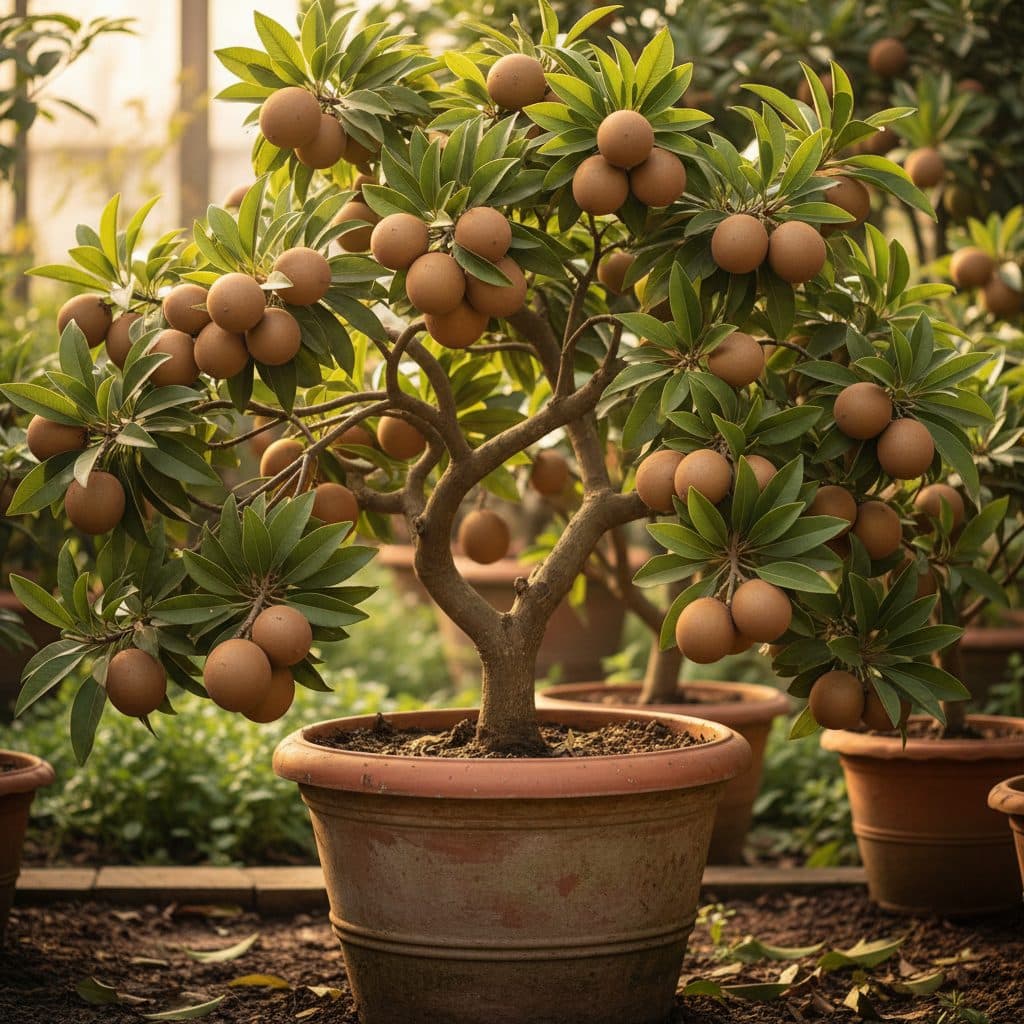
- Chiku (Manilkara zapota), also known as sapota, is an evergreen tropical fruit tree well-adapted to the Indian climate.
- Always choose a grafted or air-layered sapling (such as Kalipatti) which fruits in 3 to 5 years, rather than seed-grown plants.
- For terrace gardens, use a heavy-duty container holding at least 75 to 100 litres with excellent bottom drainage holes.
- Chiku trees require full sunlight (at least 6 to 8 hours daily) and well-draining sandy loam or red soil with a pH of 6.0 to 7.5.
- Fertilize twice annually: pre-monsoon in June and post-monsoon in October, with aged manure, neem cake, and bone meal.
Quick answer: To grow a chiku tree (sapota) at home, plant a grafted sapling of a proven variety such as Kalipatti and keep it small by container restriction and annual size-control pruning — no sapota variety is genuinely dwarf. Use a large 75 to 100 litre container or sunny garden bed with a loose soil mix of loam, compost, cocopeat, and neem cake. Provide 6 to 8 hours of direct sun, water when topsoil dries, feed twice yearly with organic manure, and harvest when the brown skin scurf rubs off easily.
Chiku, botanically classified as Manilkara zapota and widely referred to across India as sapota or sapodilla, is one of the most beloved fruit trees in tropical horticulture. Prized for its sweet, malty caramel flavor and gritty, pear-like texture, fresh home-grown chiku is a nutritious treat rich in vitamins, minerals, and natural fructose. Learning how to grow chiku tree allows home gardeners to enjoy home-grown sapota, without synthetic pesticide sprays, directly from their courtyards and terrace gardens.
Originating in Central America, the chiku tree was introduced to India in the late nineteenth century and has since become widely cultivated across Maharashtra, Gujarat, Karnataka, Andhra Pradesh, and Tamil Nadu. The tree is exceptionally hardy, with glossy evergreen foliage, excellent wind tolerance, and resistance to many common fungal diseases.
While commercial chiku trees grow into large trees reaching 10 to 15 meters in height, grafted cultivars can be kept manageable in containers with annual pruning. By providing suitable soil drainage, consistent sunlight, and timely organic feeding, you can harvest sweet sapota fruits from your home garden year after year.
Best chiku varieties: Kalipatti, Cricket Ball, and PKM-1
Selecting the appropriate cultivar is the foundation of successful sapota cultivation:
+-------------------------------------------------------------+
|             LEADING INDIAN CHIKU (SAPOTA) VARIETIES         |
|                                                             |
|  VARIETY         FRUIT SHAPE        CHARACTERISTICS         |
|  ---------------------------------------------------------  |
|  Kalipatti       Oval / Egg-shaped  Dark leaves, thin skin, |
|                                     intensely sweet pulp    |
|  Cricket Ball    Large Round        Coarse granular pulp,   |
|                                     heavy single fruits     |
|  PKM-1           Oblong to Oval     High yielding, rich pulp|
|  DHS-1 & DHS-2   Round / Oval       Vigorous hybrid crosses |
+-------------------------------------------------------------+- Kalipatti: The undisputed king of Indian chikus, widely cultivated across coastal Maharashtra and Gujarat (notably the Dahanu-Gholvad GI-tagged belt). It features dark green foliage, thin skin, few seeds, and exceptionally sweet, melting caramel-brown pulp. While naturally a large spreading tree, it can be kept manageable in home containers through regular annual pruning.
- Cricket Ball (Calcutta Round): Characterized by large, spherical fruits resembling a cricket ball. The flesh is slightly granular, very sweet, and popular across West Bengal, Karnataka, and Tamil Nadu.
- PKM-1: An early-bearing, high-yielding variety developed by the Tamil Nadu Agricultural University (TNAU). It produces medium-sized oval fruits with thin skin and rich honey-like sweetness.
Grafted saplings vs growing chiku from seed
When starting a chiku tree at home, propagation method determines whether you harvest fruit within three to five years or wait a decade.
+-------------------------------------------------------------+
|               GRAFTED SAPLING VS SEED-GROWN CHIKU           |
|                                                             |
|  FEATURE             GRAFTED (APPROACH/INARCH) SEED-GROWN   |
|  ---------------------------------------------------------  |
|  Time to First Fruit 3 to 5 Years              8 to 10 Years|
|  Genetic Purity      Exact clone of parent     Highly variable|
|  Tree Stature        Pruned for Containers     Massive / Wild|
|  Rootstock Hardiness Rayan (M. hexandra)       Own taproot   |
+-------------------------------------------------------------+
Why seed propagation is discouraged
While chiku seeds germinate easily, seedling trees take eight to ten years to produce their first fruit. Furthermore, because sapota is cross-pollinated, seed-grown trees do not breed true to the parent, often yielding small, astringent, latex-heavy fruits.
Sourcing grafted plants
Purchase approach-grafted (inarch-grafted) saplings from a registered government horticulture nursery or certified private garden center. In India, chiku is standardly grafted onto rayan (also known as khirni, Manilkara hexandra (syn. Mimusops hexandra)) rootstock. It is hardy, drought-tolerant and slow to establish, but it is not dwarfing — pot size and pruning are what keep the tree small.
Soil preparation and container planting on terraces
Chiku trees are sensitive to waterlogging and stagnant water around the root flare.
+-------------------------------------------------------------+
|                 CHIKU POTTING MIX RECIPE                    |
|                                                             |
|  - 40% Sandy Loam or Well-Draining Red Soil                 |
|  - 30% Well-Rotted Cow Dung Manure (Gobar) or Vermicompost  |
|  - 15% Washed Cocopeat                                      |
|  - 15% Coarse River Sand or Gravel (Ensures fast drainage)  |
|  - Add: 200g Bone Meal + 100g Neem Cake Powder (Khali)      |
+-------------------------------------------------------------+
Container sizing
Choose a sturdy 75 to 100 litre HDPE grow bag, a cut plastic half-drum, or a large ceramic planter measuring at least 50 to 60 cm in diameter. Ensure the base has at least four 1 cm drainage holes. Have the slab's load capacity checked by a structural engineer before siting containers this size, keep them near load-bearing walls or over beams rather than mid-span, stand them on tiles or feet to protect the waterproofing, and tie or weight the tree against monsoon gusts. Place broken terracotta shards over drainage holes before adding soil to prevent potting mix from washing out of the hole.
Planting step-by-step
- Position the container in full sunlight on your terrace, elevating it on bricks to facilitate airflow and floor drainage.
- Carefully slice the nursery polybag, keeping the root ball completely intact.
- Set the sapling in the center of the pot, ensuring the graft union sits at least 5 to 8 cm above the finished soil level.
- Backfill with the prepared potting mix, firming gently around the root ball to remove air pockets.
- Water thoroughly until excess water drains freely from the base.
Watering, sunlight, and seasonal fertilization
Chiku thrives in hot, sunny climates but requires structured care to maintain continuous fruit development.
- Sunlight: Chiku requires full, unfiltered sunlight (at least 6 to 8 hours daily). Avoid shaded balconies, which result in leggy foliage and flower drop. In extreme summer heat (above 42°C), applying bark protection as discussed in preventing sunscald trees fruit shields young branches.
- Watering regime: Water container trees when the top 3 cm of soil feels dry. Chiku is moderately drought-tolerant once established, but dry periods during flowering and fruit setting will cause young pea-sized fruits to drop prematurely. Avoid overwatering; soggy soil causes root rot.
+-------------------------------------------------------------+
|               BI-ANNUAL FEEDING SCHEDULE                    |
|                                                             |
|  PRE-MONSOON (June - July):                                 |
|  - 3 to 5 kg Well-Aged Cow Dung Manure or Vermicompost      |
|  - 250g Neem Cake Powder + 100g Bone Meal                   |
|                                                             |
|  POST-MONSOON (October - November):                         |
|  - 3 to 5 kg Compost + 150g Wood Ash (Potassium source)     |
|  - Monthly foliar/drench of diluted Mustard Cake Tea        |
+-------------------------------------------------------------+
Apply organic fertilizers along the perimeter of the root zone twice a year. Supplementing with mustard cake fertilizer for plants during the flowering flush supports heavy fruit set. Integrating chiku alongside other tropical container fruits detailed in how to grow banana plant at home expands your home fruit harvest.
Pruning, pest defense, and determining harvest readiness
Chiku trees require deliberate structural maintenance when grown in container environments.
Pruning and size control in containers
Because no sapota cultivar is naturally dwarf, container-grown trees require annual size-control pruning. In late winter or immediately after harvest, head back vigorous leading shoots by one-third and prune crossing or congested branches to maintain a compact, open-centred canopy. Always prune away rootstock suckers that emerge from below the graft union; if left unchecked, the vigorous wild rootstock will overtake the grafted scion. Following structured principles from pruning care pomegranates figs persimmons mulberries helps you maintain a balanced, productive canopy structure.
Organic pest management
Chiku has few disease problems, but leaf webber and bud borer are its standard pests in India — inspect shoot tips and flower buds weekly and pick out and destroy webbed leaf clusters by hand. Spray neem oil (5 ml per litre of water with a dash of mild liquid soap) if sap-sucking mealybugs appear.
+-------------------------------------------------------------+
|               DETERMINING CHIKU HARVEST READINESS           |
|                                                             |
|  MATURE (Ready to Harvest):                                 |
|  - Lightly scratch skin: Reveals yellow or orange under-skin|
|  - Brown scurf / powder rubs off easily with finger pressure|
|  - Plucked fruit exudes clear, watery latex (not thick milk)|
|                                                             |
|  IMMATURE (Do Not Harvest):                                 |
|  - Scratching reveals bright green under-skin               |
|  - Scurf adheres tightly to the skin                        |
|  - Plucked stem exudes thick white milky latex              |
+-------------------------------------------------------------+
Sapota fruit takes approximately four to six months from flowering to mature. Harvest mature fruits with a twisting pull, leaving a small piece of stem attached. Wash off any surface dust, dry with a soft cloth, and place the hard fruits inside a cardboard box or wrap them in paper at room temperature. They will ripen into soft, sweet, fragrant chikus within four to seven days.
By planting a grafted sapling, providing ample sunlight, and feeding with organic manure, you can enjoy abundant harvests of homegrown sapota. At agripure, practical Indian fruit growing guides help you cultivate productive orchards on rooftops and in home gardens.