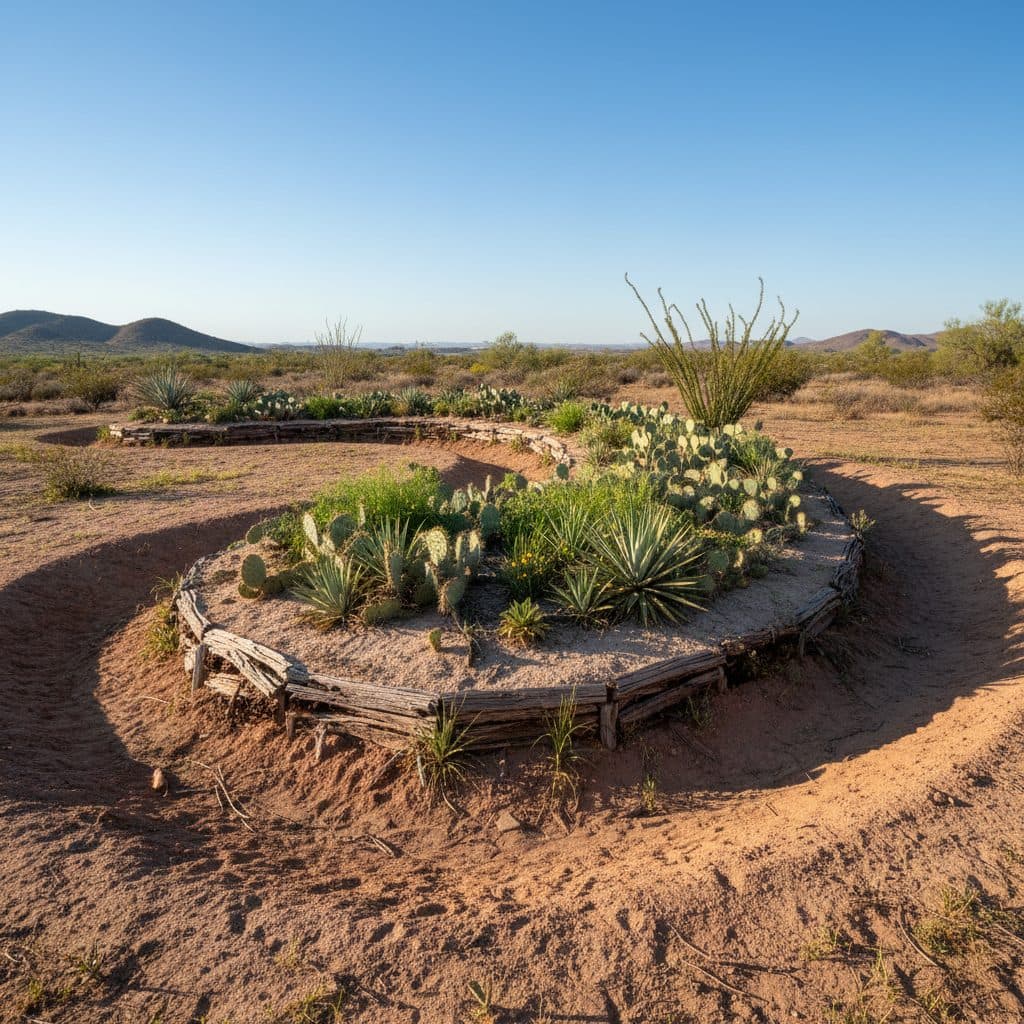
Key takeaways
- Hugelkultur mounds significantly improve water retention and soil health in arid climates like USDA zones 8-10.
- Careful wood selection, prioritizing denser, termite-resistant species, helps prevent pest issues in the Southwest.
- Integrating passive irrigation methods, such as ollas or wicking beds, improves the results of hugelkultur in dry regions.
- Water harvesting techniques, including swales and berms, can direct precious rainfall into hugelkultur systems, reducing irrigation needs by 30% or more.
- Regular monitoring for termites and proper mound construction are essential for long-term success and plant health.
- Hugelkultur can extend the growing season and reduce water consumption by up to 50% compared to traditional flat-bed gardening in desert environments.
Quick answer: To implement hugelkultur in the arid Southwest, select termite-resistant hardwoods, integrate passive irrigation like ollas, and use water harvesting techniques to keep buried wood moist while preventing pest issues.
In the arid Southwest, where annual rainfall often averages less than 15 inches across states like Arizona and New Mexico, every drop of water counts. Growers in USDA zones 8b through 10a face significant challenges in maintaining productive gardens and landscapes. Hugelkultur, a traditional German gardening technique involving burying large pieces of wood, offers a promising approach to conserve moisture, build soil, and support plant life in these dry conditions. However, adapting this method to the desert environment requires specific considerations, especially regarding wood choice and termite management.
This article explores how to successfully implement hugelkultur in regions with low precipitation and high temperatures, focusing on strategies to keep buried wood moist and prevent termite infestations. We will examine the benefits of increased water retention, the role of passive irrigation methods like ollas, and the importance of selecting appropriate wood species to ensure your hugelkultur mound thrives for decades, potentially reducing irrigation needs by 30% to 50% [1].
What is hugelkultur and why it matters in the desert
Hugelkultur, derived from German words meaning ‘hill culture’ or ‘mound culture,’ involves creating raised garden beds by burying woody debris and other organic matter. This practice mimics natural forest ecosystems where fallen trees decompose, slowly releasing nutrients and holding moisture. In the arid Southwest, where soil organic matter content can be as low as 0.5% and summer temperatures routinely exceed 100°F, hugelkultur offers several key advantages. The buried wood acts like a sponge, absorbing water during rainfall or irrigation events and slowly releasing it back to plant roots over time [5]. This can significantly reduce the frequency of watering, sometimes by as much as 50% compared to flat-bed gardening in similar climates.
the benefits of buried wood in dry climates
The decomposition process within a hugelkultur mound generates a slow, steady supply of nutrients, enriching the soil for many years – often 10 to 20 years or more, depending on the wood type. As the wood breaks down, it creates air pockets, improving soil aeration and drainage, which is vital for healthy root development in compacted desert soils. The elevated nature of the mound also warms faster in spring, extending the growing season by several weeks in USDA zone 7 areas, and provides better drainage during flash floods, which can be common in the Southwest. The organic matter also supports a diverse soil microbiome, which improves soil health and plant resilience to drought stress [6].
- Increased water retention: Buried wood acts as a reservoir, holding thousands of gallons of water per mound.
- Improved soil fertility: Slow decomposition releases nutrients over 10-20 years.
- Enhanced soil structure: Creates air pockets, improving aeration and drainage.
- Extended growing season: Mounds warm faster, allowing earlier planting by 2-3 weeks.
- Reduced watering frequency: Can cut irrigation needs by 30% to 50% in dry regions.
Wood selection and preparation for arid zones
Choosing the right wood is paramount for hugelkultur success in the arid Southwest, particularly due to concerns about termites and decomposition rates. Softwoods like willow, cottonwood, and aspen decompose relatively quickly, often within 5-7 years, releasing nutrients faster but requiring replacement sooner. Hardwoods such as oak, maple, or mesquite, common in parts of Texas and Arizona, decompose much slower, potentially lasting 15-20 years or more, and offer greater resistance to termites. Avoid using wood treated with chemicals, as these can leach into the soil and harm plants. Also, steer clear of black walnut, which contains juglone, a compound toxic to many plants, for at least 6 months after cutting.
termite-resistant wood and decomposition rates
For regions like southern California and Arizona, where subterranean termites are prevalent, selecting naturally resistant wood types is a smart strategy. Cedar, redwood, and cypress have natural compounds that deter termites, making them excellent choices for the base layer of a hugelkultur mound. However, these woods can be expensive or difficult to source in large quantities. A practical approach is to use locally available hardwoods for the bulk of the mound and reserve smaller amounts of termite-resistant wood for critical areas or as a barrier. Ensure all wood is free of active termite colonies before burying it. The ideal wood size ranges from 6 inches to 2 feet in diameter, allowing for good air circulation and water absorption.
- Prioritize hardwoods: Oak, maple, and mesquite decompose slowly, lasting 15-20 years.
- Consider termite-resistant species: Cedar, redwood, and cypress are good choices for the base.
- Avoid treated wood: Chemicals can harm plants and soil health.
- Source locally: Utilize fallen trees or trimmings from your area to reduce costs and environmental impact.
- Check for termites: Inspect all wood for signs of active termite colonies before use.
Water harvesting, ollas, and passive irrigation earthworks
To maximize water retention in hugelkultur mounds in the arid Southwest, integrating water harvesting and passive irrigation techniques is essential. Earthworks like swales, berms, and contour trenches can direct rainwater runoff toward your mounds, effectively increasing the amount of water available to the buried wood. For instance, a 100-foot swale can capture hundreds of gallons of water from a single 1-inch rain event, slowly infiltrating it into the soil. This approach is particularly effective in regions receiving 10-20 inches of annual rainfall, like parts of Nevada and Utah [4]. Consider installing a rainwater harvesting system from your roof to supplement water for your hugelkultur beds, potentially collecting thousands of gallons annually from a standard 1,000 sq ft roof.
integrating ollas and wicking beds
Ollas, unglazed clay pots buried in the soil, provide a highly efficient method of passive irrigation. Water seeps slowly through the porous clay directly to plant roots, minimizing evaporation and reducing water usage by 50% to 70% compared to surface irrigation. Placing one or two 1-gallon ollas per 10-foot section of a hugelkultur mound can significantly improve moisture distribution. While full wicking beds are typically distinct from hugelkultur, the principle of capillary action can be enhanced by ensuring good contact between the buried wood and the surrounding soil, allowing moisture to move upward. For larger systems or filling multiple ollas, a solar water pump can be a practical solution, especially for remote gardens or those relying on well water. A simple expandable hose, like the Expandable Hose with 7-Pattern Spray Nozzle, can also aid in targeted watering during establishment.
- Build swales and berms: Direct rainwater runoff to hugelkultur mounds, capturing hundreds of gallons per rain event.
- Install ollas: Bury unglazed clay pots to deliver water directly to roots, saving 50-70% water.
- Consider rainwater harvesting: Collect roof runoff to supplement irrigation, yielding thousands of gallons annually.
- Enhance capillary action: Ensure good soil-to-wood contact for upward moisture movement.
- Explore solar pumps: Use for efficient water transfer to larger systems or remote locations.
Termite awareness and management in hugelkultur
One of the primary concerns for hugelkultur in the arid Southwest, particularly in states like Texas, Arizona, and California, is the potential for termite infestations. Subterranean termites are attracted to moist wood, and a hugelkultur mound provides an ideal habitat if not properly managed. While some claim that burying wood deep enough or keeping it consistently wet deters termites, research suggests that wood moisture content between 25% and 30% is actually preferred by many subterranean species. Proactive measures help prevent these pests from establishing colonies that could spread to nearby structures or other garden areas.
strategies for termite prevention
The first line of defense is careful wood selection, as discussed previously, prioritizing naturally resistant species like cedar or redwood for the base layer. Beyond wood choice, ensure there is a clear buffer zone of at least 6 inches between your hugelkultur mound and any wooden structures, including house foundations, fences, or raised beds. Regularly inspect the perimeter of your mounds for termite mud tubes, especially during warmer months when termite activity peaks. If you find signs of termites, consider non-toxic bait stations or consult a pest management professional. Some growers use a layer of sand or gravel, at least 4 inches deep, around the base of the mound as a physical barrier, though its effectiveness can vary. Maintaining a healthy soil ecosystem with beneficial nematodes and fungi can also contribute to natural pest control, potentially reducing termite pressure by 10-20% over time [3].
- Select resistant wood: Use cedar, redwood, or cypress for the mound’s base in termite-prone areas.
- Maintain buffer zones: Keep at least 6 inches between mounds and wooden structures.
- Regular inspection: Check for mud tubes on the mound’s exterior and surrounding soil, especially in spring and summer.
- Consider physical barriers: A 4-inch layer of sand or gravel can deter termites.
- Promote soil health: Encourage beneficial organisms that can naturally suppress pest populations.
Building your hugelkultur mound for arid climates
Constructing a hugelkultur mound in an arid climate requires careful layering and consideration of moisture retention. Start by digging a trench, typically 1-2 feet deep and 3-5 feet wide, to provide a stable base and allow for deeper water penetration. Line the bottom with the largest, densest pieces of wood, ideally those with some natural termite resistance. This foundational layer will hold the most water and decompose slowest, providing long-term benefits for up to 20 years. In regions receiving less than 12 inches of annual rainfall, consider pre-soaking the wood for 24-48 hours before burial to kickstart the moisture absorption process.
layering for maximum moisture and fertility
Above the large logs, add smaller branches, twigs, and wood chips, ensuring good contact between pieces to facilitate capillary action and moisture distribution. This layer should be 1-2 feet thick. Next, add a layer of nitrogen-rich organic material, such as grass clippings, aged manure, or compost, about 6-12 inches deep. This nitrogen source balances the high carbon content of the wood, preventing a temporary nitrogen deficit that can stunt plant growth in the first 1-2 years. Finally, top the mound with 6-12 inches of high-quality topsoil, mixed with compost, to create a fertile planting medium. The finished mound should be 3-6 feet wide at the base and 2-4 feet high, providing ample surface area for planting and maximizing water retention. After construction, water the mound thoroughly, ensuring deep saturation to activate the wood’s water-holding capacity, potentially requiring 50-100 gallons for a 10-foot mound [2].
- Dig a trench: Start with a 1-2 foot deep, 3-5 foot wide trench for stability and water access.
- Layer large wood: Place densest, termite-resistant logs at the bottom for long-term water storage.
- Add smaller woody debris: Follow with 1-2 feet of branches and twigs for capillary action.
- Incorporate nitrogen: Apply 6-12 inches of grass clippings or compost to prevent nitrogen depletion.
- Top with soil: Finish with 6-12 inches of rich topsoil for immediate planting.
Hugelkultur vs. Traditional Raised Beds in Arid Climates
Feature | Hugelkultur Mound | Traditional Raised Bed |
|---|---|---|
Water Retention | Excellent (wood acts as sponge, 30-50% less irrigation) | Good (soil dries faster, higher irrigation needs) |
Soil Fertility | Long-term (10-20 years from decomposing wood) | Short-term (requires annual amendment) |
Termite Risk | Moderate (if wood not chosen carefully) | Low (if no wood contact with ground) |
Initial Effort | High (sourcing and layering wood) | Moderate (filling with soil mix) |
Long-term Maintenance | Low (less watering, fewer amendments) | Moderate (regular watering, annual amendments) |
Cost | Low (uses free woody debris) | Moderate to High (cost of lumber, soil, amendments) |
Water Savings: Hugelkultur mounds can reduce irrigation needs by 30% to 50% in arid regions, saving thousands of gallons of water annually for a typical 100 sq ft garden.
Soil Organic Matter: Over 5 years, hugelkultur can increase soil organic matter content from under 1% to over 3% in desert soils, improving structure and fertility.
Frequently asked questions
How long does a hugelkultur mound last in the arid Southwest?
The lifespan of a hugelkultur mound largely depends on the type of wood used. Mounds built with dense hardwoods like oak or mesquite can remain productive for 15 to 20 years, while those with softer woods may last 5 to 7 years. Proper construction and moisture management extend their utility significantly.
What kind of wood should I avoid for hugelkultur in termite-prone areas?
Avoid softwoods like pine, fir, or spruce for the main buried layers, as they are highly attractive to termites and decompose quickly. Also, never use chemically treated wood, as it can leach toxins into your garden soil, impacting plant health for several years.
Can hugelkultur mounds attract snakes or rodents?
While any dense garden feature can potentially offer shelter, properly constructed hugelkultur mounds with well-maintained surfaces are generally not problematic. Keeping the top layer of soil and mulch tidy, and avoiding large, open cavities, minimizes attraction for unwanted wildlife. Many growers report no issues over 5+ years.
How much water can a hugelkultur mound save compared to a regular garden bed?
In arid regions, a well-built hugelkultur mound can reduce irrigation frequency and volume by 30% to 50% compared to a traditional flat garden bed. This is due to the wood’s ability to store significant amounts of water, releasing it slowly to plant roots over days or even weeks after a single watering event.
Do I need to add fertilizer to a hugelkultur mound?
Initially, a hugelkultur mound might experience a temporary nitrogen deficit as microorganisms break down the high-carbon wood. Adding a 6-12 inch layer of nitrogen-rich material like compost or aged manure during construction helps mitigate this. After the first 1-2 years, the decomposing wood provides a steady supply of nutrients, often requiring minimal additional fertilizer for a decade or more.
What plants grow best on a hugelkultur mound in the Southwest?
Hugelkultur mounds are versatile. In the Southwest, they excel with drought-tolerant vegetables like tomatoes, peppers, squash, and melons, as well as herbs such as rosemary and lavender. The improved moisture retention also allows for successful cultivation of some plants that might struggle in typical desert soil, potentially extending options beyond the usual desert species.
References
- Rethinking Water Relationships in the Arid Southwest (2025). Rethinking Water Relationships in the Arid Southwest.
- 5. Rethinking Water Relationships in the Arid Southwest (2025). 5. Rethinking Water Relationships in the Arid Southwest.
- USDA Natural Resources Conservation Service (2024). USDA Natural Resources Conservation Service.
- EPA — Soak Up the Rain (2024). EPA — Soak Up the Rain.
- SARE — Sustainable Agriculture Research & Education (2023). SARE — Sustainable Agriculture Research & Education.
- ATTRA / NCAT Sustainable Agriculture (2023). ATTRA / NCAT Sustainable Agriculture.