Key takeaways
- Self-seeding plants reproduce naturally from dropped seeds, reducing annual planting effort.
- Successful self-seeding requires minimal soil disturbance and allowing plants to go to seed.
- Consider species like calendula, borage, and dill for consistent returns in many US regions.
- Match plant hardiness to your specific USDA zone for best results, generally zones 4-9.
- Thinning seedlings is often necessary to prevent overcrowding and maintain healthy growth.
- Many self-seeders attract beneficial insects, improving garden health and pollination.
Quick answer: Self-seeding plants reproduce naturally from dropped seeds, reducing annual planting effort in USDA zones 4-9. Success requires minimal soil disturbance, allowing plants to go to seed, and thinning seedlings to prevent overcrowding.
In many parts of the United States, from the humid summers of USDA zone 8 in the Southeast to the cooler, drier climates of zone 5 in the Midwest, gardeners are always looking for ways to make their efforts go further. One practical approach is to cultivate self-seeding plants: species that reliably drop seed and produce new plants the following season without replanting. This approach can save you significant time and money on annual seed or plant purchases.
Self-seeding relies on natural reproduction to produce volunteer seedlings. For home gardeners in USDA zones 4 through 9, dependable self-seeding herbs, flowers, and vegetables produce ongoing crops and blooms with less seasonal bed preparation.
Understanding the self-seeding process
For plants to self-seed effectively, a few conditions need to be met. First, the plant must be allowed to complete its life cycle and produce mature seeds. This often means resisting the urge to deadhead flowers in late summer or early fall. Second, the seeds need a suitable environment to germinate, typically involving some contact with soil and appropriate moisture levels. Minimal soil disturbance in the fall and early spring can greatly improve success rates, producing noticeably more volunteer seedlings than heavily tilled ground does.
key factors for successful reseeding
The viability of dropped seeds can vary greatly by species and local conditions. For example, some seeds require cold stratification (a chilling period) before they will sprout, which is common for plants in USDA zones 3-7. Others, like many annuals, will germinate readily as soon as temperatures are consistently above 50°F in spring. Understanding these requirements for your specific plants and region is the difference between a patch that returns and one that does not.
- Allow plants to fully mature and drop seeds.
- Avoid heavy tilling or mulching in areas where you want seeds to sprout.
- Ensure adequate moisture, especially during fall seed drop and spring germination.
- Identify young seedlings early to distinguish them from weeds.
- Thin crowded seedlings to promote stronger growth, leaving 6-12 inches between plants.
Reliable self-seeding herbs for your kitchen garden
Herbs are some of the most forgiving and prolific self-seeders, offering continuous harvests with minimal effort. In regions like USDA zone 7 in North Carolina, a patch of dill or cilantro can return year after year, providing fresh flavor for cooking. These plants produce abundant seed, resulting in dependable emergence the following spring. For example, a single dill plant can produce thousands of seeds, leading to dozens of new plants the following season.
top choices for flavorful returns
Many herbs provide culinary harvests while attracting beneficial insects to the garden. Borage, for instance, is a favorite of bees and can self-seed vigorously in zones 5-9, often producing plants that reach 24-36 inches tall. Cilantro and dill are cool-season annuals that will readily self-seed if allowed to bolt, providing fresh greens in early spring and fall. For more information on growing specific plants, you might find our guide on how to grow okra useful, as it also covers warm-season annuals that can self-seed.
- Dill (Anethum graveolens): Thrives in zones 3-10, producing feathery foliage and seeds.
- Cilantro (Coriandrum sativum): A cool-season annual that reseeds easily in zones 2-11.
- Borage (Borago officinalis): Self-seeds reliably in zones 5-9, and the flowers are a common garnish. Note that borage, like its relative comfrey, contains pyrrolizidine alkaloids in its leaves, so treat it as a garnish and a bee plant rather than a salad green.
- Chamomile (Matricaria chamomilla): German chamomile is an annual that reseeds well in zones 2-9.
- Fennel (Foeniculum vulgare): Readily self-seeds in zones 4-9. Wild fennel is an established invasive across California and parts of the West, so if you garden there, cut the seed heads before they ripen rather than letting it sow itself.
Colorful self-seeding flowers for continuous blooms
For gardeners in USDA zones 4-9, self-seeding flowers provide steady color year after year without the need for seasonal replanting. From the sunny calendula to the cheerful cosmos, these plants bring consistent color and often attract beneficial insects. In a typical 100 square foot flower bed, allowing just five self-seeding plants to go to seed can result in dozens of new plants the following spring, filling out the space beautifully.
annuals that act like perennials
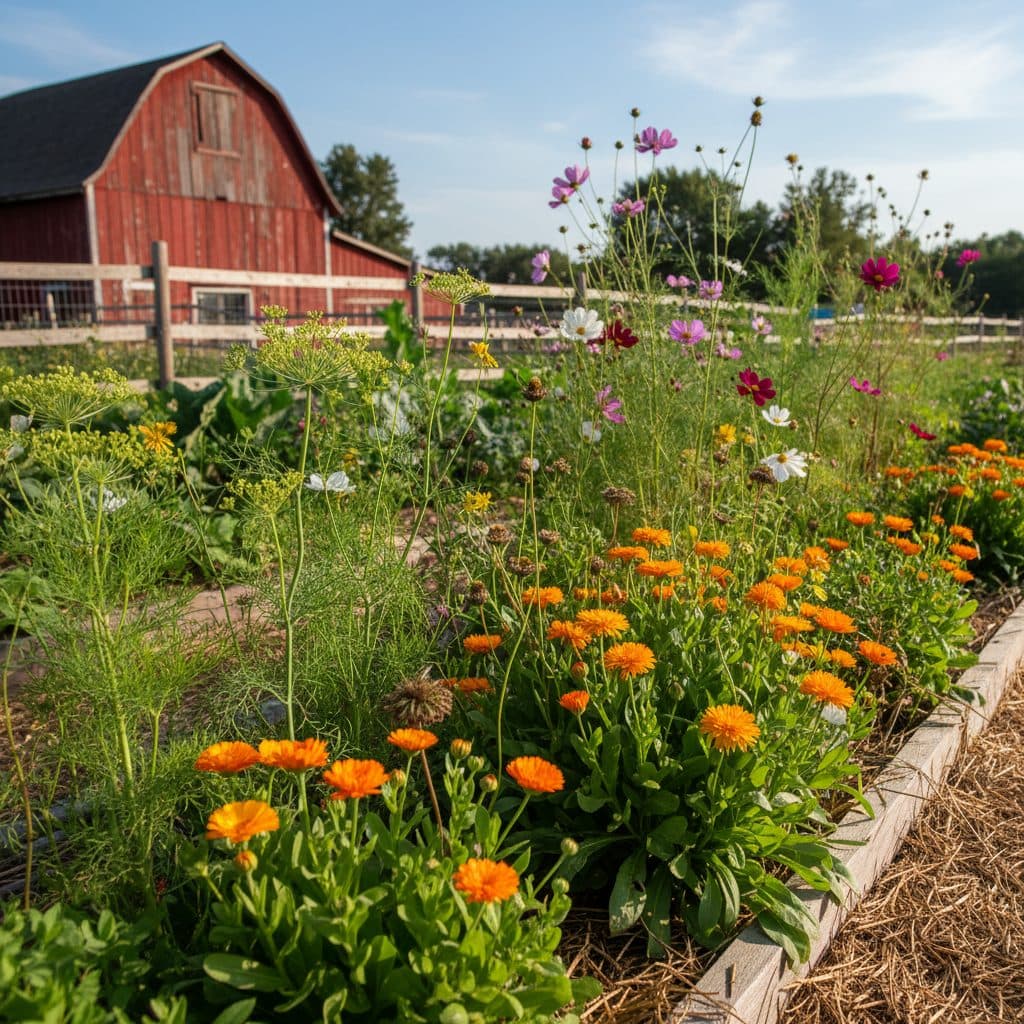
Many popular annuals self-seed readily, returning like perennials in the garden. Calendula (Calendula officinalis) is a prime example, often popping up in unexpected places in zones 2-11. Cosmos (Cosmos bipinnatus) and Nasturtiums (Tropaeolum majus) are also excellent choices, providing bright blooms and edible flowers in zones 2-11. These plants are generally low-maintenance and can tolerate a range of soil conditions, though they prefer well-drained soil. If you’re dealing with challenging conditions, our guide on plants for clay soil might offer additional insights into soil improvement.
- Calendula (Pot Marigold): Bright orange and yellow flowers, very prolific in zones 2-11.
- Cosmos (Cosmos bipinnatus): Delicate, colorful blooms that readily reseed in zones 2-11.
- Nasturtium (Tropaeolum majus): Edible flowers and leaves; self-sows dependably where winters are mild and needs resowing in colder regions.
- Poppy (Papaver rhoeas): Corn and Shirley poppies are known for dramatic self-seeding in zones 3-9.
- Love-in-a-Mist (Nigella damascena): Unique blue flowers and interesting seed pods, reseeds in zones 2-11.
Self-seeding vegetables for a productive garden
While many common garden vegetables are hybrids that do not reliably self-seed, several open-pollinated varieties and less common vegetables are excellent at returning year after year. This can significantly reduce the annual effort of planting, especially for crops like lettuce and arugula. In a small 4×8 foot raised bed, allowing just a few plants to go to seed can provide enough volunteer seedlings to fill the bed the following season.
easy-to-grow returning crops
Leafy greens like Arugula (Eruca sativa) and Lettuce (Lactuca sativa) are particularly good at self-seeding, especially in cooler climates or during shoulder seasons in zones 3-9. If you let a few plants bolt, they’ll produce flowers and then seeds that readily germinate. Mustard greens (Brassica juncea) and Spinach (Spinacia oleracea) also fall into this category. For those in warmer climates, certain winter squash varieties can occasionally self-seed if conditions are right, though their germination is less reliable. Remember that some self-seeders might also be deer favorites, so consider deer resistant plants if deer are an issue in your area.
- Arugula (Eruca sativa): Quick to bolt and reseed, providing peppery greens in zones 3-9.
- Lettuce (Lactuca sativa, open-pollinated varieties): Many loose-leaf types readily self-seed in zones 2-10.
- Mustard Greens (Brassica juncea): Fast-growing and prolific self-seeders in zones 4-9.
- Spinach (Spinacia oleracea): Can self-seed in zones 2-9, especially heirloom varieties.
- Radishes (Raphanus sativus): If allowed to flower, they produce edible seed pods and self-seed in zones 2-11.
Managing your self-seeding garden
While the goal of self-seeding is to reduce work, a completely hands-off approach can lead to overcrowding and diminished plant health. In areas like USDA zone 6 in Ohio, where springs can be wet, seedlings might sprout too densely. Thinning is necessary to ensure each plant has enough space, light, and nutrients to develop properly. In a dense patch this usually means removing most of the volunteer seedlings, leaving plants spaced 6-12 inches apart depending on their mature size.
preventing overcrowding and promoting health
Overcrowding can lead to smaller plants, reduced yields, and increased susceptibility to diseases due to poor air circulation. For example, a patch of self-seeded calendula left unthinned might produce dozens of small, weak plants with few flowers, whereas a thinned patch will produce sturdy plants with many large blooms. Additionally, knowing when to allow plants to go to seed and when to remove spent plants can help control where new plants appear. Using a soil moisture meter can also help manage watering for germination and growth to maintain consistent moisture without overwatering.
- Thin seedlings early in spring when they are 2-4 inches tall.
- Leave adequate spacing based on the mature size of the plant, often 6-12 inches.
- Remove any diseased or weak-looking seedlings to improve overall garden health.
- Consider collecting some seeds to sow in specific areas, giving you more control.
- Rotate self-seeding annuals to different spots every 2-3 years to prevent soil depletion.
Self-Seeding Plant Characteristics
Plant Name | USDA Zones | Typical Height | Primary Benefit |
|---|---|---|---|
Calendula | 2-11 | 12-24 in | Edible flowers, visual appeal |
Dill | 3-10 | 24-36 in | Culinary herb, attracts beneficials |
Borage | 5-9 | 24-36 in | Edible flowers, pollinator magnet |
Cosmos | 2-11 | 36-60 in | Long-lasting blooms, cut flowers |
Arugula | 3-9 | 6-12 in | Peppery greens, quick harvest |
Poppy | 3-9 | 24-48 in | Dramatic flowers, seed pods |
Seed viability: Many self-seeding plant seeds remain viable in the soil for 2-5 years, maintaining returns even if a season is missed.
Pollinator boost: A mix of self-seeders keeps something in flower across more of the season, which keeps pollinators returning to the garden.
Frequently asked questions
What does ‘self-seeding’ mean for a gardener?
Self-seeding means a plant naturally drops its mature seeds, which then germinate and grow into new plants the following season without human intervention. This process cuts out the sowing step for those species, saving both time and money.
Do I need to do anything to help plants self-seed?
Yes, to encourage self-seeding, allow plants to fully mature and produce seeds, avoiding deadheading in late summer. Also, minimize soil disturbance in the areas where you want seeds to sprout, as heavy tilling buries seeds deeper than they can emerge from.
Will self-seeding plants take over my garden?
Some prolific self-seeders can spread vigorously, but this can be managed. Thinning seedlings in spring prevents overcrowding, and unwanted volunteers can simply be hoed or pulled. A typical 10×10 foot garden bed might produce hundreds of seedlings, requiring selective removal to maintain balance.
Are all self-seeding plants suitable for my USDA zone?
No, not all self-seeding plants are suitable for every USDA zone. It is important to select plants that are hardy for your specific zone, typically ranging from zone 4 to zone 9 for most common self-seeders. For example, some tender annuals might only reliably self-seed in warmer zones like 8 or 9.
Can I save seeds from self-seeding plants?
Yes, you can absolutely save seeds from self-seeding plants. This gives you more control over where new plants emerge and allows you to share seeds with others. Collect mature, dry seeds in late summer or early fall, store them in a cool, dry place, and they can remain viable for 1-5 years depending on the species.
References
- USDA Natural Resources Conservation Service (2024). USDA Natural Resources Conservation Service.
- EPA — Soak Up the Rain (2024). EPA — Soak Up the Rain.