Key takeaways
- Pre-sprout ginger rhizomes 4-6 weeks before planting to jumpstart growth.
- Choose plump, organic rhizomes with visible ‘eyes’ from the grocery store.
- Plant in well-draining soil when soil temperatures consistently reach 65°F (18°C).
- Ginger requires 8-10 months of warm weather, making container growing ideal for USDA zones 7 or colder.
- Provide consistent moisture and feed with a balanced liquid fertilizer every 3-4 weeks.
- Harvest ginger when leaves yellow and die back, typically in fall before the first hard frost.
Quick answer: To grow ginger in USDA Zone 7 and warmer, pre-sprout store-bought rhizomes 4-6 weeks before planting in well-draining soil when temperatures reach 65°F. Provide consistent moisture and harvest after 8-10 months when leaves yellow.
Growing ginger (Zingiber officinale) outside tropical climates is practical with proper timing. For growers in USDA zones 7 and colder, success depends on managing the plant's long growing season (typically 8 to 10 months) and using pre-sprouting to give it a head start. Starting from grocery store rhizomes, container plants can yield 5 to 10 pounds, while dedicated in-ground beds in zones 8-11 can yield 15 to 30 pounds.
Selecting and preparing store-bought ginger rhizomes involves pre-sprouting and timing planting to local frost dates. With adequate warmth and moisture, growers in cooler regions like the Pacific Northwest or Upper Midwest can harvest homegrown ginger.
Why grow your own ginger?
Cultivating your own ginger offers several advantages over relying solely on store-bought options. First, the flavor of freshly harvested ginger is often more potent and nuanced than what you find in supermarkets, which may have traveled thousands of miles. Second, growing your own allows you to control the growing conditions, ensuring your produce is free from synthetic pesticides and herbicides. Many people grow ginger for its flavor and its long history in home cooking and folk remedies.
The economic and health benefits
From an economic standpoint, a single 4-ounce piece of organic ginger rhizome, costing around $3 to $5, can potentially yield several pounds of new ginger rhizomes over an 8-month growing season. This represents a significant return on a small initial investment. Beyond the kitchen, ginger is a staple in traditional medicine, with studies continuing to characterize the phenols isolated from its rhizomes [4]. For example, a home garden in USDA zone 8b could easily produce 5 to 10 pounds of ginger from just a few starter pieces, providing a year’s supply for many families.
- stronger flavor: fresh ginger has a more pungent, spicy, and aromatic profile.
- cost savings: a small initial investment can yield many pounds of ginger.
- control over growing conditions: ensure your ginger is grown organically without unwanted chemicals.
- kitchen supply: fresh rhizomes on hand whenever a recipe calls for ginger.
- educational experience: a fun project for gardeners of all ages, especially children.
Selecting and preparing your rhizomes
The foundation of a successful ginger crop begins with selecting the right starter material. Head to your local grocery store and look for fresh, plump ginger rhizomes. It is important to choose organic ginger if possible, as conventional ginger may be treated with growth inhibitors to prevent sprouting on the shelf. These inhibitors can significantly delay or prevent your rhizomes from sprouting, wasting precious weeks in your growing season.
What to look for and how to cut
Examine the rhizomes for visible ‘eyes’ or growth buds, which look like small, slightly raised bumps or points, similar to those on a potato. A healthy rhizome piece should be firm, not shriveled or soft, and show no signs of mold or disease. Once you have your ginger, cut it into pieces about 1 to 2 inches long, with at least one or two prominent ‘eyes’ on each piece. Allow these cut pieces to air dry for 1 to 2 days before pre-sprouting. This drying period helps the cut surfaces to callus over, reducing the risk of rot once they are exposed to moisture. For example, a 6-inch rhizome might yield three to four viable planting pieces. Grocery rhizomes are not certified seed stock, so they can carry bacterial wilt or root-knot nematodes into your soil: plant them in a bed you can rotate out of, and discard any piece from a patch that wilted or rotted instead of replanting it.
- choose organic: reduces the risk of growth inhibitors.
- look for ‘eyes’: necessary for sprouting, similar to potato eyes.
- firm and plump: indicates freshness and good health.
- no mold or soft spots: signs of disease or decay.
- cut into 1-2 inch pieces: each with at least one eye.
Pre-sprouting for a head start
Pre-sprouting ginger rhizomes helps growers in regions with shorter growing seasons, such as USDA zones 6 and 7. This gives the ginger a head start to develop roots and shoots before transplanting outdoors. Without pre-sprouting, you can lose 4 to 6 weeks of growing time, reducing total yield.
The pre-sprouting process
To pre-sprout, place your prepared ginger pieces in a warm, moist environment. A simple method is to put them in a plastic bag with a handful of slightly damp peat moss, coco coir, or even just a damp paper towel. Seal the bag, leaving a small opening for air circulation, and place it in a warm spot where temperatures consistently range between 70°F and 75°F (21-24°C). This could be on top of a refrigerator, near a water heater, or on a seed-starting heat mat set to 75°F. Check the bag every few days to ensure the medium remains moist and to look for signs of sprouting. Sprouts typically emerge within 3 to 6 weeks, developing into small green shoots and white root nubs. This technique is similar to seed starting for beginners, where warmth and moisture drive germination.
- warm location: ideal temperatures are 70-75°F (21-24°C).
- moist medium: use damp peat moss, coco coir, or a paper towel.
- airflow: leave a small opening in the plastic bag.
- patience: sprouts can take 3 to 6 weeks to appear.
- check regularly: ensure consistent moisture and monitor for growth.
Planting and early care
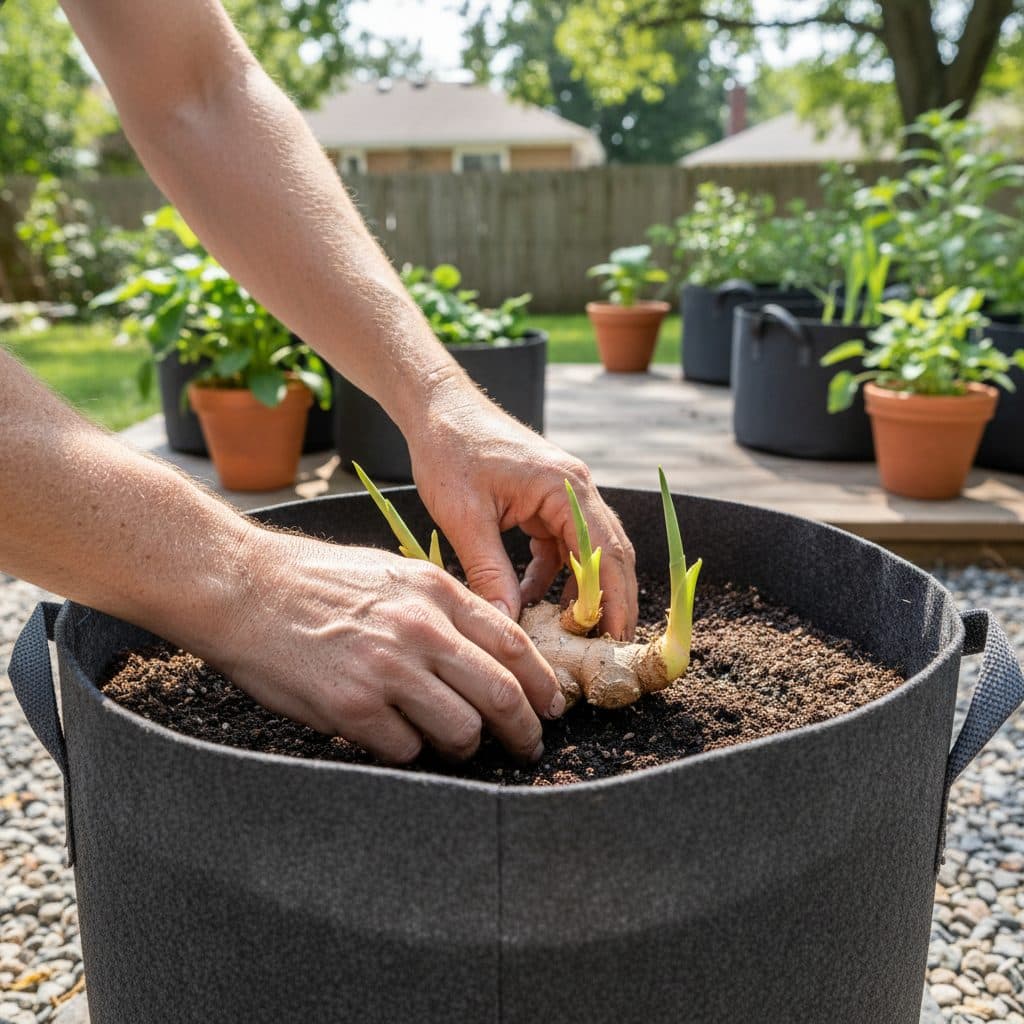
Once your ginger rhizomes have developed visible sprouts and some root growth, they are ready for planting. The timing of planting matters particularly in temperate zones. Ginger is a tropical plant and cannot tolerate frost. Wait until all danger of frost has passed, typically 2 to 4 weeks after your last average frost date, and when soil temperatures consistently reach at least 65°F (18°C). For many parts of the southern US, like Florida or coastal California, this might be as early as March, but for USDA zone 6, it could be late May or early June.
Soil, containers, and spacing
Ginger thrives in rich, well-draining soil. A good potting mix for containers would be a blend of compost, perlite, and a general-purpose potting soil in a 1:1:1 ratio. If planting in the ground, amend your garden beds with 2 to 3 inches of well-rotted compost. Plant the sprouted ginger pieces about 1 to 2 inches deep, with the ‘eyes’ facing upwards. If growing in containers, choose wide, shallow pots at least 15 inches in diameter and 10 inches deep to allow for horizontal rhizome growth. A 15-gallon fabric grow bag can comfortably house 3 to 4 ginger pieces. Space individual pieces 6 to 8 inches apart if planting multiple in a large container or garden bed. Consistent moisture is needed in the early stages; water thoroughly after planting so the top 2 inches of soil remain moist.
- frost-free timing: plant 2-4 weeks after last frost.
- soil temperature: ensure soil is at least 65°F (18°C).
- rich, well-draining soil: a mix of compost, perlite, and potting soil works well.
- shallow planting: 1-2 inches deep with eyes facing up.
- adequate spacing: 6-8 inches apart for multiple plants.
Ongoing care and pest management
Once planted, ginger requires consistent care to thrive and produce a good harvest. Regular watering is necessary; ginger needs moist soil but rots when waterlogged. Aim for about 1 inch of water per week from rainfall or irrigation so the top 2-3 inches of soil remain damp. During hot, dry spells, you might need to water every 2-3 days. For container-grown ginger, ensure pots have excellent drainage holes to prevent standing water.
Feeding, light, and common issues
Ginger is a heavy feeder. Begin fertilizing about 4 weeks after planting with a balanced liquid fertilizer (e.g., 5-5-5 or 10-10-10) diluted to half strength, applying every 3 to 4 weeks. As the plant matures and new rhizomes begin to form, you can switch to a fertilizer slightly higher in potassium, like a 5-10-10, to encourage rhizome development. Ginger prefers partial shade in regions with intense summer sun, especially in USDA zones 8 and 9 where afternoon temperatures can exceed 90°F (32°C). In cooler climates, 6 hours of direct morning sun is beneficial. Pests are generally not a major issue, but watch out for spider mites or mealybugs, especially on indoor container plants. A strong spray of water or an insecticidal soap solution (2 tablespoons per gallon of water) can usually manage these issues. Regular monitoring every 7-10 days will help catch problems early.
- consistent moisture: 1 inch of water per week, avoid waterlogging.
- regular feeding: balanced liquid fertilizer every 3-4 weeks.
- partial shade: protects from intense afternoon sun in hot climates.
- good air circulation: helps prevent fungal issues.
- pest vigilance: inspect plants every week for common pests like spider mites.
Harvesting your ginger
Ginger typically takes 8 to 10 months to mature, depending on your climate and growing conditions. The ideal time to harvest is when the leaves begin to yellow and die back, usually in late fall before the first hard frost. This signals that the plant has directed its energy into developing the underground rhizomes. In USDA zone 9, this might be in November or December, while in zone 7, it could be as early as October.
How to harvest and cure
To harvest, carefully dig up the entire plant using a garden fork, being mindful not to damage the rhizomes. Gently brush off the soil. You can harvest the entire clump or, if growing in a large container or garden bed, you can practice a partial harvest. To do this, carefully dig around the edges of the plant, cut off a portion of the rhizome, and then re-cover the remaining plant with soil. This allows the plant to continue growing and producing more ginger. After harvesting, wash the rhizomes thoroughly and allow them to air dry in a cool, well-ventilated area for a few days to cure. Curing helps to toughen the skin and extend storage life. Store cured ginger in a cool, dark place, like a root cellar or pantry, where temperatures remain between 55°F and 60°F (13-16°C). Fresh ginger can also be frozen whole or grated for long-term storage, lasting up to 6 months.
- yellowing leaves: primary indicator of maturity.
- before first hard frost: prevents cold damage to rhizomes.
- gentle digging: use a fork to avoid damaging rhizomes.
- partial harvest option: allows continuous growth from one plant.
- curing: air dry for 2-3 days to extend storage life.
In-Ground vs. Container Growing for Ginger
Feature | In-Ground (USDA Zones 8-11) | Container (USDA Zones 5-7) |
|---|---|---|
Growing Season Length | 8-10 months, can be perennial in frost-free areas. | 5-7 months outdoors, extended indoors before/after frost. |
Rhizome Yield Potential | High, 15-30 pounds per 4×4 ft bed. | Moderate, 5-10 pounds per 15-gallon container. |
Temperature Control | Limited, relies on natural climate. | Excellent, can move indoors when temperatures drop below 50°F (10°C). |
Watering Frequency | Less frequent, typically 1 inch per week. | More frequent, every 2-3 days in hot weather due to faster drying. |
Soil Requirements | Well-amended, loose garden soil with 2-3 inches of compost. | High-quality potting mix with excellent drainage, 1:1:1 compost/perlite/potting soil. |
Optimal Sprouting Temp: Ginger rhizomes sprout best when kept consistently at 70-75°F (21-24°C), typically producing shoots within 3-6 weeks.
Container Size: For a substantial harvest, plant ginger in containers at least 15 inches wide and 10 inches deep, or a 15-gallon fabric grow bag.
Growing Season: Ginger requires a long, warm growing season of 8-10 months, or 240-300 frost-free days, to fully mature its rhizomes.
Frequently asked questions
Can I grow ginger in USDA zone 5?
Yes, you can grow ginger in USDA zone 5, but it must be grown in containers that can be moved indoors before temperatures drop below 50°F (10°C). Start pre-sprouting 6-8 weeks before your last frost date to maximize the outdoor growing season, which will be shorter than in warmer zones.
How long does it take for ginger to sprout?
Ginger rhizomes typically take 3 to 6 weeks to sprout when kept in a warm (70-75°F or 21-24°C) and moist environment. Some pieces sprout faster, while others take longer to emerge.
What kind of soil does ginger need?
Ginger thrives in rich, loose, and well-draining soil with a pH between 6.0 and 7.0. For containers, a mix of one-third compost, one-third perlite, and one-third general potting soil provides excellent drainage and nutrients for optimal growth.
How much ginger can I expect from one plant?
From a single 1 to 2-inch piece of sprouted ginger, you can expect to harvest anywhere from 1 to 3 pounds of fresh ginger in a single growing season of 8-10 months. Larger containers or garden beds with multiple plants can yield 10-30 pounds.
When should I fertilize my ginger plants?
Begin fertilizing your ginger plants about 4 weeks after planting, using a balanced liquid fertilizer (e.g., 5-5-5) at half strength. Apply this every 3-4 weeks throughout the growing season, potentially switching to a higher potassium formula later for better rhizome development.
Can I grow ginger indoors year-round?
Yes, ginger can be grown indoors year-round, especially in cooler climates. You will need a large container (at least 15 inches wide), a sunny window providing 6+ hours of light, and consistent temperatures above 65°F (18°C) to encourage continuous growth.
References
- Anti-Inflammatory Terpenoids from the Rhizomes of Shell Ginger (2023). Anti-Inflammatory Terpenoids from the Rhizomes of Shell Ginger.
- Exosome-like Nanoparticles from Ginger Rhizomes Inhibited NLRP3 Inflammasome Activation (2023). Exosome-like Nanoparticles from Ginger Rhizomes Inhibited NLRP3 Inflammasome Activation.
- Low pH-Based Method to Increase the Yield of Plant-Derived Nanoparticles from Fresh Ginger Rhizomes (2023). Low pH-Based Method to Increase the Yield of Plant-Derived Nanoparticles from Fresh Ginger Rhizomes.
- Characterization and Isolation of Ginger Phenols from Zingiber officinale Rhizomes through in Silico-Based Reverse Annotation and Molecular Networking (2023). Characterization and Isolation of Ginger Phenols from Zingiber officinale Rhizomes through in Silico-Based Reverse Annotation and Molecular Networking.
- USDA Natural Resources Conservation Service (2024). USDA Natural Resources Conservation Service.