Key takeaways
- Harvest ginger 8-10 months after planting and turmeric 7-10 months, indicated by yellowing foliage.
- Utilize large containers, at least 15 gallons, to support substantial rhizome development and yield.
- Cure freshly harvested rhizomes at 75-85°F for 1-2 weeks to heal wounds and prepare them for long-term storage.
- Carefully inspect rhizomes during harvest to identify and remove any diseased portions, preventing further spread.
- Store cured ginger and turmeric in a cool, dark, and well-ventilated area, ideally between 55-60°F, for several months.
- Consider replanting small, healthy rhizome pieces for next season’s crop, ensuring a continuous supply.
Quick answer: Harvest container-grown ginger 8-10 months and turmeric 7-10 months after planting, when foliage yellows. Cure rhizomes at 75-85°F for 1-2 weeks, then store at 55-60°F for long-term preservation.
Growing ginger and turmeric in containers offers a rewarding experience, even for gardeners in cooler climates like USDA zone 6, where these tropical plants wouldn’t typically thrive outdoors year-round. These aromatic rhizomes require a long growing season (typically 8 to 10 months for ginger and 7 to 10 months for turmeric) to develop substantial underground growth. By cultivating them in pots on a sunny balcony, rooftop, or patio, you control their environment, extending their growing period and protecting them from early frosts. This method is effective for maximizing yields in limited spaces, providing a fresh supply of these versatile ingredients right at your doorstep.
Once your ginger (Zingiber officinale) and turmeric (Curcuma longa) plants have matured, the process shifts from cultivation to harvest and post-harvest care. Proper harvesting techniques prevent damage to the rhizomes, while effective curing methods extend their shelf life from a few weeks to several months. Without adequate curing, your hard-earned harvest might quickly succumb to rot or dehydration. This guide will detail the steps for harvesting your container-grown ginger and turmeric, and then outline the curing processes that ensure your rhizomes remain fresh and potent for as long as possible, allowing you to enjoy your homegrown bounty throughout the year.
Understanding the growing cycle and harvest indicators
Ginger and turmeric are tropical plants that flourish in warm, humid conditions, typically requiring a sustained period of growth to produce large rhizomes. In most US climates outside of USDA zones 9-11, container growing is the most reliable way to cultivate them, allowing for indoor protection during colder months. To achieve a good harvest, ginger generally needs 8 to 10 months of growth, while turmeric requires 7 to 10 months. You can start them indoors in late winter or early spring, around February or March, in a warm spot with temperatures consistently above 70°F. By late summer or early fall, usually around September or October, you’ll begin to see the first signs that your plants are nearing maturity. Consistent watering and feeding throughout the 200-300 day growing season are vital for optimal development.
Indicators for harvest readiness
The most reliable indicator that your ginger and turmeric rhizomes are ready for harvest is the yellowing and eventual drying of the plant’s leaves and stems. For ginger, this typically occurs after 8 to 10 months, often in late fall as temperatures drop below 50°F. For turmeric, a similar process unfolds, usually between 7 and 10 months after planting, with the foliage turning yellow and drying out. This natural dieback signals that the plant has directed its energy into developing the underground rhizomes, storing nutrients for dormancy. Harvesting too early can result in smaller, less flavorful rhizomes. Aim to lift the pots once nighttime temperatures start dropping into the 40s, well ahead of the first frost; do not wait for a hard freeze. Some growers in warmer regions, like parts of Florida, might even get a second flush of growth if conditions remain favorable.
- Yellowing and browning of foliage
- Stems beginning to fall over
- 8-10 months of growth for ginger
- 7-10 months of growth for turmeric
- Harvest before the first frost, once nights start dropping into the 40s
Harvesting container-grown rhizomes
When it’s time to harvest your container-grown ginger and turmeric, a gentle approach helps avoid damaging the rhizomes. These plants develop a dense network of underground stems, so simply pulling on the top growth can break off valuable pieces. Start by reducing watering a week or two before your anticipated harvest date; this can help the soil dry out slightly, making extraction easier. For large containers, such as those that are 15-20 gallons in size, you might need to carefully tip the pot onto its side. Using a sturdy tool like a Wooden-Handle Garden Fork, gently loosen the soil around the edges of the pot. Work your way inward, carefully lifting the entire root ball. In a 15-gallon container, you can expect to harvest 1-2 pounds of ginger or 2-3 pounds of turmeric rhizomes from a single plant if conditions were optimal for 8-10 months.
Techniques for careful extraction
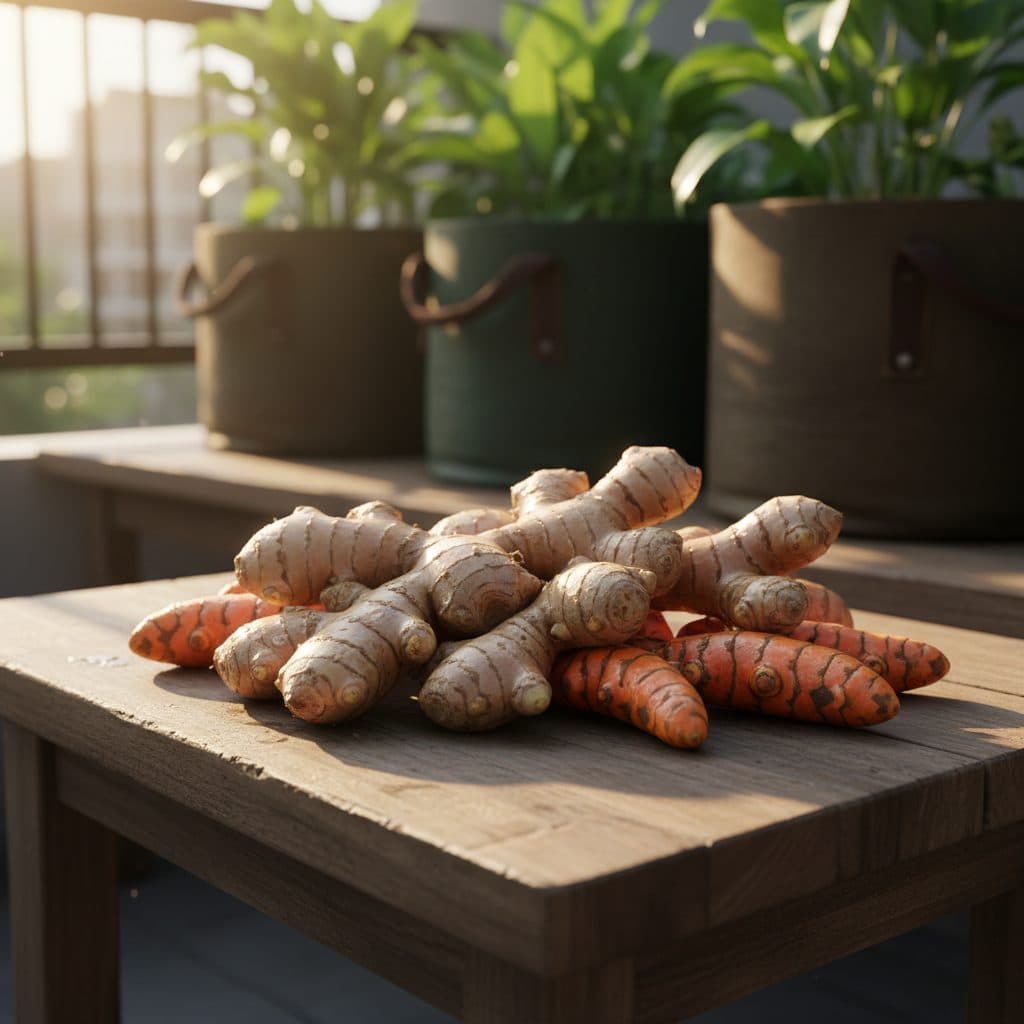
Once the root ball is out of the container, carefully shake off excess soil. You’ll see the interconnected rhizomes, often forming a dense clump. Use your hands to gently separate individual rhizomes from the main cluster. Look for plump, firm pieces that are 3-6 inches long and show no signs of disease or damage. Small, immature pieces, often called ‘fingers,’ can be left attached to larger ones or carefully broken off if you plan to replant them. It’s important to inspect each piece for any soft spots, discoloration, or mold, which could indicate rhizome rot, a common issue caused by pathogens like Pythium and Fusarium [5]. Discard any diseased portions immediately to prevent contamination of your healthy harvest. A healthy rhizome should have a firm texture and a distinct, pungent aroma. For detailed information on specific plant care, you can refer to our guide on Ginger. After harvesting, gently brush off any remaining soil but avoid washing the rhizomes thoroughly at this stage, as moisture can encourage rot during curing.
- Reduce watering 1-2 weeks before harvest
- Carefully tip container and loosen soil with a fork or trowel
- Gently separate rhizomes by hand
- Inspect for disease (soft spots, discoloration)
- Leave small ‘fingers’ for replanting
Curing ginger and turmeric for extended storage
After harvesting your ginger and turmeric rhizomes, the next step is curing, which extends their shelf life from a few weeks to several months. Curing involves healing any cuts or abrasions incurred during harvest, toughening the outer skin, and reducing surface moisture. This protective measure minimizes the risk of rot and disease during storage. For ginger, a curing period of one to two weeks is generally sufficient, while turmeric often benefits from 10-15 days of curing. The ideal conditions for both involve a warm, humid environment: aim for temperatures between 75-85°F (24-29°C) with relative humidity around 80-90%. You can achieve this in a well-ventilated garage or shed, perhaps by loosely covering the rhizomes with burlap to maintain humidity. In drier climates, like parts of the Southwest, you might need to mist the air around the rhizomes to maintain the necessary humidity levels during this 7-15 day period, ensuring good air circulation to prevent mold.
Post-curing preparation and initial storage
Once the curing period is complete, both ginger and turmeric rhizomes should have a noticeably tougher skin, and any minor cuts should be calloused over. At this point, you can gently wash off any remaining soil. After washing, allow the rhizomes to air dry completely for a few hours. For turmeric, if you plan to make powder, you might boil or steam the cured rhizomes until tender before drying and grinding. For fresh use, simply air-drying is enough. Trim off any small rootlets or fibrous pieces not suitable for consumption. For initial storage, both ginger and turmeric prefer cooler, slightly humid conditions. An ideal storage temperature is between 55-60°F (13-16°C), with humidity around 70-80%. Storing them in mesh bags or paper bags in a cool, dark pantry or root cellar can maintain their quality for up to six months. Avoid refrigeration for fresh rhizomes, as temperatures below 50°F can cause them to shrivel and lose flavor more quickly. A single 15-gallon container can yield enough ginger or turmeric to last a small family for 3-4 months.
- Cure at 75-85°F for 1-2 weeks (ginger) or 10-15 days (turmeric)
- Maintain 80-90% relative humidity during curing
- Ensure good air circulation throughout the curing process
- Wash gently after curing, then air dry completely
- Store cured rhizomes at 55-60°F with 70-80% humidity
Storing your harvest and replanting for next season
After successfully harvesting and curing your ginger and turmeric, the final step is proper storage to maximize their shelf life and ensure you can enjoy their flavors and properties for months. Both rhizomes thrive in similar storage conditions: a cool, dark, and moderately humid environment. An ideal temperature range is 55-60°F (13-16°C), with relative humidity around 70-80%. This mimics conditions found in a traditional root cellar or a cool pantry. Avoid storing them in direct sunlight or in areas with fluctuating temperatures, which can cause them to sprout prematurely or spoil. Placing the cured rhizomes in mesh bags, paper bags, or loosely in cardboard boxes allows for sufficient air circulation, preventing moisture buildup that can lead to mold or rot. In a well-maintained environment, your homegrown ginger and turmeric can remain fresh for 4-6 months, offering a consistent supply for your culinary and wellness needs. For instance, a 20-gallon pot can easily yield 2-3 pounds of turmeric, providing a substantial harvest for a family of four.
Replanting for a continuous supply
One of the most rewarding aspects of growing ginger and turmeric is the ability to replant portions of your harvest for the following season, ensuring a continuous supply. As you harvest your mature rhizomes, set aside some of the smaller, firm ‘fingers’ or healthy pieces that are 2-4 inches long and have at least one or two visible ‘eyes’ or growth buds. These are ideal for starting new plants. Before replanting, allow these seed pieces to sit at room temperature for a few days, around 68-72°F, to form a protective callus over any cut surfaces. This helps prevent rot when they are planted. For best results, use fresh, high-quality potting mix for your next crop, ensuring it’s rich in organic matter and drains well. When you’re ready to plant, typically in late winter or early spring (February-March) in most US zones, plant your selected pieces 1-2 inches deep in large containers, such as 15-gallon fabric pots, spacing them about 6-8 inches apart. Consistent moisture and warmth above 70°F are key for successful sprouting, which can take 3-6 weeks. You can find more beginner tips at Vegetable gardening for beginners: your questions answered.
- Store cured rhizomes at 55-60°F with 70-80% humidity
- Use mesh or paper bags for good air circulation
- Select 2-4 inch healthy rhizome pieces with ‘eyes’ for replanting
- Allow seed pieces to callus for a few days at 68-72°F
- Plant 1-2 inches deep in 15-gallon containers in late winter/early spring
Ginger vs. Turmeric: Harvesting and Curing Overview
Feature | Ginger (Zingiber officinale) | Turmeric (Curcuma longa) |
|---|---|---|
Growing Season | 8-10 months | 7-10 months |
Harvest Indicator | Yellowing/browning foliage | Yellowing/drying foliage |
Curing Duration | 1-2 weeks | 10-15 days |
Curing Temperature | 75-85°F (80-90% humidity) | 75-85°F (80-90% humidity) |
Storage Temperature | 55-60°F (70-80% humidity) | 55-60°F (70-80% humidity) |
Typical Container Yield | 1-2 lbs per plant (15-gal pot) | 2-3 lbs per plant (15-gal pot) |
Optimal Curing Temp: For both ginger and turmeric, maintaining a consistent temperature of 75-85°F during the 1-2 week curing period helps heal cuts and reduce spoilage.
Container Size Matters: To achieve a substantial harvest of 1-3 pounds of rhizomes per plant, use containers of at least 15-gallon capacity for optimal growth.
Storage Longevity: Properly cured ginger and turmeric, stored at 55-60°F, can maintain freshness and potency for up to 6 months.
Frequently asked questions
Can I harvest small amounts of ginger or turmeric throughout the growing season?
Yes, you can ‘snitch’ small pieces of ginger or turmeric rhizomes after about 4-6 months of growth, especially if you’re growing in a large container like a 20-gallon pot. Gently dig around the edges of the pot to expose some rhizomes, break off a small piece, and then re-cover the remaining plant with soil. This allows the main plant to continue growing and developing.
What happens if I don’t cure my ginger or turmeric?
Without proper curing, which involves healing cuts at 75-85°F for 1-2 weeks, your ginger and turmeric rhizomes will be more susceptible to rot and disease during storage. The skin will remain tender, and any nicks from harvesting will be open wounds, allowing pathogens to enter, significantly reducing their shelf life from several months to just a few weeks.
How can I increase my ginger and turmeric yield in containers?
To increase yields, use the largest possible containers, ideally 15-20 gallons, and ensure your plants receive at least 6-8 hours of direct sunlight daily. Provide consistent moisture and fertilize every 2-3 weeks with a balanced liquid feed throughout the 8-10 month growing season. Starting early indoors, around February or March, also maximizes the growth period.
Can I store ginger and turmeric in the refrigerator?
Storing fresh ginger and turmeric in the refrigerator (typically 35-40°F) is generally not recommended for long-term preservation, as the cold temperatures can cause them to shrivel, lose flavor, and potentially become moldy more quickly. For best results, store cured rhizomes in a cool, dark place around 55-60°F, where they can last for 4-6 months.
What if my rhizomes show signs of disease during harvest?
If you find rhizomes with soft spots, discoloration, or mold during harvest, discard those diseased pieces immediately to prevent the spread of pathogens like Pythium or Fusarium [5]. Do not cure or store them with healthy rhizomes. Ensure your growing medium is well-draining and avoid overwatering in future seasons to minimize disease risk.
Is there a difference in curing methods for ginger and turmeric?
While the general principles are similar (warmth and humidity), turmeric often benefits from a slightly longer curing period of 10-15 days compared to ginger’s 1-2 weeks. Both require temperatures between 75-85°F and high humidity (80-90%) to heal wounds and toughen their skins for optimal storage longevity, which can extend to 4-6 months.
References
- Harvesting and Postharvest Management of Turmeric (2019). Harvesting and Postharvest Management of Turmeric.
- Harvesting and Postharvest Management of Turmeric (2013). Harvesting and Postharvest Management of Turmeric.
- Turmeric in Ayurveda (2019). Turmeric in Ayurveda.
- The Biotechnology of Turmeric (2019). The Biotechnology of Turmeric.
- Diseases of Turmeric (2019). Diseases of Turmeric.
- USDA Natural Resources Conservation Service (2024). USDA Natural Resources Conservation Service.