Key takeaways
- Check state biosecurity regulations before planting; Queensland and parts of New South Wales require permits and certified source material to prevent Panama disease and Banana Bunchy Top Virus.
- Plant certified tissue-cultured plantlets in early spring (September to October) into rich, free-draining soil with a pH between 5.5 and 6.5.
- Bananas are gross feeders requiring heavy organic nutrition, high potassium fertiliser, and constant root-zone moisture with deep watering several times weekly in hot weather.
- Manage stool density by desuckering regularly, maintaining a strict three-generation cycle: one fruiting mother, one half-grown daughter, and one small follower sucker.
- Bag developing bunches once the floral bracts lift and fruit fingers curl upward: use commercial polyethylene covers against sun and blemish, or a wildlife-safe 5 mm mesh sleeve to exclude flying foxes and possums.
Quick answer: Growing bananas (Musa species) in Australia requires warm subtropical or tropical conditions, shelter from cold southerly winds, rich soil amended with abundant compost, and high soil moisture. In Queensland and parts of NSW, check current biosecurity permit conditions and source certified disease-free stock. Maintain a stool cycle of mother, daughter, and follower stems to ensure regular annual harvests.
Bananas are iconic backyard plants across Australia's eastern seaboard and tropical north, producing dramatic lush foliage and heavy yields of sweet fruit ripened on the plant.
However, because commercial banana production is a vital primary industry, Australian backyard growers operate under strict biosecurity regulations designed to control catastrophic fungal and viral plant diseases.
Understanding state permit requirements, planting protocols, pruning cycles, and microclimate design allows home gardeners to enjoy bountiful home-grown fruit while protecting Australia's commercial orchards.
Australian biosecurity laws and backyard permits
Before sourcing banana plants for your backyard, you must understand the legal biosecurity obligations in your state or territory.
+------------------------+-----------------------------------+-----------------------------------------+
| State / Territory      | Regulatory Authority              | Backyard Permit & Growing Rules         |
+------------------------+-----------------------------------+-----------------------------------------+
| Queensland (QLD)       | Biosecurity Queensland            | Permit required; check current rules    |
| New South Wales (NSW)  | NSW Department of Primary Ind.    | Approval needed; check current rules    |
| Western Australia (WA) | DPIRD Biosecurity                 | Import restrictions; certified stock    |
| Northern Territory (NT)| NT Biosecurity                    | Strict TR4 exclusion quarantine zones   |
| Victoria / SA / Tas    | State Agriculture Departments     | Non-commercial zones; frost shelter key |
+------------------------+-----------------------------------+-----------------------------------------+
Why banana biosecurity is strictly enforced
Two devastating pathogens threaten Australian banana production:
- Panama Disease (Tropical Race 4): A soil-borne fungus (Fusarium oxysporum f. sp. cubense tropical race 4 / Foc TR4) that survives in soil for decades and kills Cavendish cultivars.
- Banana Bunchy Top Virus (BBTV): A viral disease spread by the banana aphid (Pentalonia nigronervosa) that severely stunts plants and halts fruit production.
To prevent the spread of these diseases, never accept uncertified suckers or rhizome bits from neighbours or online classifieds. Check the current planting conditions with Biosecurity Queensland or NSW DPI before you buy plants, obtain a permit where required, and purchase only certified tissue-cultured plantlets from accredited production nurseries.
Australian climate zones and cultivar selection
Bananas thrive in high humidity and temperatures between 22°C and 32°C. While tropical and subtropical regions offer ideal conditions, temperate gardeners can succeed by selecting cold-tolerant dwarf cultivars and establishing warm north-facing microclimates.
+--------------------+-------------------+-----------------------+-----------------------------+
| Cultivar           | Cold Tolerance    | Plant Height          | Best Australian Zones       |
+--------------------+-------------------+-----------------------+-----------------------------+
| Dwarf Cavendish    | Moderate          | 2.0 m to 2.5 m        | Subtropical, Tropical coast |
| Lady Finger*       | Moderate          | 4.0 m to 5.0 m        | Subtropical (NSW/QLD coast) |
| Dwarf Red Dacca    | Moderate          | 2.5 m to 3.0 m        | Tropical, warm subtropical  |
| Ducasse (Sugar)*   | High              | 3.5 m to 4.5 m        | Subtropical, warm temperate |
| Rajapuri           | Very High (hardy) | 2.0 m to 2.5 m        | Temperate (Sydney, Adelaide)|
+--------------------+-------------------+-----------------------+-----------------------------+
* Note: Lady Finger and Ducasse (Pisang Awak) are susceptible to Panama disease race 1, which is widely established in subtropical east-coast soils.
+-------------------------------------------------------------------+
|               AUSTRALIAN BANANA SEASONAL TIMELINE                 |
+-------------------------------------------------------------------+
| [Sep - Nov]  Spring planting of certified suckers into warm soil  |
| [Dec - Feb]  Rapid vegetative growth; apply high potassium mulch  |
| [Mar - May]  Autumn bunch emergence; bag clusters against pests  |
| [Jun - Aug]  Winter dormancy in south; protect stems from frost   |
+-------------------------------------------------------------------+
Soil preparation and feeding requirements
Bananas are among the heaviest feeders in the garden, requiring deep, loose soil rich in organic matter and continuous access to potassium.
+------------------------+-----------------------------------------------------------------------+
| Soil Parameter         | Ideal Target for Australian Soils                                     |
+------------------------+-----------------------------------------------------------------------+
| Soil pH                | 5.5 to 6.5 (slightly acidic loam)                                     |
| Organic Fertility      | Generous barrow-load well-rotted manure + compost per planting station|
| Drainage Capacity      | Rapid drainage; standing water causes corm rot                        |
| Potassium Demand       | High; apply sulphate of potash or comfrey mulch regularly             |
+------------------------+-----------------------------------------------------------------------+
The permaculture banana circle method
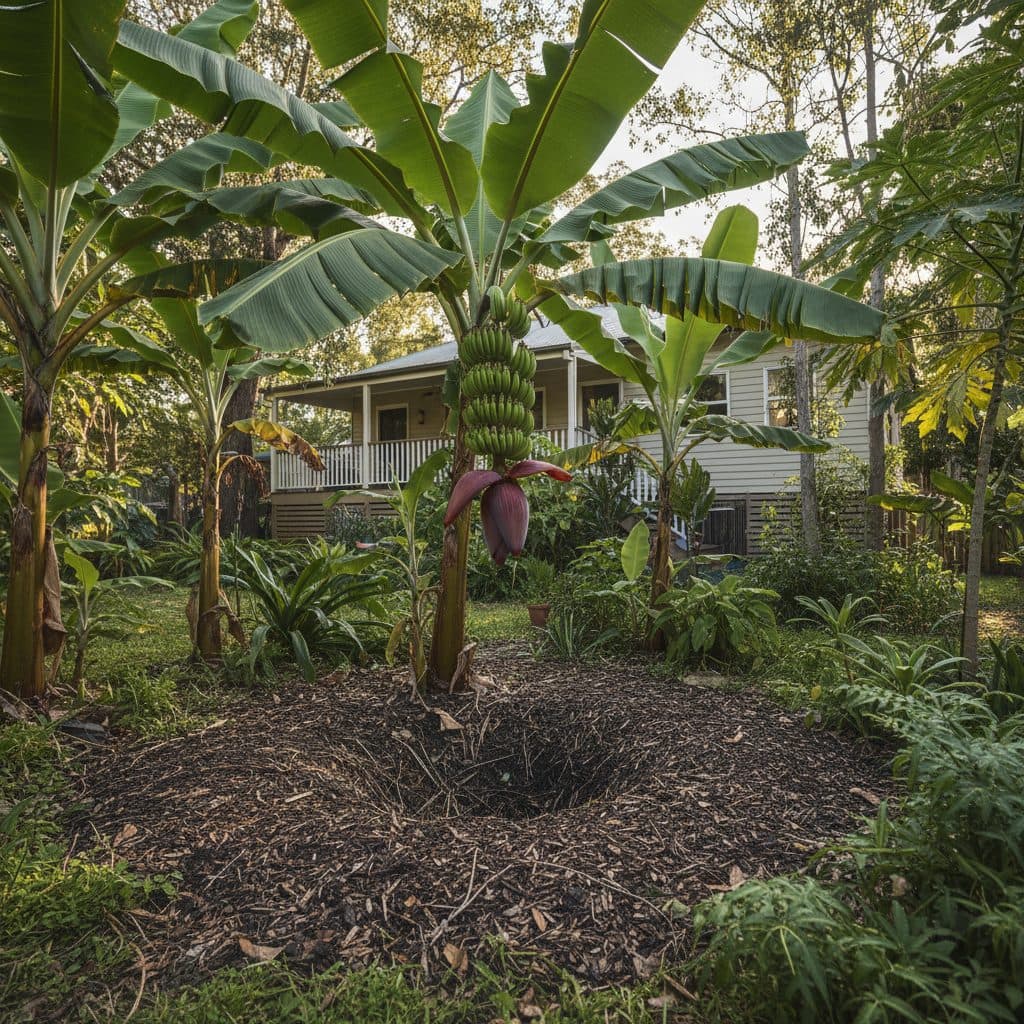
An efficient way to grow bananas in Australian gardens is the permaculture banana circle. Dig a central basin 2 metres wide and 1 metre deep, piling the excavated soil into a surrounding raised circular mound.
Fill the central basin with organic waste, tree prunings, kitchen scraps, and cardboard. Plant four to six banana plants around the crest of the mound. Greywater reuse is regulated in every state — check your council and state health requirements first, and never let greywater pool where it can breed mosquitoes or run off your property.
Improve soil nutrition with organic liquid feeds detailed in banana eggshell kitchen scrap liquid feeds and ensure proper planting depth using plant fruit tree correctly.
Stool management: the three-generation desuckering cycle
Left unmanaged, a single banana corm produces dozens of suckers that compete for nutrients, resulting in small, stunted bunches. Proper stool management maintains a continuous, three-generation production line.
+-------------------------------------------------------------------+
|               THE THREE-GENERATION BANANA STOOL                   |
|                                                                   |
|              [Mother Stem]                                        |
|              (Fruiting now, 100% tall)                            |
|                  |                                                |
|                  +-----> [Daughter Sucker]                        |
|                          (Half-grown follower, 50% tall)          |
|                              |                                    |
|                              +-----> [Follower Peeper]            |
|                                      (Small sword sucker, 20 cm)  |
+-------------------------------------------------------------------+
How to desucker correctly
- Select one strong "sword sucker" (a sucker with narrow, spear-like leaves) to serve as the daughter stem.
- Remove all competing "water suckers" (weak suckers with broad leaves early in life) by cutting them flush at the corm with a sharp spade and gouging out their growing heart.
- Once the mother stem finishes fruiting, chop its pseudostem down to ground level and split or chop the pseudostem into pieces rather than leaving whole sections lying at the base, where banana weevil borer breeds. The daughter stem then becomes the new mother.
Protecting bunches from pests and weather
Australian flying foxes, possums, and lorikeets target maturing banana bunches.
+------------------------+-----------------------------------+-------------------------+
| Risk Factor            | Protection Method                 | Timing                  |
+------------------------+-----------------------------------+-------------------------+
| Sunscald & Blemish     | Commercial plastic bunch cover    | Once floral bracts lift |
| Flying Foxes & Possums | 5 mm wildlife-safe mesh sleeve    | Once floral bracts lift |
| Queensland Fruit Fly   | Exclusion bag tied at top & base  | Early fruit formation   |
| Wind Damage            | Bamboo props supporting heavy stem| As bunch expands        |
+------------------------+-----------------------------------+-------------------------+
Slide a commercial UV-stabilised plastic bunch bag over the cluster once the floral bracts lift and the fruit fingers curl upward to protect against sunburn, insect marks, and blemish. However, plastic bunch covers do not deter possums or bats; excluding flying foxes and possums requires a sturdy 5 mm wildlife-safe mesh sleeve or frame around the bunch.
Because possums are protected native wildlife across all Australian states, exclusion netting is the legal and practical way to protect your harvest without causing harm. For wildlife exclusion netting laws, consult fruit tree netting.
Harvesting, curing and winter protection
Bananas take roughly three to four months from bell emergence to reach harvest maturity in warm tropical conditions, stretching to five months or more (sometimes eight or nine, over winter) in the subtropics and further south.
+-------------------------------------------------------------------+
|               HARVESTING & RIPENING PROTOCOL                      |
+-------------------------------------------------------------------+
| 1. Harvest Signs:  Fingers round out; angular ridges soften       |
| 2. Cutting Bunch:  Cut entire stalk leaving 30 cm handle          |
| 3. Sap Handling:   Allow milky latex sap to drain on grass        |
| 4. Ripening:       Hang in cool, shady, well-ventilated shed      |
| 5. Speed Ripening: Place hand of bananas in paper bag with apple  |
+-------------------------------------------------------------------+
In frost-prone temperate regions (inland NSW, Victoria, South Australia), wrap the lower trunk with hessian or bubble wrap before winter frosts arrive in June.
Coordinate your warm-season planting calendar with what to plant in november australia and buffer heatwaves using methods in shade netting desert fruit trees.