Key takeaways
- Align planting dates with BC's primary climate split: mild coastal maritime versus continental interior zones.
- Start cool-season crops outdoors in February and March in coastal regions (Vancouver, Victoria, Gulf Islands).
- Wait until mid to late May before direct sowing warm-season crops in the cold interior (Okanagan, Kootenays, Prince George).
- Overwinter hardy winter brassicas, leeks, and garlic along the coast for fresh spring harvesting.
- Use raised beds and floating row covers to warm cold spring soil and protect young seedlings from heavy rain.
Quick answer: Knowing when to plant vegetables in BC depends on whether you garden in the mild coastal maritime zone or the cold continental interior. Coastal gardeners (Vancouver, Victoria) start sowing hardy greens outdoors as early as late February and enjoy a 220-day season, while interior gardeners (Okanagan, Kootenays, Prince George) begin indoor seed starting in March and transplant outdoors in late May after frost danger has passed.
British Columbia possesses some of the most varied and productive agricultural geography in Canada. From the mild, lush rainforest valleys of the South Coast and Vancouver Island to the hot, semi-arid fruit benchlands of the Okanagan and the cold boreal plateaus of the Central Interior, BC offers a wide spectrum of growing conditions.
Because of this extreme regional diversity, following a single generalized Canadian planting schedule inevitably leads to frustration. Knowing when to plant vegetables in BC requires understanding the dramatic climatic divide between coastal maritime zones and continental interior valleys.
Whether you cultivate a suburban raised bed in Metro Vancouver or an off-grid acreage in the Kootenays, tailoring your seed starting, outdoor transplanting, and overwintering schedules to your local eco-zone guarantees maximum vegetable yields.
Coastal BC vs interior BC: understanding the climate split
To garden successfully in British Columbia, you must first identify your regional microclimate:
- Coastal BC (Metro Vancouver, Victoria, Vancouver Island, Gulf Islands, Sunshine Coast): Characterized by a maritime climate with mild, wet winters and warm, relatively dry summers (USDA hardiness equivalent Zones 7b to 9a). Last spring frost ranges from late March or early April in Victoria and the outer coast to mid-May in the Okanagan and June in northern and high-elevation zones. Freezing temperatures are rare and light, providing an expansive 200 to 250 day growing window. The primary challenge is cold, wet spring soil rather than severe winter frost.
- Southern Interior & Okanagan (Kelowna, Penticton, Kamloops, Vernon): A semi-arid continental climate (Zones 5a to 7a) with hot, dry summers (35°C+) and cold, snowy winters. Last spring frosts occur in early to mid-May; first fall frosts arrive in early October, providing a 140 to 160 day growing season ideal for heat-loving nightshades, melons, and grapes.
- Kootenays, Cariboo & Northern BC (Nelson, Castlegar, Williams Lake, Prince George): Mountain continental climate (Zones 3a to 5a) with short 90 to 110 day growing seasons, deep winter snowpack, and frost risks persisting into late May or early June.
Compare these Canadian regional requirements with the livestock housing standards outlined in our guide to backyard chickens in Ontario.
Coastal BC sowing and planting calendar
In coastal gardens, mild maritime air permits exceptionally early spring sowing:
Late winter & early spring (February to April)
- Late February to early March (direct sow outdoors): Direct sow cold-tolerant crops under cloches or row covers: broad beans (fava beans), shell peas, sugar snap peas, spinach, radishes, arugula, and Asian greens.
- March (indoor starts): Start seeds of brassicas (head cabbage, broccoli, cauliflower, kale), leeks, and head lettuce in modular trays indoors. For foundational brassica advice, see how to grow broccoli.
- Late March to early April (outdoors): Direct sow carrots, beets, Swiss chard, parsnips, and plant seed potatoes in raised mounds. Transplant hardened-off brassica seedlings.
- April (indoor nightshades): Start tomatoes, sweet peppers, hot peppers, and eggplants under indoor grow lights. Perennial and self-seeding herbs (such as mint in a dedicated pot, chives, and oregano) establish easily in BC gardens. Note that common fennel (Foeniculum vulgare) is an invasive species in British Columbia that displaces native vegetation on coastal bluffs and pastures — grow bronze fennel in containers only, or substitute annual herb fennel (Foeniculum vulgare var. azoricum / bulb fennel).
Late spring & summer (May to July)
- May (warm crops outdoors): Direct sow green bush beans, sweet corn, squash, and cucumbers once soil warms past 15°C. Transplant tomatoes and peppers into sunny, sheltered beds in mid to late May.
- June: Transplant melons and squash into raised mounds. Mulch beds with straw to conserve moisture through dry coastal July days.
- July (fall & winter crops): Sow winter-harvest brassicas (purple sprouting broccoli, winter cabbage, kale, rutabagas) for harvesting next spring.
Autumn & winter (August to October)
- August: Sow fall salads (lamb's lettuce, winter purslane, spinach, land cress).
- September: Clear spent summer crops and apply a 5 cm compost mulch over vacant beds.
- October: Plant garlic cloves and shallots 5 cm deep for harvest next summer. For complete planting steps, see how to grow garlic and compare with what to plant in October UK.
Interior and northern BC sowing and planting calendar
Interior and northern growers must work with shorter, highly focused growing seasons:
Spring (March to May)
- Early to mid-March (indoors): Start seeds of slow-growing onions, leeks, celery, and long-season brassicas under lights.
- Early April (indoors): Start main-season tomatoes, peppers, and eggplants indoors with bottom heat mats.
- Late April to early May (outdoors, once soil thaws): Direct sow peas, spinach, radishes, carrots, beets, and onion sets. Cover beds with floating row covers to accelerate soil warming.
- Late May (after last frost): Transplant hardened-off tomatoes, peppers, squash, and cucumbers into the garden. Direct sow beans and sweet corn.
Summer (June to August)
- June: Rapid vegetative growth under long northern daylight hours. Water deeply to support rapid development.
- July: Direct sow fall beets, turnips, and spinach in early July.
- August: Harvest early crops; protect tomato vines by pinching top growing tips to accelerate fruit ripening.
Autumn (September to October)
- September: Harvest all tender warm-season crops before the first hard freeze in mid to late September.
- October: Plant hardneck garlic cloves 5 cm deep and cover beds with 10 cm of clean straw mulch before the ground freezes solid.
Cold spring soil and season extension in BC
Along the BC coast, spring soil remains cold (below 10°C) and saturated with rainwater well into April, which can rot untreated seeds in the ground:
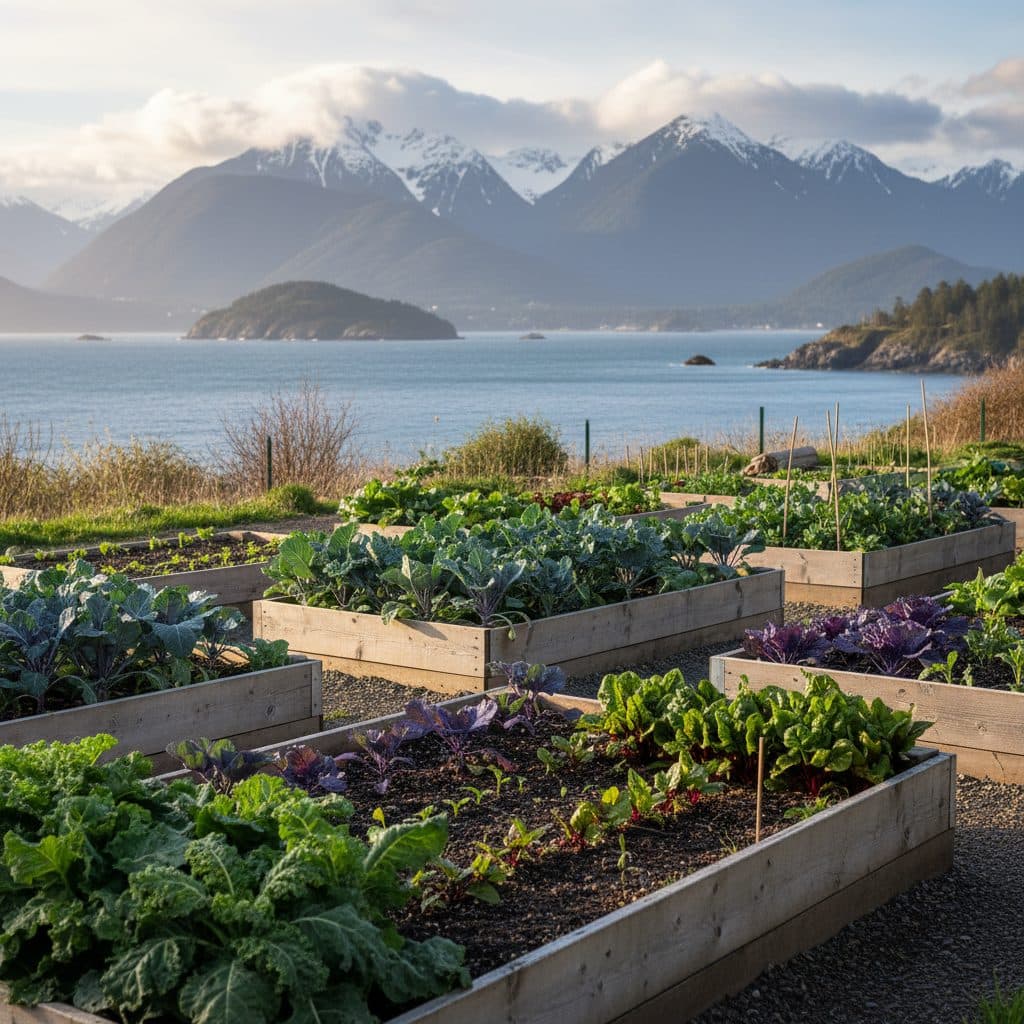
- Use raised timber or stone beds: Raised garden beds elevate the soil profile 30 cm above surrounding ground, draining cold gravitational rainwater and warming up two to three weeks earlier in spring.
- Pre-warm beds with clear plastic: Lay clear polyethylene film over planting beds two weeks before sowing to warm the soil and shelter the ground from cold spring rain, letting you start cool-season crops two to three weeks earlier.
- Deploy floating row covers: Cover newly planted rows with lightweight spunbond polypropylene fabric. This traps ambient heat and shields young seedlings from coastal rainstorms and root maggot flies.
- Low tunnels and cold frames: Build simple PVC or conduit pipe low tunnels over greens and early brassicas to allow harvesting crisp salads right through winter gales.
Soil care, pest management and fall mulching in BC
Maintaining healthy soil biology across British Columbia requires adapting to local moisture patterns:
- Managing coastal winter leaching & acidity: Heavy winter rainfall along coastal BC flushes soluble nitrogen and calcium from sandy loam soils. Coastal BC soils leach calcium rapidly in winter rain and turn acidic; apply agricultural lime or dolomite every few years, but test your soil pH first rather than adding a fixed dose. Protect bare garden beds in October by sowing winter cover crops (fall rye and hairy vetch) or covering beds with cardboard topped with seaweed or shredded autumn leaves.
- Managing interior dryland salinity: In the dry Okanagan valley, high evaporation rates can cause surface mineral crusting. Apply deep drip irrigation directly beneath thick woodchip mulches to prevent surface salt accumulation.
- Slugs and damp-loving pests: Coastal gardens experience intense slug pressure throughout spring and autumn. Handpick slugs at dusk, use beer traps, and clear tall grass borders around planting beds to minimise pest migration into vulnerable vegetable seedlings.