Key takeaways
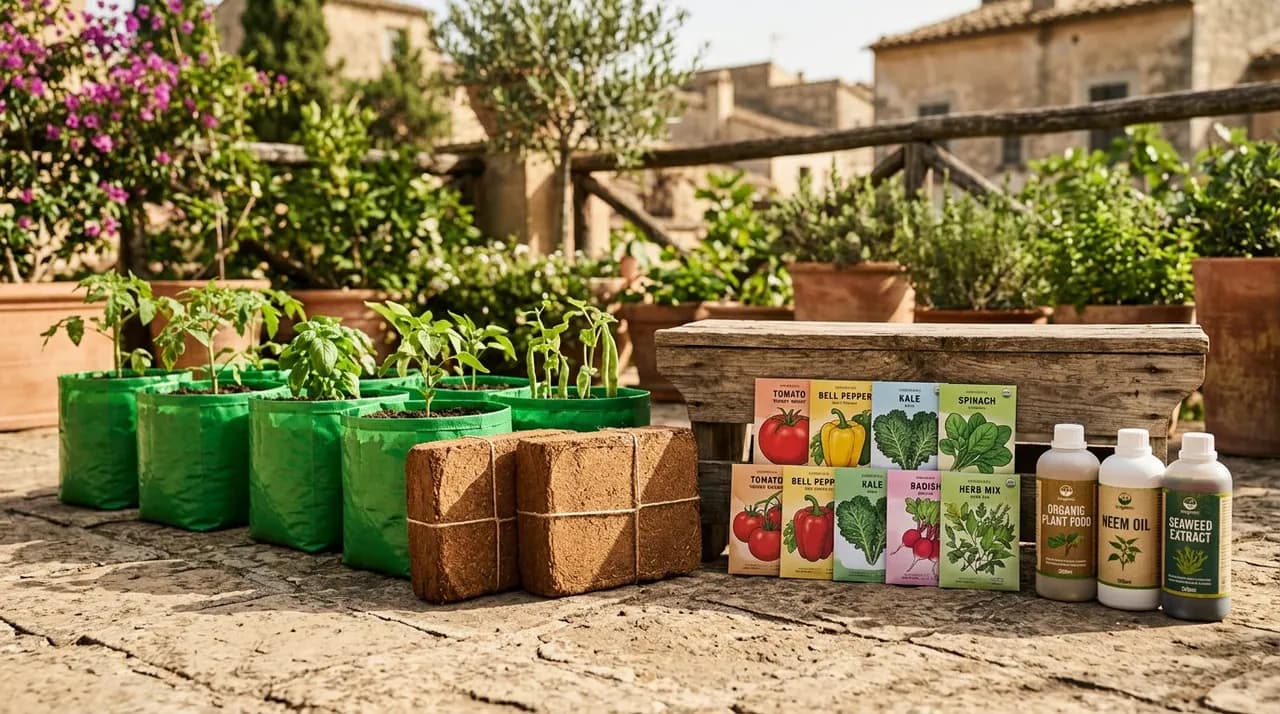
- Government terrace garden kits typically provide urban residents with UV-treated grow bags, compressed coco peat blocks, seasonal vegetable seeds, and bio-fertilizers.
- Application processes, kit configurations, subsidy percentages, and beneficiary quotas vary across districts and change between administrative funding cycles.
- Verify current scheme availability through the official Tamil Nadu Department of Horticulture portal or your local Assistant Director of Horticulture office.
- Rehydrate compressed coco peat thoroughly, mix with organic compost or manure, and inoculate with provided bio-inputs before sowing seeds.
- Elevate grow bags on drainage cells or bricks to prevent moisture accumulation on concrete roof slabs during heavy monsoon rains.
Quick answer: The Tamil Nadu horticulture department terrace garden kit is an urban vegetable initiative providing subsidized grow bags, coco peat, seeds, and bio-inputs. Applications open periodically through district horticulture offices and department channels, with specific kit components and eligibility rules set by local administrative guidelines.
The Tamil Nadu Horticulture Department terrace garden kit initiative is one of the state's main programs to promote urban rooftop agriculture. Created under urban horticulture development schemes to encourage household food self-reliance, these starter kits make it straightforward for city residents in Chennai, Coimbatore, Madurai, Tiruchirappalli, and other municipalities to start cultivating fresh vegetables at home.
Urban rooftops and balconies offer significant unutilised space, but beginners often struggle to source quality growing media, durable containers, and reliable vegetable seeds in city markets. By packaging essential physical inputs together, the state's do it yourself terrace garden kit approach lowers the barrier to entry for first-time urban growers.
Because state horticultural schemes operate on seasonal budget allocations and decentralized district targets, understanding how the scheme is structured, what the kits generally contain, and how to verify active enrollment windows will help you launch a productive rooftop garden.
What does a government rooftop gardening kit generally contain?
While exact items, quantities, and brand specifications fluctuate depending on state procurement contracts and local district distribution schedules, the tamil nadu terrace garden scheme generally packages the fundamental components required to set up a compact rooftop vegetable patch:
1. High-density grow bags
Kits typically include a set of durable, UV-stabilized green HDPE grow bags (often 5 to 10 bags per standard unit). These containers are lightweight, weather-resistant, and sized specifically for vegetable crops like brinjal, tomato, bhindi (ladies finger / okra), and green chillies.
2. Compressed coco peat blocks
To eliminate the need for heavy garden soil on concrete roofs, kits supply compressed coir pith (coco peat) blocks. Once expanded with water, coco peat provides a porous, high-moisture-retention root zone that places minimal structural load on the building slab.
3. Native and hybrid vegetable seeds
Kits include sealed packets of seasonal vegetable and culinary herb seeds suited to Tamil Nadu's warm agro-climatic conditions. Common seed varieties include:
- Fruiting vegetables: Brinjal (eggplant), tomato, bhindi (okra), cluster beans (kothavarangai), and green chillies.
- Gourds and climbers: Snake gourd (pudalangai), rib gourd (peerkangai), or bitter gourd (pavakkai).
- Leafy greens: Traditional keerai varieties (such as araikeerai, sirukeerai, or thandukeerai), palak, and coriander.
4. Bio-fertilizers and organic growth promoters
To encourage organic practices, kits supply biological inputs:
- Nitrogen-fixing bacteria: Liquid or carrier-based Azospirillum inoculants to increase nitrogen availability.
- Phosphorus-solubilising bacteria: Phosphobacteria cultures to release bound phosphates in the potting media.
- Bio-pesticides and biocontrols: Trichoderma viride or Pseudomonas fluorescens to protect young seedlings from damping-off and soil-borne fungal pathogens, alongside cold-pressed neem oil formulations for soft-bodied pest control.
5. Supplemental tools and accessories
Some kit distributions also include a small handheld hand sprayer, a polythene floor sheet to protect the terrace surface, or an illustrated instruction manual written in Tamil and English detailing seasonal crop management.
To explore foundational soil biology and amendment principles, review our guide to organic gardening soil.
How to apply: application channels, documentation, and verification
Because urban gardening schemes operate under state budgetary guidelines, application procedures, eligibility criteria, and distribution schedules are managed through formal administrative channels.
Application channels and verification
When a distribution window is open, applications are handled through the Department of Horticulture's own channels. The route varies (an online form in some cycles, the district horticulture office or a municipal camp in others), as does any beneficiary contribution and how it is paid. Confirm the current process with your Assistant Director of Horticulture office before you pay anything or share documents.
- Department website: Information and announcements are published on the Tamil Nadu Department of Horticulture and Plantation Crops website (tnhorticulture.tn.gov.in).
- Documentation: Applicants are generally asked for proof of identity and of residence within the covered urban limits, but the documents accepted and the residence rule itself are set locally and change. Ask your district horticulture office what is currently required before you travel.
- Physical distribution points: Distribution points are announced locally each cycle. Your Assistant Director of Horticulture office, or the nearest district horticulture farm, can tell you where kits are being issued and when.
Important note on dynamic guidelines and quotas
Beneficiary guidelines, subsidy rates, kit costs, and distribution calendars change periodically based on state policy decisions and district budget limits. agripure does not state fixed prices, scheme numbers, or rigid dates because these figures are governed by government administrative orders. Always verify the current status directly with your district horticulture department.
For broader container layout strategies, consult our companion walkthrough on terrace garden design.
Step-by-step setup: preparing coco peat and assembling grow bags
Once you receive your kit, proper assembly ensures optimal seed germination and prevents common container mistakes:
[Compressed Coco Peat Block]
       |
       v (Immerse in clean water bucket)
[Hydrated & Fluffed Coir]
       |
       v (Mix 2 parts coir + 1 part vermicompost/cow manure)
[Porous Potting Blend]
       |
       v (Inoculate with Azospirillum & Trichoderma)
[Filled HDPE Grow Bag]
       |
       v (Elevate on brick supports above roof slab)
[Sown Vegetable Seeds]
Step 1: Rehydrating and leaching the coir block
- Place the compressed coco peat block into a large clean tub or bucket.
- Add roughly 3.5 to 4 litres of clean water per kilogram of compressed block, in stages, letting it swell for 20 to 30 minutes. Stop when the coir is fluffy and damp; it should hold together when squeezed without water running out.
- Fluff the moist coir with your hands. If the material has a noticeable salty smell, rinse and squeeze the expanded coir with fresh water to leach out excess residual salts before planting.
Step 2: Formulating a balanced potting blend
Pure coco peat holds moisture well but contains virtually no inherent plant nutrients. To support vigorous vegetable growth, blend the expanded coir with organic matter:
- 60% expanded coco peat
- 30% aged vermicompost or well-rotted cattle manure
- 10% red earth or river sand (to add mineral structure)
- Thoroughly mix in the provided packets of Azospirillum, Phosphobacteria, and Trichoderma into the batch to establish beneficial microbial colonies.
Step 3: Filling and siting the grow bags
- Unfold the green HDPE grow bags and fill them evenly up to 3 cm below the top rim.
- Gently tap the bags on the ground to settle air pockets without packing the mix too tightly.
- Place all filled bags on raised bricks or interlocking plastic drainage mats so they do not sit flush against the concrete slab.
If you are working with limited square footage, see our advice for small home terrace garden.
Sowing seasonal vegetables and managing water on rooftops
Tamil Nadu's tropical climate allows year-round vegetable production, but sowing schedules need to match local rainfall and temperature cycles.
Sowing direct seeds vs. nursery transplants
- Direct-seeded crops: Bhindi (okra), cluster beans, radishes, and all gourds should be sown directly into their final grow bags at a depth of 1.5 cm to 2 cm.
- Transplanted crops: Brinjal, tomato, and green chilli seeds should be sown in small seed-starting trays first. When seedlings produce 4 to 5 true leaves (around 3 to 4 weeks after germination), transplant the strongest individual seedling into a dedicated 30 cm by 30 cm grow bag.
- Leafy greens: Broadcast keerai and coriander seeds across shallow, wide containers, covering with a thin 0.5 cm sprinkle of compost. For detailed indoor and balcony herb tips, read how to grow coriander at home.
Water management and summer protection
Rooftop containers dry out rapidly in the tropical heat:
- Water early in the morning before the sun heats the concrete roof.
- In peak summer (April to June), provide a 50% green agro-shade net overhead to prevent blossom drop and leaf scorching on tomatoes and chillies.
- For comprehensive container strategies across urban environments, review rooftop and patio container gardening.