Key takeaways
- Rain gardens collect and infiltrate stormwater, reducing runoff by up to 90% in urban areas.
- Dry creek beds manage water flow and prevent erosion on slopes up to 15 degrees.
- Bioswales are larger, engineered systems for filtering and conveying significant volumes of water from areas over 1 acre.
- Proper soil preparation, including adding 30-50% compost, is essential for infiltration in all systems.
- Plant selection should prioritize native, water-tolerant species appropriate for your specific USDA zone.
- A single inch of rain on a 1,000 square foot roof can generate 623 gallons of runoff.
Quick answer: Effective runoff solutions for farms, such as rain gardens, dry creek beds, and bioswales, capture and infiltrate stormwater to prevent erosion, recharge groundwater, and protect water quality. These systems utilize specific soil mixes and native plants to manage water flow across the property.
In many parts of the United States, from the humid Southeast to the arid West, managing stormwater runoff is a critical concern for growers. A single inch of rain falling on a 1,000 square foot roof can generate 623 gallons of water, a volume that can overwhelm landscapes, erode soil, and carry pollutants into local waterways. In regions like the Pacific Northwest, where annual rainfall can exceed 40 inches, or the Midwest, experiencing more frequent heavy downpours, uncontrolled runoff poses a significant challenge to soil health and water quality.
As growers, we have a responsibility and an opportunity to turn this challenge into a resource. Instead of letting valuable water rush away, we can capture, slow, and infiltrate it back into the ground, benefiting our plants, recharging groundwater, and protecting downstream ecosystems. Three practical solutions (rain gardens, dry creek beds, and bioswales) help address runoff according to site slope and soil conditions across USDA zones 5 through 9.
Understanding runoff and its impact on your property
Stormwater runoff occurs when rain or snowmelt flows over impervious surfaces like roofs, driveways, and compacted soil, picking up pollutants and eroding topsoil. A common calculation shows that a single inch of rain falling on a 1,000 square foot roof generates 623 gallons of water [3]. This volume can quickly overwhelm natural drainage systems, leading to localized flooding and significant soil loss. For example, in agricultural areas of the Midwest, heavy rainfall events, which have increased by 30% in recent decades, can strip away several tons of nutrient-rich topsoil per acre, reducing long-term productivity.
Beyond erosion, runoff carries contaminants (including nitrogen, phosphorus, pesticides, and petroleum products) into streams, rivers, and lakes. These pollutants degrade water quality, harm aquatic life, and can impact drinking water sources. In coastal regions, such as the Chesapeake Bay watershed, agricultural runoff contributes significantly to algal blooms and dead zones, affecting commercial fisheries and recreational activities. Understanding the volume of water your property generates is the first step toward effective management.
Calculating your runoff potential
To accurately assess your runoff potential, begin by measuring the square footage of all impervious surfaces on your property. This includes your roof, driveways, patios, and any compacted areas. For instance, a typical suburban home might have a 2,000 square foot roof and a 500 square foot driveway, totaling 2,500 square feet of impervious surface. A 1-inch rain event on this area would produce 1,557.5 gallons of runoff. Knowing this number helps you size appropriate solutions.
Directing downspouts away from foundations and into permeable areas is a simple but effective first step. Distributing downspout water broadly across a lawn or garden instead of concentrating it in one spot prevents erosion channels. Even a 100 square foot section of compacted soil generates 62.3 gallons of runoff from a 1-inch rain, showing the need for thoughtful water management across the entire property.
- Erosion of topsoil, reducing soil fertility by up to 30%.
- Loss of valuable nutrients like nitrogen and phosphorus.
- Contamination of local waterways with pesticides and herbicides.
- Increased flooding risk in low-lying areas, damaging property.
- Reduced groundwater recharge, impacting well water levels by several feet.
Rain gardens: a living solution for stormwater
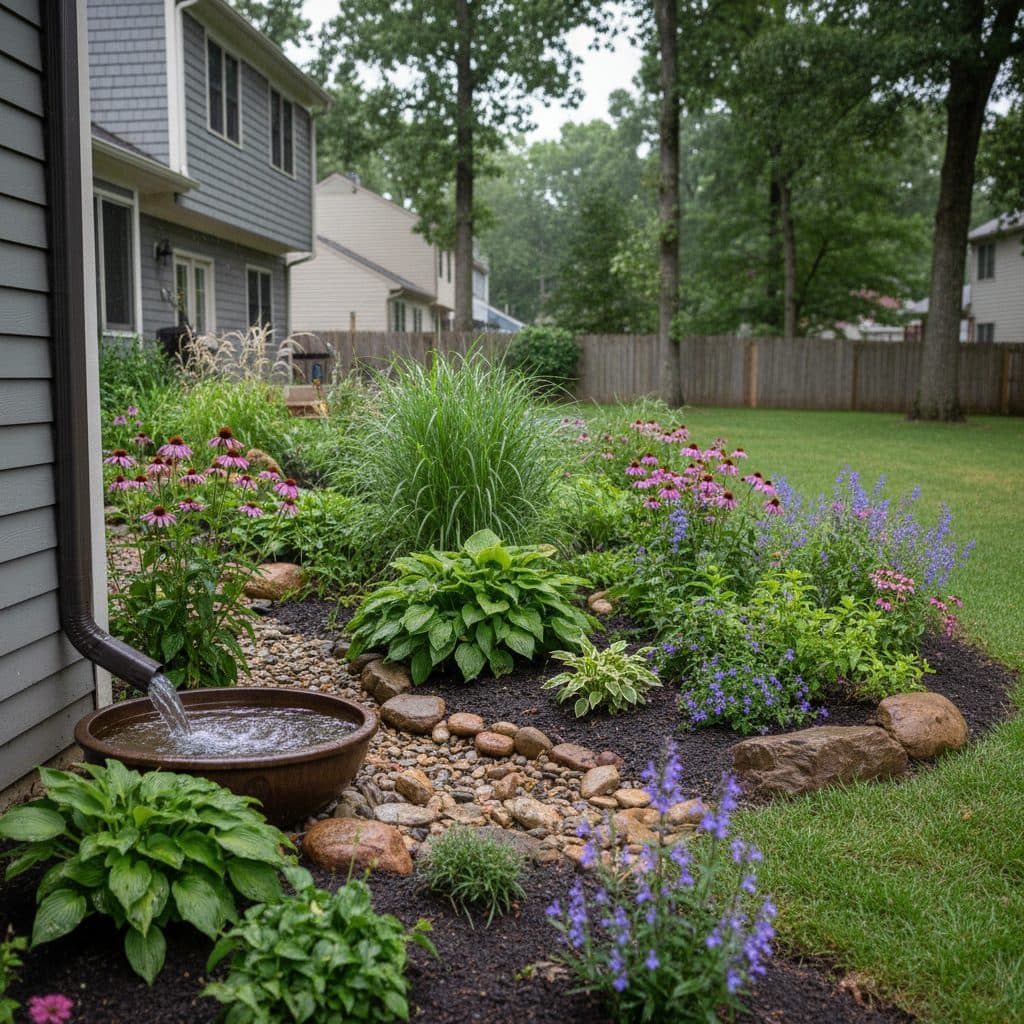
A rain garden is a shallow, vegetated depression designed to collect and absorb stormwater runoff from impervious surfaces like roofs and driveways. Unlike a pond, a rain garden is engineered to drain completely within 24-48 hours after a rain event, preventing mosquito breeding. These gardens typically feature a depression 6-12 inches deep and are filled with a specific soil mix, often 50-60% sand, 20-30% topsoil, and 20-30% compost, which significantly improves infiltration rates to 0.5 inches per hour or more [4]. This specialized soil and plant combination allows rain gardens to reduce stormwater runoff by up to 90% in urban areas [4], effectively filtering pollutants and recharging groundwater.
Plants chosen for a rain garden must be native and tolerant of both saturated soil and dry periods between rain events. For growers in USDA zone 7, suitable species include coneflower (Echinacea purpurea), cardinal flower (Lobelia cardinalis), and swamp milkweed (Asclepias incarnata). These native species handle variable moisture conditions and provide habitat for local pollinators, while increasing soil moisture in surrounding plantings.
Designing and planting your rain garden
When planning a rain garden, proper sizing and placement are key. A good rule of thumb is to size the garden to be 5-10% of the impervious area it drains [3]. For example, if your roof is 2,000 square feet, a rain garden between 100 and 200 square feet would be appropriate. It is critical to locate your rain garden at least 10 feet from your home’s foundation to prevent any moisture issues [5]. The garden should be situated downslope from the runoff source, allowing gravity to do most of the work.
Planting within a rain garden often involves creating different zones based on moisture tolerance. The deepest part, or wet zone, can host plants like fox sedge (Carex vulpinoidea) or blue flag iris (Iris versicolor). The transition zone, slightly higher, is suitable for swamp milkweed (Asclepias incarnata) or blazing star (Liatris spicata). The upland zone, along the edges, can feature plants like wild bergamot (Monarda fistulosa). For more ideas on plant selection, especially those that can handle varied moisture, consult resources on drought tolerant plants. After planting, apply 2-3 inches of wood chip mulch to help retain moisture and suppress weeds, which supports the garden during its first year of establishment.
- A shallow depression, typically 6 to 12 inches deep.
- Engineered soil mix, often 50-60% sand, 20-30% topsoil, 20-30% compost.
- Native, water-tolerant plants adapted to both wet and dry conditions.
- Located at least 10 feet from building foundations to prevent moisture issues.
- Designed to capture runoff from a specific impervious area, like a 1,500 sq ft roof or driveway.
Dry creek beds: managing flow and erosion
Dry creek beds are landscape features designed to mimic natural stream beds, primarily used to manage and direct stormwater runoff. They are particularly effective for properties with concentrated water flow, steeper slopes (up to 15 degrees), or areas where erosion is a concern [2]. By creating a defined channel lined with various sizes of river rock and gravel, a dry creek bed slows the velocity of rushing water, preventing soil erosion and allowing some water to infiltrate into the ground. These features are typically 2-3 feet wide and 6-12 inches deep, depending on the expected water volume.
Unlike rain gardens, which are designed for infiltration over a broad area, dry creek beds are focused on conveying water from one point to another, often directing it to a rain garden, a larger infiltration basin, or a stable drainage point. In arid regions like the Southwest, where flash floods are common, dry creek beds are effective for safely channeling large volumes of water that might otherwise cause significant property damage. They also add aesthetic appeal, appearing as naturalistic landscape elements even when dry.
Constructing an effective dry creek bed
Building a dry creek bed requires careful planning to ensure it effectively manages water flow. First, identify the natural path water takes across your property, paying attention to areas where water concentrates or causes erosion. The trench should be excavated with gently sloping sides, typically 6-12 inches deep, and a width appropriate for the expected flow, often 2-3 feet for residential applications. For slopes exceeding 10%, consider incorporating small check dams made of larger rocks to further slow water velocity and encourage infiltration.
After excavation, line the trench with heavy-duty permeable landscape fabric, overlapping edges by at least 6 inches. This fabric prevents weeds from growing through the rocks and keeps the soil from migrating upwards into the gravel. Next, strategically place larger rocks, typically 6-12 inches in diameter, along the bottom and sides to create a natural appearance and provide structural stability. Fill the remaining space with smaller river rock, usually 1-3 inches in diameter, making sure the fabric is completely covered. Along the banks, consider planting ground cover plants like creeping thyme or native grasses in USDA zone 6 to further stabilize the soil and soften the edges, helping to blend the feature into the surrounding landscape.
- A trench lined with permeable landscape fabric.
- Various sizes of river rock, gravel, and boulders, from 1 inch to 12 inches.
- Designed to manage water flow on slopes up to 15 degrees.
- Often includes check dams or small drops to further slow water velocity.
- Can direct water towards a larger infiltration area or a 150 sq ft rain garden.
Bioswales: larger-scale landscape integration
Bioswales are vegetated, gently sloped channels designed to convey, filter, and infiltrate large volumes of stormwater runoff. They are essentially larger, more engineered versions of rain gardens, often used in commercial developments, along roadsides, or on expansive agricultural properties, such as a 50-acre vineyard in California. Bioswales are typically longer and shallower than rain gardens, with widths ranging from 5 feet to 20 feet or more, depending on the drainage area they serve. Their primary function is to slow down runoff, allowing sediment and pollutants to settle out while the vegetation and engineered soil media filter the water.
These systems can significantly improve water quality, with studies showing they can filter 80-90% of suspended solids and 50-70% of nitrogen and phosphorus from stormwater [6]. The soil media in a bioswale is often 18-36 inches deep, a specific blend of sand, compost, and topsoil designed to maximize infiltration and pollutant removal [6]. Bioswales are particularly valuable in areas with large impervious surfaces, where traditional drainage systems might be overwhelmed by heavy rainfall, which can exceed 3 inches in a single event in many US regions.
Designing and maintaining bioswale systems
Designing a bioswale requires careful consideration of the site’s topography, soil type, and the volume of runoff it will manage. The channel typically has a gentle slope, often between 1-3%, to ensure water flows slowly enough for filtration but quickly enough to prevent standing water. Plant selection is essential, favoring deep-rooted native grasses and forbs that can withstand both saturated conditions and extended dry periods. Examples for USDA zones 4-9 include switchgrass (Panicum virgatum), big bluestem (Andropogon gerardii), and various sedges (Carex spp.), which establish root systems up to 3 feet deep for stability and filtration.
Initial establishment of a bioswale may require irrigation, which can be managed with a garden PE irrigation hose, especially during dry spells in the first year. Maintenance involves periodic weeding, especially during the first two years, and sediment removal every 5-10 years, depending on the amount of sediment captured. Regular inspections, perhaps quarterly, help ensure the system is functioning optimally and that the vegetation remains healthy. A properly maintained bioswale can provide effective stormwater management for 20-30 years, offering a long-term solution for large-scale runoff challenges.
- A gently sloped, vegetated channel, typically 5 to 20 feet wide.
- Engineered soil media, often 18 to 36 inches deep, for filtration.
- Robust, deep-rooted native grasses, sedges, and wildflowers.
- Designed to convey, filter, and infiltrate large volumes of stormwater runoff.
- Can remove 80-90% of suspended solids and 50-70% of certain nutrients like nitrogen.
Choosing the right solution for your property
This builds directly on bioswales larger scale.
Deciding between a rain garden, dry creek bed, or bioswale depends on several factors specific to your property: the volume of runoff, the slope of the land, your soil type, budget, and aesthetic preferences. Rain gardens are generally best for residential properties or small commercial sites, effectively managing runoff from impervious areas up to 5,000 square feet. They are ideal for capturing water from a single downspout or a small section of driveway, allowing it to infiltrate and filter close to the source. Their relatively small scale and varied plant palette make them a popular choice for home growers in USDA zones 4-9.
Dry creek beds excel at managing concentrated water flow and preventing erosion on slopes up to 15 degrees. If you have a property with a distinct drainage path that experiences rapid water movement during storms, a dry creek bed can slow that water down and direct it safely. They are versatile and can be designed to blend seamlessly into various landscapes, from a woodland setting in New England to a desert garden in Arizona. Bioswales, on the other hand, are designed for larger properties, agricultural fields, or commercial developments, capable of handling runoff from over 1 acre. They require more engineering and a larger footprint but offer comprehensive filtration and conveyance for significant water volumes.
Combining approaches for comprehensive management
Often, the most effective stormwater management plan involves combining these solutions. For example, a 2-acre property in rural Ohio might use a dry creek bed to channel water from a large barn roof and gravel access road to a rain garden near the house, while a bioswale manages runoff from a larger field. This layered approach addresses different runoff sources and flow characteristics across the property. Before starting any major project, consider a site assessment, perhaps consulting with your local USDA Natural Resources Conservation Service (NRCS) office [6], which can provide guidance on soil types and appropriate designs for your region.
Even small interventions can make a substantial difference. A 50 square foot rain garden can capture over 300 gallons of water during a 1-inch rain event, significantly reducing the burden on municipal storm drains and replenishing local groundwater. Understanding site conditions and runoff patterns helps in selecting the right approach. Whether managing a suburban lot or a rural property, runoff solutions capture stormwater and protect soil from erosion.
- Rain Garden: Ideal for residential yards, small commercial sites, capturing runoff from up to 5,000 square feet of impervious surface.
- Dry Creek Bed: Suited for directing water flow, preventing erosion on slopes up to 15%, and enhancing landscape aesthetics.
- Bioswale: Best for larger properties, agricultural lands, or commercial developments, managing runoff from over 1 acre.
- Soil Type: Consider your soil’s infiltration rate; sandy soils drain faster than clay, which might need more soil amendment like 30% compost.
- Budget & Maintenance: Rain gardens are generally less expensive and easier to maintain than bioswales, which require more engineering and periodic sediment removal every 5-10 years.
Comparing Stormwater Runoff Solutions
Solution | Primary Purpose | Typical Scale | Key Feature | Maintenance |
|---|---|---|---|---|
Rain Garden | Infiltrate & filter | Residential (50-500 sq ft) | Vegetated depression | Low (weeding, watering first year) |
Dry Creek Bed | Convey & slow flow | Any size (linear) | Rock-lined channel | Very low (debris removal) |
Bioswale | Convey, filter & infiltrate | Large properties (1+ acre) | Engineered vegetated channel | Moderate (sediment removal, plant care) |
Water Savings: A 100 sq ft rain garden can capture over 6,000 gallons of water annually in a region receiving 30 inches of rain.
Erosion Control: Dry creek beds can reduce soil erosion by up to 80% on slopes with concentrated water flow, especially those between 5-15% grade.
Frequently asked questions
How much space do I need for a rain garden?
A general rule of thumb is to size your rain garden to be 5-10% of the impervious surface area it will drain. For example, if your roof is 1,000 square feet, a rain garden of 50 to 100 square feet would be appropriate to capture most of the runoff from a 1-inch rain event, infiltrating hundreds of gallons of water.
Can I build a dry creek bed on a steep slope?
Dry creek beds are effective on slopes, but extremely steep grades (over 15%) can still lead to high water velocity and erosion. For steeper slopes, consider incorporating check dams or terraces within the dry creek bed design to slow water flow further, potentially reducing velocity by 50% or more and preventing soil loss.
What kind of plants should I use in a bioswale?
Bioswales require deep-rooted native plants that can tolerate both saturated conditions and dry spells. Good choices for many US regions include switchgrass (Panicum virgatum), cardinal flower (Lobelia cardinalis), and various sedges (Carex spp.), which can establish root systems up to 3 feet deep for stability and filtration, supporting the system’s longevity for 20-30 years.
How often do rain gardens need maintenance?
Rain gardens typically require the most maintenance in their first year to establish plants and ensure proper drainage. This includes watering during dry periods, weeding to prevent competition, and checking for sediment buildup, which might be a concern after a 2-inch rainstorm. After establishment, maintenance usually reduces to a few hours per month, largely consisting of seasonal cleanup.
Are bioswales suitable for residential properties?
While bioswales are often used for larger commercial or municipal projects, a smaller-scale bioswale, sometimes called a vegetated swale, can be adapted for larger residential properties, especially those with long driveways or significant lawn areas (over 0.5 acre) that generate considerable runoff. They are generally wider and longer than typical rain gardens, often 5 feet wide or more, requiring more space but offering greater capacity.
What is the lifespan of these runoff solutions?
With proper design and maintenance, rain gardens can function effectively for 10-20 years, while dry creek beds, being primarily rock-based, can last 20-30 years or more with minimal upkeep. Bioswales, due to their engineered nature and larger scale, are often designed for a lifespan of 20-30 years, requiring periodic sediment removal every 5-10 years to maintain optimal performance and filtration rates.
References
- Garden Creek and the Glocal Middle Woodland (2019). Garden Creek and the Glocal Middle Woodland.
- Simulation of rain floods on Willow Creek, Valley County, Montana (1986). Simulation of rain floods on Willow Creek, Valley County, Montana.
- The Rain Garden (2024). The Rain Garden.
- Modeling stormwater rain garden performance (2023). Modeling stormwater rain garden performance.
- Educator’s Toolkit for Rain Garden Programs (2021). Educator’s Toolkit for Rain Garden Programs.
- USDA Natural Resources Conservation Service (2024). USDA Natural Resources Conservation Service.