Key takeaways
- Many US cities, including Philadelphia and Portland, offer financial incentives for installing rain gardens and other green infrastructure.
- Stormwater credit programs can reduce annual utility bills by 10% to 50% for properties managing runoff on-site.
- Rain gardens effectively capture and filter up to 90% of stormwater runoff from impervious surfaces, improving local water quality.
- Passive irrigation methods like ollas and wicking beds can cut irrigation water use by 50% to 70% compared to conventional watering.
- Understanding local municipal programs and requirements is crucial for maximizing financial benefits and environmental impact.
- Integrating water harvesting with passive irrigation creates resilient garden systems, especially in regions like USDA zones 7-9.
Quick answer: Many US cities offer financial incentives like rain garden rebates and stormwater credits, allowing home growers to reduce utility bills by 10-50% and improve water quality. By installing green infrastructure and passive irrigation methods, residents can save hundreds annually while creating more resilient garden systems.
In cities across the United States, managing stormwater runoff is a significant challenge, especially with increased rainfall events in regions like the Northeast and Pacific Northwest. However, this challenge presents an opportunity for home growers to save money and improve their gardens. Over 100 US municipalities, from Philadelphia, Pennsylvania, to Portland, Oregon, now offer various incentives, including rebates and stormwater credits, for property owners who install green infrastructure like rain gardens [2]. These programs aim to reduce the burden on aging drainage systems and prevent pollution from entering local waterways, while also putting hundreds of dollars back into the pockets of residents who participate.
For growers, these municipal programs offer practical savings and enhanced garden productivity, on top of compliance and environmental stewardship. By implementing strategies like rain gardens, ollas, wicking beds, and passive irrigation earthworks, you can significantly reduce your water consumption, lower utility bills, and create a more resilient growing space. For example, a typical 500 sq ft residential property in a city with a strong stormwater credit program could see annual savings of $50 to $200 by managing 100% of its stormwater on-site [2]. Here is how these programs work and how you can apply these water-wise techniques in your own garden.
Understanding municipal stormwater programs and credits
Many US cities and counties operate stormwater management programs designed to mitigate the impacts of runoff from impervious surfaces like rooftops, driveways, and patios. When rain hits these surfaces, it picks up pollutants such as chemicals, sediment, and trash, and carries them directly into local streams, rivers, and lakes [2]. To combat this, municipalities charge a stormwater utility fee, often appearing on your water bill. However, many of these same cities also offer credits or rebates to property owners who install features that reduce or treat stormwater on their land.
How stormwater credits work
A stormwater credit typically reduces your utility bill based on the amount of impervious surface you manage or the volume of stormwater you retain. For instance, in Washington D.C., property owners can receive up to a 55% reduction on their stormwater fee by installing green infrastructure that captures a certain volume of runoff [2]. Similarly, in Philadelphia, the Stormwater Management Incentives Program (SMIP) provides grants for projects that manage at least 1,000 gallons of stormwater runoff per rain event. These incentives make investing in water-wise landscaping a financially sound decision for many growers.
- Assess your property’s impervious surfaces, such as a 1,500 sq ft roof or a 500 sq ft driveway.
- Research your local municipality’s stormwater utility website for available credit programs.
- Identify eligible green infrastructure projects, like a 200 sq ft rain garden or a 500-gallon rainwater harvesting system.
- Submit an application with design plans, often requiring professional certification for larger projects.
- Receive a reduction on your monthly or annual stormwater utility bill, potentially saving $10 to $30 per month.
Rain gardens: a key to rebates and water management
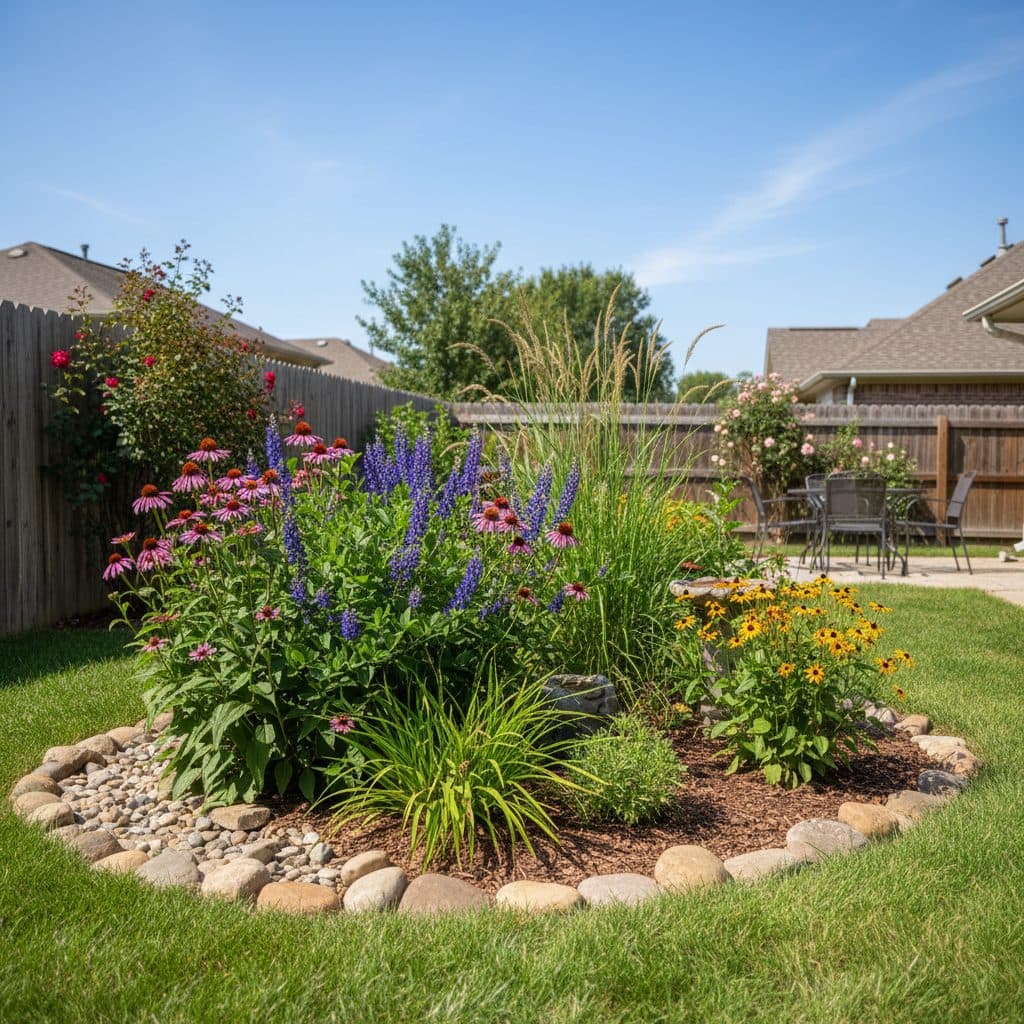
Rain gardens are perhaps the most popular and effective form of green infrastructure for residential properties, and they are often the centerpiece of municipal rebate programs. These shallow depressions are designed to capture and slowly absorb rainwater runoff from impervious surfaces, allowing it to infiltrate the ground rather than flow into storm drains [2]. A properly sized rain garden can filter out up to 90% of pollutants from stormwater, improving water quality in local watersheds [2].
Designing an effective rain garden
When planning a rain garden, consider its size and placement. A good rule of thumb is to make it 5% to 10% of the size of the impervious area it’s collecting from. For example, to manage runoff from a 1,000 sq ft roof, you might need a 50 to 100 sq ft rain garden. The depth is typically 6 to 9 inches, allowing for temporary ponding of water for up to 24 hours [2]. Planting native, water-tolerant species that thrive in your USDA zone, such as coneflowers or sedges in USDA zone 6, matters for success. Many cities, like Seattle, Washington, offer rebates of $500 to $2,000 for installing qualifying rain gardens, covering a significant portion of installation costs.
- Calculate the size of your impervious area; a 1,200 sq ft roof needs a 60 to 120 sq ft rain garden.
- Select a location at least 10 feet from your home’s foundation and downhill from the runoff source.
- Excavate the area to a depth of 6 to 9 inches, creating a level bottom.
- Amend the soil with 50% sand, 20% compost, and 30% native soil for better infiltration.
- Plant native, deep-rooted species appropriate for your USDA zone, such as switchgrass in zone 5 or irises in zone 8.
Passive irrigation: ollas, wicking beds, and earthworks
Beyond rain gardens, integrating passive irrigation techniques can dramatically reduce your garden’s water footprint and enhance plant health, especially in drier climates like USDA zone 9. These methods work by delivering water directly to plant roots, minimizing evaporation and runoff. They complement municipal stormwater efforts by reducing the demand for potable water for irrigation, potentially lowering your water bill by 30% to 50% during peak growing seasons.
Water-wise techniques for your garden
Ollas are unglazed clay pots buried in the soil, filled with water, and allowed to slowly release moisture through their porous walls directly to plant roots [4]. This method can reduce water use by up to 50% to 70% compared to surface irrigation, making it ideal for individual plants or small beds. A single 1-gallon olla can effectively irrigate a 2-3 ft diameter area for several days. Wicking beds are raised garden beds with a sealed reservoir at the bottom, from which water is drawn up into the soil by capillary action [3]. They can maintain consistent soil moisture for up to 3 weeks, significantly reducing the frequency of watering. For larger areas, passive irrigation earthworks like swales and berms capture and spread rainwater across the landscape, mimicking natural water flows [1]. A 50 ft long swale, 1 ft deep, can hold over 300 gallons of water, slowly releasing it to surrounding plants. Consider exploring rainwater harvesting systems to fill these passive irrigation structures.
- Bury 1-gallon ollas every 2-3 ft in garden beds, refilling them every 3-7 days depending on plant needs.
- Construct wicking beds with a 6-12 inch deep water reservoir, separated from the soil by a permeable layer.
- Design swales on contour lines with a gentle slope of 1% to 2% to spread water evenly across a 50 ft planting area.
- Integrate berms to slow water flow and create microclimates, particularly beneficial in arid regions like the Southwest.
- Use a 5 L garden pressure sprayer for precise watering of ollas or initial plant establishment in wicking beds.
Integrating water harvesting with garden design
Maximizing the benefits of municipal programs and passive irrigation often involves integrating a comprehensive water harvesting strategy. This means capturing rainwater from your roof and storing it for later use in your garden. A typical 1,000 sq ft roof can collect approximately 620 gallons of water for every 1 inch of rainfall [2]. Storing this water in rain barrels or larger cisterns provides a free, chlorine-free water source for your plants, reducing reliance on municipal water supplies and further lowering your bills.
Practical water harvesting solutions
Rain barrels are a simple starting point, with capacities ranging from 50 to 100 gallons. Many cities, like Austin, Texas, offer rebates of $25 to $50 per rain barrel. For larger needs, consider installing a cistern that can hold 500 to 1,000 gallons or more. This collected water can then be gravity-fed to your wicking beds or used to refill ollas. You can also connect it to a simple drip irrigation system using a garden PE irrigation hose, especially beneficial for larger garden areas in USDA zone 7. The USDA Natural Resources Conservation Service (NRCS) provides resources and technical assistance for implementing on-farm water conservation practices, which can be adapted for home gardens [1].
- Install one or more 50-gallon rain barrels at downspouts to collect roof runoff.
- Connect multiple rain barrels in series to increase storage capacity to 100-200 gallons.
- Consider a larger 500-gallon cistern for substantial water storage, particularly in regions with infrequent but heavy rainfall.
- Use collected rainwater to refill ollas, top off wicking beds, or for general garden watering, saving up to 50% on irrigation water.
- Filter collected water with a simple screen to prevent debris from clogging hoses or irrigation systems.
Navigating local requirements and maximizing benefits
While the benefits of these programs are clear, navigating local requirements can sometimes be complex. Each municipality has its own set of rules, application processes, and eligible project types. For example, some cities may require specific plant lists for rain gardens or professional certification for larger installations. Consult your local stormwater utility or public works department website early in your planning process. Many also offer workshops or technical assistance to help residents design and install projects that meet their standards.
Tips for successful participation
Start by identifying your property’s impervious surface area (a 2,000 sq ft lot might have 800 sq ft of roof and driveway). Then, research specific rebate amounts. In some areas, like the Chesapeake Bay watershed, grants can cover up to 75% of project costs for qualifying stormwater management installations. Documenting your project with photos and receipts is often a requirement for receiving rebates or credits. Consider connecting with local gardening groups or extension offices, as they often have up-to-date information on regional programs and can offer practical advice for growers in your specific USDA zone, such as zone 8 in the Southeast. Remember, a well-planned project not only saves you money but also contributes to healthier local ecosystems by reducing polluted runoff by thousands of gallons annually.
- Contact your city’s stormwater department or water utility for specific program guidelines and application forms.
- Attend local workshops or webinars, often offered free, to understand design standards and plant selections for your region.
- Obtain necessary permits before starting construction; some projects, like large earthworks, may require them.
- Keep detailed records of expenses, including materials and labor, for rebate applications.
- Consider starting with a smaller project, such as installing a 75-gallon rain barrel, to learn the process before tackling a larger rain garden.
Stormwater Fee Savings: Property owners in cities like Philadelphia can reduce their stormwater utility bills by up to 55% by managing runoff on-site, potentially saving hundreds of dollars annually [2].
Water Use Reduction: Implementing passive irrigation techniques such as ollas can cut garden irrigation water use by 50% to 70% compared to traditional watering methods [4].
Shop water-saving garden tools
Frequently asked questions
What is a stormwater credit?
A stormwater credit is a reduction in your municipal stormwater utility fee, typically offered to property owners who install green infrastructure like rain gardens or permeable pavements. These installations manage stormwater runoff on-site, reducing the burden on public drainage systems and potentially saving you 10% to 50% on your annual bill.
How much can a rain garden save me?
Savings vary by municipality and project size. A rain garden can significantly reduce your stormwater utility fee, potentially saving $50 to $200 annually, depending on local rates and the garden’s capacity to manage hundreds or thousands of gallons of runoff [2].
Are ollas really effective for water conservation?
Yes, ollas are very effective. They are unglazed clay pots that release water slowly into the soil, directly to plant roots, minimizing evaporation. This method can reduce irrigation water use by 50% to 70% compared to surface watering, making them ideal for conserving hundreds of gallons over a growing season [4].
What are wicking beds and how do they work?
Wicking beds are raised garden beds with a sealed water reservoir at the bottom. Water is drawn upwards into the soil via capillary action, providing consistent moisture to plant roots. This design can keep plants watered for up to 3 weeks, significantly reducing the need for manual watering by 75% or more.
Do I need a permit for a rain garden or other earthworks?
Permit requirements vary by city and the scale of the project. Small residential rain gardens (under 200 sq ft) often do not require permits, but larger earthworks or projects near property lines or critical areas might. Always check with your local planning or public works department before starting any significant construction to avoid fines of several hundred dollars.
Which plants are best for a rain garden?
Native plants that tolerate both wet and dry conditions are best. Examples include coneflowers, sedges, switchgrass, and various native shrubs. Selecting species appropriate for your specific USDA zone, such as zone 6, ensures they thrive and effectively absorb the 6 to 9 inches of temporary standing water.
References
- USDA Natural Resources Conservation Service (2024). USDA Natural Resources Conservation Service.
- EPA — Soak Up the Rain (2024). EPA — Soak Up the Rain.
- SARE — Sustainable Agriculture Research & Education (2023). SARE — Sustainable Agriculture Research & Education.
- ATTRA / NCAT Sustainable Agriculture (2023). ATTRA / NCAT Sustainable Agriculture.
- USDA National Agroforestry Center (2023). USDA National Agroforestry Center.