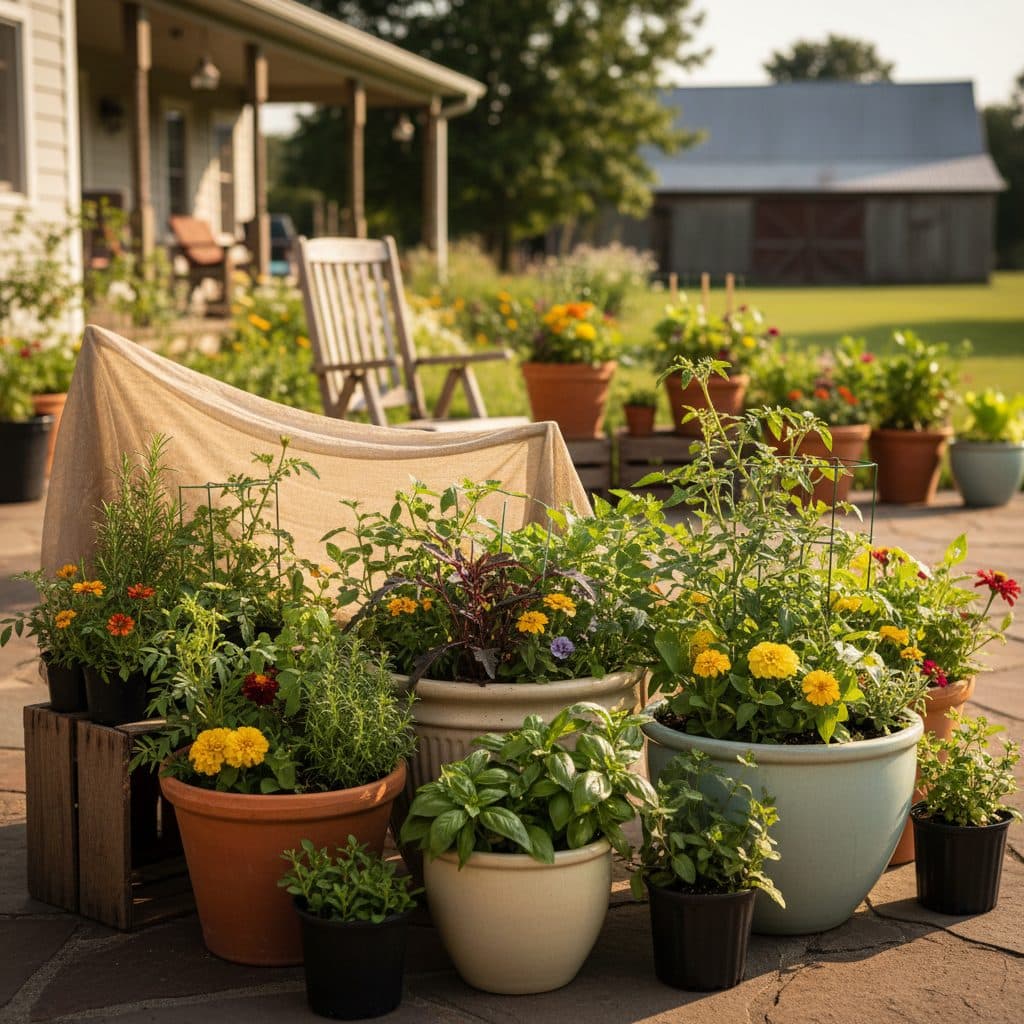
Key takeaways
- Choose light-colored, insulating pot materials like fabric or thick plastic to reduce root zone temperatures by 5-10°F compared to dark, thin plastic.
- Implement double-potting by placing a smaller pot inside a larger one with an air gap, which can lower root temperatures by 10-15°F.
- Provide emergency shade with shade cloth, umbrellas, or by moving plants to a naturally shaded area during peak sun hours, typically between 11 AM and 4 PM.
- Monitor soil moisture frequently with a soil moisture meter, as container plants in hot climates may need watering two to three times daily.
- Select heat-tolerant plant varieties and use a well-draining, moisture-retentive potting mix to build long-term resilience against heat and drought.
- Insulate pots with mulch, burlap, or reflective materials to prevent direct sun exposure to the pot sides, reducing soil temperature by several degrees.
Quick answer: To keep container plants cool in hot climates like USDA Zone 9b, use strategic shading, double-potting, and choose light-colored, insulating pots. Monitor soil moisture frequently and select heat-tolerant plant varieties to prevent root damage and ensure plant health.
In regions like USDA zone 9b in Arizona, summer temperatures regularly climb above 100°F for extended periods, posing a significant challenge for container gardens. While many plants thrive in heat when planted in the ground, their counterparts in pots face unique stresses. A container’s limited soil volume heats up much faster than garden beds, often reaching root-damaging temperatures that can exceed ambient air by 10-20°F.
This article outlines practical, proven strategies for protecting your container plants from extreme heat. We’ll cover everything from choosing the right pot materials and employing double-potting techniques to providing emergency shade and optimizing watering schedules. With a few adjustments, you can ensure your potted plants, whether a ‘Black Krim’ tomato or a dwarf citrus tree, continue to flourish even when the mercury hits 95°F or higher.
Understanding container heat stress
Container plants experience heat stress differently than in-ground plants primarily due to restricted root zones and direct sun exposure on pot walls. In areas like the Central Valley of California, where summer temperatures can reach 105°F, a dark plastic pot in full sun can easily push its internal soil temperature to 115°F or more. This extreme heat damages root hairs, inhibits water and nutrient uptake, and can lead to rapid wilting, leaf scorch, and even plant death.
The critical root zone temperature
The optimal temperature range for most plant roots is between 65°F and 85°F. When soil temperatures consistently exceed 90°F, many common garden plants, including vegetables and annuals, begin to show signs of distress [6]. Temperatures above 100°F can cause irreversible damage to root cells, leading to a decline in plant vigor and overall health. Metal containers, for instance, are particularly efficient at conducting heat, with thermal conductivities far surpassing those of plastic or ceramic, meaning they can transfer heat rapidly to the root zone [2].
- Reduced water uptake due to root damage.
- Stunted growth and decreased yield.
- Increased susceptibility to pests and diseases.
- Leaf scorch and wilting, even with adequate water.
- Premature flower or fruit drop.
Cooling pots: material and color choices
The material and color of your container affect how much heat reaches the root zone. Dark-colored plastic pots, especially thin ones, absorb and transfer solar radiation very efficiently, heating the soil rapidly. In a Texas summer, where temperatures can hit 100°F, a black plastic pot can easily register soil temperatures 15-20°F higher than a lighter-colored pot of the same material.
Choosing the right pot for heat resilience
Opt for light-colored pots, such as white, cream, or terracotta, which reflect more sunlight and absorb less heat. While terracotta is breathable, its thermal conductivity can still allow substantial heat transfer, especially if directly exposed to intense sun [4]. Fabric grow bags, often made from recycled materials, offer excellent insulation due to their porous structure, which allows for evaporative cooling and better air circulation around the roots. These bags can keep soil temperatures 5-10°F cooler than traditional plastic pots in direct sun. Consider materials like thick-walled plastic or glazed ceramic for their insulating properties, which can maintain more stable soil temperatures, often within 5°F of ambient air during a 90°F day.
- Light-colored plastic: Reflects sun, reduces heat absorption.
- Fabric grow bags: Breathable, evaporative cooling, better aeration.
- Thick-walled plastic: Provides insulation, durable.
- Glazed ceramic: Less porous than terracotta, retains moisture.
- Wood planters: Natural insulator, aesthetically pleasing.
Double-potting for insulation
Double-potting is a simple yet highly effective technique to insulate container plants from extreme heat. This method involves placing a smaller, planted pot inside a larger, empty pot, creating an insulating air gap between the two. This air layer acts as a thermal buffer, significantly slowing down heat transfer from the outer pot to the inner root ball. In trials conducted in USDA zone 8b in Georgia, double-potted containers maintained root temperatures 10-15°F cooler than single pots during peak afternoon sun, even when ambient temperatures reached 98°F [5].
Implementing the double-potting method
To double-pot, select an outer pot that is 2-4 inches larger in diameter than your inner planted pot. You can fill the gap between the pots with various insulating materials, such as mulch, straw, crumpled newspaper, or even sand. These materials further strengthen the thermal barrier, preventing direct sun exposure to the inner pot’s sides. For instance, a 12-inch terracotta pot placed inside a 16-inch plastic pot, with the gap filled with pine bark mulch, provides strong protection. This strategy is particularly beneficial for heat-sensitive plants like fuchsias or certain leafy greens that struggle when soil temperatures exceed 85°F. You can also find reflective indoor grow tents that can be adapted for outdoor container use to create a larger, reflective double-potting environment for multiple plants, offering a similar insulating effect on a larger scale. Learn more about reflective grow tents here.
- Choose an outer pot 2-4 inches larger than the inner pot.
- Fill the air gap with insulating materials like mulch or straw.
- Ensure the inner pot has good drainage; elevate it slightly if needed.
- Consider using light-colored outer pots for maximum reflection.
- Periodically check the insulating material and replenish if it settles.
Emergency shade and strategic placement
When temperatures soar above 90°F, even the most heat-tolerant container plants can benefit from temporary shade during the hottest part of the day. This is especially true in regions like Florida, where high humidity exacerbates heat stress. Providing emergency shade can reduce leaf surface temperatures by 10-20°F and significantly lower soil temperatures, giving plants a needed reprieve.
Quick shade solutions
One of the simplest methods is to move pots to a naturally shaded area, such as under a large tree or on a covered patio, between 11 AM and 4 PM. If moving isn’t an option, deploy temporary shade structures. A simple patio umbrella, a piece of old cardboard, or even a sheet draped over stakes can provide immediate relief. For more permanent solutions, consider installing shade cloth with a 30-50% shade rating. This material filters intense sunlight while still allowing adequate light for photosynthesis. For example, a 40% shade cloth can reduce direct solar radiation by nearly half, protecting delicate foliage from scorch. You can learn more about greenhouse climate control and shade cloth here. Positioning containers on the north or east side of a building can also provide natural afternoon shade, reducing direct sun exposure by several hours during the hottest part of a 100°F day.
- Move pots to natural shade during peak sun hours.
- Use patio umbrellas or temporary tarps for quick relief.
- Install 30-50% shade cloth over vulnerable plants.
- Position plants on the north or east side of structures.
- Create a temporary ‘shade tunnel’ with stakes and old sheets.
Optimizing watering and soil for heat
Proper watering is paramount for container plants during hot weather. The limited soil volume in pots means they dry out much faster than garden beds, sometimes requiring watering multiple times a day in extreme conditions. In arid regions like Southern Nevada, a 10-gallon container may need 2-3 gallons of water daily when temperatures consistently exceed 100°F.
Watering strategies and soil amendments
Instead of a fixed schedule, monitor soil moisture diligently. A soil moisture meter can be invaluable, indicating when the top 2-3 inches of soil are dry. Water deeply until water drains from the bottom, ensuring the entire root ball is saturated. Consider using saucers or trays beneath pots to catch runoff, allowing plants to reabsorb some water, but avoid letting pots sit in standing water for extended periods, which can lead to root rot. Incorporate organic matter like compost or coco coir into your potting mix; these materials improve water retention, allowing the soil to hold more moisture for longer periods. For example, a potting mix with 20-30% compost can retain 30-50% more water than a standard peat-based mix. Mulching the top of the soil with 1-2 inches of straw, wood chips, or even small pebbles also helps reduce evaporation by up to 25%.
- Water deeply until drainage occurs.
- Use a soil moisture meter to guide watering frequency.
- Incorporate compost or coco coir for better water retention.
- Mulch the soil surface to reduce evaporation.
- Consider self-watering planters for consistent moisture.
Container Material Heat Performance
Material | Heat Absorption | Insulation Value | Evaporative Cooling |
|---|---|---|---|
Dark Plastic | High | Low | None |
Light Plastic | Medium | Low-Medium | None |
Terracotta | Medium | Medium | High |
Glazed Ceramic | Medium-Low | Medium-High | Low |
Fabric Grow Bag | Low | High | High |
Wood | Low | High | None |
Metal | Very High | Very Low | None |
Root Temperature Limit: Most plant roots begin to experience stress when soil temperatures consistently exceed 90°F, leading to reduced water and nutrient uptake [6].
Double-Potting Benefit: Double-potting can reduce root zone temperatures by 10-15°F in direct sun, creating an insulating air gap [5].
Explore climate-resilient plants
Frequently asked questions
What are the best pot colors for hot climates?
Light colors like white, cream, or light gray are best because they reflect sunlight rather than absorbing it. This can keep soil temperatures 5-10°F cooler compared to dark-colored pots, significantly reducing heat stress on roots.
How often should I water container plants in a heatwave?
During a heatwave with temperatures above 95°F, many container plants will need watering one to three times daily. Always check the top 2-3 inches of soil with your finger or a moisture meter before watering to prevent over or under-watering.
Can I use household items for emergency shade?
Absolutely. A patio umbrella, an old sheet draped over stakes, a piece of cardboard, or even a lawn chair can provide effective temporary shade during the hottest hours, typically between 11 AM and 4 PM, reducing direct sun exposure by 50% or more.
What types of plants are best for containers in hot climates?
Opt for heat-tolerant varieties like lantana, portulaca, purslane, or specific varieties of peppers and eggplants. Many Mediterranean herbs such as rosemary and lavender also thrive in hot, dry conditions, often tolerating temperatures up to 100°F with adequate water.
Does pot size matter for heat resilience?
Yes, larger pots generally offer better heat resilience because they contain a greater volume of soil, which heats up and dries out more slowly. A 15-gallon container will maintain more stable temperatures and moisture levels than a 5-gallon pot during a 90°F day.
Is it safe to water plants with ice cubes in hot weather?
While ice cubes release water slowly, they can shock plant roots with extreme cold, potentially causing damage. It’s generally better to water with cool, not icy, water early in the morning or late in the evening to avoid thermal shock and maximize absorption, ensuring the water temperature is within 10-15°F of the soil.
References
- Surfacing Rescue Container Concept Design for Trident Submarines: Rethinking Submarine Search and Rescue (2010). Surfacing Rescue Container Concept Design for Trident Submarines: Rethinking Submarine Search and Rescue.
- Thermal conductivity of heat pipe container and wick materials (2014). Thermal conductivity of heat pipe container and wick materials.
- Emergency rescue container (1958). [Emergency rescue container](https://doi.org/10.1016/0016-0032(58)90389-2).
- Thermal Conductivity of Heat Pipe Container and Wick Materials (1994). Thermal Conductivity of Heat Pipe Container and Wick Materials.
- Thermal Conductivity of Heat Pipe Container and Wick Materials (1982). Thermal Conductivity of Heat Pipe Container and Wick Materials.
- USDA Natural Resources Conservation Service (2024). USDA Natural Resources Conservation Service.